Let's move on to John Michael's question. Hey John Michael, friend of the show. He said, "I stopped paying extra on my mortgage because it is at 2.1 percent, and now I take that extra and I put it in a savings account paying three and a half percent. When, or do I ever, move that money and interest earned over to my mortgage?"
Hmm, yeah, so a lot of people are in this situation right now. If we bought homes in the past couple of years and we refinanced in the past couple of years, we recognize that the mortgage cost on our homes is lower than the interest we are earning on our savings account. John Michael says he's earning three and a half percent. I think some savings accounts now are even paying over four percent, and so you're thinking mathematically, "Okay, this must be what that means. So long as that arbitrage exists, I should keep the money in savings and then keep paying the minimum mortgage. But as soon as it shifts, as soon as my mortgage rate is higher than my interest rate, will then I should throw all the money at the mortgage. Is that the right way to think about it?"
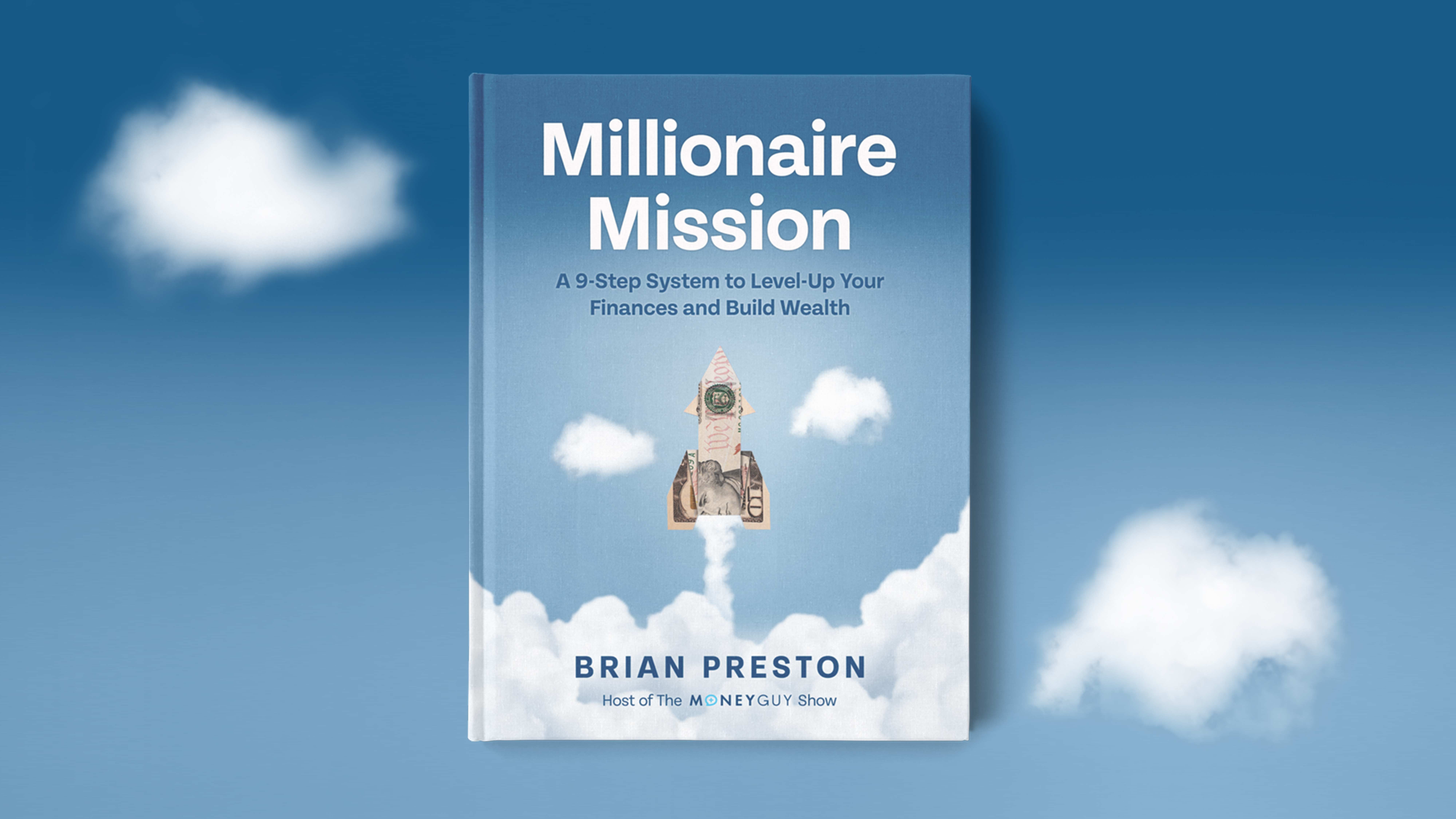
It's...and look, I feel a little bit of an advantage because I know who John Michael is and we've met. He's done the studio tour. The guide to this...the answer to this...and you know I'm gonna do it. I'm gonna hold it up. I'm gonna make the cool sound. The
Financial Order of Operations. Because look, paying down because we do have an arbitrage situation. We know that you have a 2.1 percent mortgage. Cash is paying more than four percent if you put it in the right place without the risk. There is a...you're like, "Whoa, that's a great opportunity!" But there's a balance here. Remember, there are two components here. There's getting wealthy, and then there's keeping your wealth. And that's what the
Financial Order of Operations tries to maximize that entire journey so that if you don't have your emergency reserves, if you don't have the foundation of your investments with your Roth and your retirement plans through your employer, and the hyper-accumulation and pre-funding all your kids' education and other goals, then you don't get to move on to paying off the 2.1. But however, I don't want somebody who's approaching the threshold of retirement post-45 meaning you can actually see the runway of the future ahead of you. You've got to figure out how do you glide this thing down, and how do you keep your wealth?
How do you minimize the risk of the long term because you want to enter retirement completely debt-free? You're going to take all those components, and that's where step number nine of the
Financial Order of Operations might say, "Hey look, if you've already been saving and accumulating and have built wealth by saving and investing 25 percent, you can spot your retirement threshold in the near, not too distant future because you're over 45. Now we're at the point where it might be okay to pay off the 2.1 percent interest rate even though you can make more in cash." So, I will tell you my own situation. You all know I have pretty much paid off my house because I told Bo I was going to be completely debt-free by age 50. I am so close, but then this whole arbitrage situation with interest rates happened. What I've done is quit hyper-paying down my mortgage. I'm just now rounding up my monthly mortgage payment a few extra hundred bucks. I'm not a minimum payment type of guy; that's not my mentality on anything, even though I know those few extra hundred dollars are not getting maximized, they are working towards that component of lowering the risk so I can keep my wealth. That's the way I would look at it, John Michael. Use the
Financial Order of Operations as your marker guide to know where you are in the journey, but then try to figure out how you balance keeping your wealth as you're in that phase of success. Love, and I'm not gonna throw it out there, but I'm gonna throw it out there. If you're someone who's sitting on cash and you're not earning some of these rates, we're recording this in February of 2023, so we know the interest rates can change. If you're not out there getting at least like three and a half, four, four and a half percent that's available out there in the marketplace without a whole lot of work, make sure you command your army of dollar bills. If you're not getting those savings rates, ask in the chat; they'll tell you where to go find places to park that cash because every little bit helps a ton over the long term.