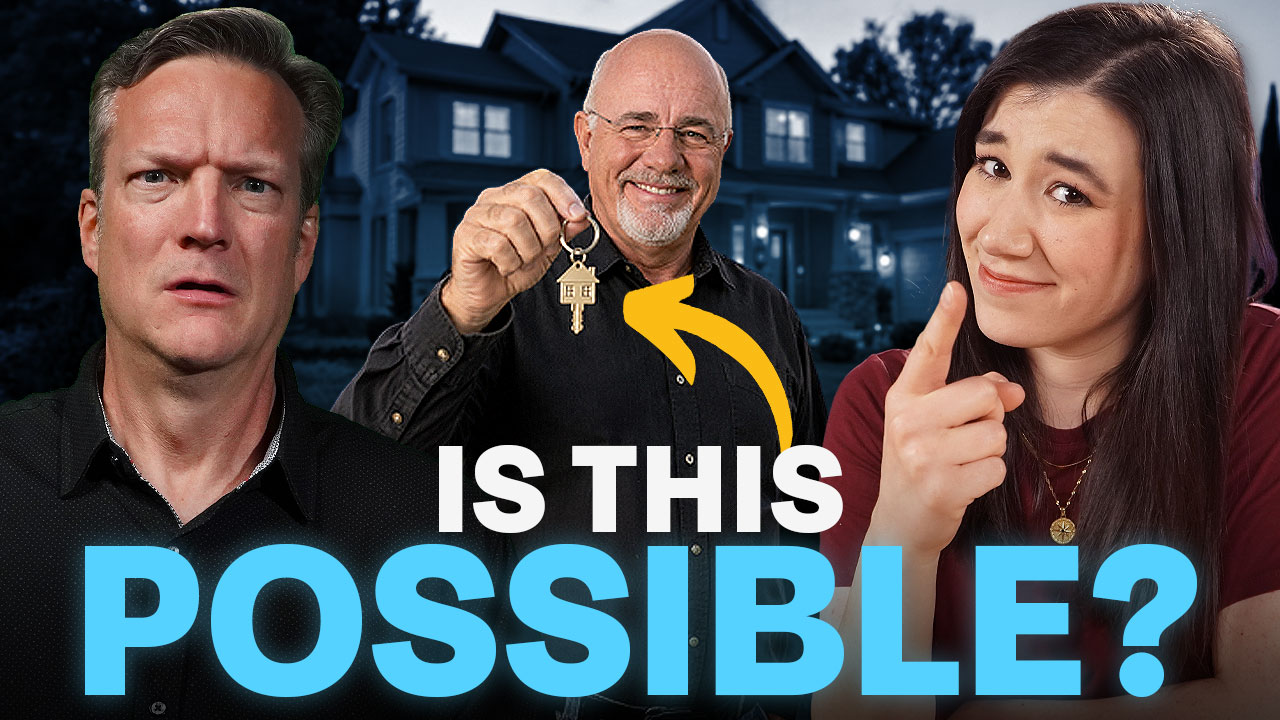
Alright, we’re going to move on to Jason S’s question. It says, “Do you believe in ‘good debt’ like Robert Kiyosaki, and do you have personal experience in having good debt? So, what should they think about this? I mean, let’s be fair; there are a lot of people out there that are like, ‘all debt is bad,’ which, a lot of it is. So, give us your hot take. I mean, it’s hot for the internet, I guess, but it’s not hot to me. I understand mathematics, right? And I understand that certain times one of the appealing things about opportunities to purchase different types of assets is that you can borrow money to do that. You can borrow money to acquire an asset that you might not otherwise have the money for, assuming that you’re in the right place in your financial journey.
So, like a real easy example that people think about is real estate. I can go buy a primary residence—I’m going to use that as an example. If I don’t have enough money to pay cash for it, I can get a mortgage so that I can get on the homeownership train. I can pay that mortgage off. I’d argue that is an example of good debt. You can take that all the way out to step seven or eight of the Financial Order of Operations, go to like rental property. If I want to get levered returns on my dollars and I’m saving 25% elsewhere and I’ve got a financial foundation built up, and interest rates are low like they have been for the past couple of years, yeah, maybe it’s attractive for me to go use debt, use a low-interest-rate debt vehicle to buy a piece of real estate, and then my cash on cash return would be better.
Or perhaps you have an opportunity to acquire a business or buy a commercial property or there’s some asset out there that you have a desire to own that is at an attractive price. Does that make sense? To own that, you don’t have cash to pay for. In those situations, debt might be a fantastic tool to allow you to purchase the asset. Now, I think people bastardize that, and I think they get too aggressive with it. I think there are some big financial voices out there that maybe did that to the nth degree and made a mistake and got burned by it. But I think a reasonable financial mutant would agree, yeah, there is such a thing as good debt, and debt can be helpful.
Let me throw one other one out there. I do not like student loan debt. It drives me nuts. But I would argue when done appropriately, if the asset that you’re receiving is a college education and you’ve done it the right way and you’ve done the ROI, and the alternative is to not go to college, I would even argue maybe that can be good debt if approached appropriately. I want to answer it this way: I reject the premise that debt is good or bad. Oh, there we go, because think it automatically—well, no, it immediately when you classify one as good and one’s bad, you’ve taken a side on the whole thing because us as humans, we’re good and evil. Credit card debt’s bad. But no, hear me out. Hear me out. I like what you’re—is dangerous. I think that’s what I would share, you know, but dangerous does not mean it’s not effective.
Because, I mean, it’s back to my chainsaw analogy. I mean, I’m scared to death of chainsaws. You guys have heard me talk about my stories where, during bad storms, my dad and his buddies would go cut firewood, they’d go remove trees, and I would never work the chainsaw. I was always the splitter. But chainsaws scare me because I’d see my dad over there, and I’m like, man, one slip and it is just horrible. But I got to tell you, it’s a heck of a lot easier to chop up a tree with a chainsaw than it is with a hatchet or whatever other tool you want to use. But it’s dangerous, and if you’re not scared while you’re using it, you’re doing it wrong. So that’s why I think that there are definitely debts that are very effective, very dangerous. But yeah, if you structure them and you respect the functionality of it, you don’t have to be a teetotaler about it.
I mean, because I think about situations I’ve been around business purchases. I mean, think about succession planning, and most business owners are dealing with vast amounts of debt. Despite what you’ve been told, when you do succession planning and other things, you’re typically selling business assets to other people in the business. Debt is a component that goes with that, even when you sell with a big company. Like if I sold this company right now, the company that would buy me would probably structure some type of note or debt on top of it. Is that good debt or bad debt? No, it’s necessary for the transaction. It’s dangerous debt. Real estate’s the same way. You know, and I remember when we were looking for our own decision, we were paying rent over $177,000 a month.
We needed more space, and I knew that it was going to now take us to like $23,000 a month. At some point, you go, man, if I’m going to be spending this much money, why don’t I just own the building? But the only way you can own something like that is if you go and typically finance it. I mean, all the mathematics and the cash flow work out where this is a no-brainer, plus it’s going to create all these tax benefits and other things. But yeah, you’ve got to, good debt. I mean, to come up with eight figures worth of capital like that is tough. I mean, how do you do that? I mean, that would be a tough thing. Same reason when we talk about buying our first home. You hear a lot of pundits tell you to put down 20%. We never told you that. We didn’t have to adjust our rules because I knew for myself, I’ve never been a hypocrite to you guys. I knew for myself I only put down, I can’t remember if it was 3 or 5%. I’d have to do the math, and I don’t do public math.
But I put down somewhere between 3 to 5% on my first house. So I made sure I drafted my rules to reflect what I actually had to deal with to create success, not something that’s hypothetically falling into this box of good versus bad. And look, Robert and Dave are friends. I think people would be shocked to know that they talk about it. Robert and Dave Ramsey are friends, and they love to poke fun. And I think it’s part of the stick now at this point that Robert’s good debt, Dave’s bad debt, and they play their parts. I’m telling you, it’s probably less entertaining, but the real answer is it’s more nuanced. And debt is debt, and it’s dangerous, and you better know the right reason to use it and when to use it. For more information, check out our free resources.