

Running your own business as an entrepreneur provides you with worlds of opportunity to create a meaningful life and grow real wealth.
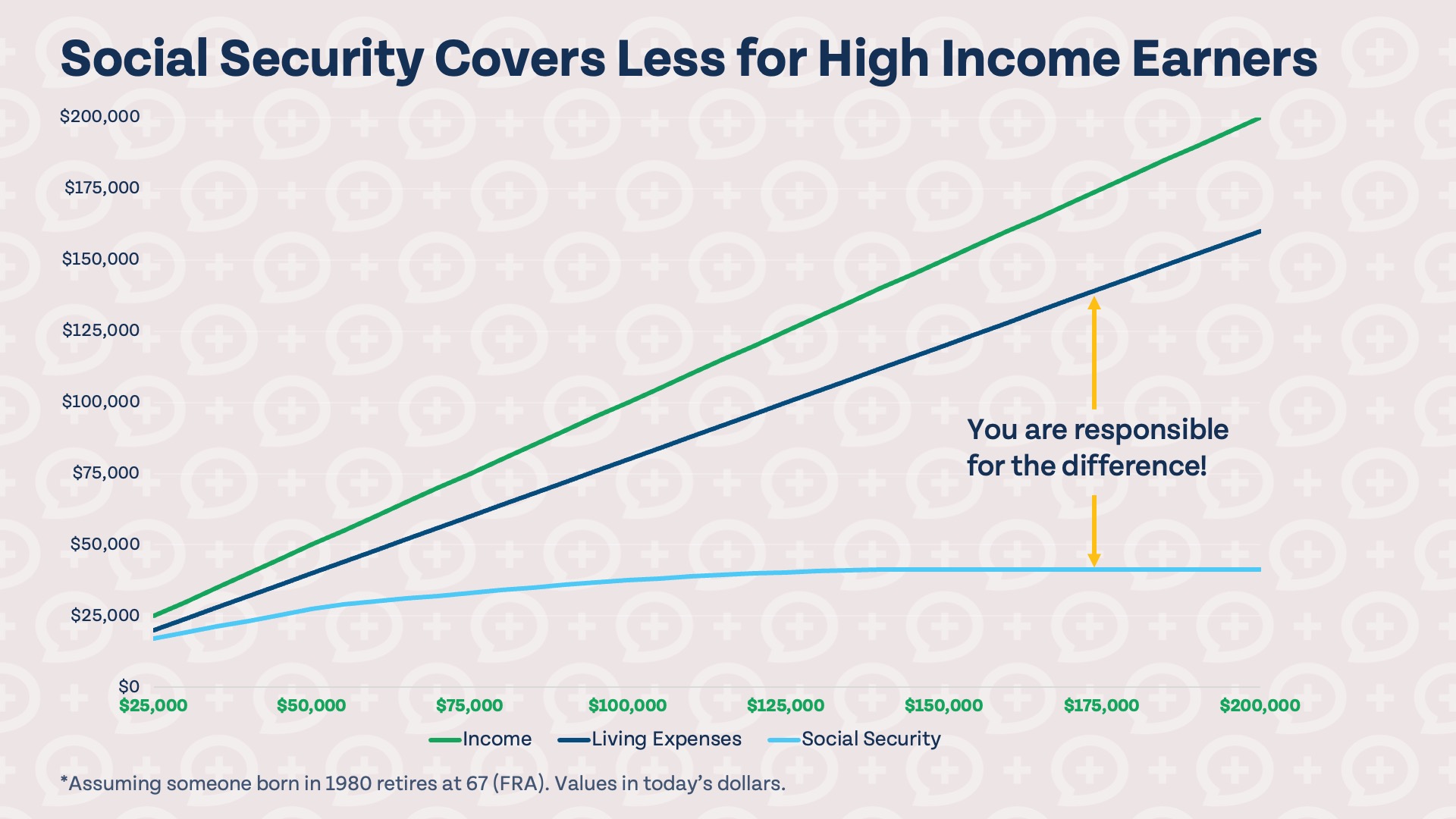
But self-employment comes with a lot of responsibility, too. You’re the boss, you have to keep track of your expenses and income, you have a greater tax burden, and you have to figure out how to fund your retirement.
According to a survey from TD Ameritrade, 70% of entrepreneurs aren’t contributing to a retirement plan. 40% of self-employed individuals aren’t saving regularly, and 28% aren’t saving at all.
Those are some frightening statistics, but you don’t have to be a part of them.
If you’re behind on saving for retirement, consider these 5 different retirement account options for the self-employed, so you can start saving as soon as possible.
Traditional and Roth IRAs
We’ll start off with Traditional and Roth IRAs. Anyone can open one of these accounts — self-employed or otherwise — and they’re a great starting point when looking to fund your retirement.
The contribution limit for each of these accounts as of the 2015 tax year is $5,500 for those under 50 and $6,500 for those over 50.
What’s the difference between the Traditional and Roth IRA? With a Traditional IRA, your taxes are deferred so you’ll get a tax break while you’re contributing. Your withdrawals will be taxed later on.
With a Roth IRA, the opposite happens. You pay taxes on your contributions on an ongoing basis, but you can withdraw your money tax-free in retirement.
Which should you choose? It depends on your personal situation. The general rule of thumb tends to recommend Roth IRAs for younger individuals who think they’ll be in a higher tax bracket when retiring.
Solo 401(k)
A Solo 401(k) is simply a traditional 401(k) for business owners with no employees (but your spouse can contribute if they earn an income from your business). It follows the same requirements as a traditional 401(k) as well.
As a result, you can contribute as both an employer and employee. As an employee, your annual contribution limit is $18,000 in 2015 ($24,000 if you’re over 50), and as an employer, you can also contribute up to 25% of your compensation.
The maximum total contribution limit (excluding catch-up contributions) for 2015 is $53,000.
Depending on your plan, the Solo 401(k) can be offered as a traditional or Roth, and it functions the same as the IRAs (with traditional growing tax-deferred and Roth growing tax-free).
SEP IRAs
The Simplified Employee Pension Plan (SEP) is similar to a Traditional IRA . You can claim a tax break in the year you make contributions, which means you can potentially save more as self-employed individuals tend to pay taxes at a higher rate than regular employees.
The SEP IRA also offers a sizeable contribution limit: you can contribute the lesser of 25% of your earnings, or up to $53,000 for the 2015 tax year.
Another bonus is you can contribute to a SEP IRA even if you’re self employed only part time, and you can still contribute to a 401(k) offered by your employer.
However, there isn’t a “catch-up” contribution policy in place for those over 50.
Simple IRA
You can take two routes with a SIMPLE (Savings Incentive Match Plan for Employees) IRA: you can open one if you’re the only employee of your business, or you can open one if you have fewer than 100 employees.
If you choose the latter, you either have to make a mandatory 2% retirement account contribution for every employee, or you can make an optional matching contribution of 3%.
Annual contributions are limited to $12,500 for the 2015 tax year, with catch-up contributions of $3,000 available to those over 50.
If you’re the only employee, a Simple IRA is a good choice if your income isn’t substantial – otherwise, a SEP IRA is the better option.
Other Plans
There are two other defined contribution plans available to self-employed individuals, and you can also contribute to a defined benefit plan:
- Profit-Sharing Plan: This plan lets you decide how much you want to contribute on an annual basis. The limit is up to 25% of compensation (not including contributions for yourself), or $53,000 in 2015.
- Money Purchase Plan: This plan requires a fixed percentage of your income to be contributed every year, also with a limit of up to 25% of compensation (not including contributions for yourself). The fixed percentage is determined by a formula stated in the plan.
- Defined Benefit Plans: This is a traditional pension plan, which means the focus is on the payout you’ll get come retirement, not on annual contributions. You decide how much you want to be paid (the maximum annual benefit you can receive in retirement is up to $215,000 as of 2015), and an actuary must calculate the minimum funding levels you’ll need to reach each year to make that possible.
Start Focusing on Retirement
Self-employed individuals have it harder when it comes to money management, but that shouldn’t be an excuse to get behind with saving. Your future is important, and if you can’t save for something like an emergency fund, what do you expect to live off of in retirement? Prioritize saving in your budget and make retirement a possibility.
The amount of options can get overwhelming for entrepreneurs, so don’t be afraid to reach out to a professional to help you. You let a CPA handle your business taxes because they’re the experts and taxes are complicated. In the same way, a financial advisor can handle the planning side of the equation to ensure you’re creating a strong financial future for yourself.