
Change your life by
managing your money better.
Subscribe to our free weekly newsletter by entering your email address below.
Subscribe to our free weekly newsletter by entering your email address below.




You only get one shot at a successful retirement, and it turns out, the biggest factors have less to do with your savings than you think. According to a MassMutual Retirement Happiness Study, 67% of retirees are happier in retirement than when they were working, but the other 33% reveal some surprising pitfalls that even well-prepared retirees didn’t see coming. We break down 5 key insights, from the money mindset to the habits, so that you can start shaping your financial roadmap today for an even more beautiful tomorrow.
Then we answer your financial questions, and things get a bit heated during rapid fire! We also reveal a side of Brian you have never seen before. If you want to find out how much wealth you need, when you’ll get there, and ways to speed up the process, check out our Know Your Number course today!
Subscribe on these platforms or wherever you listen to podcasts! Turn on notifications to keep up with our new content, including:



Brian: You want a successful retirement? Lean in and we’re going to hook you up today.
Bo: Lean in is right, isn’t it? Brian, I am so excited about this because we know when it comes to retiring, we obviously want to crunch the numbers and we want to figure out the mathematics of it. We want to think through those pieces of it. What we have found is that there are more things at play and more things that you should be aware of in order to have a successful retirement. And we want to dive into those things today.
Brian: Wait a minute. You mean there’s more than just the nest egg amount and the safe withdrawal rate? What else could there be?
Bo: What else could there possibly? So, today we’re going to look at some tips and some insights from actual retirees, folks who have actually done this and said, “Hey, this is what’s allowing us to enjoy our retirement.” We’re going to talk about some things to avoid to not make your retirement something less ideal than you want it to be.
Bo: And I think the first one, this one seems kind of interesting when it comes to there was a study done by MassMutual on the happiness level of retirees and they asked them a number of questions and one of the responses they got from the retiree surveys was that retirement is better than working. That’s Brian. I’m curious to know how do you feel about this one? Because I struggle with this one a ton.
Brian: I think we have a bias. I mean, because we like our jobs. But I think that for the majority of people, when you see all the happiness studies, a lot of people are in jobs they don’t love. So, it’s not surprising to find out that 67% of retirees are actually happier on a typical day than they were when they were out there in the workforce.
Bo: So, it’s pretty, you know, it’s a majority of folks, but it does leave a swath of people that it sounds like are probably unhappy. And the questions on the survey went on and what they found were 47% of retirees that said they’re not happier in retirement identified that they were lonely. They said that, hey, one of the reasons why I’m not happy in retirement is because I’m not surrounded by people the way that I was when I was working. And we talk about this all the time, Brian, for our folks that show up here every day to Money Guy show or to Abound Wealth. It’s kind of like your work family, right? Like it’s the people often times you spend more time with the people at your 9 to 5 than you do with the people that sleep under the same roof. And when that’s gone and when you lose that social structure, it’s really easy to feel isolated and alone.
Brian: Every bit of happiness research I’ve ever done when I was writing Millionaire Mission or and even some show content, relationships is a big part of what drives that. So, I would right now if you find out that your work structure is all of your social structure as well, go ahead and start making steps or strides to figure out what’s next. You know, kind of build to what you’re going to so that way you don’t fall into that category of being retired, lonely, and unhappy because I think a little preparation can help offset that.
Bo: I love what you said right there. Know what you’re retiring to, not just what you’re retiring from. Another takeaway that came from the survey, again, the survey was what makes a happy retiree and one of the things that kind of kept coming up in the survey was this idea of health and the takeaway was you should right now whether you’re retired or not, you should begin to prioritize your health starting today.
Brian: Yeah. I mean, this is one I say it all the time, health is wealth. Because I mean, having a front row seat to not only success, but to seeing how people retire. One of the biggest things that breaks my heart is when everybody puts all of what they perceive as their happiness or what will be their happiness or fulfillment into the future and then they get sick. I mean, that happens. So, that’s why you have to invest in your health now. And that’s why if you look at the stats here, nearly half, 49% of retirees who are happier in retirement are those who planned ahead and they definitely prioritized making sure they were healthy.
Bo: So they are happy because even before they got there, they put in the time, put in that effort. And then with this study, they asked the retirees, hey, what are the things that concern you? What are the things that you’re worried about? And 34% of all current retirees that were surveyed said that one of their biggest issues is their health. It’s one of the biggest concerns that they have. So the earlier you can begin prioritizing that, the earlier you can begin righting that ship. If you’re not where you need to be, likely the more enjoyable, the easier those later years in retirement are going to be.
Brian: So the big takeaway hand in hand you need to think about not only deferred gratification and saving for the future but also let’s go ahead and focus on the health is wealth and you know because what’s the worst thing that happens is that you learn to be healthy. I actually well you actually love exercising. I didn’t if you would have told me 20 years ago that I would have enjoyed exercising. Now there’s all these nuts like Bo who’ve from Jump Street thought that they loved working out but some of us it takes a little bit of adoption to figure out that hey this healthier lifestyle actually sticks.
Bo: I love it. Another the next point that they kind of pulled out of the survey I think was one that’s a little bit of a Money Guy echo even though it flies contrary to what a lot of people think. And the idea is that you don’t want to wait to live your life. We love deferred gratification. We love thinking about sacrificing a little bit of today for tomorrow. But we don’t want to sacrifice all of today for tomorrow for exactly what you said. We don’t know what the tomorrow holds.
Brian: Well, we just recorded a Making a Millionaire yesterday and I was thinking and I don’t know that I highlighted enough that there is a fine line between financial mutant and financial miser and I think sometimes us mutants we think that hey we’re going to live our best life in the future so we’re going to just lock ourselves down. No, that’s more miserly than that is mutant because I want you to bedazzle your basic life. Go out there and travel. You don’t have to spend a ton of money to still create incredible memories. Because what I think is interesting, if you compare and contrast what people think they’ll do in retirement versus what actually happens, it will make you take action today.
Bo: Yeah, it’s really interesting. The survey asked, okay, what are the top activities that you imagine you’re going to do when you retire? And 79% said travel. 71% of the respondents said they were going to exercise more. And then 71% said they were going to spend time with others. So that’s what people that are not retired thought that they would be doing in retirement. Then they asked the question for the current retirees. Hey, what do you actually spend your time doing? Where are your efforts going? 83% said it’s watching movies and TV. 67% said time with loved ones and about 63% said relaxing. So there is a little bit of a disparity between what people thought they were going to be doing and what they end up doing. You get to be the director, the main character of your story. If you think that you’re going to travel a lot when you retire, you may want to start traveling now a little bit just to make sure that you enjoy that. Just to make sure it’s something you want to do. Same thing with exercise. Same thing with hobbies. Same thing with spending time with other people. Don’t just wait till tomorrow. You can actually begin to do some of those things today.
Brian: Yeah. I think the big takeaway for me is we hear about the go-go years, the slow-go, and then the no-go. I want you to expand that go-go period as long as possible. And having a plan can go a long ways to making sure that you actually do the things that you anticipate that you’ll be living your best retirement life doing.
Bo: And then this next one I thought was a little surprising, because again, I think this is contrary to what a lot of people think. The fourth insight was you might actually worry less about money in retirement than you did pre-retirement. Don’t mishear us, Brian, because I you say this all the time whenever we’re sitting down with someone who’s about to retire. You say, “Hey, I don’t care how prepared you are. I don’t care how much time you’ve put in how much we’ve looked at the numbers. There will be a psychological shift in those early days of retirement.” Talk a little bit about that.
Brian: Yeah, I mean you think about it when let’s just because right now there’s a lot of crazy stuff going on in the world. A lot of geopolitical stuff, a lot of economic stuff. And for a lot of you when the stock market gets beat up, you’ll just like it’s okay. I’ll just always be buying. I’ll just work through it. Good thing I have this job. Think about now put yourself in the position of you go through all this emotional as well as all these things that are going on in the world and now when the stock market goes down 10%, 15%, 20%, you just have to ride it and that’s going to hit you completely differently in retirement than it is when you’re actually working and still throwing money into the markets through the always be buying. You just need to plan accordingly. That’s why I think a lot of people especially those first two years that sequence of return risk is legitimate. But I think a lot of people who have been financial mutants and saved well, they find out though once they get there, hey, this is going to be okay. Especially if they have a great team that they surround themselves in, so they think less about money and more about doing. We see that in a lot of our clients as well.
Bo: Brian, I’m taking my kids, my wife and I were taking our kids down to Universal this week and my kids are super stoked about roller coasters. But it’s always one of those things that leading up to getting on the roller coaster, there’s a little bit of apprehension, there’s a little bit of nervousness, there’s a little bit of scaredness, but once we get them on the roller coaster, once they actually get to experience it, they recognize it’s not quite as frightening as they thought that it might be. And I think a lot of retirees came to that same conclusion. 34% of pre-retirees said that they’re worried about outliving their money. I’m worried that when I retire, I’m going to live longer than my resources are going to allow. And yet when they actually asked retirees that are in retirement that are living off of their resources, only 22% said that they were worried about outliving their money. So something changed between the pre-retirement piece and the after retirement piece.
Brian: Now some of that could be I’m just playing it through depending upon when they surveyed survivorship bias. Sure. And the fact that I mean if you make it through your first two years and we’ve had some pretty good markets in the last few years, it could actually work its way out. I still plan accordingly because I’d rather you be pleasantly surprised than to be shocked by it. And then this goes into just being another positive, being pleasantly surprised. 46% of retirees say they’ve had fewer financial problems than they anticipated. Isn’t that always nice to kind of plan for the worst and then hope for the best.
Bo: But I do think it’s one of those things you do need to anticipate it. It’s why we tell people all the time that before you retire, let’s measure two, three, four, five times. Let’s look at the dream plan. Let’s look at the down-to-earth plan. Let’s look at the doo-doo plan. Let’s think about all the different contingencies that could happen so that we at least have some familiarity and we at least have a recognition that these things could happen and we’ve tested it and we’ve made sure the plan is sound. If you can do that, if you can weigh out all those things, then it’s not surprising the folks who have done that, half of them say, you know what, I tested it. I looked at it. I thought about it and man, things turned out even a little bit better than I expected. But you have to do the work on the front end. You have to make sure again that you measure two, three, four times before you just take that leap to move into the next phase of life.
Brian: Well, you know, and I’ve kind of given a little prelude to this is that just like I talked about sequence of return risk is when you retire actually matters. But we actually did a different example or wanted to highlight a different data point is that we looked at people back in 2020. And this is before all that the big inflation hit. You know, 17% said they were spending was just a little bit higher than they could afford for retirement. So, if you do the other side of that math, that means 83% of people were like, “Hey, this is okay. I’m going to be all right.” But fast forward and now we’ve come through this hyperinflation period. I think people have found that man all of a sudden now that number that was 17 has jumped up to 31%. That spending was higher and much more than they anticipated. It does matter when you retire and you need to plan accordingly. That’s why we love stress testing. That’s why we do love creating financial plans is that nobody has shock or surprises when they actually cross that threshold.
Bo: And I would go ahead and assume when you’re doing your planning, okay, what happens. Yeah. In our base case, we’re going to model out what if expenses increase at 3% inflation, but then go ahead and okay, what if it’s actually higher? What if it’s five? Or what if when I retire, all of a sudden 2022 happens or 2008 happens or the year 2000 happens. If you can model those things out and have a probability of success assigned to even making it through those markets, there’s a much higher likelihood that you’re going to be a happy retiree. Then when those unknown unknowns come to fruition, you’re like, “It’s okay. I’ve planned for this. I thought about this. I’m in a good spot.”
Brian: So Bo, why don’t you go ahead and let’s recap those five things one more time and then let’s get into what everybody’s been waiting for. Little Q&A.
Bo: So in order to be a happy retiree, here are some things that we think you ought to begin doing now. Number one, prioritize community. Number two, go ahead and start taking care of your health. Number three, don’t wait for tomorrow. Go ahead and live some life today. Don’t push everything into the future. Make sure that you have a plan in place. And as you have that plan in place, make sure that you are preparing for the worst, but hoping for the best. And if you can do that, there’s a chance that you’re going to be one of the respondents in the survey 1, 3, 5, 10, 20, 30 years from now that says, “Man, I am a happy retiree. I’m living the life that I want to be living on my terms.”
Brian: If you’re a financial mutant and you’re quickly approaching retirement, five years, even 10 years, and you just want to go ahead and start taking the steps now to make sure that you’re going to be okay, don’t sleep on the fact. Go to moneyguy.com/resources. We actually have the Money Guy’s ultimate guide to retirement that you can basically, it’s a landing pad where you can get all the details, all the information you want to kind of know to make sure you live your best financial life.
Bo: Brian, I love that we get to do this. I love that we get to show up every single Tuesday at 10 a.m. Central and share something with you guys about how to save for retirement, how to have a happy retirement, how to take your finances to the next level. But I also love that we get to sit here and answer questions. We get to speak to the things that you guys are curious about. So, if you have a question that you want us to weigh in on, we have the team out in the wings right now collecting your questions. So, make sure you get them into the chat because we do believe that there is a better way to do money. So, with that, creative director Rebie, I’m going to throw it over to you.
Rebie: Yes, I’m going to kick it off with Garrison’s question. It says, “The wife and I are looking to buy our first home and trying to decide if buying mortgage discount points is smart in this market. What are the determining factors that make buying points worth it?” And what is that? I feel like there’s going to be people out there that do not know exactly what that is.
Bo: Yeah. So, let me talk a little bit about what points are, Brian, then you can talk because I think this question is a great question. Even if you take out the in this market, that little prepositional phrase, I think you should answer the question. Does it make sense to ever buy mortgage discount points? And what that means is let’s say that right now the prevailing interest rate on a 30-year mortgage is 6 and 1/8, right? 6.125. If you want, when you go through closing, a lot of times the lender will give you the opportunity where you can buy your rate down, meaning I’m going to pay X number of dollars and instead of having a 6 and 1/8 interest rate, I’m going to buy my rate down to 6% or to 5 and 7/8 or to 5 and 3/4. I’m going to spend some money upfront today at closing. And in exchange for that money I’m spending at closing, I’m going to get a lower interest rate. Right. And so Garrison’s question is, well, does that make sense? If rates are high, is that something I should take advantage of? How do you decide?
Brian: Well, first a few more data points you need to be aware of. If this is your purchase, not a refinance, you actually can deduct those points on your tax return, which can help give a little bit of an oomph to the decision-making process because there’s some deductibility there. But it does ultimately come down to a math decision is that you have to now compare, you know, what is my payment going to be with this lower bought down rate versus what it would be if I just took what the off-the-rack rate was and then you figure out, you know, take what the cost is. You figure out where the break even point is. Now, if in the past you would just say, okay, well, if the break even point is 30 months in the future, well, I’m going to live in this house for at least the next 5 years, this might make sense, especially with the deductibility, to push it over the line and say this is a good deal. I will tell you, you might want to hit the pause button right now in the fact that there’s one other consideration to take into account. I’m not so sure we’re completely done with interest rates going down, okay? There are some pressures that maybe we’re going to get another quarter, maybe we’re going to get another half. Now, look, when the Fed adjusts rates, they’re adjusting the short-term rates, but there is an influence on even longer term rates. If you don’t believe it, just look at what’s happened in the last year. We have watched mortgage rates go down from the sevens all the way down to the low sixes, even below six briefly for a period of time. And that’s because the overall interest rate environment has been dropping and I think that we might still have a little more room for that. So you’d have to ask yourself, not only do the math equation that we just laid out, which is what is the cost depending upon when the break even, but then ask yourself, hey, where is the market going? And is it going to move the needle to where I need to refinance? Those are the kind of things I would take into account to figure out if it’s worthwhile. I will tell you in the past it all depends on how good the deal is. There have been deals where when I’ve done the math I’m like, “Holy cow, you mean I can do this in less than two years and I don’t have to go through the process of refinancing and all the costs associated with refinancing and I get this tax deduction? Yeah, let’s do that.” And I have actually bought points in the past.
Bo: Yeah, I think it’s really interesting. A lot of people don’t realize this. I don’t want to be so bold as to say that mortgages are negotiable because that’s the wrong language to use. You should definitely shop it. But mortgages are customizable. Some mortgages might be 30 years, some mortgages might be 15 years, some mortgages might be 10 years. Your rate might be the prevailing interest rate. Or you might be able to buy down points or even if you’re someone who doesn’t put down 20% and you’re supposed to have PMI, you might be able to exchange PMI for a lender paid PMI and take a surcharge on the rate. So, understand if you are a first-time home buyer, there are a plethora of options at your disposal to figure out how you get the right product for your circumstance. So, just make sure you do your research, you do your due diligence, because for most people, buying a home is the largest purchase that you will ever make. And so you want to make sure that you make it well.
Brian: I would be curious now because I did I’m doing this off the cuff so I haven’t you know the players are changing constantly. But I think it was better.com was actually publishing their mortgage rates online so you could almost check it in real time on a day-to-day basis if y’all want to go see if better.com is still publishing mortgage rates with refinance rates.
Bo: I did that one time. You know what they did?
Brian: What?
Bo: I accidentally put my phone number in there.
Brian: Oh, they harassed you.
Bo: Buddy they harassed me.
Brian: That’s why I say real time without you having to give an email or phone number. That’s because I don’t want to I don’t like getting into either. But there was a period I know Ally in the past has done it. But then I found out Ally was just using better.com as the backbone for their system. But if you can get that way you can because it then it adds to the process. You can know how good your broker or the institution’s offering. How good is that to the market? Because you got to cut through the noise of are they padding the rates that they’re offering you. This is a good way to keep them honest is trying to find an online resource that will publish rates on a daily basis so you can know how close you’re with what your mortgage provider is offering you.
Brian: Is it still active? Does anybody did anybody check it?
Rebie: Well, I was just going to tell Garrison at the end of the day depends in case you’re wondering. It depends. But thank you for your question. That’s great. To everybody watching live right now, go ahead and get your rapid fire questions in the chat. We will have our it does not depend rapid fire coming up later in the show. What’s that?
Brian: Any kookiness, you know, any crazy rules?
Rebie: I’ll let you know as the rules evolve, Brian.
Brian: Well, you know, Bo talked about riding roller coasters can create anxiety and stress. I feel like it’s very equivalent to riding the Velocicoaster over here.
Rebie: Oh, great. That’s what I like to hear.
Bo: I’ve heard the Velocicoaster.
Rebie: If you would like to submit a question for our rapid fire segment just put RF at the beginning of your question so that we know what it’s for and so yeah get those in. We’re going to do a few more classic questions if you will and then get to rapid fire later in the show.
Bo: Will you tell Garrison one thing?
Brian: By the way, I’m on better.com. I feel like I’m taking the ACT right now in terms of all the questions. So I have not seen anything on the front page. I’m 19. By the way, because I love doing live shows and the fact that if somebody knows a real and then that way our team can go check out, let us know in the comments what you’re using because I knew this stuff changed. Remember how when I’ve done car buying and other things, I love it when I find hacks, but I did that off the cuff because that’s something I’ve used in the past. Before you ask the next question, I did have a PSA.
Rebie: Okay.
Brian: I just got back from spring training where I met up with some high school buddies and I had some great experiential moments. You know, I got to meet a few of you. There’s one couple though that’s haunting me because they said hello to me as I was getting on the plane. What they don’t know the context matters. I just had a rage moment with the airline that I was dealing with to where they made me gate check my bag and then I got, you know, and it was one of these weird things and I was on a tight trying to make it to a play with the family at TPAC to watch Back to the Future. So this thing was all tight but the sweetest couple said hello and I think I recovered and said thank you. Thank you. Thank you because I always want to make sure my financial mutants know I love meeting you in public. But I didn’t know if it came off that way or if the airline rage was overtaking that. We’ve all been there. By the way. I thought I was the only one and then several of you on the content team told me no. This is getting to be a problem with a lot of these airlines is that they kind of herd us through like cattle.
Rebie: I think there was one other person.
Brian: What? No. But look, he’s an expert. Expert. Hey, I give you expert status.
Bo: Can we what will you tell Garrison if he’s thinking about buying a home? But before we move on from that, where what’s a good resource he could go use at moneyguy.com for getting ready to buy a home?
Rebie: Oh, we have several. A very popular one is our home buying calculator at moneyguy.com/resources. But to go a little bit deeper, we also have an ultimate guide and a download that’s a checklist for everything you need to consider before you buy the house and make the decision. So definitely head to moneyguy.com/resources to find all of that good stuff.
Bo: Here’s my next question. I’d love a poll and I’m trying to think about how to word this. I just want to know is our audience are you pro-checked bag or anti-checked bag?
Brian: I mean gate checked, meaning they forced me to gate check my bag. Then I found because they said there was no overhead. And then I get to my seat and there was empty overhead everywhere. Not to mention every overhead had backpacks in it.
Bo: Here’s where we’re at right now. Brian is very much SEAL team six.
Brian: When I get off the plane, I grab my bags. I go and I go jump in the car and I’m out of there. Fast extractions from airports.
Bo: He does not like checking a bag. Whether it be the official way or the gate checked way. Some of the other members of the content team are like, “Hey, checking a bag is super convenient. I don’t have to worry about lugging it around the airport. I don’t have to put it in the overhead. I don’t have to be stressed at where I’m at in the boarding group. I’m just curious.
Brian: They’ll charge fees also when you do carry on versus.
Bo: They don’t charge fees when you gate check. Goteem!
Brian: Well, but that’s they cost me time.
Bo: So, I’m just curious. I’m just curious to know if our audience is pro-checking bags or anti-checking bags. I’m not going to tell you who on the content team falls in each category, although you could probably guess where Brian falls.
Brian: In the flyer bill of rights or when is it okay to lie to your customer and say, “Hey, we filled up all the overhead space, so we’re making you check your bag.” And then you get on the plane and realize, “No, half the overhead is not full.”
Rebie: I’m speaking totally out of pocket. But what if it has to do with the weight of the plane? You know how they’ll distribute?
Brian: Has nothing to do with the weight of the plane. As a former baggage handler for Delta Airlines, I can tell you it has nothing to do with that.
Rebie: Brian, I don’t actually know that. I am no expert.
Brian: By the way, just last thing, when I got my checked bag yesterday, beat I mean, the wheel was completely pushed up in it. I immediately go over to luggage services, even though I’m trying to make this whole deadline to get to the performing arts center. And I go up and I say, “Y’all damaged my bag. Not only did you gate check, you damaged my bag.” And she goes, “That’s not damage. All you got to do is yank that out.” And so, she goes, “Just hit it right there and it’ll pop out.” It pops. Now it’s got a huge crease across it because this one’s hard shell. She goes, “See, it’s fixed.” And I’m like, and I did it. I’m a little embarrassed. I said, “This is not the airline that I grew up, you know, really thinking was a great airline.” Oh, that’s hilarious. She didn’t care, by the way. She goes, “Yeah, I hear you.”
Rebie: If you are the lovely couple that met Travel Rage Brian, let us know. I would love to know.
Brian: Travel Brian is already a mess. Y’all know because when we did the book tour, if you thought I was wound up tight normal, you ought to see me on a travel schedule. Travel Brian. We love Travel Brian.
Bo: Hey, somebody just said in the chat that when you gate check, you don’t have to go to baggage claim. Is that true?
Brian: No, that’s not true. They do that for strollers, for kids stuff like strollers and things. They help you out and put it back up. Got it. But for no, when they took my bag, it was going to baggage. I have seen a rare occasion where if they put a tag on there, it’s going to baggage claim.
Bo: And they’re wasting 20, 30 minutes of your life and traveling with kids. I’m traveling with a bunch of kids so I think checking might be a little bit easier. I think it might be a little more advantageous when you have a bunch of kids and stuff. Just hot take there.
Rebie: Let’s do another finance question and then we’ll get back to this poll about checking versus not checking your luggage.
Brian: Can I tell you I know my financial mutants, they’re going to be overhead people.
Bo: Look, I am also an overhead person. I just, you know, they got the kids and stuff. It’s do you check bags? It’s just a lot of okay, go.
Brian: We can do what we’re supposed to be doing.
Rebie: All right. Big Mo asks, “Why do so many advisors claim that expenses will be lower in retirement? It seems to me this is when you will have more activities to pay for.” We were kind of talking around this, so I’d love to hear your thoughts as financial advisors yourselves.
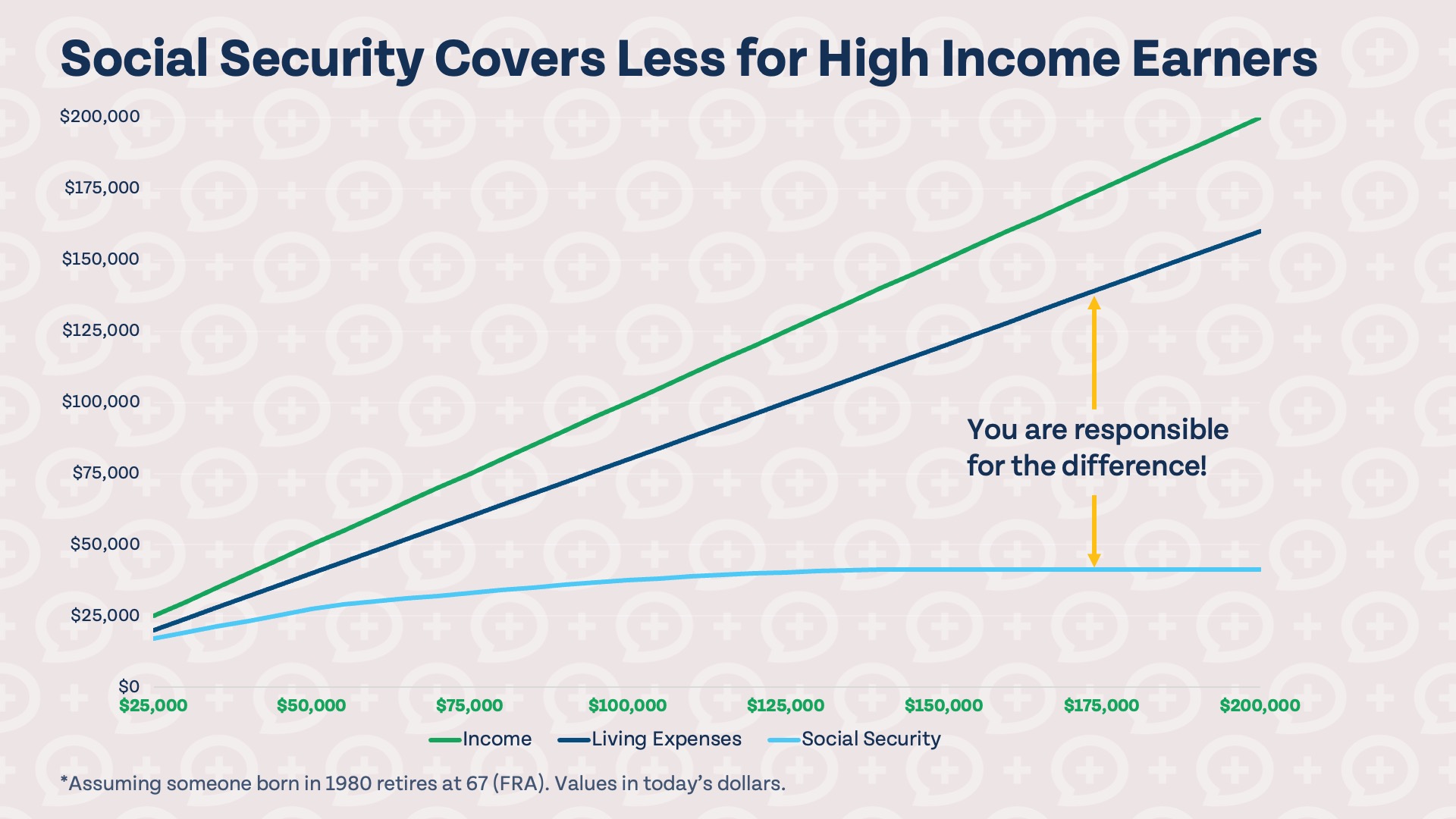
Brian: Well, I mean the difference between because a lot of times when we’re talking about expenses will be lower, it’s then people take their income and what you start thinking about what’s coming out of the gross number that we base a lot of our savings rates off of. You’ve got taxes, which is pretty large. And then you also have your savings rate. I mean, you think about if you couple taxes and savings rate, I mean, right there is probably 40 to 50% depending upon where you are. And then also realize that when you hit retirement depending on what age, you know, Medicare is subsidized and then you also have Social Security, the social safety net pops in. That’s why a lot of people that’s why I think they’re pleasantly surprised when they actually get to retirement is that that part is covered. And then you also have the go-go years, the slow-go and the no-go. But I do hope that during those go-go years, I hope that you’re doing tons of activities and other things, but I still bet even in that case, it’s lower than what you were making pre-retirement.
Bo: Yeah. I don’t actually know that I agree that most advisors say expenses will be lower in retirement. I try not to plan for that because what I really want to see from my clients is I want at worst you maintain your standard of living when you retire, meaning your expenses stay the same. And at best, I actually love to see my clients have an increase in standard of living. Hey, I used to spend all this time going to work and now I don’t have all that time that I was devoting to my job. I’m now able to fill that time with other things that cost money like travel and experiences and that sort of thing. So, I would actually take a little bit of argument. I think that most retirees at least in the world in which we live, they maintain the standard of living, same expenses that they had while they were working or they actually have an increase in standard of living. But what that means is the money necessary to do that might be lower for exactly what Brian said. You’re no longer having to account for taxes coming out or you’re able to be a lot more tax efficient and you’re no longer having to save. So, if you think about saving as an expense, then for sure that’s likely going to be lower. But I don’t want my clients like the last thing I want to tell a retiree is, “Hey, man. Oh, it’s been a fun ride. Now it’s, you know, spam and cat food for you for the rest of this thing.” That’s not a win. That’s not what we want our folks to experience. We want you to be able to live the life that you want to live on your terms, the way you want to live it, when you want to live it.
Brian: Well, and also I think when we do I think about some of the resources we have on moneyguy.com/resources for somebody who’s 25 years old, 30 years old trying to start saving for retirement. We do make some assumptions whether it’s 60%, 80% because we’re trying to give you some educational tools to start spot-checking or doing napkin math planning. But the reality is as you get close to retirement, personal finance is personal. I don’t want anybody giving you a rule of thumb and you thinking that’s what retirement I can do that for content creation, but that’s not good financial planning. Good financial planning is actually going to be using your numbers, what your goals are, what your specific situations are, stress testing it, checking in on it every year, seeing how it cross-pollinates and integrates with your tax code and all the things you’ve got going on from a cash flow. And that’s what’s really supposed to happen. And so we’re trying to balance the education side but also the implementation. They’re kind of two different things.
Rebie: Well, Big Mo, thank you for the question. And we now are going to check in on our checked baggage poll before getting to another personal finance question.
Brian: Got him right.
Rebie: What’s your guess? How many people said anti-checked baggage? What’s the percentage, Brian? What’s your guess? How many people are in your camp?
Brian: Are in my camp? I think that 75% of people are in my camp.
Rebie: Okay. The actual answer is that 58% said they are anti-checked bag while 42% said they’re pro-check bag.
Brian: Should have brought it down. I should have brought it down because when Bo flies at least once a year. Oh, I’m flying more often now. But you used to pretty regularly.
Bo: I did not actually start I’d never flew as a kid. I didn’t start flying until I was a grown adult. That’s me too. And so I’m still honestly I’m still feel like I’m kind of still learning stuff, right? Like you know what’s the best way to pack? I was asking you going to this thing. I was like, “Hey, what do I need to pack, dude? How do I need to travel? How do I need to think through this?”
Brian: So I hooked him up with my theme park shorts. You now are the proud owner of those theme park shorts.
Bo: I went and bought me some theme park shorts.
Brian: Zippers are king in a theme park. You don’t want to have a backpack, especially at Universal. Let me go. There’s an inside tip. And I’ll tell you what.
Bo: If they sponsor this show, I’d be happy to tell you what brand. No, we’re not going to give them a free plug. Even though I’ve sold a lot of their brand.
Rebie: If you’re watching, email me.
Rebie: Okay. Let’s do another question and then we’re going to get to our rapid fire segment, so hang in for that. This question is from Mcglone704. Hello, I’m struggling in step four and have had to start the step over due to emergencies twice now. I know this is built into the FOO, but how do I not feel down when I’m missing months of investing?
Bo: Fantastic question. What do you think? So, for those of you who don’t know, step four, Brian, will you hold the thing up for me? Step four is emergency reserves. This is the step of the Financial Order of Operations. We want you to have somewhere between 3 to 6 months of your living expenses in liquid cash. McLoon, what I want you to do is I want you to reframe your mindset because right now you’re thinking, “Oh, no. I’m missing out on investing. Missing out on investing. Missing out on investing.” And sure that’s true. But I want you to think I’ve had some events now happen in my life that I’ve had to go to this well. And holy cow, thank you Lord that I had my emergency fund. Thank you that it was there. Because if I did not have it, if I did not have those dollars there, I would have been swiping credit cards. I’m taking out home equity lines. Going to the banks. So you it’s okay. And I want all my financial mutants to hear this. It’s okay if you use your emergency fund for an emergency. That’s what it’s there for. So, every time you have to do it, even though it might feel painful, even though you might not like it, thank goodness that you have it there. Now, once you’ve recognized, okay, good, that thing was there, the parachute was there, it saved me. Now, you get to change your mindset and how do I get back on track?
Brian: Yeah. I mean, first, let’s give you a few things to kind of take the edge off. Hopefully, you’ve got an employer plan where you’re getting the free match and that’s going to for a lot of people that’s going to get you 5% to 10% just off of that if you count the employer match. So you’re not missing out on everything assuming you have an employer plan. But then I want you because I do think that it’s a self-proving system in the fact that if you had two emergencies that popped up, man oh man are you fortunate that you’re not now stuck making desperate decisions. You had the money to cover it. You’re going to have a patch of life that is going to be more smooth sailing or blue water opportunity. And that’s when you’re going to cross into step five, hit the Roth IRA. And I look, I’m okay with you feeling a little bit of pressure of this because it’s going to get you out of step four. That discipline is going to be just whispering in your ears, hey, let’s save. Maybe we make a little bit more sacrifice to get to that job and that goal of getting to step five that much sooner.
Bo: Love that. Somebody made this great comment. Oh my goodness, I wish I would have highlighted it, but it was, “Man, it’s so much better to say, ‘Oh man, that’s annoying’ than saying, ‘Oh man, how am I going to pay for this thing? Oh man, how am I going to make it through it?'” That’s a great perspective to have. Whoever said that, thank you for putting that in the chat.
Brian: Yeah. I mean, that’s what I think human nature is, is we ruminate on negative stuff. And if you can change that inner voice to be a little more of an optimist, you’re going to find success just kind of happens. And I think there is something about if you can point yourself to the positive with that inner voice, a lot of good things can happen for you. That’s not a mantra. That’s just a control voice. The standard default setting that you’re setting up within yourself.
Bo: That’s right.
Rebie: All right. Well, that’s great. It is now time for our it does not depend rapid fire segment. Here we go. I have some rapid fire questions queued up. Thank you for submitting them to the chat. Remember the rules are you only have 30 seconds combined to answer these questions and you cannot say the words it depends. Now if you trip up and say it depends that means you don’t get to answer. And also I will throw you a bone at the end and say we will have our maybe it does depend segment where you get to say all the things that maybe you didn’t get to say during rapid fire. So with that let’s dive right in. Are you ready?
Bo: You want me to go first?
Brian: We got to start flipping a coin or something. Yeah, I’ll go first just so we can see how bad.
Rebie: Okay, timer starts after I ask the question. Question number one is, what personal finance decision, or it doesn’t have to be financial, do you feel most shaped your success and fulfillment over time? Go.
Brian: I mean, for me, it was when I read Wealthy Barber and Millionaire Next Door. It kind of changed my mindset. The Marrow moment.
Bo: You use the word fulfillment and when I hear that word, when I found a job doing a job that I absolutely love with people that I absolutely love, most impactful in my life.
Rebie: Well done. Next question is how far ahead of your retirement date should you let your employer know your plans?
Bo: How far ahead for retirement date? Depends on the URGH.
Brian: He’s out. He’s out. He said depends.
Rebie: I mean, I even you didn’t even give yourself a chance. Brian, do you have anything to say?
Brian: If your employer is not going to be surprised and you’re not going to be fired on the spot, then I would be collaborative with sharing your thoughts on things. And most employers, I think, would like to know. So, because it’s not like you’re cheating on them to go to a new employer.
Rebie: Time is up. All right, don’t you worry.
Bo: I’m writing down my notes on this one. That sucked. Sorry language.
Brian: That was too intense.
Rebie: Is it ever okay to do step four before step three in the FOO if you are the sole income earner for your family?
Brian: Yes. Because you’re doing step one, which is cover the deductible for the emergencies of desperate decisions of bad catastrophic things. But you’re still going after you get through step one, you get your free employer match, you’re going to want to pay down the high interest debt.
Bo: No, the question was do step four before three. No. If you do step four before step three, step three is going to get worse and worse and worse. One and four are related. Four is one.
Rebie: And time. Okay, next question.
Brian: Somebody tried to put a new system.
Rebie: Best Star Wars supporting character, the Ewoks or Jar Jar Binks? There are no other nominations.
Brian: Oh my goodness gracious. I mean I would say I was googling what Ewoks probably sold more merchandise. So we’ll say Ewoks for sure. The Ewoks. Brian. Come on. That’s why they were even designed to be the way they were. But not Jar Jar. Not Jar Jar Binks. Who played Jar Jar? Wasn’t it somebody famous?
Rebie: I forget honestly.
Bo: Ahmed Best. And Phil LaMarr.
Brian: I didn’t get to answer.
Rebie: I didn’t think you were going to answer. I don’t think you were capable.
Brian: Have you saw Star Wars with the kids recently?
Bo: We did the first one. I’m not no, when you say first one, the fourth one or the first one? The original one? The 70s.
Rebie: All right. Yes. Next question says, “My wife works for a school district and has a pension that takes 15%. How does this factor into investing?”
Brian: I mean assuming you’re not making over $200,000. I think you’re counting that as 15%.
Bo: I don’t think I would allow it to change my portfolio a ton. Some people would say that you can consider that to be like a fixed income portion of your portfolio early on. I don’t know that I’d think about it that way. I would start shifting my mindset to think about that as I get closer and closer to retirement. But I do agree you can consider that part of your savings rate.
Brian: And make sure it’s got pension benefit guarantee corporation coverage.
Bo: Boom. PBGC.
Rebie: Well done. What step of the FOO is paying down mortgage principal to eliminate PMI?
Brian: Step nine.
Bo: Nine.
Rebie: You guys, that was easy. I’m going to move on. Can you explain backdoor Roth like I’m five. Is it only for wealthy people? Go.
Brian: Well, it’s for high income people.
Bo: It’s only for people that cannot contribute to Roth directly. I take money. I put money in traditional. I have no other IRA balances. I convert from traditional to Roth tax-free.
Brian: It’s a conversion strategy that is, you know, friendly term known as backdoor Roth contributions because it doesn’t have income limits.
Bo: I put money into this bucket and then I take it and I pour it into that bucket. And so long as I don’t have any other buckets, it’s completely tax-free.
Rebie: So, the team from the wings is calling out Bo for getting creative and saying, “I don’t know if I would think of it that way.” Which is a great point. Isn’t that the same as it depends?
Bo: No. No.
Rebie: God bless the content team that is correct.
Brian: I really think I know the shock collar was probably too over the top, but we do need to have some consequences. We need some consequences. Amazon delivers next day. I mean, we could have something here by 4 a.m.
Rebie: I will not eliminate your points. I didn’t know we got points in this.
Bo: But you are currently on probation.
Rebie: Exactly. This is your formal warning. Okay, let’s do a few more. The next one says, “Should I put my financial numbers in financial calculators using both my wife and I’s total 401ks together or run them separately?”
Brian: For what?
Bo: Together?
Brian: Yeah. I mean, household is the default for most financial planning calculators. You know, two becomes one. So you can figure out what your retirement is going to look like. Structure might be separate, but you’re going to use the household.
Bo: Even if you’re doing stuff like savings rates, like, okay, well, my savings rate is this and her savings rate is this or his savings rate is this. If you’re both doing 25%, that also equals 25% for the household. So it ought to align.
Brian: Well, it doesn’t make sense if you make 50…
Rebie: And time is up. I actually feel really bad interrupting Brian.
Bo: You just feel bad interrupting Brian. You don’t feel guilty. It’s messed up.
Rebie: I like giving you your formal warning. That was fun. Okay, next question. We live in a high cost of living area and don’t want to buy a home here. Do we need to increase our step seven hyperaccumulation percentage to stay on track if we may need to pay rent in retirement?
Bo: Rent will certainly be a part of your number. It will be one of the expenses that you bear in retirement. So relative to a retiree whose mortgage might fall off, your rent will stay there for the remainder of your financial life.
Brian: No, you’re spot on in the fact that step seven is definitely where you start thinking about how you’re going to use this money. And if you’re having to pay rent or need access to a larger portion of this, then you’ll need after tax and then of the three bucket strategies, then you’d plan accordingly.
Rebie: Very nicely done on the time. All right, last one. Is there any advantage to using a 529 as a pass through for college bills when it doesn’t cover all of the tuition?
Bo: Yes.
Brian: Yeah. I mean, most states have a state income tax. A lot of states, I shouldn’t say most, I should say a lot of states have a state income tax.
Bo: Oh, he’s talking about just straight the benefit of 529s is tax-free growth. But I think if you’re saying in same year, put it in and pull it out same year, that generally is only advantageous if there’s a state tax benefit. If I understood the question correctly.
Brian: That’s the way I read it or heard it.
Rebie: All right, that concludes our it does not depend rapid fire segment. Not bad. Not bad. But we had a few fouls there. So, I’d love to hear now during our maybe it does depend segment. Things that you didn’t get to say, things that I interrupted you on, Brian.
Brian: Well, the biggest number one…
Bo: I feel like I need you to reread the question. Like reread the first let’s just go through every question and no, no, no, no, no. This was not fair. So just read the first question because you had something to say about the first one.
Brian: Well, it was I remember what it was though is what’s the big thing that influenced you? It was a cross-pollination of that. I really didn’t take action until after I got my first real-world adult job in public accounting and I remember getting the Wealthy Barber and Millionaire Next Door. But I had recalled Mr. Marrow. It was a cross-pollination moment where all those things kind of came together and it was big bang.
Bo: That was great. What was number two?
Rebie: How far ahead should your retirement date should you let your employer know your retirement plan?
Bo: It depends on your role in the company. And I’m going to stick by that. If you’re someone who’s pivotal to the operations of your company, you’re a higher level, you oversee a team, there’s a lot of stuff. Then I think it’d be wonderful if you give them a large heads up, some maybe 6, 8, 10 months. If you’re more of if your departure will likely not have significant ripples throughout the organization, then I think a standard couple weeks is okay. But not all roles inside of our organization are created equal. So if you just drop it on them, hey, two weeks and I’m out and you got, you know, 20 people that report to you and big projects underway, that’s not cool.
Brian: But I do think context because we had a person that retired last year and we worked with her for two years to know, you know, so we could spot check it and know where she was with the whole family planning and all the other things that they were doing.
Bo: I told her I need 180-day notice. That’s what I told her now.
Brian: But I have another one that if you looked on the organization chart, she’s an admin, but we have strictly told her I know her husband wants to hire her. She’s also never, never, ever. You just can’t leave. I want to make sure, you know, you stay here with us. You already get plenty of time with your husband.
Bo: She’s listening right now. She knows who we’re talking about.
Brian: We every year we have to tell her to tell her husband everything today.
Rebie: Like, let’s just, you know, spice things up.
Bo: And so, that was an appropriate. It depends. And I’m not going to be sad about that. My the answer does depend on that one 100%. I want my points back. Next question. There was two more. There were two more that did you write anything down?
Brian: I didn’t write anything down.
Bo: That’s not really useful.
Brian: I mean, I’m not a natural.
Bo: There were two more. You interrupted.
Rebie: Did I interrupt you on paying rent and retirement?
Bo: Yeah.
Rebie: I should mark which ones I interrupt you on next time. Noted. He just shrugged. He was like, I’m over it. I’ve abandoned this cause. All right. Well, that was fun for me. Hopefully for everybody watching and listening as well.
Bo: One traveling flight baggage claim question.
Brian: Or what rides are you looking forward to riding at Universal? I thought more people would have questions on some of that stuff too.
Rebie: We did have a few people in the chat Universal is better than Disney. They were doubling down.
Brian: They said I said I think context matters guys, you know.
Bo: So you’re saying it depends.
Brian: Yeah, it definitely depends. It depends. This is I’ve considered myself fluent in both parks. So I can give you kind of he is though. That’s true. Tell you what’s going on with both parks.
Bo: Yeah. I have never been to Universal before, so I’m super excited about it. And I’m taking the big kids, so it’s going to be a lot of fun to pal around. They’re I checked the height requirements. They’re tall enough for everything. So we’re going to we’re going to ride everyone. So I think it’s going to be awesome.
Brian: So the big thing that I did tell Bo just so you guys can benefit. I love for my financial mutants is that Universal, Disney unlike Disney kind of lets you use those Loungefly bags and take them on all the rides. No big deal. Universal’s kind of a stickler that they’re going to make you use lockers on about every one of the big E-ticket attractions. And that’s just a pain to go deal with the lockers. So I told Bo, “No, don’t show up with a backpack. Don’t show up with a water bottle. Show up with zipper pants and then stack it in there.” I mean I look ridiculous in the theme parks because I have so much stuff. I have, you know, sunglasses, sunscreen, you know, battery backups. I got a gazillion things. But you know what? We don’t have to use lockers.
Bo: So I went and bought me some more britches yesterday that I’m ready to roll. Some short britches.
Rebie: Love to see it.
Bo: Seven inch inseam.
Brian: Seven inch inseam. That’s by from spring training. I sent Bo one because one of my buddies got a foul ball and I was very proud. Nobody prompted. He gave it to the young kid in front of us. It was really cool. Very sweet. Sweet interaction there. But I send one picture to Bo and he’s like, “Man, look at you with those legs, the gams on display at the game.” I was like, “Oh my gosh, out of one picture I send, this is what Bo’s going to pick on me about.” True story. And by the way, I found out that I wear 7-inch inseams. A lot of these nuts, a lot of these young guys and Bo, they’re like 5-inch. I’m a 7-inch. I’m a 7-inch inseam guy. No, 5-inch crazy with a 5-inch shaking his head. That would look like Larry Bird back in the 80s.
Bo: You remember Burt Reynolds when he used to wear those, but he would tuck in the button-up shirt into it. You know what I’m talking about?
Bo:
Brian: Magnum PI. Yeah, Magnum PI is what I think of when I think of those short inseam shorts. And by the way, mustaches are out. So, it makes complete sense.
Bo: Out or in?
Brian: They’re in. No, I say mustaches. I don’t understand. I don’t understand the perms in the hair. I don’t understand the mustaches and I don’t understand the shorty short shorts.
Rebie: Okay, on that note, let’s dive back into personal finance.
Bo: My nephew came to stay with us a couple weekends ago. He was visiting Nashville for something and I was like, “Bro, do you have a mullet?” He’s like, “Yeah.” I was like, “Well, what did you tell your barber?” He was like, “I told her to do a mullet” and it was legit besides and it’s a thing. It’s everything old is new again. It’s a thing. So, a lot of people in the conversation they want to see they want to see Brian in a mullet. So, maybe maybe one day I’ll never want to. He panicked. He was like absolutely not. No business on top and party in the back. What?
Rebie: All right. We do have a question from CosmicPenguin01. It says, “We all have friends that fall into every consumer trap they see. How do you approach this topic with someone you care about without making them feel defensive about such a personal topic?”
Bo: Is this the Penguin from the Discord? Well, Penguin, if you’re the same Penguin, thank you for being somebody from the Discord. I recognize and see your name in there. This is a hard one because a lot of times we have friends, loved ones, relatives, and we just see them making awful financial decisions. And what we want to do is we want to be able to influence them and be a positive example to them because we want better for them. But it’s real hard to do that without becoming without coming off as judgy, mean, insensitive, know-it-all, you know, fill in the blank. And so I think the first thing you have to do is you have to understand where you are in the relationship, right? I’ve got some buddies that when I see them making boneheaded decisions, I can just tell them straight up, “Dude, you’re an idiot. That’s not right.” And then I have other people that I see them making those decisions, but I know I can’t speak to them that way. So I start asking them questions. Hey, okay. I see that you did. Walk me through. Hey, I do finances for a living. Walk me through what were you thinking? Like why? Oh, that’s an interesting product you bought. Tell me why that made sense for you. And what I try to do is see if I can through the Socratic method have them arrive at the conclusion like, oh, maybe the 9-year car loan wasn’t the best thing or oh, maybe signing up for the credit card to get the 50,000 points wasn’t the most or whatever the thing may be. And if you can get them to discover that themselves, it’s probably going to come across a lot better than if you’re just kind of beating them over the head with, hey, this is how you make decisions. This is how you make decisions.
Brian: Okay, look, this is fishing for trying to convince your friends to start making good decisions. I can tell you what I did was I tried to nobody likes to hear things from a negative perspective. So when I talked to my friends, I first hit them with a shock and awe stat. Like I can remember after I’d read Wealthy Barber and Millionaire Next Door and had the Marrow moment that I was like, “Man, do you realize how powerful compounding interest is?” And then I tried to hit him with some sentimental stuff. It’s like, man, I plan on trying to change my life metrics to where I’m not making the mistakes my parents did. And it would sure be nice when I retire early because remember back in the 20s, back when I was in my 20s, I thought I was going to retire at 50. I’m past 50 now. And I could retire, but I choose to keep going because I love what I do for a living. But I was like it’d be great if you guys could retire with me. So we’re not going to be able to do this alone if we don’t start making action. So I hit him with shock and awe stat. That’s to set the hook. Then you got to pique the interest. Set the vision of hey this is what I would love for you to start making decisions so we can do these things. Or if you see them making bad decisions, be careful so it doesn’t come off as judgy. I would try to focus on the optimistic stuff and then provide the tool or resource that’s going to fix it. And in my case, I bought those books for all my friends. I actually gave them copies. So, you know, a book that I’ve got, I’m very, you know, near and dear to me as Millionaire Mission, of course. So, I’ve tried to incorporate a lot of what inspired me for the next generation. And then also, you can go to moneyguy.com/resources or point out a show or send out our newsletter. I really do think a lot of times if you can get somebody just to get curious, you can help them start solving the problem that they have.
Bo: I think that’s great. Curiosity. If you can inspire curiosity, that’s huge. And then what you are is you’re not necessarily the answer. You’re the hey, let me show you how to find the answer. Hey, let me show you where that’s at.
Brian: And I think that can be super super helpful without being the know-it-all or looking down your nose at somebody. Nobody likes condescending or that part of it or they all know-it-all. So you have to inspire curiosity, set a hook and then provide the solution and hopefully you’ll set them on their path and they’ll look back and go hey that conversation we had that night that got me really curious about that, it’s changed my life.
Rebie: All right, let’s do one more. We’ve got one from Mark. It says, “My wife and I are expecting our first baby in May.” Oh, congratulations. We currently have a will. Do we update our will so that all of our assets go to our child? Do we need to set up a trust for this to work? What should they think about?
Bo: Well, we can’t give you specific advice here, right? Because we don’t know the state you live in. We don’t know the unique circumstances of your financial life. But there’s a big life change happening. If you already have a will in place, I would imagine the will in place was just for you and your spouse. Now you have a baby coming online. Well, now the things you have to think about are way, way, way different. If you have you and your spouse, it’s basically all right, if I die, it goes to my spouse. My spouse dies, it goes to me. Now that you have a kid, you got to think about some other stuff. Hey, if something happens to both of us, who do we want to take care of this child? And then we have money and life insurance and investments and who’s going to make sure that that money is stewarded well for the benefit of that child? Is it the same person caring for them? Is it someone else? What type of structure would be necessary inside of that? So, do you need to revisit your estate planning? Do you likely need to update that for sure? What strategies or tools will make the most sense for you? Well, that’s where it depends a little bit on again your unique situation, what you’re hoping to accomplish, as well as the state in which you live.
Brian: It depends on I didn’t mean to say it depends, but it really does. We’re allowed the rest of the show. I’ve seen I’ve seen estate documents written where they talked about unnamed children or, you know, they were kind of going to where the ball was looking like it was going to be when that estate document was set up. So, but if your estate document doesn’t have guardianship of who’s going to take over the kids, even if they’re unnamed in the estate document, and if it doesn’t name a trust on how what happens to the life insurance proceeds if both you and your spouse die for the said children, unnamed children, then yeah, you’re going to have to redo your estate documents because those are two big things that immediately need to be kind of tied down. As well as now with this change, you probably ought to revisit your term life insurance. Remember, the difference between term versus permanent is that it’s time certain that you pay the annual premiums. And it’s a lot cheaper to buy term insurance than it is permanent insurance. And I always I’m a big advocate or a fan of term insurance because in a lot of ways if you’re building wealth in the right way hopefully down the road you’re going to be able to self-insure the need because your kids leave the house, you’ve built your own retirement assets, but while the kids are in the house and while your spouse is counting on your income you can very in a cost-effective way buy term insurance to protect the family and loved ones.
Bo: I just I want to just give a little brief PSA. A lot of people because not on baggage, not this has nothing to do with airline travel. A lot of people have been asking me recently talking about estate planning and going through probate and all that kind of stuff. And trusts are wonderful tools. Brian, both you and I utilize trusts. We have testamentary trusts built into our estate. We have testamentary trusts. We also have revocable living trusts that are currently established, currently funded. What I want to make clear is often times that serves a purpose especially if you have young kids or there’s assets that have a certain thing that they need to do but for a lot of people that may not be necessary if you are updating the beneficiaries on your accounts. If you have joint titling on your accounts, a lot of people don’t recognize that even on after tax accounts like a joint brokerage account or individual brokerage account, you can add a payable on death or transfer on death designation on there to where it has a beneficiary the same way that IRAs do. There are a lot of ways that you can structure your estate to pass and flow very efficiently according to your wishes without having to get overly complicated. I think a lot of times even people who have built up some wealth, million, two, three, $4 million, they think there has to be all this complexity in order to transition and in reality that’s just not the case. And so you want to make sure that you have an estate plan that’s appropriate and fitting, but not that is overcomplicated and unnecessary for what your ultimate wishes are.
Brian: I mean, yeah, that’s one of the things I think as a financial planner I’ve helped because sometimes people get caught in these seminar attorneys where they sell them these big packets of estate docs that is just insanely complicated. And I think it’s because we have an experience of actually helping people who are on the other side of when a loved one passes away. We know the complexity and what’s effective versus what was just sold during a seminar to scare somebody. Be aware that not everybody who sells you something has got your best interest. And so personal finance is definitely personal. So you want to make sure your estate document, keep it as simple as possible, but make sure it’s going to be effective and represent your wishes when you’re no longer here. I think that’s the biggest thing that people just stick their head in the sand is especially when it comes to kids just because it’s an awkward conversation when you think about your sister or brother and you’re thinking about your brother and sister and y’all have disagreements on who’s going to raise what kids. If you guys can’t get along about the decision while you’re alive, what do you think the state’s going to do if you don’t leave behind a document that expresses your wishes? It’s going to be a mess and create a lot of turmoil and pain. It might even impact how people look at you post your passing.
Rebie: That’s fantastic.
Brian: God, we got to do oh, that’s fantastic. I was about to say we need to do something a little more fun because I felt like we just doing it on an estate plan is not a good way to close things out and you guys put a hairdo on me.
Bo: Now, Brian went full on full length. I was just thinking, you know, like neck you’re thinking Billy Ray Cyrus. I was, but this is something.
Brian: Did you know I’ll tell you what makes me look better, but it just doesn’t exist because of my genetics is, have you seen me with a beard? Look, I think I’d probably look I’d be more attractive if I had a beard. I can’t grow facial hair.
Bo: You know, with that hairdo, he could do a mean man bun. That’d be awesome. I’ve always wanted to have long hair.
Brian: The only thing that would make that picture better is if I had an axe and a shield. An axe and a shield. That’s more Braveheart and then I can give a you know a big speech to get motivated. Doesn’t that kind of have a Braveheart feel with the long hair.
Bo: I often think that Brian Preston is the William Wallace of the personal finance space. That’s often what I think.
Brian: Well done team. You guys are a mess.
Bo: Fantastic. Amazing. They’re so good.
Rebie: Well, hey, if you want more memes and behind the scenes chatter and you don’t want to stop chatting, make sure you check out the Moneyverse. Go to moneyguy.com/moneyverse.
Bo: It’s wild. It’s crazy. If you’ve not been in there, we’re always talking in there. It’s insane. It’s so cool. It’s you’ve you’re in there now. You’re I have set everything up. You’re a lurker.
Brian: I’m more of a lurker at this point. I need to get more active. I need to take your lead.
Rebie: I’ve had some but I have been lurking. They’ve been hypothesizing which account might be your lurker. So they’re you I don’t know whenever you do decide to show yourself.
Brian: That’s the other thing I feel like I set something up and I was like oh maybe I can change it later but it just I don’t know if I love what I’ve set up.
Bo: I get it. Screen name is a big every one of us stressed about their screen name. Every one of us remembers our 13-year-old selves setting up their AIM screen name for the first time. Funny to me.
Brian: Well, I mean, think about it’s funny is all my wife has a Hotmail account. I have a Yahoo still from the past. We all get stuck with these things and then, you know, forever you’re trapped in this. I think that’s what hangs over me. It’s like whatever I choose because I imagine as healthy as this Discord is, this thing’s going to be around for a while. So, I’m feeling a little apprehension about getting it measure twice, cut once.
Rebie: It’s literally the landing. It’s literally like a full-time live stream. That’s what it feels like to me. That’s what it is. At any point in time, there are people in there interacting, answering questions, celebrating milestones. It’s awesome. I’m a big fan.
Bo: Yeah. And we’re looking forward to seeing how it evolves and how we can make it even more fun and constructive for everybody. So, thanks for everyone who’s given feedback and joined in and made it fun. You know what I think is cool? We have so many heavy Discord users. They keep mentioning, “Hey, content, hey, Rebie, you ought to do this. You ought to.” And you keep doing it. You keep adjusting and modifying the Discord based on feedback. I think it’s awesome. That’s the goal.
Brian: All right, guys. Thanks for tuning in. Thanks for hanging out with us. There is a better way to do money. And I’m your host, Brian, joined by Bo, Rebie and the rest of the content team. Money Guy out.


Free Resources
Here are the 9 steps you’ve been waiting for Building wealth is simple when you know what to do and the order in which to...

Free Resources
If you want to set yourself up for future success, find out how much you need to save every month to become a millionaire.

Free Resources
Here’s how you can buy a dependable car that won’t break the bank. Our free checklist walks you through the 20/3/8 rule and strategies to...

Articles
It’s easy to become discouraged if you have an average or below average income. Saving for retirement is normally more difficult with a lower income;...

Articles
It’s difficult to overstate the risk of spending too much in retirement (or saving too little for retirement). Running out of money means moving in...

Articles
Do you have a substantial amount of assets in pre-tax retirement accounts like a traditional IRA or 401(k)? If so, it could make sense to...

How about more sense and more money?
Check for blindspots and shift into the financial fast-lane. Join a community of like minded Financial Mutants as we accelerate our wealth building process and have fun while doing it.
Free Resources
Here are the 9 steps you’ve been waiting for Building wealth is simple when you know what to do and the order in which to...
Free Resources
If you want to set yourself up for future success, find out how much you need to save every month to become a millionaire.
Free Resources
Here’s how you can buy a dependable car that won’t break the bank. Our free checklist walks you through the 20/3/8 rule and strategies to...

It's like finding some change in the couch cushions.
Watch or listen every week to learn and apply financial strategies to grow your wealth and live your best life.
Episodes
Do you measure financial success before seven figures in 2026? Learn seven cash flow milestones that show real progress, from saving $100/month to hitting 25%....

Episodes
80% of Americans have some level of financial anxiety, but we have some tools that can help you go against the grain. Discover what each...

Episodes
When is the right time to invest in the market? In this Live Q&A, we share the behavioral patterns behind investing, from loss aversion to...
Subscribe to our free weekly newsletter by entering your email address below.