Change your life by
managing your money better.
Subscribe to our free weekly newsletter by entering your email address below.
Subscribe to our free weekly newsletter by entering your email address below.
Join us with special guest Erin from Erin Talks Money as we react to some of the internet’s most viral financial clips. From the power of consistent Roth IRA investing to the psychology of spending in retirement, the “poor rich” problem, and the renting vs. buying debate, this episode highlights timeless money lessons hidden in modern content. Discover how to harness compounding, avoid lifestyle creep, and define financial independence on your own terms.
Subscribe on these platforms or wherever you listen to podcasts! Turn on notifications to keep up with our new content, including:



Brian: Welcome back, Money Guy family. We got a special react for you today with Erin from Erin Talks Money joining us today. I can’t wait to see what the content team’s put together.
Bo: Brian, I am so excited that we have Erin with us today. Thank you so much for being here.
Erin: Thanks for having me. I’m so excited.
Bo: That’s my line. You can’t tell. That’s my thing.
Erin: I’m borrowing it for your show.
Brian: Perfect. All right, let’s see what clips we have today.
Video Clip: Wow. I got a $10,000 bonus at my first job. I’m going to take $6,500 and put it in my Roth IRA and then never contribute another dollar until I hit 65. Wow, I also got a $10,000 bonus at my job, but I’m going to use it to go on vacation. I could die tomorrow. I have the rest of my life to invest. Well, I guess I should start saving for retirement now. I’m going to put $500 in my Roth IRA every year until I hit 65. What about you? I don’t know. I haven’t touched my Roth IRA since I put that $6,500 in it when I was 21 years old. I’ve been investing in other things, but not my Roth. Well, I’ve put $10,000 in my Roth IRA. Let’s see what we got. $25,000. Okay. What do you have? You only put like $6,500 in there when you were kids. Let’s see. My Roth IRA is currently worth $178,000. Wow. I made $170,000 completely passively and it’s tax-free. I should have invested sooner.
Erin: Well, I mean the end part. Yes. Investing.
Bo: I wish there was a third option of the person who said, “You know what? I’m going to do my Roth this year and then I’m going to keep doing it every single year thereafter.” Because then imagine what those numbers would have been.
Brian: I always love this, compounding interest really is that eighth wonder of the world. I would encourage everybody if you’re just now discovering this concept, go to moneyguy.com/resources. Play around with our wealth multiplier because it is truly amazing to see what small decisions become. Just give them enough time.
Erin: Make sure you’re not contributing once. Once is kind of painful.
Bo: It was one of my biggest gripes when I had friends growing up. I’d say, “Hey guys, you got to do a Roth. Got to do a Roth. Got to do a Roth.” And this was like 2007, 2008. They did it one year and then Great Recession happened and they’re like, “Ah, this investing thing is horrible.” I tell people now, don’t max out your Roth all at once. Start doing it $500 a month or whatever you can so that way you trick yourself into being consistent. And if you can do that over the long term, it gets real exciting.
Brian: Absolutely. Automate, automate, and automatic for the people.
Bo: I thought you were about to start singing. I thought he was about to break out in a song right there.
Brian: Gracious.
Video Clip: Here’s why people with more than enough money still struggle to retire. Tyler, I’m a former financial adviser and portfolio manager. If any of this is helpful, check out my free newsletter by clicking the link in my bio. Number one, they can’t shift gears after decades of saving. They physically can’t spend without guilt. It feels irresponsible even when the math says they’re fine. Number two, they fear the first withdrawal. That first dollar spent feels like a cliff. It’s not. It’s a long, slow stroll downhill and you packed a very nice picnic. Number three, they forget that health has a clock, too. The best travel years are often in your 60s. Don’t save every trip for your 80s, unless you’re really into cruise ship oxygen tanks. If that’s your thing, that’s awesome. You do you.
Brian: This is spot on.
Erin: I would also add travel in your 30s, in your 40s, in your
Bo: So, not even just wait till retirement.
Erin: Yes. Like save a piece, but also make sure you’re still living today.
Bo: I think it’s wild that so many people think, “Oh, I’ll never have trouble spending money.” But it’s not true. For financial mutants, folks out there that are really good at building wealth, you spend your entire working career saving, saving, saving, saving, saving. Then all of a sudden, this magic thing is supposed to happen that as soon as I retire, I’m supposed to have comfort with spending. It is not a comfortable thing. It’s why we tell all of our retirees before you actually pull the plug, before you actually get there, start practicing what retirement is going to look like, what you’re going to spend money on, what hobbies you’re going to pursue, and if you do that, you’re likely to set yourself up for success.
Brian: Well, I also think it’s so interesting for our entire working career, a lot of your spending behavior is tied a lot to your income. And then when you transition to now where you’re living off of your net worth, it just does some crazy things mentally. It’s hard for financial mutants and people who have always been rewarded for saving to now flip the script and not only now start consuming what they spent decades building, but also realize, oh my gosh, I don’t have the backdrop of additional income coming in. This is one of my favorite things as a financial adviser. I love telling people not the no that the Suze Orman made famous in the ’90s. It’s more of the yes and let’s do more because I want you to live your best life.
Erin: I also like advocating for a phased retirement because for us who have trouble spending, saving is easier. I think if you have some income coming in and you’re getting comfortable spending a little bit more with a lesser income, I think that makes it easier.
Video Clip: Typically, to make a good living, you have to live in an urban center in a blue state where the taxes are high. If you’re making $200,000 or $300,000 in San Francisco or in New York, you’re probably paying somewhere between 40 and 45%. If you’re really killing it and making kind of over a million dollars, which sounds like a lot of money, and it is a lot of money, you might be paying over 50% in taxes. And then you roll in the expenses of living in those cities. A lot of these people I would deem as the poor rich. And that is they make a lot of money. They don’t have a lot of money. Wealth isn’t about how much you make, it’s about how much you save. Think about forced savings plans. A house can be a force savings plan. Finding the money for a down payment and building up equity in your house. Any sort of tax advantage vehicle at your employer, max out, and some are offered even if you’re self-employed. Low-cost index funds, ETFs, don’t delude yourself that you think you can pick stocks better than anyone else. You can’t. You want to find someone great at it who’s really cheap. That’s called an index fund or an ETF.
Brian: Man, Scott covered a lot there. I mean, there was we were all over where you have to live, how you’re going to invest. I mean, he tried to pack it all in.
Bo: Well, I love where he started. There is a difference in being rich and being wealthy. There’s a difference in folks who have a high income and a high net worth. And the folks that are actually able to be financially independent aren’t necessarily the folks who just have a high income. It’s the folks who can turn their income, whether it is high or not, into wealth through some of the strategies he said, maxing out your 401(k) plan, saving to your employer sponsored plan, using index funds, doing it consistently over time.
Erin: And I think today’s world is a little bit different in that we have remote work and you can have a great job and live in a low cost of living area. So if you can keep your savings
Brian: That was the biggest thing I was thinking because I think Scott first set up a premise that I don’t completely agree with that you have to live in an urban area with massive taxes to be successful. We deal with, we have an entire client base that’s all across the entire United States and there’s a lot of very successful people that recognize, hey, how much I pay in taxes is just as important as where I’m investing the money. And so they have found ways to not only expand how big their shovel is or their income, but also trying to minimize the taxes and then putting those into index funds so that they can really maximize their wealth building opportunity.
Erin: I think his biggest point was just make sure you put your money to work for you. I know that regardless of your income, low cost index funds.
Bo: Yes.
Video Clip: Now, spending, savings, and your investing, which last time I put towards your account, I’m like, wait, I have zero. No, your investing account actually has $3,737. Look at that. That’s a lot. What do you have to do? I have to put them in either spending, savings, and rest. And how much do you get? Eight. Why? Because eight. I need to pay your interest. I pay you 10 cents for every dollar in here. So, how much in savings do you have? 100, 120, 130, 131. 131 times 10 equals $13.10 paid to you for keeping your money in savings. Having your money in savings is good when you’re working towards other goals so that you can earn the interest. 10, 11, 12, 13. With that money, you can choose to do what you want to do. You can put it back in savings and keep let it keep growing. You can put some in investing, some in spending, just like you do your normal allowance. Okay, I’m going to put one in here. I’m going to put the $2 in here and put $10 in there. $10 in investing. It’s going to grow a lot. Okay. Now, with your allowance, two in there, one, two, three, and three. 13 and investing. Do the math. How much I have now? 3,750.
Erin: This might be my childhood. I started investing at 8 and like this is kind of like how we would do things.
Bo: Is that how it went? Were you, did they sit you down and
Erin: We didn’t have like the envelopes and I didn’t get paid interest from my parents but I walked into the bank which at the time was Old Kent and I would look at my deposit slip. We got to go through the paper and I would pick my stocks. My first stock I ever did was Campbell Soup. And then I did Disney.
Brian: How did you decide on Campbell Soup?
Erin: Because I liked the Campbell Soup.
Brian: I liked Campbell Soup. I love
Erin: Did you see the cartoon kids ever? They got a little chubby cheeks.
Bo: I love it. What I think is amazing is parents put so much pressure on themselves. Oh, I got to teach my kid about money and I got to tell them all. It does not have to be more complicated. If you can start with age appropriate behaviors early on, okay, when I get money, I’m going to give, save, spend. Okay, when I save, this is where I put it and this is what happens and this is how interest works. And if you can get kids excited about that and recognizing that, man, if I don’t consume this, I actually let it work for me and that takes hold at the age of 8 years old, man, the future is bright.
Brian: That video warmed my heart for this mom to sit down with her daughter and not only model good behavior, but also start sharing some of those building blocks. This mom daughter duo is maximizing that time. And I just I love it. Like I said, heartwarming, incredible. Good job. Well done, mom.
Erin: My two cents is going to say, use money with your kids so they can actually touch it because nowadays everything is so digital, they can’t get a concept of it. So doing something like this and speaking to your point of who has investments in college because this was my exposure and I started my Roth when I was maybe like 17 or 18. Anyone I dated in life I was like do you have a Roth IRA? You don’t. We should be setting one up for you.
Bo: I love that.
Erin: So even if the relationship didn’t work out, they had a Roth.
Brian: Paying it forward.
Video Clip: Financial independence is not a set number. It’s a different number for everybody. So, I’ve known people who’ve made millions of dollars a year and they will never be financially independent because they have constructed lifestyles that cost every bit of that and then they broke rule number one. They spend more than they earn, right? I mean, Mike Tyson made something on the order, one of the all-time great boxers, an incredible athlete, made something like $400 million and it just bled through his fingers because he didn’t know how to handle it. He was surrounded by sharks taking bits and pieces out of it. Tragic, tragic story. When he lost, it wasn’t because he wasn’t making enough money. By the same token, I’ve known people who’ve never made more than $50,000 a year who have achieved it. You know, I have another book called Pathfinders, which is a hundred stories of people who have found the simple path to wealth, read it, and have implemented it from all around the world. One of the things I love about that book is some of the stories in there are from people who started from incredibly humble beginnings. I mean, there’s a guy in there who was a migrant fruit picker when he started. When he was writing his story for us, he was worth half a million dollars. There was a woman in there who said, you know, when I was a kid growing up, the rich people, they were the ones who had flush toilets. Right. So, I love those stories because there’s a push back in this country. And you touched on it a little bit earlier when you were talking about making say $46,000 a year. There’s a push back that says, “Oh, you know what? That sounds great, but that’s only for people with really big incomes. That’s only like for tech people and that kind of stuff.” And that’s not my experience.
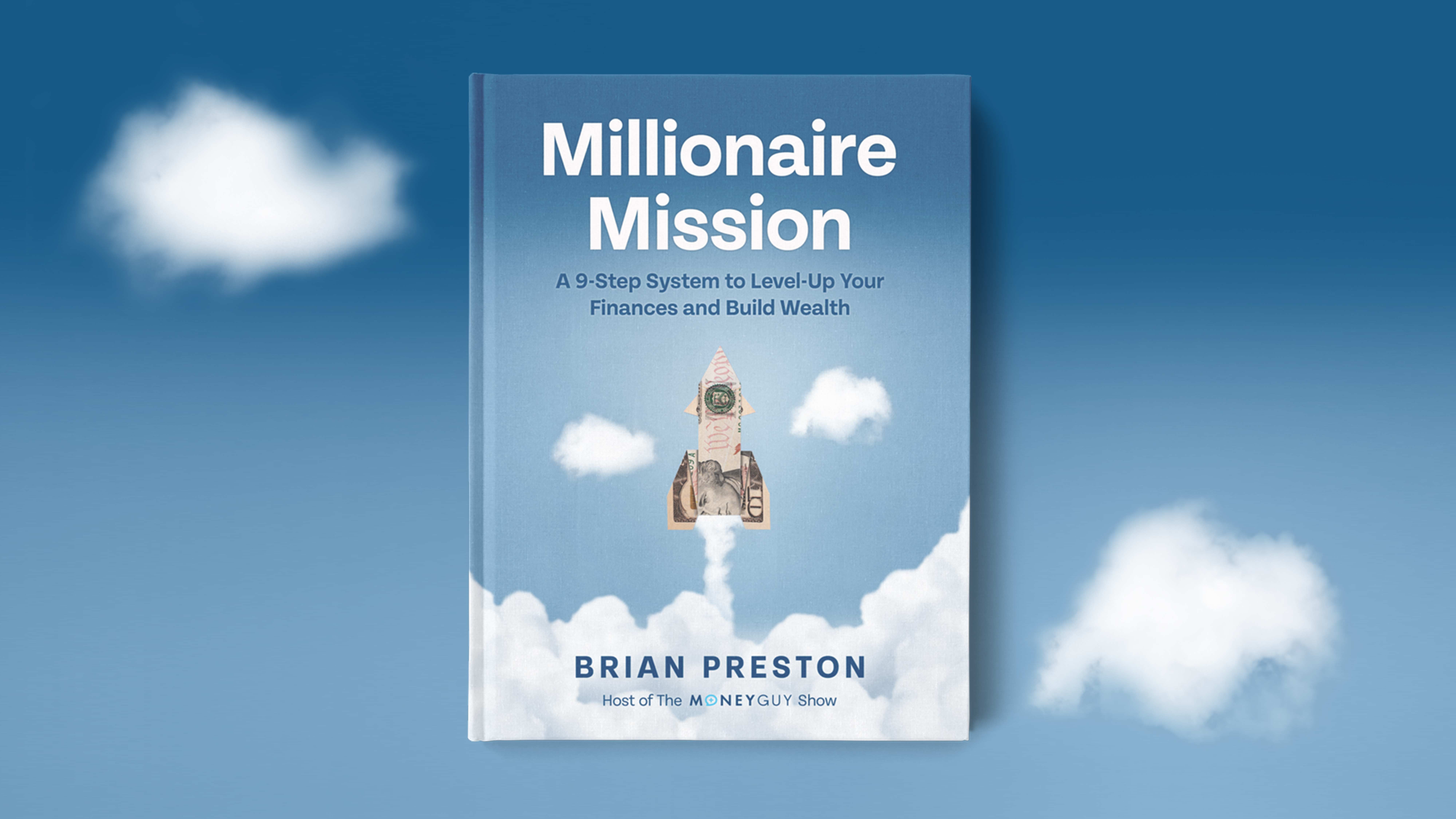
Brian: Man, oh man. JL Collins is a just massive influence on a lot of people. You can see why he’s so persuasive. I think what he’s also hitting at there is something I even covered in my own book, Millionaire Mission, is that villains and victims never win. So, it’s really you have to figure out how you can be the hero of your own story. No matter what situation you’re put in, whatever your income is, you can do it if you just understand the power of time, understanding on living on less than you make. That was a powerful clip.
Bo: Yeah, I love how he started talking about lifestyle is so important. And I think the number one reason a lot of people don’t reach financial independence is because of the Joneses. Because we’re trying to keep up with some artificial lifestyle of someone else and not our own true personal lifestyle. We have the same experience in our firm where we’ll have folks who have never made over $100,000 a year and they are financially independent doing everything they want to do the way they want on their terms. And we have other folks who have been incredibly successful with a lot of zeros that are not there yet. And it’s all dependent upon lifestyle. So if you can figure out early on in your life what’s the dream life that I want to live and what are the things that matter to me and what are the things that I actually find value in, you can work towards that goal. Financial independence does not escape you no matter where you are in the socioeconomic class.
Erin: And I think wealth just magnifies who you are. If you’re good with money and you make more money, you’re better with it, you make better decisions. If you’re bad with money or make some not so stellar decisions, you make bigger mistakes with bigger zeros.
Brian: It is always important to remember it’s better to be rich than to look rich and I think that that’s the big part. If you’re very familiar or have come across JL Collins content, he really does walk through the path of, the title of the book, simple path to wealth, and it is those basic things of living on less than you make and just maximizing all those opportunities.
Video Clip: You need to own a home to retire. This comes up a lot because I don’t plan to buy a home anytime soon and I probably won’t have a paid off home by the time I retire and I get a lot of comments saying I’m never going to retire if I’m a renter. I think the reason people feel so strongly that you can’t rent in retirement is because honestly for a lot of people it has been true. Homes have been kind of like a forced savings. We all have housing costs. Might as well get equity and appreciation while you’re at it. People are also really worried about the rising cost of rent eating into retirement savings. So, while I agree for some people you may need to own a home to retire, there are a lot of things that get missed in the conversation like the opportunity cost of a down payment versus investing, interest rates, maintenance costs, flexibility, location. Ultimately, retirement is just a number, and that number can include rent or mortgage. It’s just going to be a larger number. There’s no rule that says you have to retire at 65 with a paid-off house. And for me, buying a home would actually push back my retirement timeline because instead of investing aggressively, I would have to save for a down payment. My monthly housing costs would increase drastically if I wanted to live in the same location, which would mean I’d have less money each month to invest, and I’d have to keep an even beefier emergency fund for home repairs. It’s just important to remember what’s true for you might not be true for another person. And most people out there with really strong views are just projecting their own experiences. It all comes down to what you want out of life, when you want to retire, what you want your lifestyle to be today and in retirement, if you want to live in the same place forever or move around, if you prefer a city or a rural area. So many factors will come down to what makes sense for you financially. So no, you do not need to own a home to retire and it actually might be holding you back.
Erin: I think like there’s very good points there. I don’t think you need to own a home to retire. But I also think when you’re 20 or 30 and saying, “Oh, I’m not going to go into retirement with a paid-off home.” You don’t know what your life is going to look like at 60 or 70, you don’t know when you’re going to retire. Life’s a little unpredictable.
Bo: I love that. I think that home ownership is wonderful, and it is a great way to build wealth. Now, homes in and of themselves are not necessarily wealth builders. They’re use assets, but they’re use assets that do generally appreciate in value. But in order to be financially independent, you do not have to own a home. There’s nothing that says you have to be a homeowner. Although home ownership is great and we have a lot of clients who spend their entire working lives as homeowners and then when they retire they decide to be renters because it gives them maximum flexibility. It allows them to go where they want and do what they want and really own their time. And there’s nothing wrong with that.
Brian: Every few years the Federal Reserve releases their data on net worth for the typical American. Sadly, the only way it’s been increasing really over the last decade is through increased equity and home ownership. Everyone who’s thinking about retirement, you have to build up assets. Start saving and investing. The earlier you start, the better. Get that pebble rolling down the hill with a small decision today to start saving and investing for the future. And then you will own your life that much sooner.
Erin: So whether you’re a renter or a saver, invest.
Bo: Love it. Love it. If you are someone who’s thinking about buying a home, we have tons of great resources. You can go to moneyguy.com/resources. You can check out our home buying hub. We have a home buying checklist, home buying calculators. For most folks, it is the largest purchase that you ever make if you choose to make that purchase. So, you want to make sure you do it right if you are going to do it.
Video Clip: Here’s a crazy investing statistic. Once you have $100,000 invested, you’re 25% of the way to getting $1 million. And once you reach $300,000 invested, you’re more than halfway to reaching $1 million. The reason these facts are true is because of the power of compounding. As your nest egg grows, it does more and more of the heavy lifting to grow the total. This is why going from 0 to $100,000 invested takes about 8 years, which is a quarter of the total time. But going from $900,000 invested to $1 million only takes about one year. So if your portfolio is less than a million dollars, you might be further along than you think.
Brian: Man, couldn’t say it better. And I love the angle that $300,000 is actually 54% of the way because that’s presented a different way than most people think because we think 50% of the way is probably $500,000. No, because the power of compounding it’s spot on.
Erin: Is there anything that feels better than when your portfolio is doing more of the work than you?
Bo: What’s wild? And if you want to play this again, we have a compound interest calculator. You can go play with this. Go to moneyguy.com/resources. It’s amazing what you can see if you give yourself long enough time. How little work early on can lead to big big numbers. If you were to increase how much you save and see how fast you can get to that $300,000. What’s amazing is now you don’t just say, “Okay, how close am I? How far am I along to a million?” But how far along am I to $2 million, $3 million, $4 million? It gets really exciting really, really fast.
Brian: And do this for me. Lean forward and promise me you’re not going to quit in the first 10 to 15 years just because the market goes down. That’s part of the process. It’s a feature. It’s not something that’s bad that’s happening. Don’t give up. Because I think the problem with most people, you see that stat, you get excited, but there’s a whole lot of quit that happens because a market downturn or something in life happens. You have to stay consistent to let the process do the magic.
Erin: I always say put your blinders on and run your own race. Like, just don’t pay attention.
Video Clip: The average American retires at age 64, but the life expectancy of an American is merely 77 years old. And most of our lives, we’re taught that when we reach our 60s, that’s when we can retire. But you can retire early if you know these three things. Number one, how much you spend. A good rule of thumb is to take your spend per year and multiply it by 25. That means if you want to spend $40,000 per year in retirement, you need $40,000 times 25 or a million dollar nest egg. And that’s going to let you withdraw from it as it appreciates in value from investments. Number two is your savings rate. The more you save, the faster you can retire. Because if you can live on much less, you don’t need as much money. The average American savings rate is 4.5%. Which is abysmal. We should aim for higher. And number three, your income. The more income you make, the easier it is to retire. But you need to ensure that you aren’t blowing your cash on things not within your means as you get paid more.
Brian: That’s pretty strong. I mean, I agreed with every one of the things that Humphrey just shared.
Erin: I would say also plan for a little bit more longevity because the life expectancy of someone in their 60s, well if you make it to your 60s is actually in your 80s. So assume you might live a little longer but spend and save.
Brian: That’s great. I’m the oldest guy here so I really love that.
Bo: And I think that 25 times is a great rule of thumb if you’re retiring around normal retirement but if you are someone who is retiring much earlier you want to factor that in because your money needs to last a whole lot longer. But everything he said I think was spot on. If you figure out those three things, you really can set yourself up for financial independence.
Brian: The other big thing is just he said the average savings rate is around 5%. Guys, do better. I mean, there’s a reason. I know we say 20 to 25%. And a lot of you are probably right now starting out and you’re saying that’s aspirational. I get it. Start at the 5 to 7%, but then every time you get a pay raise, let 60% of that pay raise go towards increasing your savings and investments. And before you know it, you’ll wake up and you’ll be saving and investing 20 to 25% of your income. Just make sure you’re doing something because I feel like so many people set it and forget it in the wrong way. Instead of, you know, setting it, forgetting it with positive habits, a lot of us are setting and forgetting the positive but only at a much smaller portion and then letting lifestyle creep just control the rest of their life.
Erin: And if you increase it whenever you get the bonus or even just like 1% a year, you’re not going to notice.
Video Clip: Okay. And so you’ve got $250,000 sitting in the bank.
Caller: Yeah.
Dave: Why?
Caller: Which, yeah, exactly. Because I sold a business for a lot of money. So, I’ve got that money sitting there and I want to invest it wisely, but I don’t want to make any wrong decisions.
Dave: Okay. Well, I mean, nobody wants to make wrong decisions.
[Video cuts to Dave Ramsey playing Mario Kart]
Dave: So, I’m doing something wrong here. So, now, okay, I’m going to put this in the calculator because I want to do a little bit of math here and try to, bravo. There we go. Yeah. So, you need like $8 million.
Brian: Content team. I don’t know where y’all found that clip, but bravo. I mean, it took me for a split second. I’m all into Dave talking and this gentleman’s problems and I’m like, “Oh, wait a minute.” Because Dave looks so like he was just in what was going on on that pad. I was like, “That is when you play Mario Kart, you’re like that.”
Erin: I stopped listening to the call. And I’m just like, I hope Dave wins here.
Bo: So, I think it’s interesting. A lot of people, this guy said, hey, I got $250,000. Question. Somebody had to listen to it. I got $250,000 sitting in this account. It’s not working for me. And what Dave is saying, hey, you got to have a big, there’s a big number you got to get to. You need to take that $250,000, put it to work so that it can work for you. Because saving is only half of the equation. What we have to do is we have to save the dollars, but then we have to invest them wisely so that it can compound through time so that one day you can reach financial independence and play Mario Kart as much as your heart desires.
Erin: I agree with both you and Dave, but I was watching Mario Kart.
Brian: I was too. I mean, all I remember was that I was like Mario Kart and then $8 million. That was what I got out of that video. So, y’all would have to play it again for me to actually give advice to that gentleman. Bravo. I mean, I love it. Context was way off, I’m sure, but whoever did that genius. I love it.
Bo: Man. I love these videos, right? Because a lot of people are saying, “Hey, building to financial independence, making wise financial decisions doesn’t have to be all that difficult. It’s incredibly simple, even if it’s not that easy, but the earlier you figure it out, the more impactful it can be over the long term.”
Erin: You live below your means, you invest. I feel like the saying is you cannot screw this up.
Brian: Erin, this was a blast. Did you have a good time coming?
Erin: It was so much fun.
Brian: Guys, if you want to know more and know how to maximize your wealth building journey, make sure you check us out. Go to moneyguy.com and then take advantage of all our free stuff.
Bo: Moneyguy.com/resources.
Brian: Erin, if they want to check out your stuff, where do they need to go?
Erin: I’m only on YouTube and Erin Talks Money.
Brian: Until next time, I’m your host, Brian Preston, Bo Hanson, and of course, Erin for a special episode, Money Guy Team. Out.


Financial Order of Operations®: Maximize Your Army of Dollar Bills!
Here are the 9 steps you’ve been waiting for Building wealth is simple when you know what to do and…
View Resource
Net Worth Template
It’s our favorite time of year: time to complete your annual net worth statement!
View Resource
New Child Checklist
Planning for a new child is so exciting! But as parents, we know it can also start to feel overwhelming.…
View Resource

How about more sense and more money?
Check for blindspots and shift into the financial fast-lane. Join a community of like minded Financial Mutants as we accelerate our wealth building process and have fun while doing it.


It's like finding some change in the couch cushions.
Watch or listen every week to learn and apply financial strategies to grow your wealth and live your best life.
Subscribe to our free weekly newsletter by entering your email address below.