Change your life by
managing your money better.
Subscribe to our free weekly newsletter by entering your email address below.
Subscribe to our free weekly newsletter by entering your email address below.
The Federal Reserve has announced its first interest rate cut in years, sparking headlines and confusion. In this episode, we unpack what the decision means for your wallet — from investing and housing to savings strategies. You’ll hear why “always be buying” still matters, when refinancing makes sense, and how to avoid financial noise that leads to poor decisions. We also tackle questions on gold, old 401(k)s, REITs, car buying, and more. Whether you’re investing for the future, buying a home, or just trying to stay informed, this episode will help you navigate change with confidence.
Subscribe on these platforms or wherever you listen to podcasts! Turn on notifications to keep up with our new content, including:



Brian: I don’t know if you guys heard the Federal Reserve met, dropped some interest rates. What does that mean for you?
Bo: And Brian, I am so excited to talk about this because the financial world is constantly changing and there are decisions that are made and these decisions get a lot of press and this most recent Fed meeting was no different. There’s been a lot of people postulating and hypothesizing, okay, is this good? Is this bad? What does it mean? Was it the right call? And so we hope that we can put a little bit of logic and calm headedness to what’s going out there in the financial world.
Brian: I mean, I like to think that we are your source for what to do with that next dollar. There’s a reason we have the financial order of operations. So when big financial stuff happens, whether it’s tax legislation or now the Federal Reserve changing their stance on interest rates, we want to kind of cut through the stuff because you’re trying to figure out what does this mean, you know? But before we jump into what this means for your wallet, we want to give you some context. Because I think a lot of the posturing that is going on is people know that the Federal Reserve has a tricky job ahead of them, Bo. And we decided we would kind of share, you know, inflation is one of those things where you keep hearing that coming up. So we’re like, let’s go ahead and just show everybody what is everybody saying about CPI. And he said, “We have at least come off the mountain.” I mean, because look at what this thing looked like from the spikes of late 2020 all the way to 2023 is where we built that mountain. It was kind of scary.
Bo: It was, but we’re still above the target. The Federal Open Market Committee has said, “Hey, we have this target of 2% inflation and we’re still slightly above that.” And over the past couple months, we have seen a slight tick up. You’ve already mentioned it’s not to the levels that it was back immediately post pandemic but it is starting to turn up and so there is some concern, okay, is inflation a problem? Is that something we need to address? Is that something we need to be aware of? But that’s not the only problem that they’re facing.
Brian: Yeah. The other thing I keep hearing the news media talk about is the job market and if you look at this it is a little concerning. We’re not as white hot with people getting new jobs and opportunities being out there. Unemployment’s actually ticking up to a degree. I’ve seen some anecdotal stuff where people have posted headlines of, you know, how many search queries are going on about foreclosures and other things. So, there’s definitely some concerning things making you say, “Hey, this is a little concerning. Is the market softer than maybe we had hoped in a lot of ways?”
Bo: Now look, none of this stuff in and of itself signals disaster, recession. And in fact, GDP growth is still expected to be around 1.6% this year. So still positive economic growth. However, there is a unique problem that’s going on. The tricky part is that even though both of these problems exist, the solution is not incredibly crystal clear. Because if you think about it, okay, we have this problem of inflation. And it looks like it could potentially be ticking up. So what is one probable, one possible solution, one way to combat that? Well, we could increase rates. We could raise interest rates and that would serve to stave off inflation. Okay, got it. Check. But what about this other problem? We have this job market problem where jobs are slowing down and unemployment is slowly starting to tick up. Okay, how do we combat that? Well, we decrease interest rates. Okay. Well, so in order to solve one problem, we have to do X. But in order to try to solve the other problem, we have to do Y. It’s a tricky little conundrum that they’re trying to figure out how to navigate.
Brian: Well, the thing nobody wants to say out loud because we really haven’t faced anything. You hear it from time to time. They throw the word out, but really since President Carter, you know, fellow Georgia boy, stagflation. Stagflation, because this is one of those things where when you have inflation but you have an economy that might not be doing as well as hoped, you’re like oh my gosh well how do you get yourself out of this because the solutions are not as easy when you reach those type of moments. Now so there’s to be determined and we don’t have all the answers for you. We just want to kind of lay out for you, but here we can tell you what the Federal Reserve has actually said and what they did from the meeting. And what they ended up coming out with is they cut rates by a quarter of a percent. And they even gave guidance that there’s potential for two more rate cuts by year end. Now that’s not a guarantee. You know, there’s a good chance that as data comes in, they will change our posture to go in a completely different way. But it is something that we’re like, hey, now that the Fed has voted to lower interest rates, what does this mean for you? How do you plan for this? Because there’s a lot of big things that you’re probably trying to navigate.
Bo: Yeah. A lot of people are asking, okay, okay, it happened. It happened last week. What’s that mean? What’s that mean? And the answer is not a whole lot just yet. Because here’s what we do know. We do know that massive changes are not coming. They were not saying that, hey, we’re going to have these huge drops or these huge raises. So, it doesn’t look like that’s what’s going to happen. Even though they’ve sort of hinted that, okay, we could potentially see some additional rate cuts, even that is not set in stone. So when you think about your personal finances and when you think about the decisions that you make related to some of the policy changes that come through, we want you to think about the different areas that this could affect. And the first would be investing. So Brian, when you think about all right, Federal Reserve just said they’re going to cut rates and potentially there could be additional rate cuts. And generally speaking, when rates get cut, the market goes up. But there wasn’t like this huge thing that happened last week. What does that mean for the everyday investor? How should they change their behavior?
Brian: Well, historically, look, investors love when interest rates go lower because the cost of business gets cheaper. You see more people use leverage to invest. You see people, the stock market typically it’s like almost like a steroid for investing. We got a little too addicted to that in the past. I think we’re going to be a little more measured about, you know, the interest rates and using it as a sweetener or a juicer for investing. But right now, I think it’s one of those things where I don’t know that it really changes the direction or the headwinds that much. It’s more about what does your behavior do because we’re still big fans of can you automate the process? Can you make sure you just strip out this noise around you and always have focus on having an always be buying type mentality and then just know that what you need money to do for you as a tool and not let this be something that you feel like you’re market timing or jumping or reacting to the headlines because that’s not actually going to help you be successful with your investment process.
Bo: Yeah, you want to be very careful letting forces outside of your control end up controlling your behavior. So focus on the things that you can control. You already said it. Automate. Always be buying. Have a plan in place and stick to that plan. So that’s what you should do from an investing standpoint. But another big thing that’s getting a lot of publicity right now is okay, now that rates have been cut, now that rates are coming down and potentially it could come down even further. What does this mean for housing? Because housing in this country right now has been a big problem for a number of Americans. So, is this drop and potential future drops going to be a boon for housing?
Brian: So, now this is first of all, I got to make sure I clarify this because it can get easy to get confused. The fact that what the Federal Reserve, the rates that they cut don’t impact actual housing, not directly. Because what they’re impacting is your credit cards, your car loans, all those short-term interest rate type things. But even with that said, they’re all interconnected. It’s like a relative. So, you know, because the housing uses the 10-year Treasury rate. And here’s some good news because I love sharing good news. Interest rates for mortgages are at a three-year low right now. I think the headline I saw from CBS was 6.1% somewhere around there. 6.1 was the average. So that’s a positive, but it is one of those things where just pay attention to what’s going on, you know, because markets are always forward-looking. So this means that since you see interest rates coming down even on the long-term rates, it means a lot of people out there or a lot of investors are kind of pontificating that this is a trend that will probably continue. We’ll start seeing lower interest rates and the market’s trying to get ahead of that.
Bo: But if you are someone who’s in the market to buy a home, we would say that buying a home should be more of a life decision and less of a market timing decision. Certainly, you want to pay attention to rates and you want to pay attention to inventory. You want to pay attention to what’s going on in prices, but at the end of the day, buying a house should be because it makes sense for your life and your life circumstance, not because, ooh, rates just got cut a quarter percent, now it’s my time to move. And so if you are someone who wants to know about what you should think through when it comes time to buy a house, go to moneyguy.com/resources. Make sure you check out our home buying checklist. You can check out the home buying affordability calculator to make sure that you’re making that decision well. So that’s kind of the first piece, people that want to buy. But now, Brian, there are a lot of people that are thinking, man, okay, with the rates coming down, does this mean that I need to refinance? You know, you said it’s a three-year low in terms of mortgage rates right now. If I’m someone who got a mortgage a year, two, three years ago, is now when I need to go ahead and rush to pull the trigger to refi?
Brian: Well, I mean, personal finance is very personal, but what I would kind of take into account is, is the mortgage rate 1% lower than what I got? And if it is, I would start, you know, crank up the spreadsheet, whip out the calculator, and start figuring out how does this pertain to me? And I’d even probably go on our website, moneyguy.com, go look at our resources, go look at our archives. We’ve done a lot of content on refinancing and maybe even consider before you do refinancing, rate modifications, other things. I want to give you the terminology so you can have a great place to start your research. But this is something that there potentially could be some opportunities for you.
Bo: All right. So, we’ve talked about what rate cuts could mean for investors. We talked about what it could be for home buyers or homeowners. But then there is sort of a third group of people that falling interest rates could have an impact on. And we’ve just kind of dubbed these savers. What does this mean, Brian, for our savings accounts?
Brian: Well, and this is, I’m going to give you kind of behind the curtain. I’m just giving you my thoughts on this is that I think that once again, the Federal Reserve and as well as the market in general are trying to figure out how you navigate interest rates on savings for the long term because realize we went for over a decade where you made absolutely nothing on safe investments or perceived safe investments like your cash and cash equivalents. So, what did that mean for older investors? It meant that you had to go out on the risk spectrum. You had to go put your money to work to actually get any yield whatsoever. I think when people, because realize we did this, like I said, for over a decade. So, I think everybody was worried, hey, whenever we flip the switch to go back to higher interest rates, what is that going to do to the markets? Because we’ve been essentially taking this drug of steroids for the economy for so long. They flipped the switch and fortunately the whole thing just didn’t implode upon itself. Like a lot of people were nervous. So I think now that we’ve kind of come to the other side where we’re now at these high interest rates from a historical standpoint, the market’s probably thinking, hey, there’s a balance here that it would be nice for older investors to just like traditionally and historically to be able to get 2, 3, 4% just on their cash equivalents, you know, a risk-free rate of return. Let’s not go back to zero like we were. But how do you navigate that? Because there’s a balance here. Older investors need to get something without having to take risk. But yet, if you keep interest rates too high, younger investors who are trying to buy stuff through debt, like you know, houses, cars, and everything else, they’re paying a higher premium on this. So, you can now quickly see where the rubber meets the road on how does the economy navigate this. So, I think that my prediction is or my thoughts are we’re going to see some continued pressure down with interest rates, but we’re not going back to where we were. If you think that we’re going back to 3% mortgage rates or you think that we’re going back to where you’re making a quarter of a percent on your savings account, I just don’t see that. It seems unlikely. I think we passed that threshold where we were able to turn interest rates back on and it didn’t completely implode the system. Why would they want to go back? I know, yes, it would be great in the short term to juice the returns, but it would not be great for the long-term viability of things.
Bo: So, I think the big thing, the big takeaway we would have you take away from this meeting last week is that when you have a financial plan in place, a really good financial plan should be good before economic circumstances change. It should be good during economic changing circumstances, and it should be good after. That’s why we don’t think that there should be a lot of knee-jerk reactions from you as an investor, as a homeowner, or as a saver. But we do want you to be mindful of it. Are there things that you ought to be doing or ought to be changing? Should you be automating, increasing your saving, buying more consistently, refinancing the house, beefing up your emergency fund, moving it to high yield? These are all things that you can do to optimize your financial life. And that’s what we are in the business of doing. We believe that there is a better way to do money and we show up every single Tuesday at 10 a.m. to help you guys do that. And one of the ways, Brian, that we love getting to do that is by answering your questions. So, right now, we have the team out in the wings collecting your questions. If you want to get our take, if you want us to weigh in on something in your life, make sure that you get your question in the chat. So, with that, creative director Rebie, I’m gonna throw it over to you.
Rebie: Yeah, thanks Bo. We got a question from Kevin to kick us off. It says, “Why don’t finance guys ever recommend gold? It has outperformed S&P since the year 2000.”
Bo: I figured you’d have something to say about this. I think it’s always so funny when people pick any specific investment or specific asset class like, hey, why don’t you guys recommend this stock? It outperformed the S&P from this date to this date. Or why don’t you pick this asset class because this outperforms this date to this date. And what’s really interesting is if you move your timeline whenever you’re comparing two different types of investments, if you move the timeline, there are going to be in most circumstances periods where one investment outperforms another and other periods where that same investment underperforms. So, one, it’s a little bit of a flawed argument trying to decide on a specific time frame how to frame your investment decision-making. Rather, we think instead of looking at specific time periods or time frames, it makes sense to step back and look at the fundamentals of an investment decision. Why am I or why does this specific type of investment or type of asset make sense in my situation? And when we think about comparing something like the 500 largest publicly traded companies in the United States relative to a precious metal piece of bullion, a commodity, they are not the same and the risk and reward characteristics they offer are not the same. Would you agree with that, disagree with that? Want to fight about that? And what are the reasons why you don’t get super excited about gold?
Brian: Yeah, I wanted to give the basics of what my thoughts on gold are. What is it? Gold is a holder of value. That’s really how you have to look at gold. It’s a way to kind of, you can look at it against inflation, you know, as an inflation hedge. You can look at it as something that if all else breaks free that since there’s a limited quantity of gold on the planet, this could potentially be a holder of value for you to barter and sell goods. Now, now that we’ve kind of understood what gold is, let’s talk about how you actually use it in a marketplace. As an investment, what do I look for when I invest? One of the key things I want to know is what is this yield? I mean because when I buy real estate, when I buy stocks, when I buy bonds, I’m like if I’m going to use my, I’m going to trade my labor to create this money and now I’m going to put it to work. What is it going to pay me back? And unfortunately, gold has zero yield. Meaning that it’s not going to pay me rent that adjusts for inflation. It’s not going to pay me dividends. It’s not going to pay me interest. The only way I make more money on gold is if the next person that comes along in the marketplace is willing to pay more than I paid. It’s a holder of value. It is not a working asset. Meaning that if I have a lump of gold right here, you know, let’s just say I built this table out of gold or like our video editors in a recent video, they just started stacking gold all around us. We could come back in 10 years and that gold would not change. It’s not like it was a basket of rabbits and all of a sudden you have more rabbits. It is just the same amount of gold. So then you ask yourself, okay, well, if it’s just a holder of value, what does this mean? Are there any downsides? Well, also remind people when you have something that’s a holder of value and a good size of value for a small amount of goods, people can rob you. So, now we have the problem of we have to pay to keep it safe. We have to pay to turn this into currency because it’s not like in the old days, you know, I always think when people buy gold, I’m like, what is this actually going to do? The question always comes up when the economy is going to crap. Neighbors will come to me and be like, how much gold do you own? And I’m like, why do you want the gold? And they always like because this place is going to crap. And I’m like, okay, let’s follow that line of thought all the way through. Your thought is that when this system implodes, meaning let’s say the United States just completely poof goes away, you think that having gold in an account is going to be the way that keeps you protected from this systemic risk? And they’re like, “Yeah.” And I’m like, “That doesn’t seem viable because if you have to hold it, the quantity, the weight, it’s just going to be hard to protect it because somebody’s going to come along with guns or something else and if the system loses laws and we go to complete chaos how is gold going to protect you?” That’s why I’m not willing to say, I mean you have to have gold with ammo with water with food with gardens. It just is a preposterous thing. Now that I’ve thrown a lot of cold water on this investment, let me tell you now when people approach me about it and say, “Hey, Brian, I want to buy some gold.” I’m like, “Great. How much do you want to own?” And as long as it’s less than, you know, 5%, 6%, I’m like, “All right, let’s go figure out how we do this. Are we going to buy this in your IRA? We going to buy the ETF? What, how do you want to do this?” A little can go a long way for you. But if somebody comes to me and says, I want 25% because I think the whole system’s going to crap, so I want to load it up. I think there’s a bigger discussion there. And then I always say, I don’t think that this is going to give you the protection you think it’s going to give you.
Bo: Yeah. I love the way you even framed the question, Kevin, was why don’t finance guys ever recommend gold? And I say it’s not that we don’t ever recommend gold. It’s that what we try to do is we look at problems that exist and we try to find okay what are the most effective and efficient ways to combat that problem. Okay, so I’m concerned about inflation. Well, do I think gold is the best way to combat inflation? No, I think there are other ways to do that. Okay, well I want a store of value. Do I think that gold is the absolute best way to store value? No, I think there are other things that can do that. And so often times when you go down that line of thinking of okay, I have a problem. What’s the most efficient and effective way to solve that problem? Oftentimes, gold just doesn’t rise to the top of the list. But personal finance is incredibly personal. So, if you’re someone who wants to have an allocation to gold, we’re not going to fight you on that. We’re going to tell you where the guard rails or the boundary should be and why it may be less than optimal or less than the most efficient solution. But if that is your investing bent, I’d say that’s okay.
Brian: Yeah. And past performance is not indicative of the future always. I mean that cherry-picking since 2000. I’d have to go fact check that first. I don’t, I haven’t done that. But it just seems very, I mean that would make me, reversion to the mean is a real thing. Did it have its best days because we just came through some uncertain periods and now are we going to be stagnant for another 20 years? Because I’m old enough that I made it through the last inflationary fear period back in the 70s and 80s and it’s funny, there were periods where gold was just trash because you know when you have really big concentrated returns there might be a period of time where it’s not so concentrated because reversion to the mean is a real thing.
Bo: Yep. Well said guys. Thank you Kevin for the question.
Rebie: I have another question here from Leandra Joe. It says, “You’ve given several people on Making a Millionaire, our show where you talk with real life people about their finances. You’ve given several of these people homework to simplify their retirement accounts. Should we always roll over 401(k)s from an old employer into the new employer’s 401(k) or into an IRA?”
Brian: Bo, if there was only a deliverable that somebody had created something that would let you go through a decision matrix to figure out what do you need to do with these assets.
Bo: That’s a great thing. I love how Leandra asked this question, always. That’s just not a, it’s not a word that we love to use because always is so certain and so finite. Is it often, does it often make a lot of sense to think about consolidating old retirement accounts? Yeah. But is that always the best? No. And so what Brian’s alluding to, we have a great resource. If you go to moneyguy.com/resources, we have a resource titled 401(k) flowchart. That’s not what it’s called, but that’s basically what it is. It’s what do I do with my old 401(k)? It’ll actually walk you through the things that they do. Look at that. Bam. Got an old 401(k), here is what to do with it. Because you really have four, but not actually four. You have three options. So, option number one is if you have an old 401(k), you could cash it out, take the money. That’s never a good option unless you were in retirement planning on spending those dollars because if you’re below 59 and a half, you’re going to pay penalties. And if you’re below 59 and a half, you’re also going to pay taxes on those distributions. So, cashing it out never makes sense. Well, then you got to decide, okay, do I leave it where it is? Do I roll it to my new 401(k) or do I roll it to an IRA? How do I know, Brian, which one of those three it makes sense to do? What are the things I should think through?
Brian: Well, I mean, you got to look at, you got to look to see what the internal expenses are, what the investment options are. You know, there’s all kind of alternatives and opportunities because index funds, are they available? And because every plan’s a little different. If you’re with a big Fortune 500 company and a super low-cost plan, it’s not going to benefit you to transition that into your new employer’s plan. If it’s a small company with an insurance-based product, you should probably stay. That’s why we give you the decision matrix. You probably be better off staying. But I could invert that and say, hey, if you worked for a small company, now you’re going to a company that has a really kicking 401(k) plan, it is going to probably benefit you to figure out if there’s a way you can consolidate and bring that into the brand new plan because it’s just that much better. Or maybe you go from bad small plan, bad big plan, and you look at and they don’t have index funds. They’re expensive because it’s just the golf buddy of the owner of your company who set up these different plans. And then you might, that might benefit you, especially if this is a large sum of money, to consider rolling that into an IRA. But there’s things, homework is a great word because it means you have to do some research to figure out how this impacts you and your personal finance situation so that you can stick the landing on making sure this, it’s not hard but it’s not a simple decision. You have to just go through the work and work through the exercise to make sure you’re doing this right. But if you download the deliverable it will literally walk you through. Okay. Can you pull it up one more time for me team? It’ll ask you questions. Is this your situation? Yes, do this. No, do this. Okay, if yes, then do this. If no, then do this. It literally kind of makes it dummy proof. That’s a bad way to say it, but that’s what we’re going for because we want to make it as easy as possible, but you have to do the homework to make sure you’re making the most optimal decision.
Rebie: Yeah. So, we always say personal finance is personal. That’s why we have moneyguy.com/resources so you can get that free things like that free download and actually apply it to your situation. So, be sure to go take advantage. We did say the name of that so that our podcast listeners get that too, right?
Brian: We did. The got an old 401(k). Here’s what to do with it. Got a 401(k) old something very similar to that on the website.
Bo: You would think that we would do a better job of memorizing the names of our deliverables. Honestly, I should know that one. I can always tell you what they’re about and what they tell you and the takeaway.
Brian: Well, I remember because we put a lot of effort in designing these things and making them, but it’s always, it’s just the catchy headlines. I always forget because I remember more of the substance than I do the sizzle.
Rebie: Are you, it is called got an old 401(k). Just double checked.
Brian: Are you really good with names?
Bo: No. Yeah. See, that doesn’t, so, like similar. If I meet you, right, like I might remember your face or I’ll probably remember some nuggets of our conversation, but I’m just not great with names. Even you know like the little trick they teach you where you meet someone you’re like oh hey Rebie it’s so nice to meet you Rebie are you having a good day Rebie you’re like supposed to say their name three times right when you first hear and it’s supposed to solidify in your mind. I’ve now that’s become so rote for me it doesn’t even work anymore and I’m like I do it and I’m like gosh was it, oh was it, was her name, I’m not good at names. That’s what I’m saying. Are you good at names?
Brian: Man, I feel like we’re on the jungle boat cruise, you know, and they always say there’s the elephants. They’re known for their incredibly long memory. And then you see another elephant. There’s the elephants. They’re known for—That would sure help me with my job. Bo just asked me the same question twice. So I felt like I’m on the Jungle Cruise and he’s the host.
Rebie: All right. Good to know.
Rebie: All right, let’s get back to personal finance with Matthew C’s question. He says, “Are REITs a good strategy if you want to get into real estate without having to deal with owning rental properties?” And REITs are real estate investment trusts. Maybe you could talk a little about what those are in case someone doesn’t know.
Bo: I love it. A REIT, exactly what Rebie said, is a real estate investment trust. And oftentimes the way that they’re structured is it’s a holder of real estate or a holder of multiple different types of real estate. And so Matthew’s question is, is that a good strategy if I want to get into it without having to deal with owning rental property? One thing you even have to discern is, okay, if I’m going to go buy a REIT, a real estate investment trust, how am I going to purchase that? Am I going to purchase it through something like a publicly traded mutual fund or publicly traded ETF, or am I going to go buy into like a private equity, private placement type deal? Because even those are unique and distinct. I will tell you from investment perspective when we build out client portfolios and we look at allocations, we love investing in real estate and we love using real estate ETFs, real estate mutual funds because it allows you to get very liquid public access to real estate across diversified modalities. So, I’m not just buying a rental property or a piece of commercial real estate in a specific area in a specific neighborhood, community, or town. I’m able to go out and diversify broadly across there. So, we think that REITs are a wonderful way if you’re going to buy publicly traded REITs to get real estate exposure. Now, on the other end, if you’re just trying to do a private placement where you’re investing privately in a real estate investment trust and it’s an illiquid holding or there’s some specific period through which you have to hold it, that may or may not make sense as to the best way for you to begin to get your real estate exposure. Do you agree with that? Disagree with that?
Brian: No, that’s because that’s a great lead in because REITs are good, but then they also lead to how about real estate mutual funds, real estate index funds, because we’ve used all of these. We’ve used all three of those, including in a former life, I’ve even put people in private placements when I worked for a much larger, actually, I can’t say that anymore because we’ve gotten to be big, too. We’re larger than that back then. But yes, the firm I previously worked at liked doing those private deals. We do not do, I don’t know why I was about to say a lot. We don’t do those private deals. One of the things that I know just from our own investment committee meetings in the past was there was a period where a lot of just the real estate whether it was REITs or REIT mutual funds or index funds I should say the way they were structured is they had a lot of malls and other things just because that’s the nature of a lot of the commercial real estate and there was some exposure risk and so you wanted to have managers who were being very proactive in making sure that they were looking to the future on how they were making decisions for their real estate portfolio. So all that stuff comes into play whether you go to do an index fund and active management. I do think real estate is one of those inefficient marketplaces. As much as I love index funds, I absolutely love index funds. The right manager potentially could add some alpha to your performance. So do some due diligence, do some research so you’re an informed investor to know, hey, what’s the best structure to get my real estate? And then the last closing parting comment on this is realize for the typical American, every time I see the Fed data from the Federal Reserve on where their net worth is, Americans don’t have a real estate problem if they’ve bought a primary residence. Their problem is building up assets, investment assets outside of real estate. So don’t sleep on the fact that you probably have a big real estate exposure just with your primary residence. Let’s make sure we’re building up some assets outside of real estate, too.
Bo: I’m always amazed at how rarely people, and this is why if you don’t do an annual net worth statement, you absolutely should. We have a free template you can use at moneyguy.com/resources or if you want to go to the full-on dashboard tool, you can go to learn.moneyguy.com. I’m amazed at how often people neglect that. Hey, okay, I’ve got my portfolio and I’ve got this much in large cap and I’ve got this much here and that much there. And then we ask the question, yeah, yeah, but you realize you also have this huge home that you own and that’s a big asset on there. And then you have this other problem like you have a ton of real estate exposure when you look at your global, your total portfolio allocation. A lot of people don’t even realize they’re real estate investors.
Brian: Yeah. But we also I mean I want to, I always like to be transparent. We always tell people we use the accounting term of lower cost of market or of cost or market. So whatever you paid for your house plus improvements is what we put on our net worth statements. A lot of people don’t like that rule. And I do that because for most of us your primary residence is a use asset. And I don’t want you inflating your net worth statement for something that provides shelter for your family. The only way you can turn it into an asset that’s actually usable is to sell it or to go take debt on it, which neither one of those things are the easiest processes to go through.
Bo: Great. Learn.moneyguy.com if you want to check out the full version of that net worth tool. I’m trying to think this. There’s only four ways that our primary residences add value on our net worth statement, right? Check me on this. Okay, you pay down the debt. So, the debt goes down. You don’t have a mortgage anymore, so you wouldn’t know about that. You make an improvement because we do cost plus. So, whatever you paid for it plus, or you sell the house, you end up selling it and you capitalize on the equity put in. It’s only those three and the fourth one there’s not one. I think it’s just those three.
Brian: Yeah. But even that I don’t want that. I don’t like that. I mean, there was a season where I remember I had prospects who came to me where some advisers were out there essentially creating package products where you’d go get a home equity line and then you take the proceeds and put it in the markets. Dude, so aggressive. That’s, I don’t know. That’s not, now the other side is my debt crusaders are going to be like, “Well, that would mean you’re just like Dave and you want to pay off the mortgage.” I’m like, “No, there’s a lot of real estate friction costs.” That’s why also why I wouldn’t just go out there and do the loans. I’m not that type of investor.
Rebie: All right, Do It Huitt has a question for you next. I need to buy a car after mine broke down. I have a sinking fund on top of my emergency fund to buy in cash. Should I finance with 2/3/8 to maintain liquidity? Maybe 50% down. I’m 29, married with two kids, and on step seven. What do you think? Is he a candidate for the 2/3/8 car buying rule?
Bo: How big’s your portfolio? How old are you? What’s your savings rate look like? What are your long-term goals? How’s your account structure structured? What’s your other debt look like?
Brian: But if he’s a step seven, I would put that means he’s saving and investing greater than 25%. If it’s, because he’s given us the context of step seven. And he has a separate sinking fund in cash, but Bo is right. Okay, I was about to make a statement. I was about to say just pay cash. But then I see 29 and that always scares me because when you’re so young, you’re just not guaranteed that you’ve had enough time to build the assets up underneath you. Yeah. I would need more data.
Bo: Yeah. I would need more data. Our preference is and a lot of people don’t recognize our preference when it comes to buying automobiles, we want you to pay cash. We would love for every automobile you purchase you to pay cash for because that will keep you honest with what you can afford to buy. You know, it keeps the eyes and the wallets all connected versus you just trying to look richer than you actually are.
Rebie: So, why would a 29-year-old not pay cash?
Bo: But in reality, I kind of get what you’re saying. A lot of people can’t pay cash or in order for them to pay cash, there is an opportunity cost that is greater than they should take on. And that’s what I was saying for a 29-year-old. Man, if you’re 29, you’re right on that cusp of 30. And we say that for 30-year-olds, by the time you get there, if you want to be saving the way you should be, your liquid portfolio ought to be roughly equal to one times your annual salary. So, let’s assume that maybe you didn’t get started till a little bit later on in your 20s and you’ve built up this sinking fund, but you’re kind of behind on saving and investing. Well, we know if you go to moneyguy.com/resources, you check out the wealth multiplier. I don’t know where it’s at, but the wealth multiplier for a 29 year old is almost 23 or is a little bit greater than 23 because I know it’s 23 for a 30-year-old. And so that means that every dollar that you put to work can turn over 23 times by the time that you get to retirement. And so one of the questions I would think through is, okay, I could pay cash for this car, but does that make the most sense if those dollars could potentially do more for me by working inside of my portfolio, inside of my army of dollar bills? Because being at step seven tells me what you are saving today. It does not tell me what you saved last year, the year before, the year before. So, I’d want to know all of the other extenuating circumstances to be able to determine if financing could make the most sense for you or if you should pay cash.
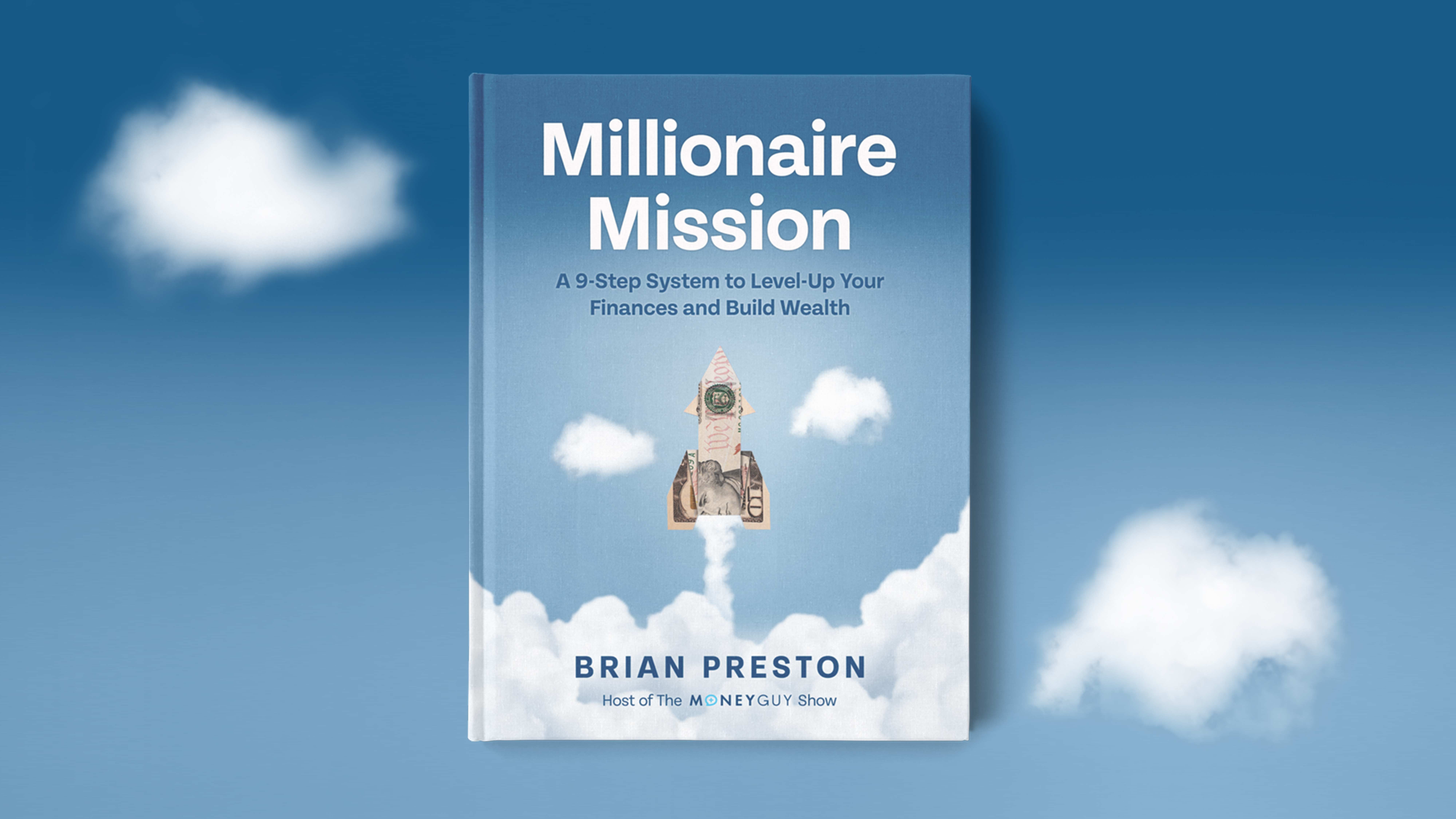
Brian: But let me give it the other side to give this thing balance is if this is a 29-year-old who’s already well beyond one times their net, I mean their investment portfolio is already greater than one times their income and they have this money on top of their emergency reserves and they’ve appropriately stuck the landing on steps one and four so their reserves are truly fully funded. I’m gonna probably error on them paying cash because that with that additional context that’s going to keep them from, you know, it’s probably going to keep them more in the Corolla to Camry versus thinking Land Cruiser, you know, because that’s the thing is these cars, they’re such emotional decisions for a lot of people that people get themselves in a lot of trouble. You know, I have done content and I’ve talked to you guys. You know, one of my biggest complaints is my wife’s European car and no, you know, because these, but what’s funny is we’ve had to, and I’ll do more content. We’ve had to replace that car because the air conditioner went out and that’s a disaster here in the south. But when we were repeating the same silly mistakes again and going to a nice European dealership, it floored me to see how many young 30-somethings were in this dealership with tricycle motors, you know, crawling all over these nice leather seats. And I’m like, what are these people, that means toddlers. It just took me, what are they doing here? I mean, why are they here when they should probably be buying a much more affordable car to because what their value and where the wealth building in the journey is is actually saving and investing as much in that bank as possible and investments versus buying, you know, something that you’re going to look really cool in for just a period of time. That stuff drives me crazy. There’s a time and a place. And that’s I tried to make that point when I wrote Millionaire Mission when I talked in the example I used in the book was buying a Corvette. You know, for a 25-year-old to buy a Corvette versus the typical Corvette owner is actually in their early 60s, which Chevrolet doesn’t want you to know that, by the way, because they want you to think that all the young, beautiful people are buying Corvettes when they’re in their 20s and early 30s. No, they’re buying them when they’re really having a hard time getting into those low riding seats. Think about that because there’s a time and a place. It’s better to be rich than to actually look rich. So, I just want you to think about the timing of silly purchases like European SUVs.
Bo: My wife is on an airplane right now, so I know she’s not watching the live stream so I can say this. You know, she is not happy about the car that she drives and she tells me, “Hey, I’m a car person.” Which I’m like, “All right, that’s cool.” And she’s like, “Oh, look how beautiful, look at this car. Look, it’s so beautiful.” And this one’s so beautiful. I’m like, babe, you know what’s not beautiful? Chicken nuggets smashed into those seats. French fries underneath. Milkshake smoothie on the, you ever had this thing? And we’ve all, every parent has ever had this, right? Where a kid’s in the back with a milkshake or a smoothie and the straw flicks and it flicks the thing across the ceiling. You know what I’m talking about? Or they just have a spoon of ice cream. Every parent knows. I don’t want that in some fancy car. So, I keep telling my wife, I’m like, “Hey, for this season, for this season right now, let’s do this. Let’s do this thing. It makes the most sense or whatever. And we’re going to have that time.” It makes me think about the, you’re talking about the 30-year-olds that you see in the dealership with all the kids running around. Even if you have the money, even if you, is that the right time to be driving that kind of—
Brian: I just wish it’s back to that commercial where people walked around with numbers over the head where you can see. I just would love to know what people’s investable net worth. Oh, wouldn’t that be awesome at the car dealers? Wouldn’t that be so awesome? I mean, I would love to know because when I, that way when I see the young 30-something with the kids, you know, looking at these expensive cars and I’m like, please max out your 401(k) first, you know, please let me know that that is taken care of, that you’re doing 25%, that you’re ahead of the curve, not behind the curve, because I just don’t think that’s the exercise typical American does.
Bo: She’s hard. She is full-court pressing me.
Brian: Well, I’m sure my situation doesn’t help, you know, the decision that we made and it’s-
Bo: But you know I, she didn’t show the picture. She’s like see, see. I’m like no, no. You know what, he didn’t have milkshake on his ceiling.
Brian: But we’re in our 50s now and that’s, I will tell you it’s kind of like, you know, I was thinking about Simple Path to Wealth, Collins. We reacted to one of his videos and he was talking about you do reach a portion of life where it goes beyond finances if you’ve done it right and that’s what I had to because I’m still a financial mutant. I’m not a tightwad anymore but I’m definitely a financial mutant. Is that I’ve had to let go of some things that younger versions of myself wouldn’t have but that’s because of the time and place argument is that I was in this discipline stage here because that’s what was needed to create success. But to hold back from something that would bring happiness to my wife in my 50s is more miserly when that’s not going to move the needle whatsoever in the financial independence or even net worth discussion.
Bo: That’s what I tell, I keep telling my wife, but I’m like it’s you know you do like your Braveheart thing. Hold. That’s what I keep telling her. She’s like so whenever somebody asks like, “Oh, hey, do you love the car that she drives?” She’s like, “No, but don’t worry. I’ll be driving an awesome car when I’m 90.” I’m like, “Okay, thanks. Thanks, sweetheart.”
Rebie: You guys are funny.
Brian: Or early. Early 50s. Early 50s. Oh, late 40s. Early 50s. Still feels pretty good. Late 40s. Come on. Let’s not rush this thing. I got little kids. I got a two and a half-year-old. We got some time. He’s got some chicken nuggets to get through. I got some chicken nuggets we got to make it through.
Rebie: We have a FOO question for you. Financial order of operations. Really trying to break it. It says, “What step of the FOO would you think is the best time to consider a quote unquote next endeavor?” We got this. I’m currently in step seven of the FOO with five times of my yearly expenses in retirement. So, seems to be doing well. We don’t have an age, but what do you think about planning for a next endeavor in light of the FOO?
Bo: I want you to answer because often times when you use that language next endeavor, that makes me think about the FIRE movement or what we like to talk about. It’s not so much financial independence, retire early, it’s financial independence, next endeavor, moving on to the next thing. But this Caleb’s question makes me think that this is more of a career shift thing. He’s using next endeavor, but at what step of the FOO do you think it’s time to consider changing, time to consider making a shift? Is that the way that you’re reading this or are you thinking this is actually financial independence?
Brian: Well, I mean it either way. I love because guess what, Caleb, you’re in the right place. Step seven, because so much of steps one through six is mathematical in features, meaning that we’re trying to keep you from avoiding the desperate decisions of not having enough cash. Making sure you’re getting the free money from your employer. That’s step two. Avoiding the high interest debt, step three. Back to cash again, because we want to go beyond just emergencies, short-term emergencies with step four. Step five and six are all about trying to build investable assets, but with a heavy dose of tax planning built into them. It’s not until you get to step seven where we go beyond just the basic behavioral things of saving, investing 25%. All the mathematics and the tax planning that goes into steps five and six that seven is saying, “Hey, now that you’re at this point that you made it through the basics of finances, how do we actually use these assets?” And that’s why I love in step seven is that we’re taking really the temperature of are we ahead of the curve, behind the curve, right where we’re supposed to be. And I love that you gave the concept that, you know, the feedback that you’re five times your yearly expenses, but we don’t have the context of how old you are, what’s your income, and other things, you know, we do we know yearly expenses, we don’t know your income, but there’s still more that I need the data points so I can answer that question. Ahead of the curve, behind the curve, right where we’re supposed to be. And then you get to add the curveball of not only ahead of the curve, behind the curve, but how do I want to use this as a goal planning tool? Because it’s one thing if you’re extremely successful, but then you put goals upon yourself. If you’re somebody who makes $100,000 and you’re saving 25% of it and you’re doing really good things, but you tell me, “Hey, I want to be able to spend $500,000 a year in retirement.” Well, look, that’s going to require some big things for you to get out of these assets to build up a big base underneath you. So, your goals definitely impact what you need to be doing in step seven to reach it. So there’s just that’s why personal finance is very personal and that’s why I can give you all the free advice in the world to reach a level of success. But when it comes down to actually maximizing and implementing that’s where the abundance cycle always kicks in is because to reach you and help you maximize and become the best version of yourself once you get to be close to that seven figure status, that two commas, we’re going to need to know more about you. That’s why all of you who watch our content, you’re like, gosh, why do these guys not give more content about the 50s and 60s? It’s because so much of that is personalized to your fingerprints of your personal retirement and your life that it would be the most boring content in the world because it wouldn’t catch a big net full of people. That’s why it’s so much better, you know, and easier if you were just creating content for everybody just assuming they’re in debt is because that is the majority of Americans. I feel like we’re in much more shallow water with trying to help people navigate this and become maximizers of this. But I know you’ve had some ideas on how we expand that envelope even more.
Bo: Sure. Can I ask, do you mind can I ask him to opine a little bit here, Rebie? Are you okay with that? I’m gonna expand the question a touch just because this wasn’t exactly Caleb’s question, but I think it was tangential and it’d be valuable. When is it or what should your thought process be if you want to change careers or change jobs? Because I want to hone in on that because you have some experience both having done that as well as we’ve employed a bunch of career changers here. How does someone think through that? Like when is that something you have to wait until step seven before you can change a job before you can shift a career before you can do something else?
Brian: Not necessarily, but it is going to require you to put on your 3D glasses. I mean that’s the thing I think so many people when you make big changes in your life just make sure you’ve measured twice cut once. You know a lot of what society will tell you is just follow your passions. Maybe I mean but you better make sure you do your work because otherwise your passions can get you in a lot of trouble really quick if you don’t include some of the math and the reality of how you’re going to come out on the other side better and actually survive. And that’s why I put on my 3D glasses with any big life decision. And by the way, I did this and you know this, I have a no hypocrite policy is that when I went out to start my first company, I actually did the spreadsheets. Every now and then I go look at them for fun. I have them in my fire safe here at the office. Bo’s seen them. It’s kind of fun to go back and look at what I was thinking back when I laid the groundwork for all this that we’ve built over the years. And for those of you who are brand new to our content, because I know constantly, if you look at our numbers, 40% of you are brand new, constantly coming through the doors, when we say put on 3D glasses, I’m telling you, you have to before you make any big financial decision that’s going to jeopardize what you’re doing is you got to create three plans. And I would, you know, and it’s going to be customizable to what you’re trying to accomplish. For me, I’m doing this off memory. I think I did a five-year look forward because I figured it was going to take me a few years to get the business up and running and then I wanted to kind of know where the family was starting to catch traction on reaching saving and investing for the future. So, I did a five-year goal for myself and I did three different versions. I did the dream plan. This, remember, we’re talking about 3D. So, there’s going to be three Ds here. The dream plan is living your best life. You catch traction sooner than you thought. Everything works out. You are going to be loaded and rich and holy cow, this is awesome. Do that plan because it’s very motivating to see what could be. And here’s what’s fun about that dream plan is that if you really do this right, even if it’s slower than you anticipated, I bet you even do better if you look back at this 15 to 20 years in the future than even in that dream plan because we always think linearly, not in an exponential fashion like real success happens. So do the dream plan. It’s healthy, but it’s going to be much slower than you probably are anticipating. Then do the down to earth plan. This is what you really think is going to happen. I want you to be honest with yourself. Put enough good stuff in, but also put in the things that are going to be struggles because like for me, my next endeavor was starting a company. I wasn’t good at getting business. It cracks me up. Everybody thinks that we’re great marketers. I was not originally a good marketer. I was really good at building financial statements back in the day, not so great at the marketing. So, I had to build in that it was going to take a lot longer to get clients. That was the down to earth. And then don’t skip out on the last one, which is the doo-doo plan. This is you make this, you go into this next endeavor, and it is a complete failure. What does that look like? What are you going to do? What are you going to pivot? How are you going to survive that? It’s much easier to do that on paper and in the planning process than it is to live it. So, I always tell people, don’t skip out on doing that type of homework because you’ll be better prepared for it. You’ll also that way when you’re experiencing it, you’ll be like, “Oh, I’ve been here. I’ve planned for this and I’ll be okay.” You know, so many things. What’s funny is I think we have great instincts, Bo. And as I get older, I’m realizing like mental health, anxiety, other things. A lot of times the way you overcome any of these struggles is you have to address them head on because you’re not that way, you’re not worried about what’s coming for you in the future or things that you’ve struggled with in the past. You have to address and let these things wash over you completely. We are doing that. And that’s what I’m telling you as instincts is we tell you to do this stuff on the financial side. See the numbers, actually experiencing the numbers so that you can be better prepared so it doesn’t feel new because, you know, anytime you do something novel or for the first time, it’s going to feel awkward. So, we’ve got to figure out how we get you reps or ways to experience it in the most healthy way possible. And that’s why I love doing the planning.
Brian: That wasn’t even a question. Well, Caleb had a question, but we took it into, we expanded upon it.
Bo: Yeah, that’s, I asked her if I could have you opine and she said yes.
Rebie: Yeah. I mean, if you’re going to do a next endeavor, you should think about everything you just said. So, I liked it.
Rebie: I do have another question queued up. Kyle S says, “Hey, money guys, what are your thoughts on having a vehicle lease with a payment of $595 where my company refunds $175 per month as long as I’m in the lease? I’m frugal in other areas of my life.”
Bo: I don’t know enough details here, Kyle. The way that you framed your question makes it sound like there’s some free money going on. Hey, if you spend $600, we’re going to give you $200 back. I’m using round numbers here. So, should I take advantage of this thing? Should I be willing to spend this money in order to get this money back? Well, if when I think about it that way, it’s no different than like when you go to a store and they’re like, “Hey, if you spend $150, you get this back.” If at the end of the day, if it’s causing you to spend more money, it may in fact not be worth it. So, what you have to do is you have to kind of look at your situation. If I was going to go buy my own car, pay cash, not have the outflow, not have the lease, what would my capital outflow look like? And if I’m spending that money anyway, the money’s already going out the door. Maybe I’m going to have a higher car payment and doing the lease is going to put me at a lower cash outflow and I’m getting some cash back. I can do the analysis that way, but I would be careful of letting some sort of carrot or some sort of incentive encourage me or influence me to spend more money than I would spend otherwise. Agree, disagree, want to find?
Brian: Well, we actually addressed this on one of our Making a Millionaire episodes where we had, she came on and I’m blanking on the name. A car allowance. Yeah, there’s a car allowance. And what we unearthed. Now, I don’t know if this is what Kyle’s situation is, but she was going to get the money either way. It was what made it deductible. And then I think it was so obvious and I’ll just use Kyle’s example. He just shared was it $175 a month was what he’s going to get back is what he’s going to get from the employer. If you multiply that by 12, that’s $2,100. Let me go ahead and just, that’s great to get free. I love free money, but if you think about the typical car depreciates, $2,000 is a blink of the eye. That’s right. I mean, that is absolutely nothing. So, you have to in doubt zoom out. It’s not only for the financial markets, it’s also on what the big economic impact is. So, I don’t want you to go take on a bigger car, more than you can actually afford or need just so you can get a $2,000 annual benefit that probably got absorbed the moment you drive that car off the dealer’s parking lot because a lot of these deals with leases especially are going to make you flip this car every few years. Now, let me give you the other side of this. If you’re in step eight and you’re beyond financial decisions, this is a lifestyle choice because you realize that some decisions are beyond money, then okay, that’s all right. But I don’t want, it’s back to what I talked about earlier in the show. I don’t want young 30-somethings who have not maxed out the 401(k), have not funded the kids’ college plans, not done all these other very important things, but are somehow now expanding their lifestyle so they can look rich because it’s much better to be rich than it is to look rich. And I want to make sure you do things in the right time or place.
Bo: I don’t know your age, Kyle, but man, $600 a month on a car lease. I’m just thinking if you’re young and still building, $600 a month can do a lot of work for you in your portfolio in the early ages.
Brian: I do like, I mean I think about my own journey with cars. I mean some of the best driving cars are cars you can drive for 10 years and they’re paid off for seven of those 10 years. I mean that’s some good wealth-building years there if you have it. But I also want to make sure that because they’re business owners there’s other unique things. I don’t like absolute rules. I like the additional context so people can make the best decision with their finances. But that’s where the personal in personal finance comes into play.
Bo: Love it.
Rebie: We understand that personal finance is personal and like we have shared throughout this episode today in livestream, we have moneyguy.com/resources there for you all the time to hopefully help you take the concepts and ideas that we talk about and apply them to your personal situation. So, be sure to take advantage of that by going to moneyguy.com/resources and browsing all of the free stuff that we have available to you about all of these different financial topics, whether it’s buying a car, buying a house, rolling over your 401(k). We have a lot of great resources there at moneyguy.com/resources. So, thanks for joining us for the livestream and thanks for checking out those resources and hopefully it’s just going to help you feel even more confident with your personal finance decisions so you can focus on what really matters.
Bo: Well, it’s almost like there’s a better way to do money, Rebie. And what here’s what I want everybody who’s out there watching to know is you don’t have to figure this out yourself. If you’re feeling like, I mean, we know from the stats, whether it’s Millionaire Next Door, whether it’s the Ramsay Solutions research, even from our own millionaire research, approximately 75 to 80% of millionaires are first generation. That’s probably a lot of you guys who are watching this and you’re like, “Oh man, I don’t know what I don’t know because I didn’t grow up around money. I don’t know how money completely works.” We got your back. You don’t have to figure this out all by yourself. Use the resources. Use all the content we’re creating so that you can have co-pilots to help you navigate this. All we ask, the only catch is that when you reach close to that double comma mark, as your assets are starting to catch so much traction, they’re like, “Whoa, can you believe I’m the CEO of this multiple seven-figure enterprise or what will be multiple seven figures at some point?” Let you know, consider the abundance cycle. Realize who planted the seeds of knowledge out there because we are the Johnny Appleseeds of personal finance so that you can then pay it forward with the abundance cycle. I’m your host Brian Preston, Mr. Bo Hanson, Rebie and the rest of the content team, Money Guy team out.


Financial Order of Operations®: Maximize Your Army of Dollar Bills!
Here are the 9 steps you’ve been waiting for Building wealth is simple when you know what to do and…
View Resource

Home Buying Checklist
Before you make one of the biggest purchase of your life, make sure you're ready with our Home Buying Checklist.…
View Resource

How about more sense and more money?
Check for blindspots and shift into the financial fast-lane. Join a community of like minded Financial Mutants as we accelerate our wealth building process and have fun while doing it.


It's like finding some change in the couch cushions.
Watch or listen every week to learn and apply financial strategies to grow your wealth and live your best life.
Subscribe to our free weekly newsletter by entering your email address below.