Last Updated
July 29, 2026
Read Time
Share
What is the 20/3/8 rule? And, how does Money Guy’s rule for car affordability compare to the 20/4/10 rule?
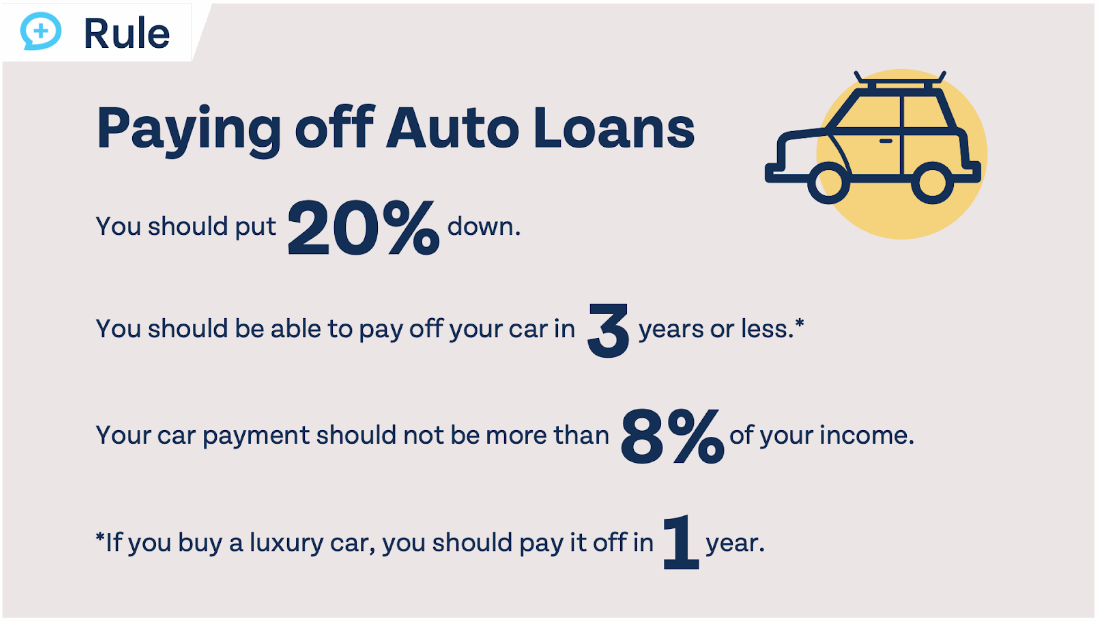
The 20/3/8 rule is simple: on any car you finance, put 20% down, pay it off in 3 years or less, and make sure the monthly payment is 8% or less of your gross income.
The value of a car drops like a rock as soon as you drive it off the lot, so it’s important to make sure you buy a car the RIGHT way. If it isn’t possible to pay in cash, follow our 20/3/8 guidelines to keep your finances on-track. Make sure you download our free Car Buying Checklist to keep handy as you go through the buying process.
Key Takeaways
Copy link to this section: Key Takeaways
Copied the URL to your clipboard!
Copy link to this section: Key Takeaways
Copied the URL to your clipboard!
- Not everyone can pay cash up-front for a car – and that’s okay!
- However, auto loans are dangerous liabilities on depreciating assets. We’ll show you how they can harm your financial life and how to do it the right way.
- The 20/3/8 car-buying rule is a proven rule of thumb for buying a great, reliable car while staying inside your financial guardrails.
- Use our free 20/3/8 calculator to figure out how much car you can really afford.
Share image


Share image
Do I Have to Pay Cash When Buying a Car?
Copy link to this section: Do I Have to Pay Cash When Buying a Car?
Copied the URL to your clipboard!
Copy link to this section: Do I Have to Pay Cash When Buying a Car?
Copied the URL to your clipboard!
Paying for a car in cash is ideal. A solid car loan rule like 20-3-8 is your next best option. Unlike homes, cars are quickly depreciating assets, which means if you take out an auto loan you could become underwater on your purchase if you aren’t careful.
However, not everyone has the ability to pay for a car in cash. Rather than driving a clunker off the lot and spending more in maintenance and repairs than a dependable car would cost, we believe it is often more cost-effective to take out an auto loan and drive a safer, more reliable vehicle.
What is the 20/3/8 Car Buying Rule?
Copy link to this section: What is the 20/3/8 Car Buying Rule?
Copied the URL to your clipboard!
Copy link to this section: What is the 20/3/8 Car Buying Rule?
Copied the URL to your clipboard!
Not everyone can afford to pay cash for a car – and often, the car you could afford to buy in cash is a clunker. That’s why we created the Money Guy 20/3/8 car buying rule of thumb. This car affordability rule helps ensure you can buy a car the right way while staying within the Financial Order of Operations (FOO).
Following the 20/3/8 rule means:
- Putting 20% down
- Financing for (or paying your car off in) no longer than 3 years
- Keeping your total car payment(s) to no more than 8% of gross income
If there are special financing deals for choosing a term longer than 3 years, it is okay to select a longer loan term. However, you must still pay off the car in 3 years or less! Your monthly loan payment, or payments if you have multiple vehicles with loans, should not exceed more than 8% of your gross income.
Just because you followed 20/3/8 doesn’t mean you are done yet! We always want your monthly investments to exceed your monthly car payment(s). And if you buy a luxury vehicle, it should be paid for in cash or paid off completely in one year or less.
How Much Car Can You Afford with the 20/3/8 Car Buying Rule?
Copy link to this section: How Much Car Can You Afford with the 20/3/8 Car Buying Rule?
Copied the URL to your clipboard!
Copy link to this section: How Much Car Can You Afford with the 20/3/8 Car Buying Rule?
Copied the URL to your clipboard!
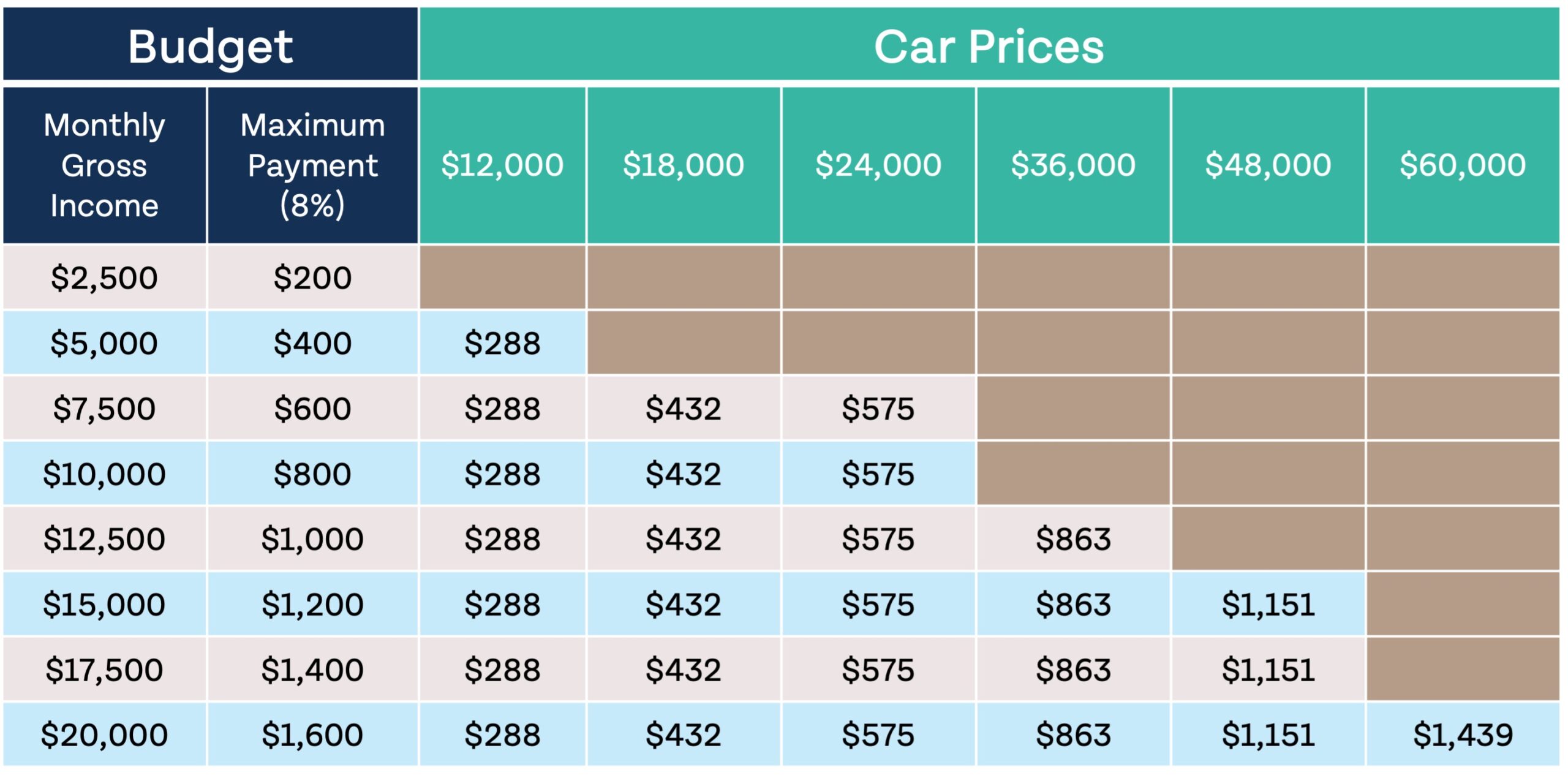
Use the following car payment rule calculations to help you determine how much car your family can afford. Remember, the maximum payment is for all vehicles, not each vehicle. The chart assumes you are following 20/3/8, putting 20% down, paying your car off in 3 years, and keeping your monthly payment at or below 8% of your gross income. The table assumes an interest rate of 5%, so if your interest rate is a little different, the car you are able to afford may be a little different, too.
How Strict is the 20/3/8 Rule for Financing a Car Purchase?
Copy link to this section: How Strict is the 20/3/8 Rule for Financing a Car Purchase?
Copied the URL to your clipboard!
Copy link to this section: How Strict is the 20/3/8 Rule for Financing a Car Purchase?
Copied the URL to your clipboard!
The Money Guy car buying rules can help you buy a reliable car that fits in your budget, but it may not allow you to buy the car you want or even the car you need.
If you are struggling to follow 20-3-8 and buy a reliable car, try the following before bending the 20/3/8 rule:
- Put more down
A higher down payment means you are paying less per month. It may take you longer to save for a car, but it might help you purchase a nicer, more reliable vehicle. - Shop around for better interest rates
Car dealerships may not always offer the best interest rates on cars. Check with banks and credit unions to see if their rates are more competitive. - Sacrifice a little on your car
If the vehicle of your choice doesn’t fit in your budget, look at models a year or two earlier, base models, or cars with a little more mileage.
While the 20/3/8 rule may feel strict when purchasing a vehicle, in reality it allows you to spend more in other areas and meet your other financial goals, like investing for retirement, saving for a home, and more.
If you can be “strict” about what you spend on a car, you can have more freedom in other areas!
How Does the 20/3/8 Rule Compare to the 20/4/10 Car-Buying Rule?
Copy link to this section: How Does the 20/3/8 Rule Compare to the 20/4/10 Car-Buying Rule?
Copied the URL to your clipboard!
Copy link to this section: How Does the 20/3/8 Rule Compare to the 20/4/10 Car-Buying Rule?
Copied the URL to your clipboard!
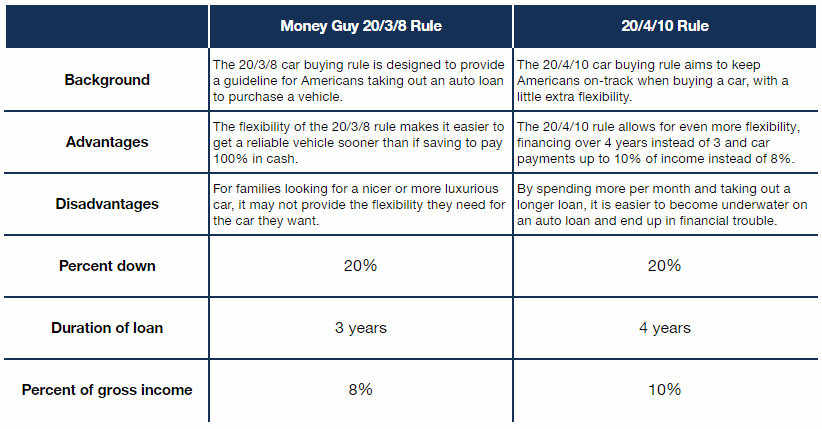
Critics of the 20/3/8 rule claim that the Money Guy car affordability rule makes it impossible for many families to get a reliable car. They propose a more generous rule called 20-4-10.
While taking out a car loan for a longer term and spending more of your monthly income on a car payment may allow you to buy a more expensive vehicle, we believe it is unwise to bend the rules to get a nicer car. The 20/3/8 rule represents the outer bounds of affordability. That means you should put down at least 20%, pay the loan off in three years or less, and spend no more than 8% of your income.
If you find you are not able to afford the car you want while following 20/3/8, there are a few options worth considering. First, is the vehicle you desire really necessary or are you able to get a vehicle that is just as reliable and meets all your needs for less? If there isn’t any wiggle room on price, consider saving longer for a downpayment to lower your monthly car payment (and raise the amount of car you can afford). If the interest rate you qualified for is relatively high and holding you back, shop around for better rates at local banks or credit unions.
Here’s how the 20/3/8 rule stacks up against the 20/4/10 rule.
Comparison Table: The 20/3/8 Rule vs. the 20/4/10 Rule for Car-Buying and Affordability
According to Experian, the average amount financed for a used vehicle in 2025 was $27,528. After putting 20% down, an auto loan for 3 years at 5% interest would have a monthly payment of $660. This means the median household in the United States, earning $83,730 per year, would spend 9.5% on a car payment for the average used vehicle financed over 3 years.
In many cases, for households looking to spend less than 8% of gross income or for households with income below the average, it is possible to get a reliable vehicle for less than $27,528. Putting more than 20% down or getting a better interest rate will increase affordability as well, if a less expensive car isn’t an option.
“Many people who live in expensive homes and drive luxury cars do not actually have much wealth.”
Thomas J. Stanley, The Millionaire Next Door
Does the 20/3/8 Car-Buying Rule Help Me Negotiate a Good Deal at the Dealer?
Copy link to this section: Does the 20/3/8 Car-Buying Rule Help Me Negotiate a Good Deal at the Dealer?
Copied the URL to your clipboard!
Copy link to this section: Does the 20/3/8 Car-Buying Rule Help Me Negotiate a Good Deal at the Dealer?
Copied the URL to your clipboard!
It’s no secret that car prices today are significantly higher than they were pre-pandemic, which means it’s important as ever to get a great deal at the dealership. Knowing your boundaries going into the dealer can help you get a better price than someone who is more willing to spend.
We don’t believe you should even step foot in a car dealership unless you know exactly what you want and how much you are going to pay.

Share image


Both used and new car prices are still elevated from pre-pandemic levels, but prices have dropped pretty significantly from their highs. For a period of time, it actually made sense to buy a new car, assuming you could find one in stock, rather than a used car. Now, both used car and new car prices are back in sync.
Car Affordability Calculator for the 20/3/8 Rule
Copy link to this section: Car Affordability Calculator for the 20/3/8 Rule
Copied the URL to your clipboard!
Copy link to this section: Car Affordability Calculator for the 20/3/8 Rule
Copied the URL to your clipboard!
Use our free 20/3/8 car affordability calculator to determine how much car you can buy and how big of a car loan you’ll need. Simply enter the price of the car you are interested in and your monthly gross income, and the 20/3/8 rule calculator will determine your monthly payment and if it is an affordable option for you.
20/3/8 Car-Buying Rule for First-Time Car Buyers
Copy link to this section: 20/3/8 Car-Buying Rule for First-Time Car Buyers
Copied the URL to your clipboard!
Copy link to this section: 20/3/8 Car-Buying Rule for First-Time Car Buyers
Copied the URL to your clipboard!
First-time car buyers are more likely to need to take out a loan and not to have the ability to pay for a car in cash. This means it’s even more important to follow a guideline like our 20 3 8 rule to ensure your finances stay on-track AND you can get a reliable vehicle.
We don’t believe your first car should be a clunker. Lemons cost more over time in repairs and maintenance. You don’t need to break the bank, or destroy your finances, to purchase a car if you follow 20/3/8.
Can I Buy a Luxury Vehicle?
Copy link to this section: Can I Buy a Luxury Vehicle?
Copied the URL to your clipboard!
Copy link to this section: Can I Buy a Luxury Vehicle?
Copied the URL to your clipboard!
Buying a luxury car is different from buying reliable transportation that can get you from Point A to Point B. We don’t believe you should use the 20/3/8 rule to buy a luxury car. They depreciate more quickly than typical cars and tend to be more expensive to drive and maintain (many require more expensive fuel and parts and labor can also be more expensive). If you do want to buy a luxury car, there’s nothing wrong with that – if you can afford it.
Luxury vehicles should be paid for in cash or financed for a term no longer than one year.
Frequently Asked Questions (FAQs)
Copy link to this section: Frequently Asked Questions (FAQs)
Copied the URL to your clipboard!
Copy link to this section: Frequently Asked Questions (FAQs)
Copied the URL to your clipboard!
Can I buy an electric vehicle with the 20/3/8 rule?
Electric vehicles have changed significantly over the last decade. Previously, we considered almost all EVs to be luxury vehicles. Now, there are more affordable options on the market that can fit under the 20/3/8 rule. If you plan to buy an electric vehicle under 20/3/8, make sure the expected depreciation is more in line with a normal car than a luxury car. Expected maintenance costs should also be more similar to a normal vehicle than a luxury car. Federal tax credits for EVs were terminated by Congress in 2025, so those no longer factor into the equation.
Should I buy a junker if that’s all I can afford?
Reliable vehicles have risen significantly in price over the last decade, and you may find the type of car you can afford does not match the type of reliable transportation that you and your family require. Instead of buying an extremely cheap car that may be more likely to require costly repairs and maintenance, see if you can save a bit longer to lower your monthly payment or shop around for better deals. In the long run, it’s better to buy a reliable vehicle, even if you have to make some sacrifices to get there.
What type of vehicles are reliable and affordable?
The website CarEdge ranks vehicles by their value rating. They factor in average purchase price, expected resale value, and maintenance, repair, and insurance costs. Makers with many highly rated models include Toyota, Honda, Subaru, and Mazda. At the bottom of the list, brands you may want to avoid if you are looking for a good value, include Jeep, Dodge, Chevrolet, and Chrysler.
Can I lease a car?
Leasing a car instead of purchasing usually doesn’t make financial sense because the cost of the lease is almost always higher than the cost of ownership. However, if you are at Step 8 of the Financial Order of Operations or later, you may wish to lease a vehicle if you plan on upgrading cars frequently and want to avoid the hassle factor of selling a vehicle every couple of years.
How does the 20/3/8 rule work in practice?
To apply the 20/3/8 rule to your vehicle purchasing decision, simply multiply your monthly gross income by 8%. This is the total amount you can spend per month on all car payments. The monthly payment isn’t all you need to worry about. You also need to make sure your loan term is for three years or less, or that you are paying enough every month to have the loan paid off in three years. You also need to ensure you are able to put down 20% when you buy your vehicle.
Here’s an example with real numbers:
Sally’s gross income is $5,000 per month.
She can afford a monthly car payment of $400.
At the dealership, she is offered a 5% interest rate on a three-year loan.
After her downpayment of 20% or more, the maximum Sally can afford to finance is $13,346.
With a 20% down payment, the maximum purchase price of a vehicle she should consider is $16,683.
If you don’t want to do the math yourself, check out our free 20/3/8 car affordability calculator!