
-
▼


-
▼


How does your income, net worth, and retirement savings compare to other Americans, and are you still middle class? In this episode, we break down the Federal Reserve’s Survey of Consumer Finances figures discussed in this episode, covering family income, retirement account balances by age, cash savings, homeownership, and debt. Discover why higher incomes and growing investment accounts can coexist with financial strain, what the middle-income range means, and where comparisons can mislead you.
And we answer your financial questions, covering blind spots to consider when choosing between Roth and traditional contributions, what counts toward the 25% in the 3/5/25 rule, and three ideas to teach eighth graders using the Wealth Multiplier. Then our rapid fire segment tackles budgeting vs. cash management, why we’re not fans of gold, solo 401(k) vs. SEP IRA, and how to ease the anxiety of a 401(k) rollover. Plus, a breakfast surprise celebrates a big Abound Wealth milestone! Watch the full episode now to use these numbers for perspective as you work toward your own financial goals.
Enjoy the Show?
Where You Can Watch and Listen:
Subscribe on these platforms or wherever you listen to podcasts! Turn on notifications to keep up with our new content, including:
- Episodes of The Money Guy Show every Friday
- Episodes of Making a Millionaire every other Monday
- Mini-shows every Wednesday
- Ask Money Guy Livestreams every Tuesday
- Tons of other fun content!



Are You Still Middle Class? What the Federal Reserve Data Shows (0:06)
Brian: Here’s a question. Are you still middle class, according to the Federal Reserve?
Bo: Brian, I am so excited about this. Not because I like defining class systems or stereotypes, but more, there is some really interesting data that’s just come out that does not come out every single year. And so when it does come out, I think there’s some interesting stuff that we can glean from it. And this year was no different.
Brian: Yeah. I just, to kind of bring everybody up to speed, is that I do get excited about some of these data points that come out every few years. The Federal Reserve. If y’all remember, we did content a few years ago when it came out because it was 2022, and we looked at it and net worth was up close to 40%. We were like, holy cow. Finally, maybe the American public is realizing, hey, instead of spending every dollar that comes in, we ought to start saving a little bit of this. But we found out it was more inflationary, because housing values had gone up 37 to 40% and people had ridden that up.
Bo: So here we are. Fast forward three years. We got 2025 data. It will be interesting to see what data we can pull out of this. So you can look at your own life and see if there’s something to learn from this. And it’s worth thinking, I mean, when you think about the last three years from sort of an economic and financial perspective, before we go through these numbers, you ought to ask yourself, how are things? Are things generally better feeling or worse feeling? What do I think these numbers are going to show? Because I thought it was kind of interesting when we compare where we are today, given what we know has transpired in the last three years, versus where we were three years ago. So let’s start just by talking about median family income.
Median Income, Retirement Balances, and Home Ownership (1:43)
Brian: So when we look at Americans in general, back in 2022, the median family income was about $76,900. In 2025, the new data just came out. It has now increased up to $82,000. So a 7% increase over a three-year time frame. Not horrible. Maybe not super. Keeping up with inflation, but still positive movement in the right direction.
Bo: Okay. And then net worth, if you bring up median net worth, 211 to 216. I’m not excited about this. This one didn’t give me this. How about this one? Median retirement account balance in 2022, $95,200. In 2025, $106,000. That’s a double-digit increase, 11%. That’s a good thing, right?
Brian: When you were doing the intro and you’re like, so everybody look at your own life to figure out how this all pertains, I think this one here on retirement balances, if you really dug into the data like we did, we’re kind of nerdy that way, this is what was so interesting. If you look at this by age category, look at the under 35. And this is one, look, guys, I tell you all the time we have lots of grace for our people under 35. Because it does feel like if you look at who are the losers, or the generation that’s been impacted the most by the high inflation that we had post-pandemic, it’s definitely the people under 35, because housing is way up. There’s all kinds of affordability issues. Interest rates are way up. All these things. That’s why you are seeing retirement balances for those under 35 actually went down 10%, which is not what we want to see. For those 35 to 44, it’s up 18%. 45 to 54, up 21%. These are the people who start to get nervous about retirement. And then those probably in retirement, up 14%. Now, interestingly, Brian, when I see these numbers, I want to get super excited. But I don’t know if the reason that these numbers are up is because people are doing better, they’re saving more, or is this just a product of, if you think about the market from 2022, which was a bear market, a down year, coming through 23, 24, 25, and now almost through 26, the markets have done pretty well. So I don’t know that this is so much because Americans are doing a better job putting money in their retirement accounts. I think it’s just a function of the accounts increasing.
Brian: Hang in there and watch, because I think as we close out the show, we actually have an overlay with the S&P 500. So we can answer that question when we look at some other, again, taking the snapshot of America. Because we look at home ownership: the homeownership rate in 2022 was 66.1%. It’s actually down, not surprisingly, in 2025 to 65.6%.
Bo: But I’ll be honest, Brian, that’s not as big of a drop as I would have guessed, given where interest rates and home prices are.
Brian: Yeah, historically, the highest that number has ever been was back in 2004 at 69.1%. So back to pointing towards affordability with high interest rates, and then coming out of that post-inflation period, homeownership has really taken a beating.
Bo: All right. And then when we look at median savings, now this is not like savings rate. This is transactional cash on hand. On the median, it was $8,800. Now it’s down to $8,200. So a 6% decrease in how much cash people are keeping on hand. And this includes checking accounts, savings accounts, money markets, all of those types of things. I personally don’t think that seeing $8,200 there is a good thing.
Debt, Credit Cards, and Financial Vulnerability (5:07)
Brian: Yeah. And then I’ll close out this slide with just median debt. But this doesn’t tell the whole story. Look at 2022. We were right around $88,000. We’re still right around the $88,000. So this looks pretty flat. But we’re going to go a little deeper into what that looks like for Americans. But I’ll tell you the vulnerability stat, meaning how many people are delayed on paying their bills and so forth. Stick around with us, because that is the one where a few alarms went off. It’s a lot more people struggling just to get their bills paid. It’s eye-opening and even heartbreaking. But let’s talk first about the debt problem, which likely leads into that.
Bo: When we look at the average American, the share of Americans right now carrying a balance on their credit card, so not paying it off in full every month, but actually carrying a balance year over year, has dropped from 45% down to 44%. So you’d say that’s good, I guess, but it’s still 44% of consumers carrying a credit card balance. Not ideal.
Brian: Yeah. The median balance is pretty flat, $3,000 to $3,100. Interest rate, look at this. This is a big shocker. And it’s just a sign of the times: interest rates close to 15% have gone up to 21%. You know, look, in a good year we’re hoping we make 10% on our investments. There’s no way you’ll ever get ahead if you’re paying a bank 21%.
Bo: Very similar things when we think about auto loans. For those who have an auto loan, the share of folks that have an auto loan is 32%, down from 34% three years ago. The median balance has stayed pretty flat, right at $17,000. But again, sign of the times with interest rates: it was 4.9% as the average interest rate on an automobile loan three years ago. And here we are today. The average interest rate is 7.7%.
Brian: Yeah. And when you see those interest rates, that probably attributes to why you see fewer car loans. People would rather own these cars with cash, which we’d also prefer. Buy now, pay later. Look at this one. This one is a big one. We went from 7% of families who had discovered buy now, pay later back in 2022. Now it’s 12%. That’s almost doubling. And the median balance is a little over $400 on that.
Bo: That’s right. So okay, you said, Brian, a second ago, obviously America has a debt problem, and this is less than ideal. I think what ends up happening is with this debt problem, it really highlights this idea that people are a lot more vulnerable than we realize. And there were some financial vulnerability stats in here that I thought were a little mind-blowing.
Brian: Yeah. Look at this. Behind on any loan payment, back in 2022 it was 12%. Now we’re up to close to 20%. That’s a 61% jump. Unbelievable. 60-plus days late was 4.9%. Now it’s 8.2%. That’s a 67% jump. Median debt payments, I mean, that’s even up 15%. I mean, debt payments above 40% of income. You know, we talk about trying to keep your housing costs down. We talk about why you have to have some margin there so you can save for retirement because of housing and other things. Imagine this, if your debt payments are greater than 40% of your income, like 9% of Americans are now, that’s a 32% increase. How do you have money to do anything else?
Where Is the Middle Class Range in 2025? (8:21)
Bo: Yeah. It’s, I don’t want to say tragic, that may be too aggressive. But these numbers are not trending and moving in the right direction. Not only are Americans racking up more debt, they’re also having a hard time paying it off. They’re having a hard time navigating. And so the question becomes, or at least the question to answer is, okay, are you middle class? When you think about where you fall right now, are you middle class? Are you lower income or are you upper income? Well, according to Pew Research Center, they often define middle income as earning between two thirds and twice the median household income, adjusted for household size. So if we’re going to use that same math, let’s talk about where, quote unquote, the middle class was in 2022. If the median family income in 2022 was right at $77,000, that means that the range for middle class earners had been somewhere between $51,000 and $154,000. Yeah. So now fast forward to 2025. If we do the same exact math, median family income in 2025 is right at about $82,000, that would put the middle class range somewhere between $55,000 a year and $164,000 a year. So it has increased. It has slid a little bit up the income spectrum, but roughly the same as it was three years ago.
Key Takeaways From the Federal Reserve Data (9:40)
Brian: Yeah. And I think, you know, let’s bring this home so we can start taking some questions and answers to talk about what people actually have going on in their life. There are a few key takeaways here. First of all, retirement account balances are up, but it’s likely not because of savings. And Bo alluded to this earlier. If you look at the Vanguard account balances, because we thought this was a nice overlay, we’ve used this on other shows. If you look at this, this perfectly shows you how, even with companies like Vanguard, with the How America Saves report and so forth, retirement balances, you can see how market performance drives a lot, including what’s going on in the Fed data. Because you can see in 2021, the average account balances were $35,000. But then all of a sudden we had 2022, which was a down year for the stock market. Look at the S&P 500 overlay. You see the market went down. All of a sudden average balances went down to $27,000. The exact same thing happened from 2023, 2024, 2025. Those were all pretty good years, except for that first quarter of 2025.
Bo: It is amazing when you look at that overlay. Everybody’s like, 2025 was a good year. Not the first quarter. But it is one of those interesting things, I think you can do the exact same logic, look at the Fed data, the Federal Reserve data from 2022 to 2025, and you realize that the increased retirement account balance didn’t have much to do with behavior. It had more to do with just good performance in the stock market. So it is a positive. The market is increasing. But be mindful, if the only reason your account balances are growing is because the market is doing its hard work, reassess. Am I saving the way I’m supposed to be? Am I putting my money where it’s supposed to be going?
Brian: I think another big takeaway is that those folks with debt right now, the people who do have credit card debt or auto loans or student loan debt or fill in the blank, they’re struggling. And it’s difficult and it’s hard even for them just to keep their heads above water right now. That’s why we saw so many people in delinquency, or so many people paying late. It’s a real consumption problem that we have right now in this country. Yeah. And then I’ll close it out with the hard, cold truth, which is America has a savings problem. Look, I get there’s hard things going on with housing and so forth. But you focus on what you can control. And I would encourage everybody, even in these difficult times, start somewhere. If you’re in your 20s watching this, at least make sure you’re getting that employer match. That’s step two of the Financial Order of Operations. And then let’s try to work towards maxing out our Roth IRAs. And then even putting more into the 401k. You’ve got to do something. You do not want to be average, because it’s the average consumer that wakes up in their 60s and realizes, holy cow, I just didn’t do enough in my 20s, 30s, and 40s to prepare for today. So I get it. We live in a consumer and consumption society, but you’ve got to do something. Just make something happen. Give us 5% and it will literally change your life.
Bo: And we answer the question, you know, has the middle class changed mathematically? Yeah, it has. The income to be middle class increased about 7% on average from 2022 to 2025. But does that really matter to you? And I’m going to argue no, because we know a lot of people, Brian, who might be on the lower income threshold of that income range, and yet they’re living fantastic lives, doing the things they want to do, saving the way they want to be saving, experiencing the things they want to experience. We have other folks that are higher on that end of the spectrum, or even above that spectrum, that are nowhere near where they need to be financially. And so when it comes down to what you’re doing with your financial life, it really doesn’t matter if you’re classified as middle class, doesn’t matter if you’re classified as lower income or higher income. What matters is, are you a financial mutant? Are you doing the things with your dollars that you ought to be doing? Are you building for a great big beautiful tomorrow, or are you just becoming a statistic, just like the average American around you? And I think that our audience is so unique, Brian. And we’re going to talk about this more in some content we have coming up. You guys are different. You guys are not the statistics. You are the financial mutants. The reason that your financial life looks different than your peers…
Brian: Yeah. I think you have to choose your hard. You can make really disciplined decisions while you’re in your 20s and 30s, and especially if you’re in that wealth window of 32 to 48 that we’ve talked about and done great content on, even if you’re in the messy middle, do something. Because little decisions today can have huge results in the future. And if you want to get motivated, I encourage you, go check out that we did it. We asked 20,000 Americans how they manage their money. That’s you, financial mutants, and wow.
Bo: Oh wow.
Brian: If you’re trying to figure out a pacesetter for yourself, go and look at what our financial mutants are doing. I think it will really challenge you to try to be the best version of yourself. But I love that we get to do this. I love that we get to sit here and we get to look at the Fed data. We get to go through survey stuff, we get to analyze that. But I also love that we can sit here and answer questions that you guys care about, the things that are most important to you. So if you have a question you want to get our take on, you want us to weigh in on, we have the team out in the wings ready to collect those questions. So make sure you get them in the chat right now. With that, creative director Rebie, I’m going to throw it over to you.
Abound Wealth Is Now in All 50 States (14:50)
Rebie: I’ve got some questions flowing into the hopper, but first we have to celebrate really quick. In the episode on Friday, you mentioned we didn’t have any Abound clients in Vermont, and we said, Vermont. Gosh, you guys are so nerdy. We need you to show up. And you did. As of this week, we officially have clients in Vermont, which puts Abound Wealth in all 50 states.
Brian: That’s wild.
Rebie: So we brought you guys a pancake breakfast and some Vermont maple syrup.
Bo: That smells beautiful. Smells amazing.
Brian: I will warn you, temperature-wise, I think this has been hanging out in the editors’ room for about an hour and a half, based upon the spot check here. And the butter is not spreading.
Bo: Oh no, that spread pretty good, dude.
Rebie: Here’s what’s so crazy. So obviously this is live right now. We can’t eat this, like we have to answer questions and stuff.
Brian: Like, I bring it over here. Let’s go.
Rebie: No, I’m eating it.
Bo: Are you able to eat right now?
Brian: Do you not know the beautiful chemical reaction of if you put maple syrup and bacon together? Beautiful things. And then, because properly, where did we get these biscuits from? Are these Puckett’s?
Rebie: Hold on. Puckett’s. All right, all right. So look, look.
Bo: Stop it up. He’s giving a little demonstration. Put you a little bacon on there. Sop. That’s a verb that a lot of our audience may not be familiar with. It means just to carefully… We’ll start off. We’ll do this southern-style biscuit.
Brian: Then we get into that pancake with that maple syrup.
Rebie: All right. Well, while you’re sopping, I’m going to ask a question. Bo is ready to go. Brian’s chowing down.
Brian: You’ll be fine. I’ll be ready. I’m ready to answer Alec’s question.
Bo: I’ll give you a dollar if you can finish the whole… No.
Brian: Here’s where we’ve run into a material problem. The plastic fork. Anybody who’s ever tried to cut pancakes, especially room-temperature pancakes, you know, this is an exercise in not working.
Rebie: All right. The question says, “Hey, Money Guy team,” you’ve got to finish it. “I’m giving a 30-minute personal finance talk to eighth graders tomorrow.” One more bite, if you… Oh my goodness. This is a good question. Hang on. I am so sorry. You have a great question. We’re going to give you a great answer.
Bo: Do you see all the crumbs? Do you see, you ate like a Tasmanian devil right here. Do you see this?
Brian: Let’s get a little salt.
Q&A: Three Ideas for a 30-Minute Talk to Eighth Graders (17:27)
Rebie: Well, for whoever’s still here, here’s a finance question. It says, “Hey, Money Guy team. I’m giving a 30-minute personal finance talk to eighth graders tomorrow. If you could only land three ideas with them, what would it be?”
Bo: All right, three ideas here. Here’s what I want you to do. Will you pull up for me, because an eighth grader is going to be, what, 13 years old? Is that the age, or is that the average age of an eighth grader?
Rebie: Right on there. Right.
Bo: The Wealth Multiplier. For a 13-year-old. Alec, here’s what’s so beautiful. By the time a child has gotten to eighth grade, they’ve likely already learned about multiplication. They’ve learned about compound interest. They’ve likely learned about exponents, depending on where they are in their curriculum. So these kids can probably understand the mathematical concept of what happens to our dollar. So if I’m talking to them, I want to make the math very, very real for them. And I want to say, hey, do you realize right now, if you are cutting grass, if you’re babysitting, if you’re a trash can valet, if you’re scooping poop in neighbors’ backyards and you get a little bit of money, if you can just choose to put a little bit of that money to work for you over the long term, every dollar at age 13, where you are right now as an eighth grader, has the potential to turn into $177? $177. That’s twice what a 20-year-old can do. It’s like doing something silly, like a magic trick. Like trying to turn $1 into $177. Just to have it sink in how powerful it can be, because they’re starting so, so, so young. So the very first thing that I’m going to try to communicate to them is the Wealth Multiplier, the idea that their money can do something miraculous if they give it the time to do that. That’s the first one I would say.
Brian: Yeah. And then even if you want to tell them, hey, how many of you all want to be a millionaire? You realize for a 13-year-old, they only have to save $47 a month? It’s unbelievable. That’s how you turn that $177 into an even more powerful concept, is because you ask them, “If any of you want to be a millionaire, all you have to save is $47 a month.” And I think a lot of them can grasp what $47 is, because that’s probably just cutting one yard or two yards a month or babysitting.
Bo: Exactly. Bring it into those terms.
Brian: And then let’s focus on the three ingredients of wealth. The first one is discipline. You know, a lot of times when I talk to high school classes, I’m always telling them about this magical power, deferred gratification. If you can learn to live on less than you make, you’re already just leaps and bounds ahead of your peers, because most Americans live paycheck to paycheck. So discipline, deferred gratification, is the most important thing, because that creates margin. So then you can have money or assets to start investing. And then, given enough time, it will turn into something magical. And that’s bringing it full circle back to the Wealth Multiplier.
Bo: All right. So number one, we have the Wealth Multiplier. Number two, we have three ingredients. And I’ll give you the third one. Now look, this is a little bit of a hot take. I think this is so important. And look, it’s going to seem like it’s pretty mature, but I don’t think it really is, especially for eighth graders. I would begin impressing upon them the idea that money is nothing more than a tool. My daughter, my nine-year-old right now, is obsessed with this idea. She says, “Daddy, hey, Daddy, are you a millionaire? I know your daddy.” And I’m like, baby. So I try, I’m like, hey, why? What’s it mean to be a millionaire? Why is that? What’s the thing? And so she’ll kind of walk me through that. And I’d be like, okay, why does that matter? Okay, why does that matter? Okay, why does that matter? And I want her to understand that numbers on a page are not the important thing. It doesn’t matter how much money someone has. It matters, okay, what does that allow you to do? Does it allow you to create memories with family? Does it allow you to do this? And so I’m trying to impress upon her that even though I want them to understand money is an important thing, and it’s a super powerful thing in the world in which we live, it is not the end-all, be-all, and there’s got to be a why behind the reason we’re making our decisions. Every time she gets money, every time money comes in, we go through give, save, spend. Hey, why do we give? What’s the reason? Hey, why do we save? What’s the reason? Hey, why do we spend? What’s the reason? And I want her to really grasp the idea that it’s not a goal. It’s not an idol. This thing should not be put on a pedestal. It’s simply a tool that allows us to do the things that we want to do. So I think if you can hit them with the math, hit them with the behavior, and then hit them with a philosophy, I think those eighth graders will be incredibly well off for that.
Brian: I do have one. I think Bo just closed it with that third. I think I’m going to encourage you to have four points, because I think there’s one more that you ought to put in after three ingredients to wealth. And that’s just the beauty of, instead of trying to beat the market, just being the market. And I always tell people, look, envision that you’re in Epcot and you’re riding Spaceship Earth and you’re going up into the big golf ball, and you start off with the woolly mammoth, but then we discover paper and the printing press, and then you’ve got, whether it’s Gates or Jobs in the garage, they’re kind of making as they show computers. What I want you to envision is how slow innovation has occurred over history, and how I really do believe in what’s called the law of accelerating returns, meaning things are speeding up at faster and faster paces, to where now the younger generation has the potential to be a part of this growing economy and just show the beauty of what just investing in something simple like the S&P 500 can do. And it’s an optimistic outlook. Because look, for young people, they have everybody in the world telling them why the system is against them. And I’m here to tell you that small, small decisions can create huge results if you just harness that power of what’s coming. Owning stuff is the secret to success.
Tumbler Day and Halloween Candy (23:17)
Rebie: Love that. Alec, thank you so much for your question. We’d love to send you a Money Guy tumbler. Just email winner at moneyguy.com to cash in on that.
Brian: Oh no. You know, because I fast in the morning. So when they slap down here some pancakes, even room-temperature pancakes, and a biscuit, you know, I’m willing to give it a go.
Bo: I stopped fasting. I used to do intermittent fasting every morning. I had to stop doing it. I feel so much better not doing it now. Well, because I had a big breakfast.
Brian: Also, y’all have to realize Bo wakes up at 2:30 in the morning so that he can go work out at 4:00 in the morning. He does all these crazy things, so he’s probably already done a gazillion things in the day before it’s even 7 a.m. So his body does need the food. My problem is I’m fluffy right now. And you see, I have zero willpower. I mean, who else took an audit of their kids’ Halloween basket and took all the Take 5s and Almond Joys? Those things were just gone night one, because I went in there and I don’t know why. Almond Joys. They used to be everywhere. Now my daughter went out and I got two Almond Joys out of the entire huge bag. Snickers. Snickers are having a banner year. If we were doing a market, probably 70% of candy bars are now Snickers. And then, I don’t know, Take 5, which are Reese’s with pretzels in them. This is a magical candy, but nobody’s giving them away at Halloween.
Bo: You know what I told myself? I told myself I’m going to allow myself one type of candy. Not one piece, but one type. So this Halloween, I’ve only been stealing my kids’ Twix. The little mini Twix. That’s the only… I was like, that’s what I’m picking this year, because I didn’t want to go with Almond Joy because it’ll only be a handful of them. I don’t know why I’m enjoying the thing. I know how many exactly. But Twix are like, okay, there’s lefts, there’s rights. Yeah, that’s what I did. And I don’t feel guilty when I eat the little… like, I’m like, oh, this little thing is the little thing.
Brian: How about you? Did you eat any Halloween candy?
Rebie: A little bit. Yeah, I had a Twix, some gummy bears.
Brian: There we go. The people like Twix.
Rebie: You don’t like?
Brian: Yeah. I mean, this is great. It’s okay. It’s not a Take 5.
Bo: What’s the tier? A tier? Twix is somewhere between S and A for me.
Brian: Yeah, it is somewhere. But I just like generic. It’s just, it’s a cookie with caramel and chocolate.
Bo: Yeah, buddy, you just explained the recipe. That makes it wonderful.
Q&A: Roth vs. Traditional When You Expect the Same Tax Rate in Retirement (26:17)
Rebie: All right, well, we’re going to move on to Shay’s question. And in the meantime, if you’re watching live, be sure to get your rapid fire questions in. Just put RF at the beginning of your question in the YouTube chat, and we will be pulling some of our favorites, the best, whatever you want to call it, to use for our rapid fire segment.
Bo: Tumbler day.
Brian: Yeah. Did you give Alec a tumbler?
Rebie: I did. Did you hear that? You were still probably processing, chewing on biscuit. All right, well, Shay S has a question. How good would a biscuit right now with maple syrup on it be?
Bo: Honestly, I hope they don’t throw it away. I’m going to eat it after the show.
Rebie: “I expect the same tax rate in retirement. What factors should I consider when picking Roth versus traditional? 11 years until retirement. Any blind spots to be aware of?”
Brian: I would like to ask, why do you expect to have the exact same tax rate in retirement? Because the reason that we make the assumption that tax rates create an arbitrage situation in retirement is because most people have earned income, meaning you have a job that you eventually retire from, and that creates the arbitrage. Are you already investor class, Shay, or do you have a daytime job? Because I need a little more. This is where the “depends” comes in, because I need to know why you say your income is going to be the exact same in retirement.
Bo: Yeah, because the factors, the factors I’d think of is, if I think my income is going to be the same, which side of that equation am I on? Am I in the 37% tax bracket? And I think that I’m never going to be below that. Right. All right. Well, then if you believe that tax rates are going to increase, not just your income, but the actual brackets in which you operate are going to increase, then yeah, I could see why you would want to say Roth. But if you’re in the lower tax brackets, 22%, 24%, somewhere in there, you have to think about, do I think that my income is going to go up and that’s going to cause me to bump up? Or do I think there’s going to be a shift? And if the shift happens, how close to the thresholds am I? Because it’s really interesting when you look at tax policy and tax adjustments, they don’t always happen equally across all the tax brackets. So I would figure out, for the bracket that I fall into, how likely is it that that bracket is going to see an increase? Again, if you think about it, the top tax bracket used to be 39.6% and it came down to 37%. And there’s an idea that perhaps one day the 37 will go back to 39. You have to figure out, where do I think I’m going to fall there? And realistically, am I not going to have some ability to manipulate that in the future? And what am I going to use these dollars for? If I’m going to start saving in Roth and building in Roth, is that more for my future self to use those dollars tax-free, or is that more of a legacy estate planning thing, where that’s going to be the assets that I want to leave to the second generation at some point in the future?
Brian: I think you have to kind of meld all those different ideas to truly see what your income is most likely going to look like when you get to retirement. I have no problem. You’re 11 years from retirement, so that probably puts you in your 40s or 50s. If you look at your situation and you’re way ahead of the curve, use our Know Your Number tool to figure out if you’re ahead of the curve. If you want to start thinking legacy planning-wise and loading up on Roth dollars because it is better for your children to inherit Roth dollars versus traditional, because of the tax-free growth and the 10-year deferment on that. But the other opportunity you might want to think about is, are you going to have any years in retirement, at least in the 20, 22% bracket? So you can think about Roth conversions as well, because these are all the things we take into account as we’re looking at people’s financial situation. Because the blind spot you might not be thinking about is when you hit 75 and have to take those required minimum distributions, we don’t want it to be a tax bomb on you. So we have to try to begin with the end in mind.
Bo: A lot of people think about, oh, well, in retirement, you know, I spend $100,000 while I’m working, when I retire I’m going to spend $100,000, that’s the tax bracket I’m going to be in. A lot of people forget that RMDs can artificially push you into higher tax brackets if you don’t want to be there. So even projecting out, if you’re 11 years away from retirement, let’s assume you’re retiring at 65, so that puts you at 54 years old, you’ve got a 20-year runway before you’re going to hit RMD age. Make sure you’re modeling that to determine where you think it might make sense for you.
Brian: Because I think I’m seeing in the comments a lot of people don’t have a pension. I make good money now, and I have no pension, I’m going to stay in the same place. It’s not just about how much tax you pay in any given year. What do I pay in the first year of retirement, the second year of retirement? We try to think about what’s the total lifetime tax bill I’m going to pay and how do I optimize that, or how do I minimize that, in a way that makes the most sense. But even in taking into account a pension, some states don’t tax pensions the same way they tax earned income. I’d say Georgia has huge retirement exemptions for pension and Social Security and so forth. So all that comes into play. And then you asked for additional blind spots. You know, if you use Bo’s example, you’re 55 and retiring at 65, Medicare kicks in and you have to worry about IRMAA surcharges and other things, taxability of Social Security, all these things. This is my favorite thing, Shay. This is when we’re working through this with a client: these are the complications of success. And that’s why we love helping clients, because often when clients get into retirement, if you ask yourself, what is my financial planner doing for me every year, a retiree doesn’t have to ask that question, because if you look at the amount of tax projections and tax conversions and other things that we’re having to do in those retirement years, this is exactly what we’re talking about. Enjoy your simple life with all of our free resources. But when you get to the level where the rubber hits the road, if you’re actually executing some of the tax strategies, this is when we really do great work, I think, for clients. It’s definitely a complication.
Rebie: It’s definitely a complication. Shay S, since we answered your question, you qualify for a Money Guy tumbler on us. Just email winner at moneyguy.com.
Q&A: What Counts Toward the 25% in the 3/5/25 Rule? (31:46)
Rebie: All right. Next up is Rhea’s question. Then we’ll get to rapid fire. Rhea says, “For the 3/5/25 rule, which is our home buying rule, what all is considered as part of that 25%? Is it just PITI? PITI and maintenance? Do we consider utilities, HOA fees? There are many, quote unquote, hidden costs of homeownership.” So she’s looking for some guidance on how to think about this.
Bo: The way I would answer this question is, it’s a little bit like Burger King. You get to have it your way when you think about how you want to design this. When we originally came up with 3/5/25, the idea was that the 25% was going to cover PITI, principal, interest…
Bo: I was just going to circle the middle one.
Brian: Principal, interest, taxes, and insurance. That’s exactly what the intent was. That was the intent. However, if you’re someone who says, hey, I recognize that buying a house is way more than buying the house, there are maintenance fees, there are utilities, there are HOA fees, there are these other things, if you want to lump all of those in and make sure that the sum total of those is below 25%, that’s great. We’re not going to fight you on that, because what that means is your PITI is going to be 21%, and then there’s going to be 4% that covers those others. There’s nothing that says you have to go all the way up to 25%. So if you want to be super conservative on that and you can afford to do that, that’s a wonderful thing. I don’t think that’s where the majority of the people are. Most people are trying to make sure that they can at least get into a house, so they don’t need to be super conservative. They want as much flexibility.
Bo: The only one I agree with you on is PITI, but the one that catches me is like condo association fees. HOA fees typically aren’t that bad. There are a few neighborhoods with gated entrances and other things, but there are neighborhoods here where they have like $800. Those are gated communities. So if you’re living in a gated community, you should go be more conservative. But a lot of people live in condos, and those condo association fees, it seems to be an affordable place to go buy and invest in. Then when you look at those condo fees, you’re like, holy cow. A lot of that’s driven by insurance as well. So just go in with those. I would probably add condo association fees to the PITI.
Rebie: Love it. Rhea, thank you for the question.
Bo: If someone is trying to buy a house, we have a wonderful hub out there that will walk you through all things home. We have a home buying checklist. We have our house affordability calculator. We have tons of tools out there at moneyguy.com/resources, where you can go check all of that stuff out. Just so you can, for most people, a house is the single largest purchase you will ever make. You want to make sure you make it well, and so we want to equip you with the tools to do that.
Brian: And we’re proud we didn’t have to amend our rules. There are a lot of gurus out there that got caught flat-footed, realizing how home affordability… We had a no-hypocrite policy. So we were sharing from the get-go, hey, if we only put down 3 to 5% on our first house, why shouldn’t we share that with our audience? What makes us better than our audience? No, we’re like, no, we’re not going to be hypocrites. We’re going to tell people the truth. And that’s aged beautifully because we’re just transparent and honest. Whereas I think a lot of gurus have had to go and amend because they realized they’re on the wrong side of things right now.
Brian: Yep.
It Does Not Depend Rapid Fire Segment (35:20)
Rebie: With that, it’s time for our “It Does Not Depend” rapid fire segment, where Brian and Bo will answer your questions in 30 seconds combined or less. And they are not allowed to say “it depends.” But don’t fear, at the end of the segment, we’ll make sure, if anything was left unsaid to truly answer your question, we will come back to it. With that said, let’s get 30 seconds on the clock. And here is your first question. Who’s going first?
Brian: You can go.
Bo: You know what? You go first.
Brian: You go first.
Bo: Beauty before age.
Brian: I’m going first. It’s fine. I know in that scenario, I know, but let’s just… I was trying to be funny.
Rebie: Just let him have it. Like if you were the beauty.
Bo: But I was being maple syrup sweet.
Brian: Got it.
Rebie: Okay. Question number one. When do you move from budget to cash management? Even with $10K per month, the budget seems necessary.
Brian: Yeah, I think it’s, if you have automated savings already going into your 25% and beyond, and your spending seems to be automated in ways that everything’s landing where it’s supposed to, that’s cash management.
Bo: If you need accountability, that’s budgeting. When your budget becomes muscle memory, you don’t have to think about it, you’re naturally staying inside of your categorical items, you don’t have to think about it a lot, you are probably at the point where you’re ready to graduate to a cash management plan where you automatically pay yourself first.
Bo: A little long there, guy.
Brian: That’s what you do. It’s always the risk when I go first.
Rebie: Next question.
Brian: I’m not a short-form content type guy.
Rebie: Why don’t you like gold? I’ve seen y’all’s talks with people and you seem to not like it.
Bo: I do like Goldfish. And if you don’t follow us on socials or follow any of that stuff, you won’t know what that means.
Brian: But we did a great thing.
Bo: Gold is wonderful, but it’s a precious metal. It doesn’t do anything. It doesn’t create any value. The only thing that makes gold more valuable is if the person who comes behind you is willing to pay more for it than you paid for it. I struggle with that. It’s also an asset that you have to pay to keep safe. And there are carry costs, there are transaction fees with it, and it’s not going to generate interest, rental income, or innovate whatsoever.
Brian: It’s only going to be worth exactly what Bo said, if somebody pays you more. We have a great video, Rebie, titled “Fool’s Gold.”
Rebie: If someone types that into the search, it doesn’t actually show up anymore.
Brian: Thank goodness.
Rebie: Should we put a link in the archive, the link in the Moneyverse, to “Fool’s Gold”?
Brian: That would definitely be premium content, because I’m embarrassed.
Rebie: But it was, this was before this truly had a… 2011 YouTube Brian is what you get.
Bo: If you want to go check, maybe we’ll put it in the Moneyverse. Go to moneyguy.com/moneyverse if you want to see that. We’re going to put that out in the morning.
Brian: I don’t know.
Rebie: But people, these are the Moneyverse, well now these are our people.
Brian: That’s the first… I wish that idea. I wish that ought to be a perk for my new book coming out. You know, my ordained book is, you’ve got to see “Fool’s Gold.” I wish we had, like, a screenshot of the player for that.
Rebie: You guys are so verbose today and all days, but especially today. All right, next question. The revised book Millionaire Mission releases soon. Can you let people know how to claim their pre-order perks?
Bo: For those who don’t know, okay, so you’re going to go to moneyguy.com/millionairemission. We have all the details there on how to actually make your claim.
Brian: Look at any… all 30 does screw that up.
Bo: Yeah. There’s a place where it says “redeem your perks.” Click on it on that page and it’ll tell you what to do.
Brian: I love it. I have nothing to add. That’s where you go. This book comes out next week, so go pre-order now. Perks will be gone next week, Tuesday, November 10th.
Rebie: Next question. How should we adjust retirement planning if we have a 10-plus year age gap?
Bo: Yeah, you have to think about it a little more in depth. Meaning the way that you draw Social Security will be different than similar-aged folks. The way you’re going to think about Medicare will be different. This is one of those things, how do you do it? You have to think about it differently.
Brian: That’s a horrible question. The safest way is base it off the older person. That’s going to be the most conservative. If you have other things going on, we have to sadly say the big D word. Let’s come back.
Rebie: That was such a cop-out, Brian.
Brian: No, but I gave the answer, based off the older person. That’s the most conservative answer.
Rebie: Okay. We’ll come back to that. Next question.
Bo: Look, that’s definitely “it depends.” Oh, you know what happens if you base it off the older person? Let’s say that the person’s 65 and retired, and you’re going to base the withdrawal rate on a 65-year-old, but then you have a 55-year-old spouse who’s perhaps going to have to live longer. That’s the “it depends” part.
Brian: Yeah. Welcome to the wonderful world of personal finance.
Bo: I agree with “it depends.” I don’t agree with carte blanche, but if you ask me for a 30-second answer, I’m going to say base it off the older person. Because if you ain’t got it, you ain’t got it.
Rebie: This is one to come back to. Next question. 30 seconds on the clock in case you needed reminded. What FOO mistakes have you made earlier on or still make?
Brian: I got mine. I mean, I didn’t fund my Roth IRA. I mean, in the book I’ve detailed my Roth IRA mistakes, because I was just starting a company. I didn’t have money and it was tight. So I don’t know if it was a mistake, but it’s definitely a regret.
Bo: Cash. I was always very, very lean on cash until really a couple of years ago, just because I was one of those hyper-optimizers and I didn’t love keeping it. But now I keep a lot of cash, because I’ve seen how valuable it can be when the world is falling. When the world is falling.
Brian: I did that one too. That was also detailed in the book. Lots of mistakes in my book.
Rebie: Next question.
Brian: That’s why I went through the editing process. Oh, you should buy this book because there are so many mistakes in it. It shows you don’t have to be perfect and you can still end up successful.
Bo: That’s fine. New York Times bestseller mistakes.
Rebie: Okay. When is the taxable account more important to fund than the retirement account?
Bo: Most often when you’re going to retire early. You need to have access to your capital. If you’re going to retire before the age of 59 and a half, or before the age of 55, I would argue that’s when the taxable account begins to take precedence over continuing to fund a retirement account.
Brian: But this is why this is bullcrap. If you’re going to retire early, you have to have a savings rate greater than 25%. You’re not even going to get to after-tax until it’s 25% or greater. So you go through the Financial Order of Operations. It’s undefeated.
Bo: Spicy. I didn’t say to not do the Financial Order of Operations, but there is a point in time, if you’re doing all the things and it’s all lined up, but you’re going to retire at 53, you’re like, oh man, yeah, I need to probably shift. Because there’s content out there just telling everybody the most important account is your after-tax account. And it’s just, I disagree with that, because anybody who’s retiring before 55 or so, you have to have an aggressive savings rate. So I would tell you, run through the tax-favored things like Roth stuff. I’m blowing up because we’re not… this is all part of the “it depends.”
Brian: I’m not really sure why we’re doing this segment anymore.
Rebie: It’s fun though. Okay. Next question. We are planning to build a house within two years. We have money in a brokerage account that could pay for 60 to 80%. Should we use that money to pay for the build or just borrow to build?
Brian: Oh goodness gracious. You know this one, because I immediately had four questions. That is a trick question. Pass.
Bo: What I would do is I would assess, where am I today with my current financial situation? Do I have a ton of assets that are currently working for me? If using the taxable assets would not deplete my ability to grow towards financial independence, use those. If I need those assets working for me, then I would likely choose to finance it so that I can keep those dollars working over the long term.
Rebie: Wonderful. Consider our Know Your Number calculator. Great. What do you guys think of margin loans against a taxable brokerage account?
Brian: There’s a time and a place. Margin loans are an example. Another example that’s similar to a margin loan is called a security-backed line of credit, where it works similarly, but it’s often underwritten by a bank as opposed to the financial institution.
Bo: They are fantastic tools for short-term or bridge financing. If you’re trying to sell a house, buy another house.
Brian: Yeah. It’s short term in nature, is what I would tell people. If you’re going to use margin, make sure you have enough income to where it’s actually a deductible expense for you as well, and then pay attention to the interest rates. A lot of times it’s negotiable.
Rebie: And last but not least, when does a SEP IRA make sense over a solo 401(k)?
Bo: I mean, it’s easier to set up a SEP, but you might be leaving big savings opportunities on the table by just going the easy path.
Brian: I actually would argue, I think a solo 401(k) is just as easy to open up as a SEP IRA. Now, the only time where I think that a SEP might take precedence is if you have an employee. If you have one employee, you can’t do a solo 401(k) any longer. If you don’t want to set up a traditional 401(k), you do a SEP, which, remember, what you put in for yourself, you’ve got to put in for the employee.
Bo: Well, I had a better answer on that too.
Maybe It Does Depend Segment (45:10)
Rebie: Well then, let’s start our “Maybe It Does Depend” segment with that one. What else do you need to say about it?
Brian: I’ll tell you when the easy button makes sense. If you work a W-2 job and your employer has a really good 401(k) that you’re already loading up, but you have some side gig money, like maybe you’re doing speaking engagements because you’re an expert in something, or you’re getting hired to do side hustle stuff, you can open up a SEP on that separate income source without any issues, because the 415 limits have already been reached at your work, likely. So you don’t even care about getting the salary deferral. So you just want to get the 20% profit. Does that make sense, Brian?
Bo: It does. I think in that scenario, if you’re someone who’s still perpetrating a backdoor Roth or something like that, I’d probably still say go with the solo 401(k). That’s another complication. You can do the same profit sharing in the solo 401(k) that you can do in the SEP.
Brian: So yeah, that’s a good point. I will tell you, I try to avoid SEPs as much as possible because they blow up the backdoor Roth conversion strategy. And I love tax-free money. So just be careful. If you open up a SEP, you’re shutting down your opportunity to do backdoor Roth contributions.
Rebie: You also said you wanted to come back to how should we adjust retirement planning if we have a 10-plus year age gap. There was some discussion that Brian especially seemed to know.
Brian: Oh, I was just going to share. That’s exactly the type of scenario where you actually just have to model it out. I mean, look, I love the 4% safe draw rate. It’s a great napkin planning rule when you’re in your 20s, 30s, and 40s. But as soon as you get to a situation where you’re counting on making the decision off of what you put together, you’ve got to actually model everything. You’ve got to put in, hey, when is this person quitting work? When is this person retiring? What’s the debt? How often are we buying new cars? What are we carrying on into the marriage? There are all kinds of complications. RMDs. How much of the money is in retirement accounts versus taxable accounts. So we can think about all these strategies. And then you lay it out and then you stress test it. This is one more reason when I say, stay with our simple stuff as long as you can. But when life gets complicated, don’t assume you can do this all yourself.
Bo: I was going to just echo that, because even if you have these two people that are 10 years apart, you can have a bunch of couples that all have a 10-year age difference, and the planning will look very different for them. Sometimes there is an older male spouse and a younger female spouse. Well, now you have a mortality issue, assuming that you know they’re going to live to the average life expectancy, one of those is longer than the other. So you have this idea that one person is going to retire earlier but likely need assets longer. And then you have to factor in, okay, well, whose assets, or what assets are in what names, and are they pre-tax, are they Roth, or vice versa. If you have an older female and a younger male, then you have to factor the mortality from the other side. And it’s really, really nuanced. And there are a thousand different variables that go into how you do that.
Brian: Well, sometimes the answer is, hey, older spouse, you retire early and we’re going to let the younger spouse continue working. And sometimes it is, no, older spouse, you retire early and the younger spouse also, the reason why the older spouse is retiring early is so they can begin retirement and do those things and live that life. And it’s not always mathematical in these situations. We have a number of clients where we kind of counsel them through, hey, this probably makes sense, even though you might not be quite ready to leave the workforce just yet, for the life you want to live and the things you want to do, if you’re going to have these go-go years, this is the plan that makes the most sense for you. That one just gets so, so, so nuanced. It gets complicated. Social Security, or like all of the… it all gets very…
Bo: And if any of these are, because sometimes you see bigger age differences in spouses when it’s second marriages. And that even creates another dynamic.
Brian: Yep. Yeah. By the way, we deal with all this. That’s why, look, I know people hate it when we just don’t give answers, but it really is so personalized and custom when you get to these types of decisions. You could give me 30 minutes to answer that question, and unless you give me all the variables, I wouldn’t be able to do it right.
Rebie: No, well said. And then, oh, right there. If you’re watching, there is a screenshot from this.
Brian: Because I got a bad ad in the background. I’ve got literal ammunition on the table because I want everybody to know, hey, you’ve got to keep this stuff safe, in the set of slides we just pulled up.
Bo: And Brian, whose desk is that you’re sitting at? Do you remember? It was my desk.
Rebie: Your desk? You remember why we used my…
Brian: When this was a public video, most people’s favorite thing about this video was I had some phantom… I reached for the mouse in the wrong place, and everybody caught it.
Rebie: Maybe it was your first YouTube video ever?
Brian: First. Hey, this is back when I used to wear luxury watches, too.
Bo: Look at that. Was it just for the video?
Brian: No, I used to wear it every day. This is back, you know, this is how you can tell when you’re wealthy versus when you’re trying to look wealthy, is that back then I was trying to look the part.
Bo: Even though they say that being wealthy is better than looking wealthy.
Brian: We lived it. We live that life. They know.
Rebie: That is funny. Good work, team. Good stuff. Be careful what you ask around this team.
Bo: Can I just throw one other thing out there for the margin question?
Brian: Okay.
Bo: Margin loans or security-backed lines of credit, I’m going to speak about both interchangeably. They are fantastic tools. But I just want to caution people: just because you can doesn’t mean you should. Because I see far too many people that begin to use that as a planning opportunity. Oh, well, I’ve got these assets and I’m going to borrow this money, and I can then deploy the assets and I can lever and I can go invest this in something else, or go buy real estate or whatever. Don’t forget that, like with all these things, security-backed lines of credit, margin loans, there is an equity component required. And if something happens and all of a sudden the economy hits the skids and all of a sudden dollars go down, you might be in a really precarious situation where now you get a margin call, or that line of credit gets called, and you have to figure out, how do I make this whole? How do I show up with that capital? I just think you want to be careful using them. That’s why we say they are great short-term bridge financing solutions. I would not use them as long-term debt instruments. That’s not what they’re designed to do.
Brian: Also, I want to get clarification on the after-tax account, because a lot of people… Look, when I wrote the book, I have a whole section in there. I missed $10,000 of Roth IRA contributions, and it aches me to my soul that I missed it. I want you guys to know that’s why we created the Financial Order of Operations. There really is an order to how you use each dollar. And I just want you guys to see through the game. There are a lot of times, you know, part of when you’re doing content creation is you have to come up with a creative way to stand out. And this is on the content creator: what’s your thing that makes you stand out from others? And some have chosen the path of, well, I will take… Look, there are a lot of benefits to after-tax accounts, but I just don’t want you to forgo the benefits of your employer match, the tax savings of your 401(k) and 403(b)s, or the early access of 457s, and even the tax-free growth of the Roth, just because the content creator has decided, hey, I’ll take… nobody’s taking is how valuable that after-tax account is. And that’s why I bring it back to the fact that if you are retiring early, because it is definitely a powerful thing that our after-tax money doesn’t have contribution limits, it doesn’t have early access limitations. All those things are completely true. But if you’re being honest and pulling it all together, nobody’s retiring at 50 years of age without having a savings rate that’s beyond 25%, where you could go ahead and do all of it. It’s not an or, it’s an and. And that’s what I hate, because you see it in a lot of content, people try to do either/or, when the real answer, it’s just not as sexy as “and, let me tell you how to do this.” Well, and I apologize that we don’t have more hot takes to try to get more eyeballs and views in, but I really am trying to make sure you guys know the best path, not just something that has a sexy sizzle to it just so I can get your eyeballs a little bit easier. Does that make sense? Sorry.
Bo: Like an old man on the front porch.
Rebie: No. You said, “I’m sorry we don’t have more hot takes.” And for a second, I thought you said hot cakes.
Bo: Oh, we did have pancakes, but that’s…
Brian: No, they were not hot cakes. They were room-temperature cakes.
Rebie: Oh my goodness. All right, let’s do another question. Where did we get the pancakes, by the way? Did we pay for Puckett’s pancakes? Oh my gosh, delicious. That was an expensive prop we just put out there. Don’t throw them away. We’re not that expensive. All right, ready for another question? Did they only deliver two to eat? Some of them. Inquiring minds want to know.
Hot Takes (54:32)
Rebie: Oh, yeah. It’s nice for us. I think a hot takes episode would be fire.
Brian: Do we have hot takes, Rebie? Do we have hot takes that are like, “Oh, this is a very different take”? They’re not as hot as some takes out there, so I don’t know. What do you want me to say?
Rebie: You have some hot takes.
Brian: I can think of… what hot take do I have?
Bo: Okay, I’ll give you one. Are you ready for this?
Brian: Oh no, no, this is what your face was like.
Rebie: Oh, you’re not. Yeah. I want to know.
Bo: No, no, this is one. And this is where we fall. I was watching a creator the other day, and he was going through this person’s finances. And he started, like, lambasting this individual because they were tithing or giving to charity or whatever. And the person is like, hey, you’re not in a financial position to be able to do this. Like, you should not begin to do this. And that’s one of those things, a lot of people will say, hey, you can’t be generous until you reach a certain level of success or whatever. I think our hot take is a little bit different than that. I think we would argue that generosity can start at the very beginning of your financial journey. Even if it’s not giving money, it might be giving time, resources, talents, attention, whatever. I think that’s probably a hot take. I think people would disagree with that one.
Brian: I like to take: Tesla not being a luxury. I know that’s a hot take.
Rebie: Take a look at you. You’re like, “That’s not a hot take.” But it is. It is hot.
Brian: They got rid of all their luxury cars. That’s why I think it’s a hot take, because you can’t see the other side on… Hey, can I give you all a Tesla take? Because, you know, I’m an expert on this and nobody asked for this. See, the flying car was a gimmick so that it makes full self-driving that much easier for local municipalities and states and the federal government to accept the technology.
Rebie: There was a flying car? Nobody asked for the car.
Brian: You didn’t watch the Roadster release. You don’t even know about that. Oh, that’s a hot take, honestly, that we all have. I know somebody who was at the event and it really did do all those things. A lot of people still think it’s like a… and I was like, no, I know somebody who was at the event and it really did happen, man. But I think it moved the needle, the threshold of what people think is possible. So now full self-driving seems much more reasonable.
Bo: And you would say that Teslas are not luxury automobiles?
Brian: Yeah. That’s true. That’s, you know, that’s a hot take. Look, I own one, so I have a conflict of interest. I always want to disclose. I have a no-hypocrite policy, so I try to disclose. But if you haven’t gone and experienced full self-driving, I would encourage you to go check it out. It’s pretty magical.
Rebie: Love it. All right, let’s do one more question.
Bo: About the hot takes we have…
Rebie: Oh my gosh. Did you just want to do more?
Rebie: No, no. Let’s do a question.
Brian: Let’s do that. I mean, if you’ve got more hot takes, I’ll take them. I mean, we could ask our team. I do that episode if we could come up with what we do. The problem is we’re too honest and…
Bo: …put on the list our hot takes, and we’ll do a show on that. It’d be an empty show. Just one rapid fire.
Q&A: Anxiety About Being Out of the Market During a 401(k) Rollover (57:46)
Rebie: All right. Last question from Ruby Rocks 5. “How to overcome anxiety over time spent out of the market when doing a 401(k) direct split rollover from my old employer to my traditional IRA and Roth IRA. I’m 40 years old and behind the curve.”
Brian: These are your people. Ruby, you are such a financial beauty. By the way, I have experienced this. I even experienced this as a financial advisor, because I had clients that were even doing seven-figure rollovers. Fortunately, a lot of times things have sped up. I will say technology has made a lot of this move faster, but there were moments in my career where you’d have a 401(k) or a trustee-to-trustee transfer where literally the money would be out of the market for 3 to 4 weeks. And I can remember thinking, wow, if we have one of these months where the markets move by 7 to 8%, this client is going to hate me. But I will tell you, I think in the grand scheme, you know, when in doubt, zoom out. You have to just realize this proper structure and other things overrule the timing and the opportunity cost that potentially could or could not be. You just have to grit and rip it and just, you know, expect the best. Hopefully.
Bo: Yes, I agree with all of that. I’ll give you one little tactic you can do, Ruby. Call your 401(k) provider, if it’s a Fidelity 401(k) or a Vanguard 401(k) or fill in the blank, and say, hey, I’m trying to do a direct rollover. Is there a mechanism, when I do this rollover, that I can transfer the assets in kind? I own this index fund inside of my 401(k). Can I just transfer that in kind over to my IRA, owning the same index fund? A lot of times the 401(k) institutions can do that. Now, sometimes they’ll have to liquidate, cut a check, mail a check, you deposit a check, and if that’s the case, there’s nothing you can do. But sometimes, if you are transferring from a Fidelity 401(k) to a Fidelity IRA or a Vanguard 401(k) to a Vanguard IRA, they will allow some positions to transfer in kind. If you can do that, it doesn’t matter if you’re in or out of the market, because you still hold that position even in the transition period. So that’s a little bit of a hack that you can ask. If you want to go just one step further, not guaranteeing that you can do it, but it’s a thing that’s there. But again, if you zoom out, fast forward five, 10, 15, 20 years in the future, those handful of days while you’re waiting for the transaction to complete likely will not have mattered at all.
Brian: Yeah, from a macro stance, the structure is probably more important than those days of trading.
Rebie: Yep. Ruby Rocks 5, thank you for the question. We are your people, so thank you for it. And if you would like a Money Guy tumbler, just email winner at moneyguy.com.
Closing: The Puckett’s Breakfast Hack and Vermont (1:00:38)
Rebie: I just need you to know that both of those breakfasts combined cost $8. So we are financial mutants. We did the special. We did this. Well done.
Bo: We’re about to give this hack. Go ahead.
Brian: Hey, we’re not sponsored by this restaurant, so we don’t get anything for this. But Andy, if you’re listening, we’d like free food. They have this thing, this local restaurant here in downtown Franklin called Puckett’s. They’ve got this deal. They call it the 2004 throwback. What they did, you can order this breakfast, and it’s like two eggs, a meat, and maybe grits. Or something like that. And they charge the 2004 price. It was $4 for that. So what they did is the team got us two of those, $8. Unbelievable. Now here’s what’s interesting. You typically have to dine in person to get the $4.25 price.
Bo: So somehow we must have leveraged our relationship or gone in person to get that, because it doesn’t work on the mobile order side. We’ve got some strategic people in our crew. So that’s the hack. Next time you come to downtown Franklin.
Brian: And by the way, if you’re a hog, like Bo and myself, actually two of them, we get two. Because here’s the thing. Most of their breakfasts are like $13, $14. So when you see that you can get two of these for like $8.50, you’re like, why not? I’ll take two of them. So you hog up and take advantage of the financial mutant opportunity. You know, it’s embarrassing when you order two breakfasts, when the waiter is like, “Okay, on the first one, how do you want your eggs?” “Okay, on the second one, how do you want your eggs?” “What meat do you want with the first?” “Okay, what do you…” And you’re like, oh my gosh.
Bo: Yeah. Hey, there’s no shame in our game when you’re a financial mutant. If you find a hack, lean into it and just own it and say, hey, how many other smart people… Now look, please don’t abuse this, so they take it off our menu. Tell them you heard about them from us. But don’t tell them we told you to do that. That’s good enough.
Brian: All right, guys, we had a blast. How did we do this? We lost, if more than 10 of y’all stayed on board for that. I’ll see you around. We all come to Puckett’s and have that breakfast and get you some maple syrup to sop it up. Thank you, Vermont. It’s hard to believe, 50 states. I think I was in such shock and awe that they surprised us by bringing out the pancakes with the biscuit, and I was hungry, that I really didn’t harp well enough on how incredible it is that we have so many financial mutants that we’re actually in all 50 states now. Thank you. We don’t take that for granted. We appreciate you guys immensely. Thank you for coming on this journey. I’m your host, Brian, joined by Mr. Bo and the rest of the content team in the wings. Money Guy out.
Free Resources


Free Resources
Financial Order of Operations®: Maximize Your Army of Dollar Bills!
Here are the 9 steps you’ve been waiting for Building wealth is simple when you know what to do and the order in which to...

Free Resources
Wealth Multiplier By Age
If you want to set yourself up for future success, find out how much you need to save every month to become a millionaire.

Free Resources
Car Buying Checklist
Here’s how you can buy a dependable car that won’t break the bank. Our free checklist walks you through the 20/3/8 rule and strategies to...
Articles


Articles
How To Win With Money in Your 20s (and Set Yourself Up for Life)
The first decade of adulthood is one of the most important periods of your life. The course your life takes when you are younger can...

Articles
When Should You Refinance Your Mortgage?
More than 1 in 5 Americans have a mortgage rate over 6%, which is greater than the share of the country with a rate under...

Articles
Will Buying a Home Make You Happier and Wealthier?
Homeownership has long been associated with the American Dream. 64% of Americans say owning a home is one of their life goals, and 50% say...
Financial FAQs
Courses & Tools

How about more sense and more money?
Check for blindspots and shift into the financial fast-lane. Join a community of like minded Financial Mutants as we accelerate our wealth building process and have fun while doing it.
Free Resources
Financial Order of Operations®: Maximize Your Army of Dollar Bills!
Here are the 9 steps you’ve been waiting for Building wealth is simple when you know what to do and the order in which to...
Free Resources
Wealth Multiplier By Age
If you want to set yourself up for future success, find out how much you need to save every month to become a millionaire.
Free Resources
Car Buying Checklist
Here’s how you can buy a dependable car that won’t break the bank. Our free checklist walks you through the 20/3/8 rule and strategies to...
Recent Episodes

It's like finding some change in the couch cushions.
Watch or listen every week to learn and apply financial strategies to grow your wealth and live your best life.

Episodes
Financial Advisors React to Outrageous Money Clips
From a financed cheeseburger combo to a $40,000 tax surprise, these financial advisors react to viral money clips and share the rules and tools that...
Episodes
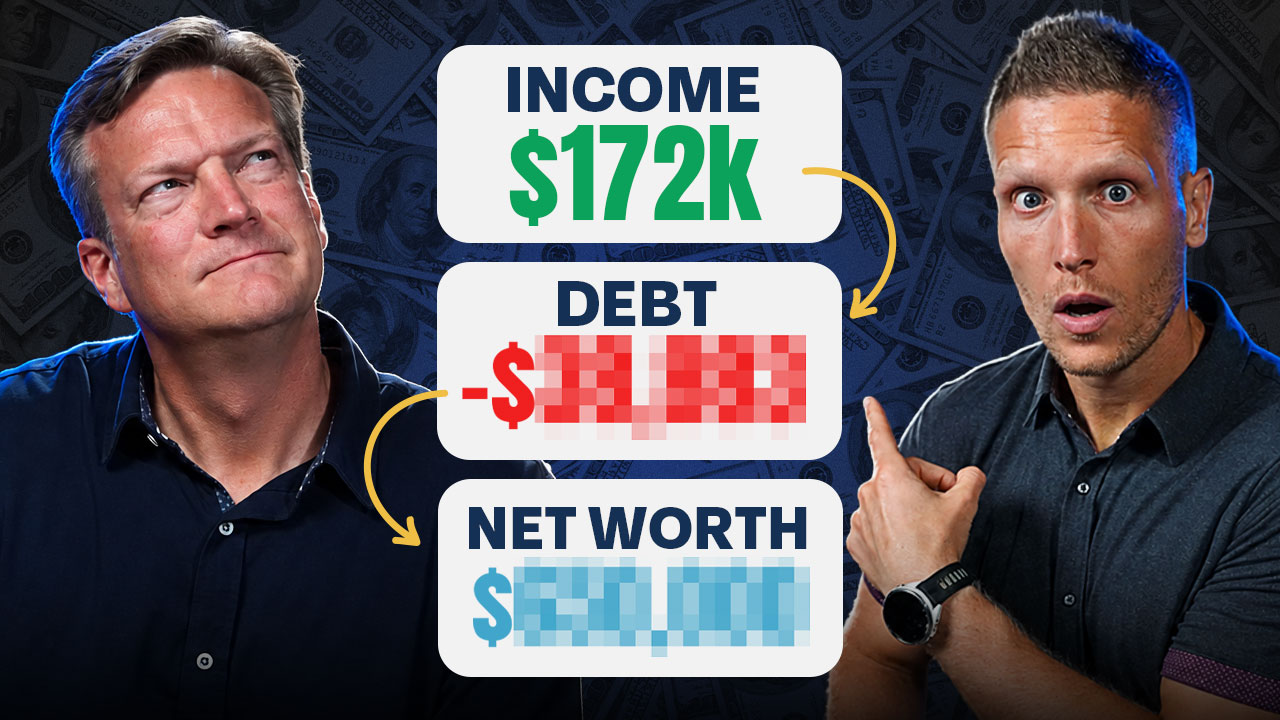
We Asked 20,000 Americans How They Manage Money. Here’s What They Said.
How do your numbers compare? We're ready to reveal our 2026 Financial Mutant Survey results from 20,000+ viewers on net worth, household income, savings rates,...

Episodes
Do You Actually Need Private Equity to Become Wealthy?
Private equity is opening up to everyday investors, but is it really worth it? Learn how it works, the risks and fees, and what to...