
-
▼


-
▼


Wealth building doesn’t require a PhD, just the right knowledge and habits. We explore the science of building wealth through behavior, investing principles, and the economic systems that can supercharge your results. You’ll learn how to avoid high-interest debt traps, why time in the market beats timing it, and how to use the tax system and index funds to your advantage. Whether you’re just starting or nearing seven figures, this episode breaks down complex topics into clear, actionable insights.
Enjoy the Show?
Where You Can Watch and Listen:
Subscribe on these platforms or wherever you listen to podcasts! Turn on notifications to keep up with our new content, including:
- Episodes of The Money Guy Show every Friday
- Episodes of Making a Millionaire every other Monday
- Mini-shows every Wednesday
- Ask Money Guy Livestreams every Tuesday
- Tons of other fun content!



Wealth Building Doesn’t Have to Feel Like a Secret Code (0:00)
Brian: Wealth building doesn’t have to feel like you’re deciphering a secret code. So why does everyone treat it like one?
Bo: Brian, I am so excited to talk about this because far too many people see investing as like this rigged game. But today we are going to flip the script because we want the journey to be clear and straightforward.
Brian: Exactly. Building wealth is actually a very simple science if you know how to make the system work for you. And that’s what we want to share with you today. So let’s jump right in.
Bo: When it comes to science, there are a couple different sciences at play. And the first one is one I think a lot of people, Brian, have heard of or at least are somewhat familiar with, and that’s behavioral science.
Behavioral Science (0:38)
Brian: Oh, this is the stuff of what you do and how that impacts you. This is the one thing when you think about the different sciences at play that you have the most control over. It’s the one that you can actually influence, that you can actually impact. So it’s why we want to start with behavioral science and this makes a lot of sense if you understand the math of compounding and so forth. None of this matters if you’re your own worst enemy if you’re working against yourself with all your decision-making. So that’s what we got to make sure we get the behavior right first. So how do you do that? What are the things that you need to do if you want to positively impact it?
Build Good Habits (1:16)
Bo: Well the first is you want to build good habits. We want you to be in the place and be in the posture that man, the things that I’m doing over and over, they are replicable. And the things that I’m replicating are actually net positives for my financial life.
Brian: Now, I’ve been around enough gurus, they tell you it takes 21 days to build a habit and 90 days for that actually to become a lifestyle. So, how is this actually going to intersect with finances?
Bo: Yeah. The thing that you need to do when it comes to the best habit you can build is simply living on less than you make. Whatever your paycheck is, whatever dollars you have coming in, you don’t want to spend all those. You don’t want to consume all those. You want to figure out how do I have a lifestyle below that threshold so that I’m not just waiting every pay period for the ends to meet.
Brian: Now, this sounds a lot like the first ingredient of the three ingredients of wealth building, which is discipline. Without a doubt, when you say live on less than you make, this means that you have enough discipline in your life that you are letting some of that money turn into margin so it can be invested over time. And that margin is the actual thing that you use to begin building wealth. But you cannot have the margin. You won’t build the margin without discipline.
Overcome the Fear of Investing (2:25)
Bo: And yet some people say, “Hey, you know what? I don’t have a discipline problem. I understand living on less than I make.” But I’ll tell you one thing I don’t love is I don’t love the idea of investing. So when you’re thinking about behavioral science and what you can impact, one thing you have to do is you have to overcome the fear of investing. And I think a lot of people approach it and it seems like this foreign, frightening, scary thing.
Brian: Well, I hate that people have gotten this thought that investing is dangerous or scary. And look, I’m willing to share in the short term, it potentially could be, but I think if you hang out long enough, long term, it’s pretty amazing. And we have a great illustration. We always talk about the cycle of market emotions. And I just know about humans, we typically are our own worst enemy is that when we have peak opportunity, meaning markets are getting crushed, we get scared to death. When you have peak scary times, meaning you should be running the opposite way, we typically get greedy and we’re all loading it up. So, cycle of market emotions is something you definitely need to understand when we’re talking about behavioral science.
Bo: Now, a lot of people don’t realize that that cycle exists that it’s sort of this somewhat predictable pattern. In contrast to that, most folks think or a lot of people when they begin investing, they think it’s really like gambling. 55% of Americans according to Magnify Money believe that investing is just as risky as gambling. So, showing up in your Roth IRA or in your 401k is no different than showing up at the casino. And that just could not be further from the truth.
Brian: I grew up in a house where I think that we resembled this. My parents thought investing was risky to the point that their biggest investment was buying CDs. And I think about what a crazy thing because this falls under that behavior or understanding is that what seems risky in the short term might actually be your biggest resource in the long term. And like saving in CDs, you’re not going to keep up with the way buying CDs is risky in the long term. So, it’s just this inversion of the reality just because you perceive this as risky or gambling. We got to get people over this barrier.
The Cost of Sitting on the Sidelines (4:41)
Bo: And while you may think that keeping money on the sidelines and not investing is the less risky behavior, there are some real costs associated with this. You’ve seen this illustration before, but we want to show you how valuable time in the market is. How costly it can be if you sit on the sidelines. Do you realize if you just had $10,000 invested from 1988 until 2023, so this is a long period of time, nearly 40 years that we’re covering here. If you would have just invested that $10,000 at the beginning of the period, left it invested, by the time you got to 2023, that $10,000 had turned into almost $420,000. I want you to remember that number, $420,000.
Brian: Well, this is why you don’t have to be the best investor because I think a lot of people think, well, I got to buy low, sell high, and that’s the only way to win. No, we’re just telling you just be there. Be there for the good days, be there for the bad days. And we’re nerdy enough, by the way, if you see this because you just said it’s close to 40 years. We actually this is close to 13,000 days. So if you think about it, so let’s talk about out of 13,000 days, what happens if you miss 5, 10, 30, and even 50 days?
Bo: If all you did was miss the five best performing market days from 1988 until 2023, rather than that 10,000 turning into 420,000, that 10,000 only turns into about 264,000. With five days, five days. If you just miss the 10 best days, instead of 420,000, you end up with about 191,000. We’ve lost over half of it just by 10 days. If you miss the best 30 days, so a single month, the best 30 days in the market, that 10,000 rather than turning into $420,000 only turns into $71,000.
Brian: I mean, and the big crescendo, 50 days, which is not that many more. I mean, like I said, out of 13,000 days, close to 13,000 days, we’re talking about a rounding error, but we could take that 417,000 all the way down to 32,000. And we all know none of us have the sports almanac. None of us have the flux capacitor. So we couldn’t do this if we wanted to. So just go ahead and save yourself the calories, the mental horsepower, and just know that you’re going to be committed to stay in this market.
Always Be Buying (6:59)
Bo: So how do you do it? How do you combat that? Well, that’s the other good habit that you can build. And Brian, you say this all the time. The key is always be buying.
Brian: ABB, baby. Always be buying. That’s for sure.
Bo: This is the idea that no matter whether the market is going up or whether the market is going down, you’re putting your dollars to work. And the beauty in this is that it’s a win-win. If you’re investing every single month and the market is going up, then the money you invested last month has made money. That’s great. If you’re investing every month and the market goes down, then the money you’re investing this month is getting in at a lower level than you got in last month. So, if you can reframe your mindset to always be buying, you’re already going to set yourself up on the winning side because we know that eight out of 10 years the market goes up. It’s only down about two years in a decade. So, if you can get your money to work, odds are over the long term, you’re going to end up in a better place.
Brian: Yeah. I like that it lets you gamify this essentially just as you shared. This is a great tool for volatility because it’s going to let you affirm and feel like you’re checking the box on taking advantage as a financial mutant of the bad times, but then it’s also going to be stick with it enough so that the next point that we’re trying to bring forward is stay the course. If you’re not staying consistent with your investing, you’re missing out tremendously.
Stay the Course (8:16)
Bo: Yeah. All these other habits were things that you need to do, right? So, you need to live on less than you make. You need to overcome the fear of investing and actually invest. You need to always be buying. Staying the course is kind of the other side of that coin. Hey, what do I not need to do? I don’t need to deviate from my plan or change my plans. I need to recognize that if I can just stay true to myself, if I can just stay grounded, this thing works. And Brian, you say this all the time that if you ever get uncertain or you’re ever unclear or something makes you feel nervous, there’s a really good thing you can do to help move you in the right direction.
When in Doubt, Zoom Out (8:55)
Brian: When in doubt, zoom out. Look, I’ve already shared it. My parents thought the stock market was risky, it was gambling. And without a doubt, if you look at this in the short term, it looks like this is chaos. I mean, if you look at annual rates of return of just like the S&P 500 or 60/40 portfolio, if you were trying to even add some diversification, it looks like you’re like, why would I do this? Do you see what emotions this would probably just bring up in me? Why would anybody stay the course if you look at all these random dots?
Bo: For those of you out there in podcast land, what we’re showing is investment returns from the early 70s all the way through the end of 2024 on an annual one-year basis. And it looks like a wild scatter plot. There is no rhyme or reason. There are dots that are above 0%. There are dots as high as 30%. Then there are dots that are below. But there is no rhyme or reason. It looks completely random. But like you said, when in doubt, zoom out. When you zoom out and you say, “Okay, how do these returns look over a 20-year rolling period?” Well, now it’s incredibly consistent. It doesn’t look so sporadic or so random. You can see it is pretty clearly centered somewhere around that 10 to 11% long-term rate of return that dare I say over this time period looks fairly predictable.
Brian: I mean, I know in the intro I talked about decoder. This looks like a decoder. I mean, if you can when in doubt zoom out, all of a sudden that chaos becomes something that has purpose that seems somewhat consistent. There’s just a lot of ahas that should be popping off in your brain. It’s definitely behavioral wise when you see this type of illustration.
Bo: But you may be thinking, well, yeah, but I’ve just got the world’s worst luck. I understand this, but man, what if I start investing? You know, this was the 70s and the 80s and the 90s. This was personal computer and this was internet. Look at stock returns over the last 20 years. If you pick any year from 2004 until 2024, and you just said, “Hey, if I started investing this year,” and we’re just looking at the S&P 500, what would my rate of return been one year in the future, two years in the future, three years in the future, so on and so forth. And what you can see is there is not a five-year period in this 20-year period that if you would have started investing, you would have had a negative rate of return. Even if you started investing in 2007, right before the great recession, if you can zoom out and give it enough time, after 5 years, you were back to making money. You were back in the green. You were back moving in the right direction. And this assumes that you weren’t someone who was already buying through it. If you were buying through this, you were positive much earlier on. So, if you understand how markets work and how investing works, you can set yourself up for financial success.
Brian: This is when people say, “How long should you plan on having your money invested to even consider investing in the stock market or diversified portfolio?” There’s a reason. It’s the science and the math of this calculation of the five years at all. And that’s why if you’re trying to save up for a down payment or an engagement ring and that’s going to be in the next two years to three years, you’re not investing that money. And this chart is the perfect illustration. And it also brings to focus that things over the long term it just gets it’s not random anymore. It really does streamline nicely when you see how close this all aligns if you can just stay the course and think like a long-term investor.
Financial Science (12:30)
Bo: So we’re talking about the science behind wealth building and we kind of hit first what you do with your money. That’s the behavioral science. Well, the second science we want to look at is financial science. And this is quite literally what your money does when you put your money to work, what actually happens to it. And so, you might think, oh, great, great, great. We’re going to talk about growing and building and all this stuff. But before you get there, you have to beware.
Avoid the Trap of High-Interest Debt (12:56)
Brian: Well, I think we just came out of the behavioral science which was important. But before we even because I want to talk about the math, but the first thing is we have to avoid the trap. And this is still somewhat behavioral. That’s why I think it’s important to be the first thing. So many people when they first start on their journey without realizing the power of what their money could become, they fall into high-interest debt thinking because it’s the bridge that feels like it solves all of your problems. You don’t have enough income. No problem. We’ll get you some debt. It will be the bridge that gets you there so you can fake it until you actually make it. The problem is you are digging a hole that you will not be able to get out of. And this is so important when we think about what you should do with your next dollar. When you think about how you should approach making your financial decisions, high-interest debt and getting rid of it and getting it off your balance sheet is very early on. Step number three, literally it is before you start doing any investing outside of getting your free employer match. That is how powerful it is. And so the question becomes, okay, why? Why is this so powerful?
Bo: Well, if you think about this, we know that compounding interest can be amazing when it’s working for us. But when it works against us, I don’t think we often recognize the gravity of how bad it could be. And we just said if you took $1 and you made a reasonable rate of return of 8% over a decade, that $1 would double, which is great. That $1 would turn into $2. That’s awesome. If you fall into the trap of high-interest debt, and instead of making 8% on your money, you’re paying someone else 22% annualized on a credit card, rather than your $1 doubling, you actually go 5x in the hole. You actually lose $5 in interest over that same time period. High interest debt is literally a hole that the deeper you dig, the faster you dig, the harder it is to get out of, you cannot play in those waters.
Brian: Well, what makes me sad is not only is there the spread of opportunity cost of what could have been and now what you’re paying and all this high-interest debt, but it’s also the lost time. That’s right. And so that’s why Bo, I think it’s really important we ought to go ahead and lay out some ground rules, what actually classifies as high-interest debt.
What Qualifies as High-Interest Debt (15:12)
Bo: Yeah. So, we have a few rules of thumb here because we don’t believe that all debts are created equal and we’re going to talk about in a moment. We don’t even think that all debts are bad. Some debts are okay. But if we’re thinking about the Financial Order of Operations, we’re trying to follow well what qualifies as high interest debt. So, let’s start with student loans, which a lot of people out there in the country are facing right now. Our thought is based on the opportunity cost of dollars that if you’re someone in your 20s and your student loans are above 6%, you may want to consider prepaying those. If you’re someone in your 30s and your student loans are above 5%, you may want to consider prepaying those. And by the time you get to your 40s, if your student loans are above 4%, now’s the time that you want to start knocking those out.
Brian: Now, we’ve also people who are familiar with our content know we have the 20/3/8 rule, but you know, look, we’re in a post pandemic, post-inflationary period. Interest rates are much higher than they’ve been back during the 90s and 2000s. So, people are now saying, “What about those consumption interest rates like on car loans?” This one’s a little unique because I’ll tell you, some of these interest rates kind of they make the hair on my arm stand up a little bit. They make me have a bad taste in my mouth. But we’re on purpose sharing these higher rates because they’re just a moment in time. If you’re following 20/3/8, that’s right. You have to fall inside. You’re only going to be having this for three years. And we just know that the time is so valuable that we want to let you know that it’s okay that you have some of these things so you can get to your job with your automobile but also be building wealth in the background. So that’s why in your 20s we say 10% on car loans, 9% in the 30s, 8% for your 40s. Credit card debt, now this is going to blow people’s mind. We think, look, credit card use is okay, but credit card debt, no way. Including, because I know a lot of financial meetings, you get caught up in thinking, I’ll just play this transfer the balance to all these 0% credit cards. That is a trap. It’s also not worth the hassle factor. I’m just telling you, if you’re going to be a financial mutant, you have to figure out the value of your time. You have to figure out the hassle factor. I don’t want you doing any of those reindeer games whatsoever. We consider credit card debt to be paid off monthly. Don’t play into that game of trying to figure out if you can maximize here and there. It’s a trap waiting for you to fall into it and get yourself in a pickle of a situation.
Bo: This may be aggressive, but playing with carrying a balance on a credit card is literally playing Russian roulette with your financial life. Just because that one time did not derail you, did not bury you, does not mean that the next time won’t. That’s why we say credit card debt, no way. Do not carry a balance.So, this shows how devastating high interest compound interest working against you can be devastating. When it comes to the financial science, let’s talk about what you do do. The financial science side of it would suggest you want to get compound interest on your side. You don’t want it working against you. You want it working for you.
The Wealth Multiplier (18:25)
Brian: Well, how could we talk about because I’m glad we’ve moved away from the trap of debt. Now, let’s get to what I get excited about the wealth multiplier. Guys, this is kind of one of those key concepts if you know what we talk about. I get excited about my Mr. Marrow moment where I talked about my economics teacher in high school talking about if I could invest $100 a month, I would be a millionaire. The only way that’s possible is that when people are billionaires of time, when you’re young, you are literally a billionaire of time. Your dollar does so much more. You might be jealous of your bosses or people a few years ahead of you. They are jealous of your time. So, don’t sleep on this because a 20-year-old, a dollar has the potential to become 88 times over by the time you retire. But here’s the part that’s somewhat mean but it’s the reality. When you’re 30, that same dollar has potential to become 23. Still incredible. I mean, 23 times, but you realize we just cut that in four. I mean, that for you 20 year olds, we just made it four times harder for the 30-year-old to do what you did as a 20-year-old. For a 40-year-old seven times. That’s still incredible. You’re going to get seven times whatever it is. But now we’ve made building wealth 10 times harder compared to the 20-year-old who starts. So guys, when you understand this concept of how powerful and valuable your time is, you’ll think about saving and investing differently. You’ll also think about how you consume differently. Now, when you see people, all your neighbors and friends driving around the financed cars that are out for 84 months, you will have a distaste for that because you know what they could have, would have, should have done with every dollar in their army of dollar bills.
Compound Interest (20:03)
Brian: The science behind this, the underpinning of this, the way that the wealth multiplier works is not rocket science. This is simple compound interest. It’s this idea that I can have my money make money and then the money that my money makes can make money and then even that money can make money. If I have $100 and I make 10%, I now have $110. That’s $10 in gains. Well, now if I take all 110 of those dollars and I make another 10%, now I have $121. I have $11 in gains. And the bigger the numbers get, the bigger the numbers get. But I know a lot of people out there saying, “Well, okay guys, I get it. $1 turns into 88 and I understand compound interest, but walk me through this in like a real life example. Like walk me through why should I be excited about this?”
Maxing Out a Roth IRA Example (20:49)
Bo: And so this is for every person out there who’s ever maxed out a Roth IRA, wants to max out a Roth IRA, or is trying to decide if they should max out a Roth IRA. We just want to show you how compelling this can be. So, let’s assume that you’re someone who’s going to max out your Roth at $7,000 a year and you can earn 8% on average. You’re going to do this for the next 30 plus years. So, all we’re going to do is max out Roth IRA $7,000 a year. Not super super complicated. In the beginning, and Brian, you talk about the beginning, it might not be super super exciting. You realize that it will take you almost nine years, a little over eight and a half years to where now your money earns more in a year than you save in a year. So, up until this point, you’ve been doing a lot of the heavy lifting.
Don’t Quit in the First 10 Years (21:36)
Brian: This is something that really bothers me and I want to go ahead and warn you about this on the front end because you’re going to be in the first 10 years. Maybe many of you are just like I am, you know, and Bo is. We know that 80% of millionaires are first generation. So, you’re hearing a lot of these concepts for the first time. And a lot of you are going to go on this journey with us. You’re going to get excited when you find out about the wealth multiplier. And realize we’re just showing this leveled out. The sad thing is when you invest, returns don’t come in nice little eight to 10 percent rates of return every year. It’s going to come in a jagged way at you. One year you’re going to make 20%, next year you might lose 7%, but over time it’s going to turn into somewhere between 8 to 11%. But here’s what I want to warn you about. The first 10 years, a lot of you are going to quit if you don’t have this knowledge. I want you to go into this with your eyes open because what’s going to happen in that first 10 years is you’ll likely experience and live through your first and second recession. There will be two downturns in every decade. Typically, you will see market volatility. And when you see that your portfolio is going up and down and then you find out that your money only doubled in that 10 years, a lot of you are like what are we doing? And that’s why Bo, it’s so important I want you to set the stage for it’s not the 10 years to get you excited. You have to stick past 10 years. You have to stick 15, 20. And we’re going to show you the why because many people don’t give you the actual illustration or the result of why they have to do it. But I just want to tell you eyes wide open. Do not quit in the first 10 years. You will feel every desire because this is hard to save and invest. You will feel every desire to quit because the messy middle, the kids, everything’s going to be happening. Don’t do it because here’s the payoff.
The Tipping Point (23:22)
Bo: So 8.75 years for your money to make more in a year than you save in a year. But by the time you get to 15.8 almost 16 years, you have now hit that tipping point to where now the growth in your portfolio is larger than the dollars you’ve saved. Your money at this point has now worked harder than you. More of your account balance after 16 years is earnings than it was contributions.
Brian: Now wait a minute. I want to make sure people hear this. After 15 years, getting close to 16 years, you will have made more money from the portfolio than you even put in in contributions. Do you see how this is exciting? Meanwhile, back just a few years earlier in the first 9 to 10 years, you just doubled your original investment, which is hard. That’s not sexy, but you have to do it. The stick with it has to be there for this all to work.
Bo: And then as you move to the end of the journey, if you do this for 32 years, do you recognize, again, this is just saving $7,000 a year, earning 8%. That in the 32nd year, your money now earns more every single month than you save in a year. It’s growing by $7,000 a month at that point, even though you’re only saving $7,000 a year. This is why it gets exciting. This is why, you know, we know the typical millionaire happens in their late 40s, typically after 27 years of diligent saving and investing.
Brian: And when you get to my I’m past that point, by the way. I’m in my 50s. And what’s amazing is when you live in an area where like we live and you’re around people like I am, we talk about this and I talk to my peers and we’re like, can you just believe what the portfolio made last quarter? And I can’t tell you which dollar I invested when and where is why this got to be so big. It was just those consistent small decisions that kept stacking on top of each other and built this great big beautiful tomorrow. But if I’d have quit anywhere in that journey, I would have never gotten to that 20 plus years to start seeing this. So that’s why your behavior comes into play. The science of actually what the math is doing for you comes into play. Bo, now we ought to talk about what’s the science of the economy because is this something that can continue to keep going forward or are our best days behind us?
The System is Rigged for Investors (25:40)
Bo: Yeah, it’s really interesting. We talk about behaviors, what you can do and financial science, what your money does, but now let’s talk about the system in which we operate because there are a lot of people out there that think, oh, the system’s rigged against me and oh, I just this is only for the other people. And I would actually flip that. I would argue that if you’re an investor and you are committed to long-term investing, the system presently is actually rigged for you. And if you don’t believe me, just think about some of the structures that we have in place. Now, you’re going to think when I say this, oh, these guys have lost it. But the tax system, we have a very unique tax system in this country. And whether you like it or dislike it, one of the unique things about it is the way that investment accounts, the way that growth opportunity accounts are treated is different from a tax perspective. And if you understand that, you can actually manipulate that to your advantage over the long term.
The Three Bucket Strategy (26:39)
Brian: Well, yeah, without a doubt. We talk about this as the three bucket strategy. We’re talking about your after tax investments, your tax-free, which are your Roth investments, your pre-tax. This can be because look, we know that pre-tax, this is the type of assets that you want to put like your bonds and your fixed income because everything’s going to be paid tax as ordinary income. You ought to know that. That’s a variable you ought to understand so you can put what needs to go in those accounts. Tax-free Roth. This is where you stick it to the man legally and build your 7 figure millionaire status without any taxes in the future. So you want to put growth type assets in those type of holdings, but you don’t want to get too risky because you can’t take losses on any of these type of investments. And then the after tax, this is where we want to build the bridge or other investment assets that you want easy access to, but also take advantage of the tax favor. And a lot of you are hearing this and like, man, that is a lot to take in in one or two sentences. The good news is you don’t have to figure this out. We’ve already done this for you. The science is cooked and built into the Financial Order of Operations. It is very much set up to take advantage of every one of these tax buckets for you. We’ve done the heavy lift. So, if you want to know more about the Financial Order of Operations, go to learn.moneyguy.com. You can check that out and do the deep dive.
The Advantage of Index Funds (28:01)
Bo: So, obviously the tax system is structured. The way the accounts are set up is structured in a way that you can take advantage of. But even taking it a step further, okay guys, I get it. I get the buckets, but what do I do inside the bucket? Well, even there, the system has now morphed over the last decades that now you even have a huge advantage in your corner that you get to take advantage of index funds. And as a reminder, just like quick vocabulary lesson, an index fund is just a specific fund that tracks some sort of market index, meaning it tries to mimic that segment of the market. So, most often people think about like the S&P 500. It’s just the 500 largest publicly traded companies in the United States. Well, rather than me having to go out and buy all 500 of those individual stocks, I can buy a single ETF or a single mutual fund and I can get exposure to all 500 of those companies. And they are incredibly low cost to operate. So I don’t have to figure out what do I go buy and when do I buy and when do I sell it. I don’t have to go try to beat the market. Index funds provide me an opportunity where I just get to be the market.
Brian: Yeah. Don’t try to beat it. Just be the market. Preach. That is where this thing is at. And then that ties into because a lot of you remember that whole analogy, this is gambling. When people see this next illustration, I think it just kind of puts it to bed. It is so much better to be a bull market investor than even the fear. It’s almost like, you know, if you watch Monsters, Inc. and other things and you’re worried about the boogeyman under the bed that you sleep in at night and the dark is scary. When you understand the actual reality of how dangerous is a bear market, you quickly realize, no, it’s better to be a long-term investor. The fear I have about those downturns is probably much more overplayed. And I even have tools that can fight this. I’ll have diversification. I’m going to have we’ll get into all that why you should consider when your life gets complicated. We’ll have a solution. But Bo, show them why being an investor especially bull market investing is so much better than bear markets.
Bull Markets vs Bear Markets (29:59)
Bo: Yeah. If you think about the market as a whole the S&P 500 from 1942 to 2024. So we’re talking about like 80-ish years around here and you just look at okay how long did bull markets last compared to how long bear markets last. And you can see bull markets last a whole lot longer. And you think okay well how severe are the bear markets? How bad is the draw down relative to the uptick in the bull markets? And what you can see is that bull markets are not only much bigger and much longer and much better and much more frequent. If you were looking at this and thinking that the stock market was gambling and thinking that the stock market was risky, you would say, “Man, I’m going to put my money on the bull market. I’m going to buy into that side of it.” And that’s what our entire system is built on. That’s why we want you to always be buying. Because even when the market is scary or uncertain or down, when you compare that to what it looks like when it’s up and not scary, it is a very very very different picture.
The Law of Accelerating Returns (31:03)
Brian: Now look, and we put up all the disclaimers because we never try to push things or skew things because we really do try to be as transparent as possible. But a lot of people say, “But past performance is not indicative of future.” And that’s true. We don’t know. And that’s in all the disclosures. But there is something that I always think about. It’s this once I discovered this I was like oh my gosh this makes sense is that you hear about the law of accelerating returns. This is the thought just like I tell you your money doesn’t grow in a linear fashion. We as humans we think in linear terms. We think that it’s always going to be 1 2 3 4 5 6 7 you know and so forth. And it takes forever for stuff to build. It’s just not that way. It typically goes more like 2 4 16 and then goodness gracious this thing’s getting big. And that’s the way it works with investing too. And we put up an illustration called the you know kind of make this point about law of accelerating returns. Look how slow it took for innovation to occur for mankind. From just doing that first papyrus and getting paper and printing and then the printing press and then we get into telescope, we get into the first battery and then I mean how crazy is it? We have the first car, the first airplane, and then before you know it, we have commercial industries built on this stuff and now we’re in the infancy. Maybe we’re not even in the infancy because it seems to be picking up so much speed so much faster. Artificial intelligence, this thing, every time you think you’ve got the world of technology and innovation figured out, the next thing comes over the horizon that revolutionizes. And I’m old enough, you know, because I’m in that greatest generation, Gen X, where we were analog and now we’re digital and now we’re even moving on. And I’ve seen so much just in my lifetime. This is not slowing down. So that’s why we win. It’s not a zero sum game where in order for you to win, somebody has to lose. The pie is actually getting bigger and that is the good news that gets exciting. Now look, we might build this thing up to where we build something that takes us out, but at least financially we are going to be able to make money as this law of accelerating returns keeps going forward.
V-Shaped Market Recoveries (33:12)
Bo: And so you may be saying, “Okay guys, I get that. I hear you. I understand that. But I know in fact the market is scary because I’ve experienced it. I was investing in 2008. I was investing during COVID. I was invested fourth quarter 2018. I was invested during the dot-com bubble. I know that the market does have periods where it gets scary.” And we’re not going to fight you on that. That is true. But here’s what we know about the way that the science of the market works. That the way the market works is when there’s a downturn, when the market moves in a negative direction, when we hit bear market territory, oftentimes there is a V-shaped recovery. And that V-shape means that as soon as it’s a bottom, it doesn’t linger around down there. It doesn’t hang down there. As soon as it hits that lower point, it catapults up and starts moving in a different direction. We actually have the math to back this. We said, let’s look at the S&P 500 and look at every bear market since 1950. So, how bad was it? And if you average out all the bear markets we have, the average loss is about 35% from the height from the peak to the trough. And the average length was about 13.8 months. So just over a year. But did you know that after the bottom of that bear market on average in the first month of recovery the market recovered about 15%. In the first three months it was about 21%. The first six months almost 28%. In the first year on average after a bear market now mind you average bear market downturn was 35%. In the first year following that lowest point, market made back 43.5%. And by the time you get 24 months out from the bottom, on average, it’s up about 63%. So even though the market might get scary and it might be uncomfortable and it might not look exactly the way you want it to look, it changes. It changes quickly and it changes in a very positive direction.
Intrinsic Value and Market Recoveries (35:05)
Brian: Well, and people say, well, what’s the why? How can there be V-shaped recoveries? And it’s typically because of intrinsic value is that and information travels so fast now with modern communication and transparency and other things is that you’ll see markets get where they get disconnected. Meaning just like in 2008 you find out that the buildings that Apple owns without debt are worth more than what the stock was trading at. Not even taking into account all the intellectual property and all the other stuff. You go, “What in the world is going on? This is the greatest opportunity ever. Why would I not buy this?” Well the reason nobody wants to buy it is because us as emotional creatures we are disconnected from the actual value so one day people wake up originally and go wait a minute this wasn’t as bad as I thought and you see the buyers line up and then you see this slingshot of recovery the reversion to the mean or the we talk about that rubber band method where the velocity the pluck effect of how bad it is going down is probably building energy for how good it’s going to be coming back. But a lot of you are going but guys, if I lost 35% when I’m 65 years old, that could be catastrophic. You’re exactly right. This is why the science is it’s not just all equities all the time. You got to get your diversification right. You got to have somebody who is managing what is going on with my investments so that I don’t experience 100% of the volatility because that’s going to break me emotionally.
The Abundance Cycle (36:34)
Brian: And that’s why I tell you guys, we can love on you as much as we want, give you all the free advice, and really tell you in a transparent way how things work, is because we know that even though building wealth is incredibly simple, it’s far from easy. There’s a lot of things. And also, what you’re going to find is when you reach your seven figure status, you’re going to be like, “Oh my god, this is the first time I’ve ever done this, and now my life went from simple to more and more complexity. How do I do this?” We know that we’re going to be able to leave the porch light on for you and help you do this in the best way possible. We’ve done this for hundreds soon to be thousands of times with all the clients that we’re working with all across the country. And that’s why you don’t have to be in this alone. And that’s why we can do the abundance cycle where I can give you all this free advice because we know that just the recipe is so good that it will create the success that will create this complexity which is a good thing. It is a good thing. But you don’t have to do this alone. You will be the CEO of a multiple seven-figure entity if you think about what the value of your net worth and all of your investable assets is going to be. Don’t take the risk if you don’t have to do this alone. Consider working with us. And guys, let that abundance cycle fulfill. If you’re by the way, if you’re at the beginning of your journey and you haven’t gone to moneyguy.com/resources, let us love on you. Take all the free advice that we’ve given you. If you’re in the middle of that journey, we’ve got tools, we’ve got hubs, we got resources that’ll accelerate. And of course, my financial mutants that are close to seven figure status and beyond, we’d love for you to consider paying it forward, letting us be the Johnny Appleseed of personal finance so that you can live your best life. I’m your host, Brian Preston. Mr. Bo Hanson, Money Guy team out.
Free Resources


Free Resources
Financial Order of Operations®: Maximize Your Army of Dollar Bills!
Here are the 9 steps you’ve been waiting for Building wealth is simple when you know what to do and the order in which to...

Free Resources
Wealth Multiplier By Age
If you want to set yourself up for future success, find out how much you need to save every month to become a millionaire.

Free Resources
Car Buying Checklist
Here’s how you can buy a dependable car that won’t break the bank. Our free checklist walks you through the 20/3/8 rule and strategies to...
Articles

Articles
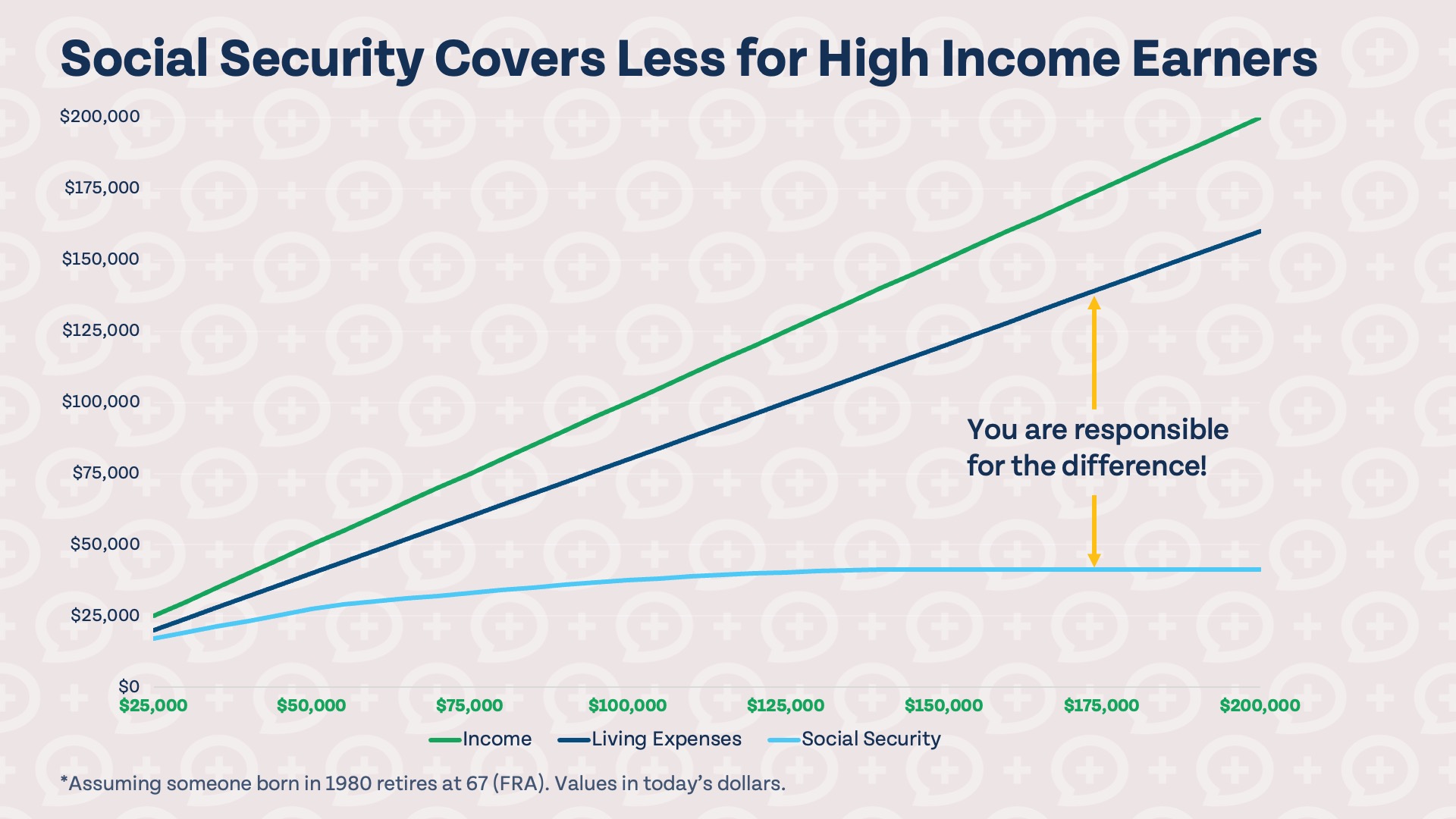
How Much Do You Need To Retire With an Average Income?
It’s easy to become discouraged if you have an average or below average income. Saving for retirement is normally more difficult with a lower income;...

Articles
How To Get Affordable Health Insurance in 2026
Health insurance premiums may make up a significant portion of your budget. How can you find more affordable health insurance? Is it ever worth going...

Articles
All About the New Trump Accounts for Kids
In the One Big Beautiful Bill Act (OBBBA) passed last year, a new type of account called a 530A account or Trump account was authorized....
Financial FAQs
Courses & Tools

How about more sense and more money?
Check for blindspots and shift into the financial fast-lane. Join a community of like minded Financial Mutants as we accelerate our wealth building process and have fun while doing it.
Free Resources
Financial Order of Operations®: Maximize Your Army of Dollar Bills!
Here are the 9 steps you’ve been waiting for Building wealth is simple when you know what to do and the order in which to...
Free Resources
Wealth Multiplier By Age
If you want to set yourself up for future success, find out how much you need to save every month to become a millionaire.
Free Resources
Car Buying Checklist
Here’s how you can buy a dependable car that won’t break the bank. Our free checklist walks you through the 20/3/8 rule and strategies to...
Recent Episodes

It's like finding some change in the couch cushions.
Watch or listen every week to learn and apply financial strategies to grow your wealth and live your best life.
Episodes
Top 10 Mind-Blowing Money Stats (2026 Edition)
Are you on the right side of the data? In this annual classic, we reveal 10 mind-blowing 2026 money stats and personal finance strategies to...
Episodes
Here’s How Much Income Puts You In The Top 10%
What income puts you in the top 10% of Americans? We break down the numbers, bust common myths, and answer your biggest personal finance questions...
Episodes
From DINKs to Single Income and 2 Kids
Commission income, two kids, and a thin emergency fund - this is what the messy middle is all about. See how we help Tyler and...