Change your life by
managing your money better.
Subscribe to our free weekly newsletter by entering your email address below.
Subscribe to our free weekly newsletter by entering your email address below.
If you’re in your 20s and feeling behind financially, take a deep breath, because you’re not alone. In fact, 41% of Gen Z currently has a negative net worth. But being at the beginning of your financial journey means you have something more valuable than money itself: time. Your 20s are the perfect opportunity to build a foundation that will set you up for decades of financial success, and it doesn’t require being perfect or having all the answers right now.
In this episode, we break down exactly what every 20-something needs to understand about money. From avoiding the consumption trap and understanding high-interest debt to harnessing the power of compound interest and your wealth multiplier, we share strategies that may help turn small, consistent actions into meaningful financial progress.
Building wealth in your 20s isn’t about sacrificing all enjoyment for some distant future. We introduce the concept of creating meaningful experiences and memories that fit your current financial situation without derailing your long-term goals, or “bedazzling your basic life.” Whether you’re just starting your first job, dealing with student loans, or trying to figure out where to begin with investing, this episode provides an actionable roadmap that can help you build a stronger financial foundation in your 20s.
Subscribe on these platforms or wherever you listen to podcasts! Turn on notifications to keep up with our new content, including:



Brian: If you think you know everything about building wealth when you’re young, I want you to think again.
Bo: And Brian, I am so excited about this because we love helping people see that there’s a better way to do money. And we are going to share exactly that today.
Brian: We’re going to walk you through what everyone in their 20s needs to understand about money and how it can supercharge your financial life. With that, let’s jump right in.
Bo: Brian, since we’re starting in the 20s, let’s go ahead and level set and let’s have just a big sigh of relief because I think a lot of people in their 20s right now have a specific feeling when it relates to their financial life and it’s generally this idea that I’m behind and right now we want you to know, we want you to hear from us. It is normal to feel behind right now at this stage.
Brian: Well, you’re at the beginning of this entire journey. I think that’s what we haven’t had enough time for you to reach all the milestones to have the success points, but you also that fear or just the fact that you have so much ahead of you is also the perfect canvas for you creating something that’s really magical over the long term.
Bo: Now, if we actually look at this, 41% of Gen Z’s actually have a negative net worth right now. And we don’t want you to stay there. We’re not saying, “Hey, this is an encouraging thing and we want you to have a negative net worth,” but we want you to breathe easy and recognize that if that accurately describes your financial situation today, you are not alone. A lot of your peers, a lot of other folks at this age and at this stage of life are starting from a very similar spot that you’re starting from.
Brian: Well, think about it. You come out of college, you probably use some debt to try to hopefully better yourself so you can make more money in the long term. Let’s talk to you about how we get you out of this. We got to have a plan. This is the first thing. Now, good news for you guys. We’ve created the all-terrain vehicle. The plan, it doesn’t matter if it’s hot outside, cold outside, we’re going to be able to get you through it with the Financial Order of Operations. This is going to be what gets you out of debt and also help you build your army of dollar bills.
Bo: Yeah. And what the Financial Order of Operations is, you can think about it kind of like an instruction manual. It’s supposed to walk you through what you do with your next dollar. So when your paycheck starts coming in, when that money hits your checking account, you feel empowered that you know exactly what to do with it. So the Financial Order of Operations will be the tool that allows you to know what to do with your dollars. But at this stage and at this age, you also have to be thinking about what not to do with your dollars. What pitfalls should I avoid? And one of the best things you can do if you are in your 20s is make sure that you do not fall into the consumption trap that a majority of young folks fall into.
Brian: Well I think remember you’re at the beginning of your journey. You don’t have a lot of resources. You’re not in your peak earning years. So it’s easy to fall prey in this consumption society to just let’s use this magical bridge of debt to solve all of our problems. If we don’t have the money today that’s all right. We’ll use debt as the tool to get us out of this. But I’m telling you that’s actually going to work against you in the long term. We actually have, look at this fact. It’s not only the amount of money that you lose in the interest because unfortunately when you use consumer debt, it has a very high punitive interest rate. Typically even greater than 20 plus%, but then that money could have been working for you. And in this example, we’re only showing like if you made an 8% rate of return. But what I worry about is all the time that has also been lost out on. Debt is something you should definitely be fearful of. And if you’re not respecting it, you’re using it wrong.
Bo: Yeah, compound interest can be the eighth wonder of the world, but it can aggressively work against you. Again, if you have a 20% interest rate on $5,000 of credit card debt, it’s going to cost you $1,000 bucks. If you are spending $1,000 bucks on interest, but even if you had a great 8% rate of return, you only made $400 on a $5,000 investment, it’s going to be very, very difficult to right that ship. So, one of the things we want all of our 20-year-olds doing is figure out what in my life counts as high-interest debt. It’s so important. We actually have it as step three, Brian, step three of the Financial Order of Operations. So, if I have high-interest debt in my life, I need to put together a plan to get out of it. And we have some rules to help you determine and discern what is high interest. And specifically for those in the 20s, if you’re someone who’s graduating with student loan debt, and I know a number of you are, but your student loan debt is in the threes, fours, even the fives, your dollars can be so powerful, it might not make a ton of sense to aggressively attack that debt. But once that student loan interest rate goes above 6% at that stage, at that phase, you may want to consider prioritizing paying off that debt or having a plan or a strategy in place to pay it off more quickly.
Brian: Well, so that’s student loans, which hopefully you use to better yourself so you can make more income. I want to talk about car loans, too. Now, look, this is one we have a no hypocrite policy, and I think a lot of people when they find out about our system, they’re like, “You allow debt on cars?” I’m like, “Yeah, look, this is because I prefer everybody to pay cash for their vehicles.” Without a doubt because cars depreciate. They are napalm for your financial life. But I also realize that if you take young version of myself where I was graduating from college, had this freshly minted accounting degree, but I had not a penny to my name really. I had to use debt to buy my first vehicle so I could get to the job. And that was going to be the biggest wealth creator I had was that job where I was trading my time and my labor so I could start creating an income and hopefully live a disciplined life to create margin. So we do write into 20/3/8 20% down. Don’t finance for longer than three years, no longer than 8% and we even allow what high-interest debt is on cars. But if you’re sitting on lots of cash, of course we want you to pay cash for the vehicle and get rid of it. But this is to help you start that engine of wealth building.
Bo: Yeah. So, if you are in your 20s, even if you have a 6%, 7%, even 8% car loan, but it is inside the confines of 20/3/8, we want you to recognize that just doing 20/3/8 allows you to have a plan to get out of that debt. So, you might not need to prioritize paying off that auto loan at this stage because in your 20s, we recognize that you have a secret superpower that your older peers do not have. When you think about being in your 20s, you have the most valuable resource in the three ingredients of wealth creation, which is time.
Brian: Yeah, you are a billionaire of time. Look, I get it. I know when I was in my 20s, I wasn’t in my peak earning years. I was broke as a joke. And I’d look at people who were in their 30s. I’d look at people, my bosses, who were in their 40s, and I’d be so jealous of them. But I’m here to tell you, you can bring all that back and give yourself some context that will help you cope and actually hopefully build to become a monster of building being a financial mutant is that you really do have the most powerful resource of time. You are a billionaire of time. So use that money. Don’t rest on it. If you wait and you kind of YOLO up your life for this decade of your 20s, you’re going to have big regrets later because you didn’t maximize that very powerful tool.
Bo: So, how do you take advantage of it? How do you actually capitalize on being a billionaire of time? Well, the answer is quite simple. You just have to do something. You just have to start somewhere. Because when you have this much time on your side, a very, very small amount goes a long way. It’s why we talk all the time, Brian, about the wealth multiplier. You know, we have these cool little koozies that say, “This $1 koozie cost me $88.” Because we know for a 20-year-old, $1 deployed in your army of dollar bills that can work for you has the ability to turn into $88 by the time that you get to retirement. But if you wait, just like Brian said, if you squander the time for a 30-year-old, the wealth multiplier, while still exciting, is only 23. And 23 is very, very different than 88.
Brian: Yeah. This is always the part, I think, if you understand that for a 20-year-old, it’s 88 times over. For a 30-year-old, it’s 23 times over. For a 40-year-old, it’s seven times. You’re like, “Whoa, I would spend my money differently if I knew how time was working against me if I didn’t start working.” Well, flip the script on this and if you actually look at what you have to save to build your first million dollars. For a 20-year-old, it’s $95 a month. For a 30 year old, it’s $340 a month. Do you see how that’s almost four times harder? So when you, like I said, when you look up at the 30-somethings ahead of you who are making more money, you’re going to be jealous. But use this to bring it back and level set is because they’re jealous of you of the opportunity. Fast forward, look at the 40-year-old. They have to save $1,000 a month, $1,052 specifically to get to the same million dollars at retirement. That is 10 times harder than if you just take a little bit. So yeah, you don’t have money, but if you just do a little bit, I mean, it’s just changing little behaviors like coffee. This is where the latte effect definitely comes into play for 20-somethings is because any little discipline decision you make is going to have huge ripple effects for your future self.
Bo: Now, there are two sides of this coin, though, because someone starting out at 20 years old is different than someone who’s 29 years old. They’re at different stages and hopefully different phases of the wealth building. So, even though we’re telling you a little bit goes a long way and just start somewhere and just do something, there is a reality though that we don’t want you to become complacent. We don’t want you to say, “Okay, I’m just going to do something.” And you start doing that something and you stay doing that something because the idea is we want you to start a behavior and then we want that behavior to get better and better and better through time. And let’s show you why that matters. If we just look at this case study, we’re going to call this the power of progress. Let’s assume that we have two investors. We have Static Sam and we have Manny the Mutant. And both of them are going to start out at age 25 saving $100 a month. But we’re going to assume that Manny every single year is going to increase his savings by 10%. So he’s going to save $100 every month this year and then next year he’s going to start saving $110 a month. So on and so forth. Well, what we can see is even if they have the exact same rates of return, a 9.5% rate of return over an entire 40-year working career, Static Sam, just because he did something, just because he started somewhere, still builds an incredible pot of money. As he gets to retirement, his portfolio will be worth almost $600,000. But because Manny was a mutant and he didn’t get complacent, he got just a little bit better every single year. He was actually able to build a portfolio of almost $2.3 million. That’s almost five times more than what Static Sam was able to build.
Brian: Look, here’s how I would use this for motivation and bring it back to be somewhat prescriptive to your personal situation. We love and we give the guidance. We want you to save and invest 25% of your income. But here’s the reality for a 20-something. That’s very aspirational. You know, more than likely when you start out, when I say just do something, you’re going to be able to start saving investing 10% and your employer is going to hopefully do five or 6% through matching contributions. So you’re bringing in cumulative 15 to 16%. I just want you as every time you get a pay raise, don’t just consume it all. I want you to start pushing things a little bit more so that every one of those pay raises leads you slow but surely to that 20 to 25%. Because that is what’s going to happen. I don’t want you to get so motivated that today you start saving something but I fast forward 10 years in the future and you’re saving the exact same thing even though you had eight to nine different pay raises over the last decade. You got to let things happen. If you need motivation, I want you to go to moneyguy.com/resources. We have a great deliverable and a resource you can download for motivation. It says, “What can 1% more do for you?” And I think you’ll see this is going to be something that’s very enlightening.
Bo: All right, Brian. So, this has been motivation, motivation, motivation. Get excited, get excited, get excited. But I want to pause like record scratch, screaming halt to the show real quick because I think a lot of 20-year-olds, this next one is so important. This is so we want this to sit with you and to resonate with you because unfortunately right now your generation is the one that is the most susceptible to a false truth when it comes to investing. And this is the way that false truth goes. High risk means higher reward. That’s what the world is telling you. If I take on more risk, I’m going to get a higher rate of return. But that’s not actually what happens. What happens in investing is if I’m willing to take on more risk, I should receive a higher rate of return to compensate me for that risk. That’s what should happen. High risk in fact does not mean higher reward. So just because someone says, “Oh, I’m going to go do this individual stock. I’m going to go do this crypto. I’m going to go do this NFT. I’m going to go fill in the blank on the aggressive type of investment that you’ve heard about that you saw on TikTok that you’ve been pitched.” Just because it’s more risky, just because it’s more aggressive, just because it’s farther out on the risk spectrum does not mean that it’s going to yield more favorable results.
Brian: Well, I mean, look, when you take investing 101, you hear about the efficient frontier, and there is some truth, and that’s why you have to always be careful with anything. There’s always a little ounce of truth that that’s what gives it the power that then allows people to manipulate it and use it against you. Is that without a doubt there are things it’s just like your Roth IRA. I want you to have somewhat aggressive stuff in there, but I want it to be something that’s not speculative. I want it to actually have an investment component to it, not a speculative component. And so many things out there for this younger generation is that we’re going to help you cut the corner off so you don’t have to save as much. You don’t have to be as patient. We’re going to let you do this faster. That is the part that’s the risk we’re trying to protect you from. And that’s why if we’re giving you guidance on how you actually do this and implementation, our advice is keep it simple. Keep it simple. Don’t over complicate it.
Brian: The first thing is always be buying. I mean the set it and forget it because the other thing that I think is a curse on this younger generation is that these distractions into these cutting the corners off when you finally fast forward two to three years and you realize hey okay maybe buying this speculative investing or chasing what was hot last year this is a fool’s errand the problem is now you’ve lost a few more years on that wealth multiplier that’s not working for you so I would rather you when I say just do something. Make it automatic for the people where you’re actually setting up some dollar cost averaging every month out of every paycheck. This percentage is just always buying into the markets or the index funds, you’re going to be that much better for the future.
Bo: And why do we want you to always be buying? Well, the answer is it’s because the cost of not doing so can be huge. If we look at the difference in timing the market versus time in the market, do you recognize that if you would have invested $10,000 in the S&P 500 starting in 1988 all the way till 2023, just investing $10,000 one time, that $10,000 would have turned into $418,000 if you just left it in the market. But if you happen to just miss the five best days, only five trading days in that nearly 40-year period, you would have only built $264,000. If you missed the 10 best trading days, it’d be about $191,000. If you miss the best 30 days, the best cumulative month over that entire 40-year period, your $10,000 would have only turned into $71,000. This is why we always want you buying. We always want you participating. We always want you putting your money to work so you don’t risk missing the most exciting times to have your money working for you.
Brian: You know, the thing just to show everybody how nerdy we are. In our content meeting, we were talking about, you know, this is one thing, the tried and true, but I know there’s going to be a lot of people out there, and I’ve already alluded to it with chasing the hot dot. And Bo, you horrified me when you shared that for a lot of people, we’re taking sports betting and now treating this as almost like a component of your investment allocation. That scares me to death because that seems to be now the latest hot dot and you can’t get away from it. I mean, it seems like every podcast I listen to has got some type of sports betting advertising. Everything is pushing you in this direction. And then you know that doesn’t even take into account all the cryptos, the real estate, all the people that are out there pushing the latest and greatest hot trend. How do you get around this? I mean, what is somebody who’s young in their 20s, how do they get away from this noise?
Bo: Well, what’s the allure? What is the siren song when you are chasing this hot dot? It’s return. It’s oh my gosh, if you go do this, you’re going to have a 100x return. If you go do this, you’re going to make 50%. If you go do this, you’re going to and it’s really focusing on how much can you make? How much can you make? How much can you make? But would you believe us if we told you that early on in your journey, your savings rate, just the rate of savings which you employ against your income is exponentially more valuable than your rate of return. We chase the hot dot so that we can amp up our rate of return. But realistically early on, the rate of return really is not all that important. Again, if you don’t believe us, let’s walk you through a case study. Let’s take two investors, Sal the Savant and Manny the Mutant. They both make $50,000 a year of annual income. And we’re going to assume that they both have a 3% annual wage increase. Now, Sal the Savant is only going to save 10%. You’re going to see why in a second, but Sal is going to save 10%. And Manny says, “You know what? I’m going to save 25% of my gross income.” But Sal because he has the ability to pick stocks and find the hot dots and find the amazing things. Sal is going to annualize a 25% rate of return. I’m going to say that again, Brian, because it sounds so absolutely egregious. Every single year, Sal is going to make 25% over and over and over. Manny, on the other hand, is going to go buy a low-cost index fund and is going to make 10% annualized while he’s investing. So, Manny is saving more but making less. Sal is saving less but making more. Do you recognize at this pace it would take Sal 10 years, a full decade to catch up to Manny? I’m going to say that a little different. Sal would have to annualize 25% every single year for 10 years straight to make up for Manny just saving more at the onset.
Brian: And we know that even out performers consistently can’t do that. Unless it’s a Ponzi scheme or something that is cooking the books in the back corners and you’re being taken for a ride, you just don’t see that type of over performance over and over again. So, it’s back to the key learning point there. Your savings rate, especially when you’re young, is more important than even rate of return. It’s really setting up those automatic for the people behaviors that’s going to ensure that you know what we’re taking this component of time that we have in just abundance and we’re figuring out how we actually create traction so that my future self has those sloppy tears of joy and excitement when I’m in my 50s all because I made good decisions when I was in my 20s.
Bo: Okay, but Brian, hard stop. Hard stop. We’re talking about investing and building dollars and growing, but these folks are in their 20s and the 20s is the only time in life where you get to have certain experiences and you have freedom and all this. Why are we talking about all this? We’re going to waste the most precious years of our life where we could be doing things and creating experiences all for the sake of building for some future self.
Brian: This is why I do think that we are that perfect balance of practicality of here’s the way the numbers work, but then we also go put the behavioral stuff in there. And I know I’ve because we both come from very humble beginnings, but I’m now in my 50s and I don’t have regrets on how I did my 20s because I understood this concept of I was very intentional with my experiences. And I want to talk to you guys out there so you can kind of navigate this well because I think there’s something that social media has done a very big injustice on is that they have not drawn attention to that for most of us in our 20s especially if you come from humble beginnings, you don’t need a lot to keep you happy. I mean if I remember when I went on my honeymoon I just couldn’t believe that I was like wait a minute this is an all-inclusive I get all my meals. Hold on. If I didn’t choose steak or chicken I get steak and chicken. There were so many things that just blew my mind that now I look at as an older version of myself that just seemed somewhat basic. But I was just and it’s the same way I used to go on vacations and we’d share, you know, a condo and load up multiple couples and it didn’t matter if the beds were not the king-size beds in all the rooms is because in your 20s what is acceptable to you is the broadest it’s going to be in your life. So to try to use social media to tell you you’ve got to do luxury and you’ve got to do all these things, it’s a falsehood. I want you to bedazzle your basic life. And what I mean by that is focus on what matters. You know, and one of the examples I give is that I went to Italy when I was broke as a joke with my wife. We made incredible memories on the cheap. And my trip still has the gondolas. It still has doing things in Rome to see the coliseum. The difference is I’m dragging my luggage down the cobblestone. I’m actually taking public transportation. I’m not staying in the five-star resorts. You can do this in a way that fits where you are in life. It doesn’t mean you have to defer your entire life and wait until you’re wealthy and old to enjoy it. You just have to do it in a bedazzled basic way.
Bo: Yeah. And I think what’s interesting is when you begin to really think about things this way, it does allow your focus to clarify where you actually know the things that you really value, not what other people value for you. Even me where I am right now in the messy middle stage, which I’m not in my 20s anymore, but a lot of people in their 20s are in the messy middle or kind of starting in that phase. One of the things I recognize is right now, yeah, I could grab my wife and we could hop on a plane and we could go to Europe and we could go do the big luxurious amazing vacation. But you know what I found that we love? Just because we’re so busy and we’ve got all these kids and things pulling us in a thousand different directions. If I can go to a coffee shop and I can sit down with my wife and I can get a cup of coffee or a latte in a cup that’s not to go and I can sit there and drink it. That right there in this season, in this moment, doing that once a week, once a month, every so often is way more valuable for us than flying out to Europe and doing the big gigantic amazing vacation. So, understanding and finding what those things are that you truly enjoy that create those intentional experiences do not have to be expensive. Just because someone on TikTok or Instagram said that this is what your life ought to look like does not mean that that is what is true for you. So there are ways that you can bedazzle your basic life and focus on the things that really bring you happiness and fulfillment and you don’t have to wait until you’re 50, 60, 70, 80 year olds to do that. You can do that right now without sacrificing building for your future self.
Brian: Also, I think this is a great transition to talk about the mindset for a 20-something because this is going to make you kind of a contrarian in a lot of ways. If you have this mindset of beginning with the end in mind, it’s going to insulate you from a lot of the shenanigans that young people put themselves through. You feel like I think when you first understand this concept of money and you start realizing, hey, I’m using my I’m trading my labor and my personal time right now for hopefully investing for the future. A lot of times you guys, it comes with a lot of baggage is that you’re spending a lot of effort trying to, like I said, cut the corner off, get into the latest and greatest, chasing the hot dot. You’re going to find out if you’ll just do a little bit and keep it as simple as possible. You’re going to be rewarded just for the discipline. You don’t have to be so cute with it and be an expert and figure everything out right now while you’re in your 20s. You just kind of need to do some basics and you’ll be rewarded immensely just from that action. But don’t get distracted by all the other stuff that’s going on.
Bo: Well, I think that’s a great thing. So many people they get so distracted they do get pulled a thousand directions thinking I’ve got to have every single thing figured out. And it doesn’t have to be that hard. If you have a general vision for what the end is going to look like and the direction that you want to move, you don’t have to figure out a whole lot more. Even when it comes to investing all the time, Brian, I’ll have someone in their 20s reach out to me and say, “Hey, okay guys, I listen to it. I’m going to do my Roth, but man, there’s all these different companies. Do I buy Apple? Do I buy Google? Do I do Nvidia? What do I invest? How do I…” And I say, hey, hey, man. Slow down. Take a deep breath. It doesn’t have to be that complicated. What I want you focusing on is your savings rate. How much are you able to save? Are you going to max out your Roth? Can you do that? The investing part doesn’t have to be all that complicated. A matter of fact, it’s gotten substantially even easier over the past couple decades because now there are even solutions today that take away a lot of the thinking for you where if you can just answer two questions. When am I going to retire? When do I think I’m going to need this money? And how much can I save? If you can answer those two questions, you can build a robust investment strategy without having to figure out anything else besides that.
Brian: Well, I mean, if somebody came and just mugged me off the side of the street and said, “Hey, Brian, right now, what should I invest in?” The easy answer I always say is index funds, but you realize even that answer right there because if I was, I think of my 22-year-old self, freshly minted from college, I have a little extra jingle in my pocket and I want to do the Mr. Marrow moment and start investing $100 a month or $200 a month, whatever it is. When I hear index, I’m like, okay, once I actually start trying to create traction, is that S&P 500? Is that a total market index? Is that an international index? Is that a bond index? Is that a real estate index? I understand very quickly that things I take for granted on knowledge. For somebody who’s brand new to this wonderful world of finance, it could seem overwhelming. And that’s why a lot of you guys, now look, if you’re a little further on the knowledge train, you’re going to look at what this next answer like that’s not perfect. Well, of course it’s not. But it’s exactly what Bo said. If you can tell me when you need the money and how much you can save, there is a brilliant new thing that came on the scene in the last decade called index target retirement funds. And what I like about these type of investments is that they buy, especially the index versions, they’re super low cost. They buy only index varieties of different asset classes, but they have what’s called a glide path. Meaning that while you’re young, now look. Yes, they’re going to potentially have some bonds in them, which if you’re 24 years old, you’re like, “Do I really need 10% of my portfolio in bonds?” Maybe not. But that doesn’t mean you can’t go look because the biggest providers are like Schwab, Vanguard, Fidelity. Go look at all three of the different companies. Figure out the one that actually reflects the aggressiveness of what you want. But it’s back to once you figure this out and you’re brand new to this investment, you answer the question, how much can I save, when do I need it, there’s going to be a year I choose on this and then it’s going to do the rest. It’s set it and forget it because it’s going to be aggressive while I’m younger and then every year that I get older, it’s going to automatically have a glide path to where it gets more and more conservative.
Bo: I think that Brian, the 20s is such a wild decade because when you first start in your 20s, you’re just barely leaving childhood, right? A lot of folks, they’re graduating college or maybe they’ve only been working for a few years outside of high school and you’re still early on trying to figure stuff out. And by the end of that decade, perhaps you’re married or thinking about getting married. Perhaps you own a home. Perhaps you have children or thinking about having children. And there’s just a lot that happens in that 10-year period. And what I think is awesome is that it doesn’t have to be incredibly complicated. It doesn’t have to be super super difficult. If you can grasp a few relatively simple ideas in your 20s and you can begin to adjust your behavior and begin to make those types of decisions in your 20s, you actually get to set yourself up for an amazing 30-year-old decade, 40-year-old decade, 50s financial independence. But the difficulty of those later decades will depend upon the decisions you made in these early decades. So if you can figure it out early, you’re going to set yourself up for a lot of great financial success.
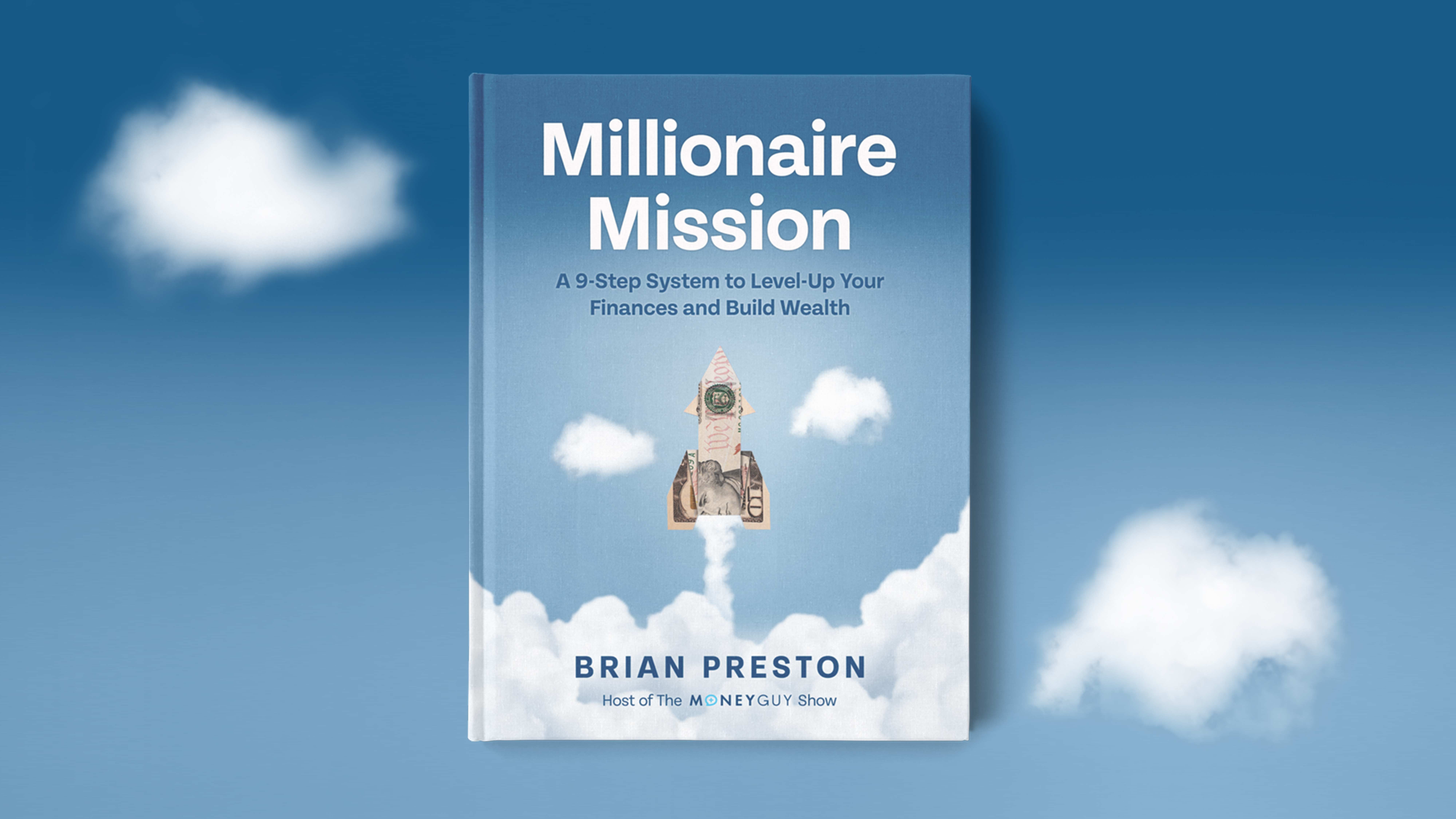
Brian: Let me bring this thing in for a close on you is that once again taking us back to our own 20s, I want you guys I’m going to give you a huge head start here. If you just go to moneyguy.com/resources, let us love on you. I mean, because we’re going to have so many different resources that are going to get you motivated, get you to cut through the noise to where you all of a sudden are going to understand this is going to be much simpler than you ever thought. Just a few behaviors that you can change on where your money goes is going to set you up. Now, it doesn’t mean this journey is going to be easy. I’m not going to tell you that this is easy, but it is definitely going to have some simple actions you can take. Go to moneyguy.com/resources. You can use all that for motivation. Then you’ll get to a point where you say, you know what, I don’t know if I’m ahead of the curve, behind the curve, or right where I’m supposed to be. We’re going to have some tools set up for you. If you go to learn.moneyguy.com, we’re going to have a net worth tool that’s going to let you have a dashboard view to track this every year. We’re going to have the Know Your Number so you can actually really figure out, are you ahead of the curve? Are you right there? I mean, all of this to set you up. And of course, the FOO if you want to kind of course you can go and listen to our 20 years worth of content or you can read my book Millionaire Mission or maybe you can just take the Financial Order of Operations course. We’ve made it very affordable on purpose is because our goal with the abundance cycle is for you to be the best version of yourself. And then guess what? One day in the future after we’ve planted these seeds of knowledge, you’re going to become a millionaire. And I’m hoping at some point on that journey, you’ll remember who planted all the seeds of knowledge, those nuggets that have turned into pots of gold for you now, and you’ll remember that abundance cycle and consider becoming a client. Bo, I love that we get to educate and share the magic of what has created success for us. It’s waiting there for you, too. Don’t let somebody tell you in your 20s that the system’s changed and it’s all rigged against you. Go use our content, get motivated, and go conquer the world because you’ve got that billionaire of time component that is going to make you a monster for your future self. I’m your host, Brian Preston. Mr. Bo Hanson. Money Guy team out.


Financial Order of Operations®: Maximize Your Army of Dollar Bills!
Here are the 9 steps you’ve been waiting for Building wealth is simple when you know what to do and…
View Resource

How Much Should You Save?
How much of your income can you replace in retirement? You can replace different portions of your income in retirement…
View Resource

How about more sense and more money?
Check for blindspots and shift into the financial fast-lane. Join a community of like minded Financial Mutants as we accelerate our wealth building process and have fun while doing it.


It's like finding some change in the couch cushions.
Watch or listen every week to learn and apply financial strategies to grow your wealth and live your best life.
Subscribe to our free weekly newsletter by entering your email address below.