Last Updated
September 16, 2026
Read Time
Share
Our 5 Levels of Wealth gives you a chance to measure your financial progress, see which level of wealth describes your financial situation, and what it takes to move to the next level.
Unlike the Financial Order of Operations (FOO), our 5 Levels of Wealth are more linear – and not everyone starts at the first level of wealth. The 5 Levels of Wealth are: 1) Financial Stability, 2) Financial Strategy, 3) Financial Security, 4) Financial Freedom, and 5) Financial Abundance.
Here’s a quick breakdown of our five levels of wealth.
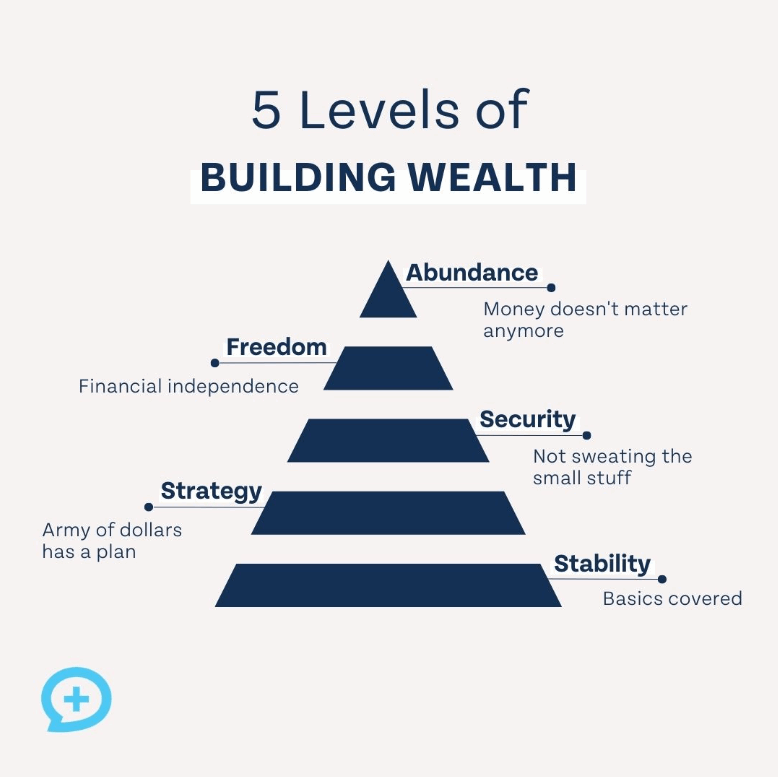
| Level of Wealth | Signs of Success | Traps to Avoid |
|---|---|---|
| 1. Stability | • Spending less than you are making • Building an emergency fund and covering deductibles | • High-interest debt • Only focusing on the monthly payment instead of the overall cost |
| 2. Strategy | • Investing 20% to 25% for your future goals • Automating your financial life as much as possible • Tracking your net worth annually | • Not saving enough for retirement • Lacking a direction or plan with your financial future |
| 3. Security | • Spending money on the small things without thinking twice • Bigger financial goals become in-reach, like traveling, major home projects, or even a luxury car | • Lifestyle creep (make sure you are continuing to live within your means) |
| 4. Freedom | • Your investments earn enough in a year for you to live on | • Not double-checking the math • Know what you are retiring to instead of just what you are retiring from |
| 5. Abundance | • Your time can't be bought • Focusing on the bigger picture and how to make the world a better place | • Don't wait to build experiences and memories |
Level 1: Financial Stability
Copy link to this section: Level 1: Financial Stability
Copied the URL to your clipboard!
Copy link to this section: Level 1: Financial Stability
Copied the URL to your clipboard!
Level 1 wealth means you can pay your bills!
40% of Americans struggle to pay for basic needs, so being able to comfortably cover expenses is a great first step.
Traps to Avoid:
- At this stage, don’t fall into the trap of tunnel vision and only focusing on monthly payments.
- Now is the time to start building your emergency fund and making sure your deductibles are covered.
Indicators of Success:
- Developing the habit of saving money and eradicating any credit card debt are huge signs of success.
Even if you start small, these habits are exactly what will take you to the next level and give you peace of mind. Don’t be afraid to cut back, consolidate your expenses, and be savvy about how you spend your money. It will be well worth it!
Level 2: Financial Strategy
Copy link to this section: Level 2: Financial Strategy
Copied the URL to your clipboard!
Copy link to this section: Level 2: Financial Strategy
Copied the URL to your clipboard!
At level 2, your army of dollar bills has a plan beyond simple cash reserves. Now is the time to make sure your money is working for you through investment tools like Roth IRAs and 401(K)s.
Traps to Avoid:
- Only 16% of Americans are saving more than 15% of their income each year. We believe people who are not saving at least 15% are missing a huge opportunity.
- Retirement saving falls on you, and The Financial Strategy stage is the time to think seriously about where your money is housed and taking advantage of compounding interest.
Indicators of Success:
- You know you’re on the right track at this stage when you’re saving 20-25% toward your future goals, you’re automating your financial life as much as possible, and you’re tracking your net worth each year.
Level 3: Financial Security
Copy link to this section: Level 3: Financial Security
Copied the URL to your clipboard!
Copy link to this section: Level 3: Financial Security
Copied the URL to your clipboard!
At this stage, you don’t sweat the small stuff. You have confidence that your financial strategy and life are in a good place.
Traps to Avoid:
- Watch out for lifestyle creep.
- Splurging on your daily Starbucks or a nice family vacation is fantastic, but pay attention and make sure you are living within your means.
- Not only can overindulging cause you to slip into financial problems, it also takes the novelty out of those special purchases.
Indicators of Success:
- At this stage, you can spend money on small, unnecessary expenses without worrying about it.
- You can drink your Starbucks most mornings without question.
- This might be the time in life when you buy a luxury vehicle (cash or paying it off within twelve months), put that swimming pool in the backyard, or start creating memories through travel.
- Looking at your finances and realizing you have margin for some of your bucket list items is the beauty of this stage!
Level 4: Financial Freedom
Copy link to this section: Level 4: Financial Freedom
Copied the URL to your clipboard!
Copy link to this section: Level 4: Financial Freedom
Copied the URL to your clipboard!
This is the level of wealth most people aspire to reach. At this stage, you can do what you want, when you want, how you want.
Traps to Avoid:
- Make sure your math is right.
- Don’t just assume your retirement savings are enough to support the kind of lifestyle you envision for yourself.
- Be honest about finding the “why” behind your work and know what you’re retiring to instead of just what you’re retiring from.
Indicators of Success:
- You know your army of dollar bills has worked hard enough to cover your cash flow needs.
- You can live the American dream of being your own boss and live with more flexibility.
- Try using The Millionaire Next Door formula (age x income / 10) to see how your net worth measures up (if you are under 40 check-out our formula modification in the video below).
- To qualify for this level of wealth, you should have a net worth double the number produced by the formula.
Reaching this milestone earns you The Millionaire Next Door title of Prodigious Accumulator of Wealth (PAW). This distinction is the point that you are considered Balance Sheet Affluent (as opposed to Income Statement Affluent, meaning high earners with low assets.) It means you have accomplished the goal of building an Army of Dollar Bills that can work as hard for you as you have over your working career. Take a deep breath and enjoy the accomplishment!
Level 5: Financial Abundance
Copy link to this section: Level 5: Financial Abundance
Copied the URL to your clipboard!
Copy link to this section: Level 5: Financial Abundance
Copied the URL to your clipboard!
Money doesn’t restrict you anymore. You have additional freedom to vision plan and decide what kind of purpose and legacy you want to leave.
Traps to Avoid:
- At this stage, you don’t have to worry about travel expenses anymore, but don’t wait until this level to build experiences and memories. You’ll miss the journey along the way!
Indicators of Success:
- You’re concerned about the quality of the experience over the cost. And more importantly, you can look past yourself and focus on how to make the world a better place.
- How will you use your Financial Abundance for good?
Watch the latest video explaining our Five Levels of Wealth below!
How the 5 Levels Map to the FOO
Copy link to this section: How the 5 Levels Map to the FOO
Copied the URL to your clipboard!
Copy link to this section: How the 5 Levels Map to the FOO
Copied the URL to your clipboard!
The 5 Levels of Wealth don’t perfectly map on to our Financial Order of Operations. After all, there are 5 levels of wealth but 9 steps in the Financial Order of Operations; how could they? Your level of wealth can tell you something about what step you would be at in the Financial Order of Operations. If you are interested in learning more about the FOO, check out our ultimate guide.
| Level of Wealth | Step(s) of the FOO |
|---|---|
| 1. Stability | 1. Deductibles Covered 2. Employer Match 3. High-Interest Debt 4. Emergency Fund |
| 2. Strategy | 5. Roth IRA & HSA |
| 3. Security | 6. Max Employer Plans 7. Hyperaccumulation |
| 4. Freedom | 8. Prepay Expenses 9. Low-Interest Debt |
| 5. Abundance | You have completed the FOO! |
What Net Worth Is Actually Considered Wealthy?
Copy link to this section: What Net Worth Is Actually Considered Wealthy?
Copied the URL to your clipboard!
Copy link to this section: What Net Worth Is Actually Considered Wealthy?
Copied the URL to your clipboard!
A common misconception about wealth is that a high income, fancy cars, or nice houses means that someone is wealthy. We believe there is a distinct difference between “rich” – the superficial trappings of wealth – and true wealth. Wealth is the freedom to focus on what really matters and do what you want, when you want, how you want. It’s not an artificial series of numbers on a spreadsheet or how many zeros in your bank account.
What Net Worth Means You Are Wealthy?
There is no magic number or specific net worth you’ll reach and feel wealthy. In fact, it may be difficult for you to ever feel like you are wealthy. Our latest Money Guy Wealth Survey of our millionaire clients found that 75% do not consider themselves wealthy. If you have a Financial Mutant mindset now and live below your means to build wealth, reaching a level of wealth that makes you feel comfortable is an ongoing and constantly evolving process.



How Wealthy Do You Want To Be?
Achieving an amount of wealth that provides you happiness and fulfillment is different from person-to-person. Depending on what you want to achieve and your goals in retirement, the amount of money that you need to feel comfortable could be vastly different from your peers. It’s important to focus on what wealth means to you, and not what the world views as wealthy. You don’t need fancy cars, big houses, or designer clothes to be wealthy.
How Many People Are Wealthy?
Being a millionaire doesn’t define wealth, but it is, at the very least, a great start. In the US, 8.8% of adults are millionaires. However, when looking at only financial assets, about 2.8% of our adult population are millionaires, or 7.4 million Americans. No matter how you slice it, a majority of the country would probably not be considered wealthy by American standards.
It’s important to recognize the privilege that comes with living in the US, as some of the basics here – like a reliable car, plenty of food to eat, comfortable shelter, and plenty of entertainment – would be considered trappings of wealth in many other countries and cultures.
When Will You Be Wealthy?
When will you achieve true wealth? You can start by checking how much you need to invest to become a millionaire with the Money Guy Wealth Multiplier. Reaching your desired level of wealth isn’t as simple as reaching millionaire status, but once you know exactly how powerful your dollars are, you can imagine how quickly you will reach the definition of “true wealth” for you.
How to Level Up Faster
Copy link to this section: How to Level Up Faster
Copied the URL to your clipboard!
Copy link to this section: How to Level Up Faster
Copied the URL to your clipboard!
Who wouldn’t want to progress through the 5 Levels of Wealth more quickly? There aren’t any cheap shortcuts to get to where you want to be, but there are some things you can do along your journey to speed your progression through the levels and make your journey easier.
You don’t need to wait for Level 2 to start tracking your net worth. Download our free net worth spreadsheet or check out our more extensive paid net worth tracking tool. How does tracking your net worth help you progress through the levels of wealth faster? Keeping an eye on your progress keeps you informed about what’s working, what isn’t, and what changes you may need to make.
In addition to tracking your net worth, you should be tracking how much you need to be investing for retirement. You can use our free Know Your Number calculator to see when you are on-track to retire and explore different scenarios to see what’s possible for your retirement.
Progressing through the levels of wealth faster ultimately means being able to invest more for your future goals, especially retirement. Anything you can do to increase your saving and investing rate will allow you to move through the levels of wealth faster. Look for ways you can cut spending and invest more, or if that’s not feasible, explore options to increase your income and capacity to save.
FAQs
Copy link to this section: FAQs
Copied the URL to your clipboard!
Copy link to this section: FAQs
Copied the URL to your clipboard!
What level of wealth should I strive for?
The level of wealth that most people dream about and strive for is Level 4, Financial Freedom. At this level of wealth, you are financially independent. Your investment accounts earn enough each year to sustain your lifestyle, and if you aren’t already retired, you have the ability to retire whenever you would like. Work is optional.
That being said, there are no bad levels of wealth. At Level 1, you are building a foundation. You are spending less than you make, eliminating high-interest debt, and starting to implement a safety net by covering your deductibles and building an emergency fund. There is reason to celebrate as you move through each level of wealth.
I’m only at Level 1. Is that bad?
No, not at all! Level 1 is all about building a solid financial foundation, so it’s expected to begin and spend time at Level 1 especially when you are just starting out on your journey. To progress past Level 1 faster, watch out for the pitfalls of high-interest debt and overspending.
How do I reach Level 5?
Level 5, Financial Abundance, is more about mindset than money. You’ve reached level 5 when your time is priceless and there’s no amount of money you would trade it for. You become more focused on your legacy. How do you leave the world a better place than you found it? How can you use your money as a tool to maximize time spent with friends and family?
What is the difference between rich and wealthy?
Being “rich” is more related to spending and income. If you have the ability to spend a significant amount of money, you can be considered rich. Wealth, on the other hand, is slow. It doesn’t accumulate overnight and you can build wealth without having a high income or ever spending a lot of money. Simply put, wealthy means you are good at saving money, and rich means you are good at spending money.