
-
▼


-
▼


Shelby and Dustin share their journey from managing separate finances to working as a unified team. With a $400K net worth, a looming $57K student loan, and ambitious goals for both college savings and retirement, they faced tough decisions on where each dollar should go. Brian and Bo guide them through restructuring their priorities, understanding their “true” retirement number, and building a plan that funds near-term needs without sacrificing long-term dreams.
Learn more about how you can incorporate millionaire habits into your own life and master your money mindset. Cultivating a healthy relationship with money doesn’t need to be difficult, but just like any other habit, it must be practiced and perfected over time.
Enjoy the Show?
Where You Can Watch and Listen:
Subscribe on these platforms or wherever you listen to podcasts! Turn on notifications to keep up with our new content, including:
- Episodes of The Money Guy Show every Friday
- Episodes of Making a Millionaire every other Monday
- Mini-shows every Wednesday
- Ask Money Guy Livestreams every Tuesday
- Tons of other fun content!



Introduction: Student Loan Freedom (0:00)
Brian: I am curious though for you Dustin. This thing’s been part of the family. I mean because you’ve had student loans since you were in your 20s, 18 to 20s. So now extinguishing this at 43. How does that feel to know that this will be completely gone?
Dustin: Things I’ve been resigned to. It feels like an albatross and been around my neck that I just got used to the weight, you know, or people have a disability. They just feel like, oh, my pain level is X, so that feels normal. And it’s almost like I feel a sense of guilt about it. I brought this into our world and it is what it is. And I can’t undo choices that I made. I’m glad to get this out of my life because I got way better things I can do. $57,000.
Shelby: I am Shelby. I am 33. We were just talking earlier. So, I’ve been in Nashville or in the Nashville area for 10 years. Next week will be 10 years.
Bo: That makes you a native around these parts, right?
Shelby: Yeah. Once you hit that 10, right? So, I’m from Texas originally, born and raised outside of Houston. And I moved here for work.
Dustin: I moved here with the boy in 2008 or to Nashville, actually. Moved down into Murfreesboro in 2013. So, I’ve been here for quite a while, too.
Bo: Also a native now. Yeah. Yeah. Even more than me.
Brian: You’re very liberal with this native thing.
Dustin: Yeah. I also grew up in Texas, but I don’t claim it as my home. So, yeah.
Shelby: Oh, I still claim I’m a Texan.
Brian: Definitely unique amongst Texans because every Texan even Texans that live away for like 50 years I have to try one of my theories. Yeah, it’s own country. It’s a very low count on when it hits. But I always ask people from Texas, do you have a Texas tattoo?
Shelby: No. No, but you have to understand that Texas raises you to be very proud. You were born and raised there. Whenever you’re in elementary school, middle school, high school, you say the pledge of allegiance to the United States and then you say the pledge to Texas.
Bo: That’s right. Of course.
Shelby: And I think a lot of people don’t even realize that. You’re raised to be very proud to be from Texas. All of our questions—weird—totally a fair question.
Dustin: My football coach was my history teacher and we did Texas history and I don’t remember anything.
Shelby: Yeah. Apparently other states don’t do this. It’s not normal.
Brian: Georgia is seventh grade by the way. That’s when we do Georgia history. That’s why I know I could still tell you all the counties in Georgia and stuff, but Tennessee, I’m a little clueless.
Bo: Little shaky on that. I know Williamson. That’s fine. All right. Awesome. So, you guys moved here a number of years ago. How long have you guys known each other? How long have y’all been married?
Shelby: We’ve known each other about a year and a half. We got married almost a year ago. We’re coming up on our one-year anniversary.
Bo: Happy anniversary.
Shelby: Thank you. Which was basically a year from our first date.
Bo: Oh, wow.
Shelby: Yeah. I mean, we had both—I’m 33, he’s 43. We had kind of lived our life. We had both been married. He has Mason, his son. And we just knew what we were looking for. And once we found it, we said, “All right, this is a good thing.” We know when we see a good thing.
Bo: And I love it. So, one year anniversary, now we’re talking about, “Okay, hey, what’s the rest of our lives look like? How are we going to put this together? How are we going to think about doing this collectively as a team?”
Shelby: Yep.
Bo: That’s awesome. And it’s great. You guys were kind enough to share with us a net worth statement. So, I just want to give the audience sort of a run of where you guys are right now because it’s pretty awesome. As we sit here right now, you guys have a total net worth of $400,000, which is pretty wild. And then you have a great income—collectively as a household you make about $180,000. So you guys are in a great spot and doing great. Has it always been that way? Walk us—give us the—so we know where you are today.
Dustin: Okay. The difference between her and I—she’s always been a very diligent, responsible human being. And I—not so much with myself. I really didn’t make—making money a priority until I got into real estate. I started that about six years ago in 2019. Prior to that, I was a school teacher, you know, so I didn’t make much money doing that. And prior to that, I was a journalist, so I made even less money. So, yeah. And so, at this point in my life, I’ve been behind the eight ball as far as saving up for things and, you know, planning ahead. Whereas she has a 401(k) that puts mine to shame, you know, or she has one. She has a 401(k). I do not. Yeah. So, yeah, we come from different paths on that. And mine has just started a little bit later. Once my boy grew up, I was able to basically invest more in a career, you know.
Bo: But let’s pause for a second. 43 is not old. Like, you know, there’s still—I’m older than—I know some really guys, right? So, 43—okay, yeah, maybe things didn’t go exactly the way you would have written it, but here you are in a great spot with a lot of opportunity moving forward, right?
Dustin: Yeah, we’re doing fine.
Brian: Then Shelby and Mason probably make you even feel younger. Pulling you down on that side as well.
Dustin: Yeah, I keep the beard up. It keeps me young, you know.
Bo: What about you? What was your background with finance? Did you grow up knowing about money and thinking about money? How did that go?
Shelby: Okay, so my mom wants me to tell you all thank you. I turned her on to the show. And so she said, “Make sure to say thank you from me.” And my mom, which is hilarious for me to think that she wants me to thank you because I think of her as being extremely financially responsible and always have been. So my money knowledge comes from her. My parents were married up until I was about 15. And whenever I was younger, we had a piggy bank and it had three different sections. So it had spend and give, savings—
Brian: Sounds familiar.
Shelby: And investment.
Bo: I love it. I love it.
Shelby: Every week we would get whatever—whatever our age was, we would get that in dollars. And we had to divide it into three. So even, you know, 9 years old, you get $9, but really you only get like $3, right? Because the rest of it has to go away. And that’s as long as I remember, probably until my parents got divorced—until I was 15 or 16—that was money, right? And I remember one of the first things that I saved for—in first grade I saved for this watch. I really wanted this watch that was like a fortune teller watch—you would ask a question, right?
Brian: Exactly.
Shelby: But I had to save my money to get that watch. I had to save to get rollerblades and a boom box that had a CD player and a tape player all-in-one. So that for me growing up—that was my kind of upbringing with money. Both of my parents made way more money than I even realized. I thought we were just middle class, whatever, but my parents both made a significant amount of money. We did not need for anything. We really didn’t want for much either. But my mom was still trying to teach us—you don’t just get whatever you want. Once we got allowance, if you wanted to go to a friend’s birthday party, you had to take your allowance to buy that friend their birthday gift. Another one that I love is I was 8th grade. We had a trip to Washington DC and my parents said if you want to go, you have to pay for it.
Brian: Oh wow.
Shelby: I don’t know, $1,500, $1,200, whatever it was. And I thought that I was paying for this out of my investment money. And so I went on this trip thinking that I paid for it. And my mom loves to tell this story. I came home and I was like, “Mom, they were just—they just didn’t care. They weren’t really paying attention. They weren’t listening when we were at the museums and everything else. I paid for this trip. I’m paying attention.” And then come to find out I didn’t actually pay for it. My parents did. They didn’t take money out of my account for it, but I thought I paid for it. So I was like, “No, I got skin in the game.” And so that I think is a little bit of a difference from how each of us were raised. And that’s kind of some of what I want to pass on to Mason is I remember how important that was to me. I had to pay for half of my first car. I had to pay for this trip to Washington DC. So, I have always felt this sense of—money matters and it’s important and I need to use it wisely.
Brian: Kudos to your parents for doing the stealth wealth thing where you never even knew how well they were doing and they were kind of instilling things.
Shelby: Absolutely.
Brian: It’s interesting. We even have financial advisors on the team here who grew up listening to the show on road trips when they were in the seventh and eighth grade. So, it does work. Modeling good behavior in front of your kids—it can pay tremendous dividends down the road, too. And you’re proof of that.
Shelby: Absolutely.
Dustin: Be cashing in on those dividends, right?
Shelby: Yeah.
Bo: So, now as you guys have—you said we each kind of lived our lives and then now we’ve come together. How are you talking about money now as a couple? How are you guys thinking about money and finances and how does that work in the household now one year in?
Dustin: There’s a lot to that answer. I think the big one is I helped her sell her house last year so that we could buy one together on her own. So she was wise and bought before all the real estate inflation kicked in around 2019-2020 here. So her real estate value doubled and basically we were able to really get a strong cash injection right off the bat. So that did us quite a lot of good starting off. And of course you had everything you brought into it as well. But so I don’t know.
Brian: I kind of feel like—any drama bringing everything together because I mean you have a son and then also—consolidating finances—anything that was—because I know my marriage first year was kind of the most difficult because it’s a change.
Shelby: Yeah. Yeah. So there hasn’t been drama necessarily but obviously you have some pain points, right? So—and Dustin didn’t come with nothing. He had—he was planning on purchasing a house. So he had, you know, $100,000. So we did combined finances basically once I sold my house. Basically what you see in savings is that plus our 20% down on our house was what I made from the sale of my house. So that’s really what has set us up to that point which I’m super grateful for. But we did combine finances pretty much shortly after I sold my house, right? We closed on our new house a week or two before we got married. So, pretty much at that point, we combined all of our finances. Currently everything is combined. We have our own personal checking accounts that has fun money, so $300 a month. Just go spend it and you don’t have to answer questions and whatever. You just spend it on whatever you want. But for the most part, everything’s combined. Now, when we talk about pain points doing that, number one, part of what we’re going to talk about is I want to be able to help Mason go to college. I want to be able to help pay for that. My parents saved up money for my brother, sister, and I to go to college, and I would like to be able to offer that to Mason. Where on the flip side, spoiler alert, student loans there. That’s Dustin’s—he didn’t have his parents save, you know, money for him to go to college. So, he had to take out a series of student loans. So, we can obviously see a big difference there, but I also am getting a 12-year—I’m on my back foot trying to save for Mason’s college, right? Because I’m coming in when he’s 11 or 12 and he’s going to be going to college a lot sooner than if I would have given birth to him and started this 12 years ago. And Dustin was doing the best as he could and he was doing great as a single dad, but didn’t have a lot of extra income to be setting aside a bunch of money for retirement or college or anything like that. So, I feel like we’re starting a little bit behind there. So that is a little bit of a stress to me. And then the student loans obviously there was conversation. I kind of was having thoughts of—okay do I just take some of this money when I sold the house and just pay the student loans off. I said no I’m not going to do that. Let’s hold on to it. It was in deferment at the time and things changed.
Brian: Yeah. More to come on that. Believe me, we’re very aware now.
Shelby: Yeah. So that’s that. We’ll talk about that in a moment. And then the only other thing was the retirement of—okay I want us to retire. I want us to be able to retire together. Dustin’s 10 years older than I am. Obviously, seeing that he’s at a different point in retirement and maybe—I’m not sure that he’s quite where he needs to be. I’m kind of scared—are you even going to be able to catch up? Are you going to be able to retire with me? I don’t want to be retired and then have him still working. Sure. But I also in an ideal situation, I would retire a little bit early. He would maybe retire a little bit later than he normally would and we could retire within a couple years of each other and really enjoy that time together. Yeah. So that’s kind of my other concern of—okay what are we doing with the finance or the retirement—all of that—are we—those were the pain points if you will as we were combining finances of just figuring out okay what are we doing from here moving forward.
Dustin: And prior to meeting her—I mean I was just going to get a town home with my boy and raise him and then do whatever I wanted afterwards. Wasn’t really planning on getting married. But now that things have drastically changed, I had basically resigned that I probably wasn’t really going to have a retirement until I was able to snowball enough to be able to get there and I was again behind the eight ball. So, I came into that relationship with that mindset really and now I’m having to get used to a very different world in which I can, you know, have some wealth and get ahead a little bit. And we’re in a very good starting position for that.
Brian: So, you’re not alone in that mindset. I think that’s—when we do shows on net worth by age and so forth, the majority of Americans kind of one day they wake up and go, I guess I need to be thinking about retirement. Usually it’s like 15 years from retirement and you’re like, you know, we—this is much easier. You choose your hard. It’s easier you start and you still have—we’ve already shared with you 43 in our eyes. You still have a lot of compounding army of dollar bills and the wealth multiplier can do a lot of good for you. Two things I’ve kind of noticed. I always love dynamics with the couples. Shelby, you strike me as that you’re driving this train in a lot of ways. Is that a fair statement?
Shelby: Yes.
Brian: Tell me how that dynamic works. And do you feel like you’re carrying a lot of weight or is it—so because you were saying you’re worried he’s not going to be able to catch up. So give us some insight into how you’re feeling about all that.
Shelby: A couple of things. So when in our finances together, I’m the one that manages the budget and we use Rocket Money. So, I’m the one that goes in and organizes everything. I ask him, you know, hey, I would like for you to kind of know what’s happening with the budget, but he is not as engaged with it on a daily basis. I’m in there every morning and every afternoon and every night, multiple times a day. “Oh, I know this charge came through. It didn’t show up in Rocket Money yet. Refresh, refresh.” I want to make sure that everything’s there. I’m obsessive about it really, which doesn’t stress me out or anything. That’s just I like to know where everything is. Where if Dustin were to even look at it, I would think on a daily basis, it would be too—it would be overwhelming.
Dustin: Especially first thing in the morning. That’d be a fast track of depression right there.
Shelby: But he does look at it at least monthly to make sure, okay, these are the things that are, you know, tax exempt or for work or whatever. He’ll kind of track everything that way. So, I definitely am managing the day-to-day budget, but it’s pretty easy because Dustin doesn’t really fight me on it. He’s—I’m more of a spender than he is and I’m still not a super extravagant spender. So, it’s not like he’s swiping card, swiping card, swiping—”Please stop, stop, stop. We don’t have the money for that.” He’s not really super engaged in the day-to-day, but he’s also not causing problems. So, it’s like, you know what? If that’s what keeps you relaxed, then all good.
Bo: You know, it’s—so you have a good balance there. You kind of know what you like.
Dustin: Keeps making good calls, too.
Brian: I think as long as she’s happy, you’re happy. I mean, in a lot of ways, I mean, that’s—there’s a lot of dynamic in relationships.
Dustin: I mean, she’s driving the train and she’s not killing us by a long shot. So, we’re doing fine.
Brian: The second part was I’m looking at y’all’s debt and I was—I mean, we’ll talk about the mortgage looks reasonable. Student loans, we’ll talk about that in a second. I didn’t recognize what Fortiva was.
Shelby: Yeah. So, when we bought the house, we got a security system installed. As a woman that lived alone for 10 plus years, your house has to have a security system. So, we got that installed and with the cameras and the door locks and the sensors, all of that. They’re like, “Hey, you can do the zero interest—$4,000 for all the equipment.” So, you don’t have to pay the equipment up front. I actually forgot that we even had that because it’s zero interest. It’s one of those things—$70 bucks a month, whatever we pay. If we wanted to pay that off tomorrow, we could, not a problem. But it’s 0% interest. So, I’ve gone back and forth—eh, I can have that money working. It’s on automatic payment, so I’m not worried that I’m going to miss a payment and, you know, wreck my credit, anything like that. That’s what that is. 0% until it’s paid off. And I think they show it as—they’re like, “Oh, well, if you want a credit card on this line of credit, we can give it to you.” It’s literally just there for the equipment.
Brian: So, debt currently doesn’t look to be that much of an issue outside of the student loans and we’ll—and that’s even been under deferment. So, we’ll cover that in greater detail. But, have y’all ever had any troubles with debt? Because that’s something—another struggle that a lot of Americans have is just consumer debt.
Dustin: No, She learned her lessons and I learned mine back in the day, too. My brother used to work for Dave Ramsey.
Brian: Okay.
Dustin: And so we had the whole—I mean, we were paying off credit cards with credit cards back in the day, trying to anyway. Okay. And so we did the whole—my boy’s mom and I did the whole snowball thing back in the day when we first moved here. And ever since then, we’ve been able to stay out of that hole.
Bo: What a lesson to learn early on, right? You learn that early on, you stay away from it.
Dustin: Yeah. And so I came into that with at least not a negative, you know, or at least not that negative. Yeah, that’s a big benefit.
Shelby: And I’m kind of in the same boat. My first husband and I got married really young. We had a car loan and we had some credit card debt and we basically did the Dave Ramsey snowball and everything, too. We actually ended up paying off all of our debt with the exception of our mortgage at the time, right before we got divorced. So when we separated and got divorced, we didn’t have anything that we had to split. He let me keep the house. I gave him what we had in savings and it was kind of—that’s it. We didn’t have kids or anything. And so I moved to Nashville and selling that—the money that I made off that house basically funded my move to Nashville. Got my down payment on my house here. And then I was pretty good. Had a not a good year in 2016. Basically 2017 I was like the year of Shelby. I just do whatever I want because I was healing myself after a bad relationship. And I racked up some credit card debt. Paid that off by the end of 2018. And I had—
Brian: Was that depression, doom spending, or was it rewarding yourself for—because you’re now free? What do you attribute that to?
Shelby: It was a little bit of everything. So, I was definitely—I mean, I had a hard depression whenever I moved to Nashville, moved away from my family. I’d literally just gone through a divorce and didn’t really give myself time to kind of heal from that. And then I was in an abusive relationship, unfortunately. And so, it was a lot of different things of—I’m going to take care of myself and I’m going to just do whatever I want to do. Also, as a side note in that I had cosigned on a car that I ended up literally having to pay for completely because the other person I cosigned for never made a single payment. So, I had just finished paying that off. So, it’s like, you know what? I’m going to worry about me. I’m just going to do what I want to do. I got veneers, a beautiful smile. What do I want to do? You know what I mean? And I was 24. I was young. And so, that was my year. And it’s—we’re not talking like $50,000, $60,000, $70,000.
Brian: How far did it go? How much debt did you go?
Shelby: Maybe $15,000 to $18,000.
Brian: And you paid it all off in the next year. And was it just a wake up one day—oh my gosh, what have I done? The year Shelby has to come to a close or what?
Shelby: All right, this is enough. Relax. You need to calm down. Let’s get back in order. And I mean that whole time I had still been—once I started my corporate job, I had still been, you know, putting money aside in retirement, all of that. I had been doing that, but I had a decent income for a single woman in Nashville. And so I was like, I can splurge on a few things. And yeah, then I buckled down. I was like, “All right, got to be responsible.” And I’ve continued to use credit cards ever since then, but I’ve just never had a balance. I paid it off. So, I’ve never—zero interest, never paid interest on a credit card since that time. But I continued, we use credit cards and get the points and benefits without having to pay interest.
Brian: It’s kind of like we say credit card use is A-OK. Yeah. But credit card debt, no way.
Bo: No, I love that y’all—you’ve had this misstep, this thing happened, we learned from it, didn’t change. And we had this misstep and this thing happened, we learned from it, didn’t change. I just love that you’re able to adjust behavior. What that tells me is that okay, even if you do feel, okay, maybe we’re behind on some of these goals because the only tension I heard is—okay, we want to pay off student loans, but also want to save for college, but also want to have retirement, have these competing priorities, but you guys have already shown—you can do some pretty hard stuff and you can if you get your mind motivated, you get to move in an awesome direction. So, I think this is going to be a lot of fun, right? So, as we sit right here, net worth of $400,000. Let’s kind of go through it real quick because one of the things we noticed—we went through this—you guys have a lot of cash, like $143,000 of your $400,000 net worth is cash on hand. Walk us through why that’s such a healthy cash position. Are y’all big cash people or is there goals for each one of those things?
Dustin: Well, we’re trying to figure out what is best to do with that and we’re probably going to alter it based off this conversation. It’s really how that goes. Yeah.
Shelby: So, we’ve been holding on to it. It’s like I’m not going to make any moves until I talk to Bo and Brian and I can figure out what it is exactly that would be most beneficial to do with this cash because I like the idea of—I mean I opened a brokerage account. So that Fidelity is a brokerage account and I had it in another brokerage account for a period of time and did some little dabbles with some investments and stuff like that. But part of my question, part of where I just don’t know—my ignorance with it is how much cash do you actually recommend having on hand versus how much should we invest? If I know that we need to purchase a car and I’d like to pay cash in 18 months, is 18 months the window that you keep it in cash or do you invest it? Right? If I know that I want to pay for Mason’s college in 7 years, is that the amount of time that you keep it in cash or do you invest it? Right? If we thought we had 18 months for student loans and come to find out we have two weeks, I’m kind of glad that’s not a mess. Right. So, I’m trying—I don’t know exactly where that window or what you recommend that window being.
Dustin: We have such a—both of us a strong aversion to debt despite student loans that neither of us want to ever be in that position again. So, we just have this, you know, bunch of cash—have it on there in case, you know, both of our cars crap out tomorrow, we can buy new ones.
Bo: Is part of this cash—is a car fund sitting there. Is that what you’re saying? For 18 months in the future. Yeah. Is that right?
Shelby: Yeah. So, I have it written down here kind of how that money is allocated out. So, the $142,000 total, $42,000 of it is emergency fund. Okay. So, that’s our $7,000 burn rate for 6 months. $42,000. That’s perfect. $40,000 of it was earmarked for a new car. Okay. I am in a position where—for my company I have to have a new—this sounds ridiculous but in order to get basically the car allowance that I get my car can’t be any more than four years old. It can’t have more than 60,000 miles on it or otherwise it’s taxed. So in 18 months I’ll hit that mark. So I will need to get a new car. My car is a 2023. It’s not old. It’ll go to him and then his car will go to Mason. And that’s kind of what we’re planning. But that’s why we have kind of a hard timeline of I know in 18 months we will have to purchase a new car.
Brian: I do want to clarify. You said it will be taxed unless it meets these things. You still get it even if it exceeds the age. Okay. Okay.
Shelby: Currently it’s tax-free. Okay. And that is about $9,000 a year that I get tax-free right now. Okay. I don’t know if the tax would be—if it would be taxed as income. I’m not sure about that.
Bo: It probably be ordinary income what it be taxed at. So taxed at your marginal tax rate, whatever the marginal tax rate you guys fall into.
Brian: So 22%.
Shelby: So I don’t want to pay that tax.
Bo: Well, but I want you to think through—I want you to think through this, right? And that’s why we’re here. $9,000 times a 22% tax rate. You guys live in Tennessee, so there’s no state income tax. It’s $1,980 of taxes. So I want to make sure I’m hearing you correctly. In order to save $1,980 in taxes this year, I’m going to go spend $40,000 on a new car. Okay, Bo, when you put that—I just want to make sure that I understand the math here.
Shelby: It sounds a little silly. Yes. When you put it that way, my other—the only other thing that I will mention, his car is 11 or 12 years old. Yeah. One of us will need to get a new car in the next year. You know what I mean? It makes sense to just have mine that’s paid off. Go to him. His car go to Mason, me get a new car. So then it, you know, it’s another four years. Now, if we both had relatively new cars and it was like, you know, there’s no way that either of us would be getting a new car for another five plus years anyway, then maybe I could understand—huh, let’s pay the tax or whatever on that. I still think—and I could just be—I just want a new car. Well, you know, my judgment could be clouded, but I think knowing that we’re going to have to get another car anyway. I think that it would still make sense to go ahead and spend the money on.
Bo: But maybe not at the 18-month mark. The 18-month mark is somewhat—I don’t want to say arbitrary because there’s a thing that happens, right? But that thing may not be quite as cataclysmic as you think it is. Correct. Right. They might be able to stretch it out because how old is your car again?
Dustin: 2014.
Bo: 2014. And when will Mason start driving?
Shelby: He’s got about two and a half years.
Bo: Yeah. So, so really—so we may even have a two to three-year window potentially and still be able to do that car shuffle and it all line up. Is that an accurate assessment?
Brian: Keep going. Also on your list though you had 40. But answer Bo’s question and then keep us going on the—
Shelby: Yeah. So yes, sorry if I remember the question. Could that instead of 18 months be two to three years? Yes, potentially it could be two to three years. And in 18 months I might have a different job. I hope not. I love the company that I work for, but I don’t know. All of that could change too. So I know that that is the case. I just want to be prepared in case that is the case. Then we have about $16,000 earmarked for Mason’s college. Okay. My goal or my thinking on that—Tennessee—Tennessee Promise. Amazing. Wish Texas had that. My thinking is that we have $50,000 saved for him. He has to take advantage of the Tennessee Promise, do community college, do community service, all of that. And then we would have $50,000 for his junior and senior year at a local in-state non-private university. Okay, we’re not going crazy. I think that should be plenty. I mean, you can go to MTSU for less than that, but that’s where I’m coming up with that number. $50,000 college goal, right? But I have—we have $16,000 already built towards that, right?
Brian: Great. Just for the audience that—because they might need the context, if you live in Tennessee, and I have a daughter who’s now a senior in college, your first two years of community college are completely free in the state of Tennessee. That’s a Tennessee promise and it’s legit. She has a lot of friends that have taken advantage of. We have employees that have children taking advantage of it. So, it’s a brilliant education hack if you live in the state of Tennessee. We’re from the state of Georgia, which we had the scholarship which helped both of us make it through. So, I love it when these states get very creative to pay it forward for the next generation.
Shelby: Absolutely.
Dustin: And we have MTSU down the road. So, we’re going to be good.
Brian: That’s awesome. Yeah.
Bo: All right. So, $42,000 emergency fund, $40,000 new car, $16,000 college. What else you got?
Shelby: And then we have $8,500 in a home maintenance fund. And I’m kind of on the fence about this. My aunt is a financial planner and advisor. So I actually talked—before I’d heard back from you guys. I talked to her a little bit—2 hours. And she was kind of saying—you have $42,000 in emergency fund. You don’t really need to have $8,500 also earmarked for—and our home is only a year old and it’s also a brand new house. It was a new construction.
Bo: I like it. I like it.
Shelby: But I have also been in a position where I had to replace an AC unit in a house. I had to do a bunch of crawl space work and stuff—I’ve been there. But I kind of am under the thought now—
Brian: I bet your insurance—I mean I bet your AC is covered for the first 5 years for sure. And then if your builder put a nice enough—paid the $500 extras might have a 10-year warranty on them. Found that out the hard way that my builder fortunately put the five-year unit in there not the 10-year unit.
Shelby: So, while when we submitted all of this to you, that was $8,500 flagged for that. However, I’m more inclined to say we don’t need to have that there.
Brian: Perfect. Great. I love it.
Shelby: We have a honeymoon—what’s remaining of a honeymoon fund—which is that’s definitely going. Yeah, it’s $3,773 to be specific. Basically it’s down to $2,000. We booked our last few excursions and stuff for our honeymoon. We’re going on our one-year anniversary. So, there’s $2,000 that’s actually now available for something.
Bo: That’s great. Exactly. Put it wherever.
Shelby: Well, that was one of the things—I made $217,000 off my house. And so, it’s like we can have a honeymoon. We’re going to put a lot of money towards a lot of really important responsible things and we can take
Bo: But making memories is a really important responsible thing to put money towards and we’re never going to fight folks on that.
Shelby: Yeah. And then SEP IRA, we have—okay. So, he has a SEP there that was just open this year thanks to you two because I heard you mention it. I was like, I came home, Dustin, you need a SEP IRA. Why don’t you have this?
Dustin: Oh, my mom—my mother is a CPA and she had brought this up years ago and I spoke—I was with an Edward Jones guy and he’s like, you don’t make enough money to do that right now because I was at the time it was just me on my own. And so, I just kind of put that on the back burner. And now that we’re in this position where we have a dual income and, you know, if you do real estate right, it just keeps on escalating. So that’s where I’m at now. So we are earmarking—how—what—25%.
Shelby: So right now there’s—he just had a deal this week. So this number’s changed slightly. But according to these numbers $16,631 is set aside in that SEP. So basically 25% of every check that he gets, every commission check we put into a vault in our SoFi so we don’t overpay but we’re keeping it back, right? Because my understanding with the SEP is that you have to be very specific about what you—you can only put up to 25% of your net—
Brian: That’s right—gross—and there’s even—there’s even more—there’s an additional complication since he’s a sole proprietor that there’ll be a self-employment offset. So it might—it might be only you get to do 20—somewhere between 18 to 20%. But wait there’s more is that one of the things we’ve been sharing because we’ve been doing content since 2006. So yes, we love the SEP IRA because that was in the past. The only way you could go back in time to take a deduction for a prior tax year, but the government has actually changed the rules here in the last two years to now where solo 401(k)s can actually go back in time as well. That’s a new provision within the last few years. And so we’re probably going to talk about why you might want to consider taking the SEP into a solo 401(k) because then you get to do all the benefits of the SEP with the profit sharing from the company—that 18 to 20%. But then you also get to do the salary deferral just like you do as a traditional employee. So you could save more with the same amount of income which is exactly what for Dustin specifically. If you’re allocating 25%, we could do the 18 to 20% that’s the profit sharing and then backfill through salary deferrals the other side of it. So, lots of opportunity.
Bo: And how neat—right now you’re putting this in your vault and in order to be able to do this next year. When you do the salary deferrals through a solo 401(k), what if you could have that money working for you every single month? Every—we’re just going to take 23-5 divide it by 12 and every month just put that in. Get those money—those dollars working. You’ll have your 401(k) now. You have your own game, right?
Dustin: Yeah, I’ve finally grown up—44.
Shelby: So, that’s what we’re doing right now with the SEP, but this sounds like really exciting news. So, we might be changing that. But just knowing that we don’t want to put too much in and then have to pull it out. We basically talked to his mom who does our taxes and said, “Hey, you know, before we officially file, tell us exactly what that number is so we can put in exactly that dollar amount.” Love and then we won’t overpay. And so then if there’s any, you know, if it is in fact only 20%, we’ve been setting aside 25, then that extra money is reallocated to something else. And then I don’t know all the numbers. I mean, those are the main ones. We also have an account that has anywhere from $2,000 to $15,000 in his tax account because again, self-employed. So 25% goes into that SEP every paycheck and 30% goes into a tax vault every paycheck.
Bo: I love this. You got the way that you do your household account. So good. It is a forced scarcity plan. It’s what it is.
Shelby: Yep. Quarterly. He just paid his tax for last quarter. So now that account’s down to $2,000, but we have that money so we’re not having to worry about an overage there. Yeah, we always do have a little bit of—not a ton, but a little bit cushion. Then anything above and beyond that up until a week ago was kind of—okay, that’s what we’re saving for the student loan payoff. Because it was interest free. Our understanding was it was going to be interest free until basically January 2027. So we had 18 months on that. So it’s like all right any extra that we’re saving and then we’re setting aside—we’re just bulking up that account student loan pay off to pay the—yeah. $57,000.
Goals: Student Loans (32:54)
Bo: Love that. Well you guys were great in terms of laying out your goals for us. She said, “Hey, we really want to knock out student loans, right? We have—at the time we thought we had a window in which we could do that. Hey, we really want to save for college for Mason. And oh, by the way, we want to be able to retire one day.” Yes. And so we thought one of the things that might be kind of helpful is if we took each one of these three goals and talk about, okay, where are you guys at currently in terms of progressing towards that goal? What is your current plan that you’ve laid out for us in terms of how you want to attack that goal? And if you do it that way, where does that put you? And then what we said is, hey, I wonder might there be some ways we could optimize? Might there be some ways that we could allow your money to just work a little bit harder for you maybe than it is presently? And so that’s what we want to kind of lay out for you. How does that—does that sound reasonable?
Shelby: Wonderful.
Bo: Awesome. All right, so let’s look at the student loans first because this is one that’s kind of top of mind, high priority, right? So we think about where your student loans are currently. Here are the facts. We know that right now you have about $57,000 in student loans, both federal loans. They both were in deferment and we thought that we were going to have until January of 2027 to be able to build up cash to pay those off. So, we got to get to $57,000 and right now as of when you said the numbers, you guys are right at about $12,000. So, when we think about the progress that we’re making towards that goal, we’re about 22% of the way there already, right? And you said, “Okay, we want to take any excess capital that we have coming.” And you said it was about $1,500 a month that was left over, right? We had about $1,500 a month of free cash flow on average. We kind of pulled this out of your budget on average that we could deploy towards this goal. So if we just start right now at the $12,000 and we save $1,500 a month every single month from now until December of 2026, we’d get to about $39,000. So we’d have $39,000 of the $57,000. So we’d be 68% of our way to our goal. But things changed. We thought that was a viable strategy, right?
Brian: Share with the audience what the big update was.
Dustin: Well, since you’ve already alluded to it a little bit. Yeah. This is—okay. Problems that hang around your neck from when you were too young to know any better is really what this is. And a whole generation—I could go—I could get all into that. People who are enslaved financially. This is a big issue for a lot of Americans right now. And it was a time in the late 90s when—you get a degree, it doesn’t matter how you get it, you just get it. So with that told I got $57,000 left on my student loans that due to changes—I was in the SAVE program and due to changes in that very recently we are now supposed to begin payments on those as of August 1st two weeks from now.
Shelby: Well hang on—the government was really kind and said you don’t actually have to start making payments again. We’re just going to start charging you interest again.
Brian: So you still have the deferment. It just means it goes—
Dustin: So much. Yeah, they had their little thing they were reading off of for sure. But it’s a 7% flat and we have what it takes to get rid of it. We just want to know exactly what the—and because of our aversion to debt, we’re just like, well, let’s get this out of our lives finally.
Bo: Well, and you know, we think that when it comes to making financial decisions, there’s a process through which you can work to figure out what’s the best way for me to utilize my next dollar. We call it the Financial Order of Operations. 0% student loans in our mind would fall into the low-interest camp. But now for a 43-year-old, if you have 7% student loans, all of a sudden that gets kind of fast-tracked. In our mind, that goes all the way to step three. That now becomes high interest debt. So in our opinion, it should be a high priority to get that thing knocked out pretty quickly. So this is what we said. If we want to think about how to extinguish that student loan debt, we know that right now we have the $12,000 currently saved up. We know that we have this home maintenance fund that’s kind of doubling up. We did not know how comfortable you were going to be playing with it. So we said, “What if we only take a little bit, right?” We said, “What if we take $2,500 from that home maintenance fund, we took $40,000 from the car fund?” Because at the time we thought we had, you know, maybe 18 and we were hoping more. We actually have some time on that. And then if we could find another $2,350 either from possibly college savings, it sounds more like maybe the home maintenance fund. If we were to combine those together today, you’d be able to write a check and pay off the student loans. Yeah.
Shelby: And that’s kind of what my plan—once I heard that I was like, “All right, well, we’re just paying it off and basically everything that’s in the Fidelity account with a little extra on top is just going to that. And now our car fund is depleted and we, you know, have a little bit.” So, this is pretty much on track with what I had already talked about. I’m like, I’m not going to make any moves until we actually talk to somebody who doesn’t have the emotional connection to this to figure out.
Brian: Well, you’ve heard us talk about on the show that the Financial Order of Operations, everybody think it’s just essentially walking up steps. No, there’s life changes happen where you all of a sudden find out that no, this thing is due in two weeks or we’re going to pay 7%. Where you guys are very fortunate, kudos to you, is you have this pot of money that y’all earmarked. Yes. It turns over the apple cart on the priority of where you’re sending it. But you’re going to be able to extinguish this and still be able to hit the ground running and accomplish a lot of goals.
Shelby: I’m extremely grateful. This is upsetting to hear this, but we could be in a much more difficult position. So I am, don’t get me wrong, I am extremely—okay, we’ll rebuild up a car fund and if we need to get a car loan at a low interest rate, it is what it is in 18 months, 2, 3 years.
Bo: Maybe 36 months. We got time. And because you have $1,500 a month that you were putting on the student loan, that is now free and clear to be used however you see fit. I am curious though for you, Dustin. You’ve had this—I mean, this thing’s been part of the family essentially. I mean, because you’ve had student loans since you’re in your 20s, 18 to 20s. So now extinguishing this at 43, how does that feel to knowing this will be completely gone?
Dustin: Things I’d been resigned to. It feels like an albatross and been around my neck that I just got used to the weight, you know? Or people have a disability, they just feel like, oh, my pain level is X, so that feels normal. And getting rid of it now. I don’t even know what that’s going to feel like, honestly. Weighted vest has been taken off. It’s amazing. And it’s almost like I feel a sense of guilt about it. I brought this into, you know—I brought this into our world and it is what it is. And I can’t undo choices that I made when I was a child essentially even though I was an adult. You know, you make choices and you live with them and here we are. I’m glad to get this out of my life because I got way better things I can do. $57,000.
Bo: Well, and what a wonderful opportunity—you said, “Oh, I didn’t know what I was doing. I made—what a great position you are now to tell Mason when he gets—hey, son, here’s how—here’s how money works. Here’s how debt works. Here’s the things that I wish someone could have told me at that time.” I think that’s awesome. So yeah, it stinks that it happened, but you are able to take that and turn it around and use it to be something super powerful moving forward. And by the way, you’re only 43, which is not that old. So you’ve got plenty of opportunity moving forward, which I think is great.
Brian: Just in the short term time I’ve gotten to know you guys, Shelby seems very generous on the fact that—we’ll talk about the college funding in a minute and then even how that we’re paying off this college. I feel like you’re carrying some of that guilt that she’s not holding on you necessarily. So this is going to be great to have it extinguished and y’all just—and you’re also exceeding—your real estate income. You’re way ahead of where you were even last year and you just said you got another check that y’all deposited. And I loved how y’all do the savings goals is that months that you have big checks coming because being a real estate agent is not—it’s not like you’re getting square cubes of perfect income every month. But you’ve been exceeding it and it’s nice. I love how y’all pay yourself first. So, it’s kind of pushing even more into the household, which is an awesome thing.
Dustin: Yeah. And we have a buffer built into the way we do our budgets so that whenever those lean months do come and when it—basically after Thanksgiving and I have to wait until January or February to get paid again sometimes.
Brian: Y’all are equipped though to plan for that. It seems based upon how y’all are allocating everything. I feel like y’all have that well under hand.
Shelby: Yeah. And that was the other thing that I forgot in this list. We have $9,000 to $9,600 that’s in our savings. That’s just basically 3 months of expenses that we need from his paycheck. So even if we get through November, December, January, we can still—we don’t have to touch emergency fund. We don’t have to do any of that. We just have it there. So that is always replenished. SEP is done, tax is done first, then SEP, then that little bucket is replenished. Then anything else from there goes into other savings goals.
Brian: I love it.
Goals: College Savings (41:29)
Bo: And so one of the other savings goals that you guys have said now is okay, we’ve got your student loans, you got your education knocked out. Now let’s talk about Mason’s education, right? Because that was another goal that we had. Now, here is one thing you guys are going to have to sit down and figure out moving forward is—we’re kind of going through these goals in chronological order. You guys will have to figure out how important are the goals? How do we, you know, frame the importance of these goals in terms of our long-term strategy that we want to employ. But here’s what we know about college funding right now based on what you told us. Hey, we really want to have $50,000 saved up for Mason and we got about five years to do that, right? You guys currently have been saving $600 or $6,000 a year towards this goal. Am I understanding that correctly?
Shelby: Yeah, basically I started it with $10,000 whenever I sold the house and then we’ve been putting in $6,000 a year with the intention to have $50,000. I calculated that out specifically. Figured $6,000 a year, that should be easy enough to save. And then that would put us to the $50,000 in theory in seven years. If we have it a few years early, cool. But seven years is after he would finish community college.
Bo: I love it. So what we did is we said, “Okay, if we’re actually doing this, if we’re on this trajectory and we have $16,000 and we’re going to save $6,000 a year, it’s going to move us to where at age 18, even before the two years of community college, if we’re just assuming a 5% rate of return, right? Some part cash, maybe some part growth. If you’re doing a 529 or something like that, you’re going to have about $54,000 even—that’s so before college, before first two years start, you’d be two years ahead essentially.
Shelby: Yeah.
Bo: So, you’re kind of two years ahead. So, what we said is we look at this and you guys have to figure out your comfort level. Even saving $6,000 a year might not be the absolute exact number to try to hit that $50,000 goal. You may be overfunded on this goal. What we said is if the goal is to have the $50,000 by 18, you’re already on track to have 109% of that goal funded, right? So, you’re a little—I don’t want to say over planning, but if the goal is 50, you’re well on your way to doing that. So, that’s one you can kind of put a check mark on and even think, okay, is there—are there some dollars that we could even maybe take and deploy to another goal elsewhere? Does that make sense?
Shelby: Absolutely.
Bo: And what I love is it sounds like you guys have already had this conversation with Mason around, hey, here’s the plan. We’re going to do this for the first two years and then we’re going to do this for the next two years. I think that’s fantastic having that conversation five years out. I mean, we talk to a lot of folks and we’ll talk to their, you know, junior senior kids and be like, “What do you think about college?” And there’s, “Oh, no idea. Haven’t really thought about it.” I love that you’re starting that conversation early. That’s amazing. You guys are doing a great job.
Brian: And it’s a huge head start. As you’ve already talked about, the little amount of debt, if you can lower how much debt you come out of college with, it is a huge head start in life. And that’s the big thing that you’re paying it forward from by y’all setting this up for Mason. So that’s an incredible opportunity for him in the long term.
Goals: Retirement (44:20)
Bo: Now you’ve done all kinds of calculations, right? Like you guys have given us all these numbers—I’ve done this calculation. I’ve done this calculation. You did another calculation that you gave to us. You said, “Hey, we want to be able to retire.” Oh, yeah. And I have this retirement number in my head. What was your retirement number? Do you remember what it was?
Shelby: I think I told Megan $3 million.
Bo: Three million.
Shelby: $2.5 to $3 million, but I think $3 million.
Bo: So I’d just be curious. How did you guys come up with that? Where did that goal come from? How’d you discern that that is the magic number for the household?
Shelby: This mysterious 4% rule. Okay. My understanding is you want to—you only want to pull out 4% of whatever you have in retirement per year. So that to keep it really simple, the account basically replenishes itself. It’s kind of like living off the interest sort of idea, right? So 4%—I think some people say three, some people might say a little bit more. I think you guys did a video—Dave Ramsey might say a little bit higher, but I think 4% is kind of what I’ve heard was about average. And so I think if I did—$100,000 a year at 4%, I think that’s what put us at the $2.5 million number. And so I’m like, let’s bump it up. Got a little more. Well, hope’s like, okay, I’m—we—I don’t want to have a mortgage at that time. So, you know, that money that we put to the mortgage, we’d be able to live. So, yeah, I think we would be able to live off $100,000 maybe a little bit. Yeah. A little bit more. So, I put it up to three.
Brian: And I have one more clarifier. $120,000. Is that in today’s dollars or are you thinking you want $120,000 when you reach retirement?
Dustin: The idea is whatever that would be within—guesstimated inflation or whatever.
Shelby: Yeah, I think that—I think that might be where I’m a little confused on the 4%.
Bo: It’s just a really interesting thing because—so obviously if you had $3 million today and you were doing the 4% thing, you’d live off $120,000 in today’s dollars. That’s $10,000 a month, which is great. Do you think you could live the life that you want to live on the way—the way that you want to live it on $10,000 a month?
Dustin: I know I could.
Shelby: Yeah. Yeah. I think that we could—I mean we live off $7,000 a month now and $2,300 of that is our mortgage. So if we nix the mortgage and that’s seven plus a little bit more I think that that would be—yeah to me that number is really high actually.
Bo: So, so that’s kind of where I am arriving to is, okay, if $7,000 is what we’re living on now, and that even includes the mortgage, is our number really $3 million? Because we’re going to show you, you gave us the number $3 million and we’re going to show you what would be necessary to get to $3 million. But one of the things we want you to take away from this today is, is $3 million really the number? Is it? Or if the number is something different than $3 million, does that open up opportunities for us earlier on than maybe we had even thought would be possible?
Shelby: Please, I love that. And maybe it’s not $3 million. This is just—this is all based on what I’ve been able to piece together from YouTube University and my mom and my aunt and Google. So I am in no way—this is why I’m so thankful that we’re here.
Brian: I love it. And Bo’s about to share, but I want to set the table. One more thing is just a financial planner’s job is we try to be as conservative as possible. Yeah. Because it is a hard threshold when you tell a client that they can retire. So we usually put in a—you know—conservative investment assumptions meaning on rates of return we put in inflation conservative adjustments. So I think what we’re going to show you is falls under the umbrella of conservative. But that’s why there’s going to be some flexibility on maybe this could adapt and get to Bo’s question is $3 million the right answer?
Retirement Projections (48:03)
Bo: Because what we said is if right now your goal is for $3 million in today’s dollars by the time that Dustin gets to 60—65 years old, that would generate about $120,000 of income in today’s dollars. So based on where you guys currently are right now, you have a little over $200,000 currently saved up.
Shelby: And that’s for both of us, right?
Bo: Yep. So we’re just—we’re considering it a household. So when we say retirement, we’re thinking about when he hits age 65, that’s retirement. Just to kind of keep it simple. What we know is right now with about $200,000 or so currently saved invested between the two of you, those dollars without saving another dollar right now would likely grow to about $1.34 million. Now, we just assumed a 7.7% rate of return given your age. So already you’re on track for a million dollar plus portfolio just on the hard work you’ve done thus far. But you guys are still saving. You’ve already kind of laid out for us how you save. Matter of fact, let’s look at how you’re actually saving because right now you’re maxing out Roth IRAs, both of you. You said you’re doing this compartmentalizing where you have this 25% of the real estate income that we’re putting in the SEP. That’s another $20,000. And Shelby, you’re putting a ton into your 401(k), 21% deferral plus a 4% employer contribution. So you guys are saving like $60,000 a year. So it’s pretty stellar. So we have $200,000 saved up. If you just take that $200,000, you continue to save just this $60,000 between now and the time that you turn 65, the number turns into $4.6 million.
Dustin: I like overshooting though.
Bo: So, well, but let’s be clear though, when you’re 65, $4.6 million will not be the same as $4.6 million today. We do have to factor in inflation because if we apply a 4% withdrawal rate to $4.6 million and then we bring it back into present value terms, that amount of money would generate about $97,000 a year for you. So, we haven’t hit our $120,000 goal. We hit about $100,000 based on your current plan. But we wanted to be able to show you, okay, if our goal is $120,000 in today’s dollars, how much more would we save? What’s the number actually need to be? And so, we figured out that if you saved an extra $1,667 a month, right? That would be the magic number to save. Then by 65, you would likely hit a portfolio of around $5.8 million. And when you turn 65, $5.8 million would generate an income, assuming a 4% withdrawal rate of the equivalent of $120,000 today.
Shelby: Okay.
Bo: So, the summary here is if $3 million were the magic number, which I’m not convinced that it is, but if it were the magic number, there is probably a shortfall in savings. So, some of these other places you have money going, you have to find, okay, how could we save an extra $1,500 to $1,700 a month in order to move in that direction. When I tell you guys that, give me some feedback. If I said, “Hey, you got to save an extra—because it comes up to about $20,000 a year.” If you had to save an extra $20,000 a year on top of what you’re doing—
Dustin: Well, it all comes down to me essentially because her salary is set. She has some, you know, bonuses and things like that. But for me, real estate is where the swings can get high or low depending. So I mean as I’m—I’ve been in real estate for six years, but I’ve only really been licensed for three. So I’m still getting that traction underneath even though I hit the ground running pretty well. So the idea is if I’m making $100K on average or what my goal is annually that that is going to incrementally step up however that can happen. That is the only way I can see where that money could come from essentially is basically another deal every month. Okay. Which is—I mean I’m happy with that anyway, you know, right? But that—that’s my initial thought, but it’s doable.
Bo: I’m hearing you say this is—it’s—this is doable, right?
Dustin: I got to—I mean I’m working as hard as I can. Yeah, that’s—that’s all I can say about that.
Bo: So the question that I would then ask is, is this what’s necessary? So, we—you gave us the number of $3 million. The question I say is, okay, well, do we really, if we, again, I’m just doing very simple math here. Right now, you guys live off of $7,000 a month. We know that $2,300 of that’s a mortgage. So, if you take that out, you’re really living on about $5,000 a month. In order for you guys to be able to retire, do you need to have twice as much of a lifestyle as you currently have? From $5,000 in spending to $10,000 in spending?
Dustin: No. Especially when we were talking about—we won’t have a mortgage at whatever point.
Shelby: We’ll have a mortgage and then Mason will be out of the house too. So, you know, monthly grocery bill alone—teenage boys—a lot lower. So, no, I think it is realistic that—less than $10,000 a year. Yeah. I also don’t want—I’m torn. Do I think that less than $10,000—as we talk through this, do I think that less than $10,000 could be doable? Yes. I also don’t want to look at that number and say, “Oh, that’s too much. It has to—you know, less than $10,000 has to be—I don’t want to short, right? Sure. You know what I mean? If we need to do that, maybe we find something in between. I don’t think that this is maybe quite it, but I think that less than $10,000 is probably reasonable.
Bo: Well, I think one of the concerns that we had as we were talking is that it seemed like, hey, there—there’s some—we’re concerned. We don’t know if we’re going to be able to do all these goals. We feel like we might be behind the eight ball. We feel like maybe we haven’t done the things and so we have to catch up. Have to catch up. Have to catch up. What we actually recognize is that you guys are doing a lot of stuff really really right and you’re moving in a really really good direction. I hope that that’s fuel to keep you moving in the right direction less so than this burdensome thing of oh my gosh it’s not going to work out because yeah for all intents and purposes you guys—yeah maybe the beginning wasn’t exactly the way you would have drawn it up but at this point you guys have a great plan in place.
Shelby: And that’s what I needed to hear really. I needed someone to look at everything and say, “Okay, all good.” “Everything will be fine.” Because I—I don’t know. I just get into a tizzy of it’s not enough and it’s not enough and it’s not enough and we’re behind and—and I don’t know if we’re ever going to be able to catch up and all of that.
Brian: And I heard you echo some of that—that concern as you’re feeling behind and I know you’re in, you know, kind of carrying the weight of this, organizing it. I would encourage y’all to think about it in bands of where you could go on. You could have a minimum amount that needs to be funded every year and then you could have the aspirational amount because you already practice a forced scarcity type structure where this thing is an automated process to where if you have extra money coming in you’re pulling it in. It’s not just going out the door into extra consumption naturally. So as long as you’re hitting those minimum numbers kind of what you—where you already were that was already going to take you over $4 million. But then in the good years as you get more and more traction in the real estate industry, yeah, why not see if we can hit some of the stretch goals because then it allows you to maybe even re-evaluate your goals, re-evaluate what you, you know, are the trips bigger, is lifestyle a little bit better, is it okay that we’re replacing the cars a little bit sooner? All these things kind of come into play after you make it past the minimum and you start hitting more of those aspirational goals.
Age Gap and Retirement Timing (55:09)
Shelby: I think the other part of the question that I have—talking about the retirement as a household, which is great. I don’t know if it takes into consideration the fact that we’re 10 years apart in age. So, I want to make sure that he—there’s enough money in his name, sure, that whenever we get to that point, if I want to retire a little bit early or that there is just enough for both of us to live off of until my retirement accounts hit the age where I can start pulling money out. So, I think that’s the other part that I’m kind of—it’s a concern a little bit, but I don’t know exactly how to verbalize that and how to look at it. So, I don’t know if you have any insight on that.
Bo: For sure. Well, one of the things that we did is we put together a little bit. It’s sort of a pseudo FOO for you in terms of how you guys think about your retirement savings because right now we know that you’re going to max out the Roth IRAs. You’re going to do that—$7,000, $7,000. We also know that we’re going to do retirement contributions for both of you. So, we’re going to do 401(k) for Shelby. You’re already doing that, the 21% plus the 4%. And we’re going to do some sort of retirement contributions for Dustin. So, it’s going to be either the SEP IRA, which is a great solution. We would probably say a solo 401(k) might be a better solution because then you can also do salary deferrals throughout the year and it’s going to help for budgeting. Like, hey, I know you’re maxing out your 401(k) and I’m maxing out my 401(k). And then whatever you have left over, then you can do the profit sharing type stuff similar to the way that you do the SEP, but you’ve already kind of—instead of mentally accounting and having to put it in a bucket to the side, you can just fund it in real time every time a check comes in. And then you have this other additional investing. And this is the part where I think this is what she’s getting at where you’re—the question you’re asking is, hey, I want to make sure that our gap fund, the fund that’s going to cover between whenever I retire, he retires, and I’m able to actually access my assets. You guys are going to have to prioritize how you fund those buckets. It’s why we talk about inside of step seven, step seven becomes once you’re at that 25% savings rate, you really got to think about how you’re going to use the money. And you guys may arrive at the conclusion to, okay, yeah, we could do profit sharing into Dustin’s solo 401(k), but that doesn’t make as much sense because we ought to be putting this in an after-tax brokerage account and we ought to be building a gap fund. And that might be where that extra $20,000 a year, $20,000 a year goes into. And you can imagine if you put $20,000 into that gap fund over the next 20 years, you’re talking about probably approaching seven figures just in that singular fund to be able to bridge that gap until you get to 59 and a half.
Brian: There—a lot of modeling could be done on this, but you’re very smart. You have great instincts in the thought that—look with the 10-year age gap and then Dustin is having to build this up. Will it get to a critical mass that it will cover both of you since your assets won’t be at the retirement age? There’s still—we could—you can annuitize a portion of your IRAs, but I love the thought of y’all building this bridge account with taxable money because that just makes it more flexible for retiring whenever you want. But it’s also going to open up other opportunities as y’all just need more access points to money, you know, whether it’s, you know, investments or it’s cars or it’s lifestyle. Yeah, the taxable account is just so easy to get to. Whereas sometimes retirement accounts, we love them. That’s why in the Financial Order of Operations, you know, really when you get to five and six, these are very—and even two, these are all very tax favored savings opportunities. It is exactly what Bo said, seven is where you’re thinking about how do we need to use this money and maybe we back into the math of we make sure the account structure works that way because it’s easy when you’re younger. Let’s, you know, let the government fund this through tax savings, but as you’re getting closer and closer, you want to say, “Wait a minute, let’s start thinking about how we can use this money in a tax-efficient way as well.”
Shelby: That makes a lot more sense. And I think that was kind of the idea with the Fidelity, the money market account before—you realize that all that has to be paid sooner rather than later. It’s like, okay, well, some of that can be invested and we can start that brokerage account. We’re just going to be set back a little bit, but we’ll still, you know, we’ll fund that again and we’ll keep it in that brokerage account, taxable brokerage account. That savings goal could be part of—it’s not—it’s not an additional $1,500 a month plus whatever we were trying to save anyway. We’re already saving the $1,500 a month. It’s just a matter of where you’re saving. Where are you putting it? So, that’s not as intimidating to me. I guess for some reason I’m thinking we already do the $1,500 a month and then we have to double what we’re saving every month. Okay, that’s a little bit—where are we going to cut down on things. I really like to do Pilates and I don’t want to—I make a decent income. I want to do some things—not extravagant. Okay, so that makes me feel a little bit better now that I’m understanding it a little bit differently. Do you have questions on it?
Dustin: Well, I need to ingest it really. I need to—
Cash Versus Investing Timeline (59:53)
Brian: Well, you had asked a question earlier, Shelby, about when do you know when’s cash and when to invest? I just want to give you some general guidelines is that when things are within 18 to 36 months, it’s a no-brainer. Keep that in cash. So, if you have any goals and your instincts were already telling you about that and that’s why even when we talk about the college savings, that’s about five to six years. That’s the only one that’s kind of in that gray zone that you probably want to do a very conservative mix to where maybe a portion of it could be invested, but a large chunk of it is going to stay very liquid. Because when you get into that 5 years, that’s starting to feel kind of mid-level goals that you can start investing in. And then beyond 7 years, let it rip that you can actually do diversified equity type investments because you should have enough time there to kind of live out whatever volatility is coming your way. But that’s the way you—because what you’re trying to avoid is having to make a desperate decision of selling something at the world’s worst time if there’s a volatile period, right?
Shelby: Right. Which to answer your question from before, why are we so cash heavy? That’s kind of—that’s the answer because everything that we were looking at obviously emergency fund we want to have—fairly got—right—and then car fund, college—you said kind of toes the line—student loan—it felt like everything was kind of the next two years-ish that we would want to have it available anyway. So that’s why I was on the fence about, you know, should we invest this or should we not? So, I mean I have it in some CDs and high yield savings, some different things that are getting a little bit better interest than what just our high yield savings is, but still I can pull it if I need to without penalty.
Bo: And we think about the $1,500—that extra savings that you guys might do in that gap account. We’d love for that to be invested. That would not be a cash holding. That would be a true equity type investment, right? So that it can grow because one of the beautiful benefits of being 33 and 43 years old is your wealth multiplier is still super super strong. So, I mean, cash is great, but you got to get the money working if you want to be able to capitalize on the wealth multiplier, right?
Shelby: Yeah. So, that makes sense.
Brian: And then on goals, because that’s the other thing—because I love that you do systems where you’re kind of set it and forget it and it’s automated. I love how you’re doing that. But a lot of times when people set automated systems, they let them on autopilot for too long. You will need to look at goals like the education funding because he’s so close that you won’t be 5 years long. It will be three years soon. And then you’re, well, okay, more of this needs to be cash. And then you’ll start, you know, curtailing or coming out of some of those equity investments at that point.
529 Plans Discussion (1:02:20)
Shelby: Which leads me into a controversial and in my upbringing conversation about 529s. Okay. My mom and dad both set aside oodles of money into 529s for my brother, sister, and I, right? I was the only one that went to a traditional college and even then I did it later in life. And so my mom has this—to me it seems very—when she talks about it it seems very stressed of—there’s tens of thousands of dollars stuck in these 529s that I can’t pull out because no one’s going to school and so, you know, some of it can be used for me and some of it can be used for my niece and nephew—great—but I don’t want to be stuck in that position. Now since talking to my aunt my aunt has kind of enlightened me on it. She’s—my aunt’s like she can pull it out if she just paid the penalty. She’s being cheap.
Bo: It’s penalty and taxes only on the earnings, not the money that she put in there. So, there are ways—yes, you can get that money and the tax laws have even now changed in the past couple years where those dollars can even flow into a Roth IRA for the beneficiary.
Shelby: And so now I’m kind of thinking my mom is extremely frugal, which is part of how she has made this amazing life for herself and she’s financially secure, but she lives as if she’s going to run out tomorrow. She’s a financial miser a little bit. A little bit. And she’s going to watch this and I’m sorry, mom.
Brian: But there’s a fine line there. I love that you’re calling her out on it, though.
Shelby: A little bit. And I mean, her house is paid off—but she never remarried. She’s very independent and so I get a lot of that from her, but I have to remind myself—I don’t want to be—all—I want to take the good qualities of that and still live my life. And so I try to find this balance. Anyway, the 529, it’s like how much of it should we—behind the scenes? Mason’s in the room hearing this conversation. And I mean, we’ll put aside $50,000, but if he decides not to go to school, I’m not just going to give him $50,000.
Brian: Sure. That’s for—it can be used for trade school. Yeah. It can be used—there’s all kind of opportunities. They—most improved account structure is 529s because they even—even the most recent tax legislation if you had K through 12 education goals they went from $10,000 a year funding to now $20,000. So you know and that—that pertains to if you wanted to pass it down to relatives and others. So there’s lots of ways to kind of clean out a 529 and without paying taxes.
Shelby: And so that’s what I’m thinking of maybe putting part of it in a 529 and then keeping part of it maybe in more of a traditional savings or investable—something like that.
Brian: Well, your goal is not that crazy. $50,000 for education is not the wildest thing we run a huge risk of overfunding the cost of college. College I think can’t keep running at the cost that I mean—going up every year with inflation like it is. But I do think it’s going to be expensive for the foreseeable future.
Shelby: I’m not so worried that the $50,000 would be more than what he would need for college. My concern is if he chooses not to or if he chooses to do trade school. I’m a cosmetologist. We didn’t talk about my career, but I went—I did trade school. That’s my career and I did university and all of that later. So, I am all for trade school. And so if that’s what he wants to do, I fully support that. I just don’t want to have all this money.
Bo: The 529—get here’s a real good—here’s a real good number, right? $35,000 is what can be used in a Roth IRA, right? That’s what you could do. So, if all you did—said, okay, of the 50, we want to target no more than $35,000 being in the 529. You at least have an escape hatch that it could be rolled into Roth IRA over the next number of years. So, that gives you—there is no right or wrong answer there, but you can play some mental math to prevent yourself from thinking you’re going to overfund it if he chooses not to go or does some other type of educational.
Shelby: Okay. And I will say my mom actually, she has gotten very, while she doesn’t want to pay the penalty and taxes and all of that, she has gotten very creative and I went back to school and got grad school and all of that in more recent years and she paid for all of that. I’m super thankful. But she actually—she was able to pull $10,000 out to put towards his student loan. So that $57,000 was actually $67,000.
Brian: Approved account. I mean, they love—
Shelby: Our wedding gift was a $10,000 contribution to—so, she is trying, but she does not want to pay the penalties on it. So, Mason and my niece and nephew and all of them will have some extra money for college, too. I just don’t want to obviously—we don’t want to depend on that. I don’t want to depend on anyone else’s money. If it comes, great. If not, we’re set. Okay. So, that’s a good—$35,000 about give or take. That’s a good number to have in a 529. And then maybe potentially the other $15,000 have it in a taxable brokerage account. Sure. High yield savings depending on how far it is. More high yield savings, right?
Homework (1:07:08)
Bo: All right, guys. Are you ready for your homework? Yeah, you guys are doing great. There’s not a lot here. Priority number one, we think you ought to probably go and pay off the student loans. Deferment ends—or interest starts in January. So, let’s go and get that knocked out. The other thing you guys should do is spend some real time figuring out what your number is. Like, okay, $3 million is a number. Realistically, what do we want to spend traveling? What are we going to do when we retire? How are we going to live life to at least give you something to work towards. Nothing says that that has to stay your number, but at least allows you to know what you’re working towards. On the retirement side, figure out is there another type of account I should be using like a solo 401(k). We love it. It gives you more options than a SEP IRA. SEP IRAs are great and they’re wonderful, but solo 401(k)s just give you a few more options, which is wonderful. And then I said, decide where to save. Okay, for college, are we going to put it in the 529 or are we going to leave it in a high yield account? Are we going to have it in cash? How we can do that. For the extra savings we’re going to do, are we going to put in a taxable bridge account. Are we going to try to do it inside of some sort of retirement plan? Figure out how we’re going to use those dollars and then you reverse engineer where to fund the dollars.
Brian: Shelby, thank you for coming on. Dustin, thank you. This has been an absolute pleasure and I love that we actually got to show that you’re going to reach your goals and become true financial mutants with all your discipline. Guys, thank you so much for tuning in. I’m your host, Brian Preston, Mr. Bo Hansen, Money Guy team out.
Free Resources


Free Resources
Financial Order of Operations®: Maximize Your Army of Dollar Bills!
Here are the 9 steps you’ve been waiting for Building wealth is simple when you know what to do and the order in which to...

Free Resources
Wealth Multiplier By Age
If you want to set yourself up for future success, find out how much you need to save every month to become a millionaire.

Free Resources
Car Buying Checklist
Here’s how you can buy a dependable car that won’t break the bank. Our free checklist walks you through the 20/3/8 rule and strategies to...
Articles


Articles
How To Win With Money in Your 20s (and Set Yourself Up for Life)
The first decade of adulthood is one of the most important periods of your life. The course your life takes when you are younger can...

Articles
How To Get Affordable Health Insurance in 2026
Health insurance premiums may make up a significant portion of your budget. How can you find more affordable health insurance? Is it ever worth going...

Articles
6 Financial Changes To Make in 2026
There is no need to wait until an arbitrary date on a calendar to make positive changes in your financial life, but if you are...
Financial FAQs
Courses & Tools

How about more sense and more money?
Check for blindspots and shift into the financial fast-lane. Join a community of like minded Financial Mutants as we accelerate our wealth building process and have fun while doing it.
Free Resources
Financial Order of Operations®: Maximize Your Army of Dollar Bills!
Here are the 9 steps you’ve been waiting for Building wealth is simple when you know what to do and the order in which to...
Free Resources
Wealth Multiplier By Age
If you want to set yourself up for future success, find out how much you need to save every month to become a millionaire.
Free Resources
Car Buying Checklist
Here’s how you can buy a dependable car that won’t break the bank. Our free checklist walks you through the 20/3/8 rule and strategies to...
Recent Episodes

It's like finding some change in the couch cushions.
Watch or listen every week to learn and apply financial strategies to grow your wealth and live your best life.

Episodes
5 Ways To Retire Early (That You Might Not Know About)
Want to retire early but your money is locked in retirement accounts? Brian and Bo explain 5 strategies to access your wealth before age 59½...

Episodes
What to Do for a Happy Retirement feat. Wes Moss
Retirement happiness isn't just about money. We build our dream retirements with Wes Moss and share what the data says really matters most about a...
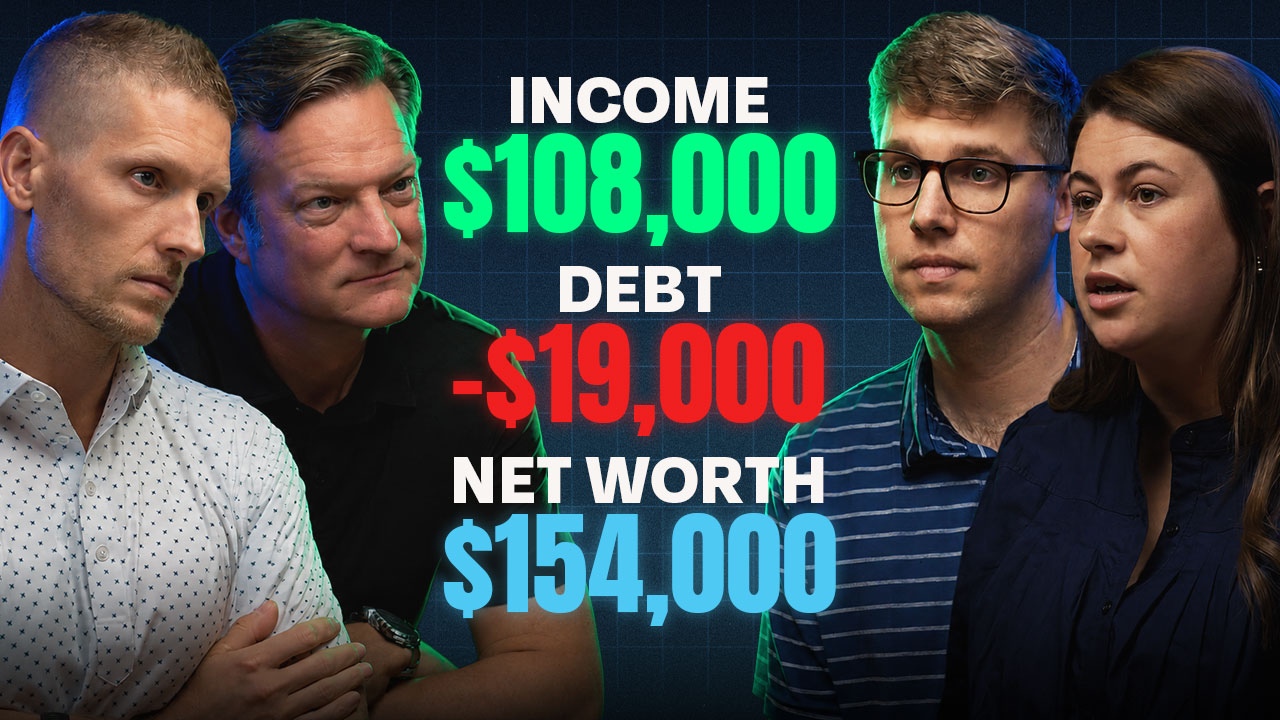
Episodes
Can a $100K Family Ever Get Ahead?
Daniel and Hannah are back on Making a Millionaire with major life updates! A car crash, an appendectomy, and a Disney trip later, this couple...