
-
▼


-
▼


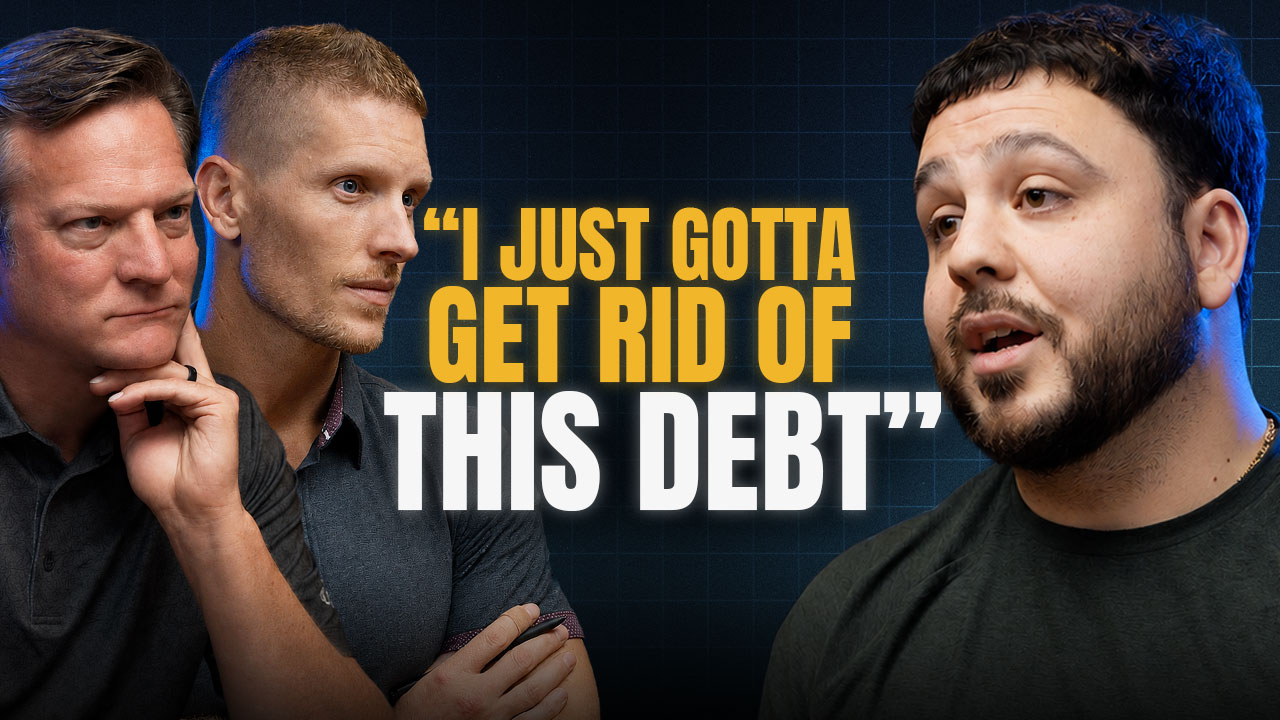
Can you really afford to become a one-income family? It’s a goal for Tyler (32) and Mikaela (31), and they’re proof that the path to wealth is rarely a straight line. After racking up $92,000 in debt between an 84-month car loan on a $67,000 Jeep Grand Cherokee and a basement renovation that blew past their $110,000 savings, they made the hard decisions, paid it all off, and built a $400,000 net worth before their early 30s.
Then came the next big decision: Mikaela walked away from a high-paying recruiting career just days after returning from maternity leave to stay home with their new baby. In this episode of Making a Millionaire, we help them figure out what comes next, and it starts with getting their Financial Order of Operations back on track.
Their journey highlights budgeting, emergency funds, investing, 401(k) strategies, 529 accounts, employee stock purchase plans (ESPPs), RSUs, and more. We walk through their financial plan built around maximizing employer benefits and adding a spousal Roth IRA could put them on a path toward a portfolio of over $5.5 million by age 60, even on one income. If you’re wondering how to pay off debt, save for retirement, build wealth with one income, or balance financial independence with raising a family, this episode is filled with actionable insights for your personal finance journey.
Check out our How Much Should You Save resource and the Wealth Multiplier to see what your own numbers could look like.
Enjoy the Show?
Where You Can Watch and Listen:
Subscribe on these platforms or wherever you listen to podcasts! Turn on notifications to keep up with our new content, including:
- Episodes of The Money Guy Show every Friday
- Episodes of Making a Millionaire every other Monday
- Mini-shows every Wednesday
- Ask Money Guy Livestreams every Tuesday
- Tons of other fun content!



How They Escaped $92,000 of Debt Before It Was Too Late (0:00)
Brian: Early 30s, $400,000 net worth. Friday, I ended up quitting.
Bo: There are so many people out there that listen that have a desire to do what you’ve done.
Mikaela: We went out to eat all the time. We never really thought about spending. We had a very expensive car payment. We were making renovations and upgrades on our house. We were going on trips.
Brian: Were you also saving money?
Mikaela: Well, no.
Brian: You remember what your payment was?
Tyler: $975.
Brian: How many months?
Tyler: It was 84.
Brian: Holy cow. That’s literally the car scenario nightmare.
Tyler: Our basement flooded. Having to take out a personal loan. We put stuff on credit cards. I ended up doing a home loan. Probably looking at $92,000 in debt.
Brian: But you got out of it.
Meet Tyler and Mikaela: From Hopkinsville to Nashville (0:41)
Tyler: I’m originally from Hopkinsville, Kentucky, which is a small town just across the border from Clarksville, Tennessee, about an hour and a half from Nashville. I always grew up with Nashville as the big city. I went to school at Kentucky and after I graduated I knew I wanted to move to Nashville. I’ve been in Nashville for coming up on nine years. Went from Nashville to Donelson to Mount Juliet, slowly moving outside of town as life progressed. And then we ended up meeting in high school. She moved to live with my grandmother senior year of high school.
Mikaela: I’m from Delaware originally. Senior year I lived with her. We met. We got set up by mutual friends to go to prom together because neither of us had a date and it worked out. So we kind of started talking around that. I moved back to Delaware after we graduated. We lost touch for several years and then I was back visiting for the holidays. We reconnected and the rest was history.
Bo: How do you reconnect? You’re back visiting. How does it happen?
Mikaela: We had mutual friends that both invited us to the same get-together and then we saw each other.
Brian: Isn’t that awesome? I see this new phenomenon with all my friends when their kids go to prom now. It’s like friend groups. It’s not romantic. It’s just, “Hey, I don’t have a date, you don’t have a date, let’s get together.” Was the prom date romantic or was it just kind of a friendly thing?
Mikaela: No, it was definitely romantic. We liked each other. It worked out that way because we didn’t know each other before we were set up. And then timing just didn’t work out for a long-term thing then.
Brian: I love it.
Bo: Imagine being married and then getting to show your kids one day like, this was us at prom.
Tyler: It’s funny because in our living room we have our prom picture and our wedding photo right next to each other.
Mikaela: And I wore a white dress to prom.
Brian: As the old guy, let me tell you something I just figured out. Put museum glass on those pictures because all my pictures are starting to fade. The sunlight bleaches everything out. If you put museum glass on it, it keeps them from fading and takes the glare away.
Tyler: Good to know. We need to do that.
Bo: So you guys get married. What do you do professionally? What’s the family situation? Get us from prom to today.
Career Paths and Income Growth (3:26)
Tyler: I worked for a tobacco leaf dealer right out of school, but I have kind of an eclectic background. I did the tobacco leaf dealer for almost two years, then six months where I worked in a bank, and that really wasn’t my thing. From there I used my agricultural purchasing background and joined a building materials company doing logs procurement for about three years. I’m still with the same company now, but I had an interest in HR. So I transitioned to a compensation role and then expanded into total rewards analyst in both compensation and benefits. Completely unrelated to agriculture at this point, strictly HR, benefits, insurance.
Mikaela: His company gave him the opportunity. They had this position open up and he applied and got it with no background except for proving himself as a good employee. It’s really worked out for him.
Brian: Some people are just winners. I always say that when we were hunting for leadership, some people you just put the right seed in the right ground and it grows. Congratulations, Tyler. That’s your mustard seed moment. What about you, Mikaela?
Mikaela: I graduated high school, started working senior year at Subway. I did not go to college. I’ve had pretty much every job you could think of. But when I moved to Nashville, I was a nanny and started thinking long term about career. I applied with a staffing agency based out of Chicago that had an office in Nashville, got the job as a receptionist and admin, and then worked my way up to recruiter and salesperson. I was there for six and a half years before I made the decision to step away when we had our baby back in September.
The Decision to Leave a High-Paying Career (5:35)
Bo: Oh, you had a brand new baby.
Mikaela: She’s eight months old now. My leave was four months. I went back on Monday. It was just debilitating. We both work from home and it was really hard for me balancing the two. My boss was so understanding. They were giving me the grace that I needed. But I just knew that long term it wasn’t going to work for me any longer. So Friday I ended up quitting.
Brian: Monday and Friday was your last day. Wow. So this is really fresh. And you’re being somewhat modest based on the notes I read, because you were a good recruiter. Tell me what happened to your household compensation. What happened to your income?
Mikaela: When I started there I think my salary was somewhere around $40,000. It doubled the next year when I started recruiting, I think doubled the year after that, and then kind of was up and down because at that point I was strictly commission based. But yeah, it was a very good job. I learned so much from it and I’m grateful that I was so good at it.
Bo: So you guys are in a great financial spot. You gave us a net worth statement. How old are you guys again?
Mikaela: I’m 31.
Tyler: I’m 32.
$400K Net Worth in Their Early 30s (6:48)
Bo: Okay. So early 30s, $400,000 net worth, which is wild. You’ve got about $24,000 in cash, a little over $28,000 in liquid investments. You have a home worth $550,000 and your debt load is only the mortgage. You have about a $381,000 mortgage. You guys are in a fantastic situation.
Brian: Do y’all already know that? When I see that, I’m like, boom, shaka. That’s pretty good.
Mikaela: I know. I have to attest it all to him because I don’t know a lot about finances and how to go about it the right way, but from listening to you guys and the Ramsey show, he’s learned everything. He steered us in the right direction.
Bo: So in the last eight months you’ve made this decision to go from what I imagine was a very high income. When you were both working, what was the total household income?
Tyler: 2025 W-2 was around $250,000.
Bo: And now you’ve made the decision to go down to one income. You’re somewhere in the $110,000 base plus bonus plus long-term incentive. Not maybe a little more than half, but roughly half, right?
Transitioning from Two Incomes to One (7:56)
Bo: How has that adjustment gone? Or have you adjusted yet? You’re still pretty fresh.
Mikaela: No, we’ve definitely adjusted, but I’ll let Tyler speak to it.
Tyler: It kind of started while she was out on maternity leave. I remember I went back to work and she came downstairs to my office one day and was just like, “I don’t think I want to go back to work. Is there any way we can make this work?” And I’m sitting there looking at the spreadsheets like, there’s no way we could possibly do this. And then fortunately I received a promotion at the end of the year in December, which was a pretty significant compensation raise. And so with that, plus we prioritized paying off debt and cash flowing some renovations over this last year, we cut down the expenses, increased my income, and obviously we’re cutting back in lifestyle a lot.
Bo: Tell us more about that. There are so many people out there that have a desire to do what you’ve done. Hey, we want one of us to stay home and focus on family, but we both make good incomes and we like our lifestyle. What are some of the things you cut out and how have you guys been on the same page about doing that?
Lifestyle Changes That Made It Possible (9:30)
Mikaela: It’s been a big lifestyle change. Before we were definitely DINKs through and through. We went out to eat all the time. We never really thought about spending. We had a very expensive car payment. We were making renovations and upgrades on our house. We were going on trips.
Bo: Were you good savers? Were you also saving money?
Mikaela: No, not really.
Brian: What do you think you were saving while both of you were working?
Tyler: Probably if you include the HSA and the ESP and the match, we were probably around 15%. Maybe a little less. But with Mikaela’s income, a bonus check could come in and we’d put that in savings and be like, oh, we have a pretty decent savings now. But we very rarely go out to eat now. We got rid of the car so we don’t have the car payment or the insurance.
Brian: So you had a nice car with a big payment and you said, the best decision for us is to just get rid of the car?
The $975 Jeep Payment Mistake (10:35)
Mikaela: Tyler for a very long time was telling me we need to get rid of this car. And it was very hard for me because it was a Jeep Grand Cherokee.
Tyler: It was a 2021 Grand Cherokee. We bought it in 2022. It had about 7,000 miles on it. It was about as new as you could get a used car. 2022 used car prices were a little elevated. And I think there’s something going on with Grand Cherokees specifically where they’re dropping in value. Because it was so much like new, even though it was used, the value on it dropped significantly even after we were throwing occasional chunks of money at it. So we were underwater in it.
Bo: What was your payment?
Tyler: $975.
Bo: Wow. And gutted on the depreciation as well. But you loved the car.
Mikaela: This was going to be our family car. We purchased it before we even thought about kids really. We knew in the next few years we wanted to start thinking about a family, so that was going to be our long-term family car. The car that we have now, which Tyler has had since college, is a 2013 Jeep Wrangler. That’s paid off. That’s our family car now.
Brian: So the Grand Cherokee was the family car and now you have the Wrangler, which is a very rough rider. One automobile household.
Tyler: Yes. It’s paid off.
Brian: You had two cars and you made the decision that you can’t have this thousand-dollar car payment. So…
Mikaela: Actually, before I even got pregnant, we knew regardless of whether I was going to stay home, because that wasn’t even a conversation yet. It was just, we need to get rid of this car. We can’t have a baby. We were thinking about daycare prices and that’s why we got rid of the car.
Brian: You got rid of the car before you were even pregnant?
Mikaela: Around the same time. We were having conversations and already foreshadowing that I wasn’t going back to work.
Brian: Did you know that?
Mikaela: No. In my wildest dreams that would be amazing, but I never thought it was possible. The plan was to put her in daycare. We had a daycare lined up.
Brian: I need context because this seems somewhat extreme to go ahead and get rid of a car while you’re making great income. Still a $1,000 a month car payment. How many months was that $975? Was that 48 months?
Tyler: It was 84.
Brian: Holy cow. Do you know how many high fives that salesman probably did when you walked out of the dealership? How expensive does a car have to be for 84 months to still have a $1,000 car payment?
Tyler: Yeah, it was $67,000.
Bo: Wow. Did you finance all of it?
Tyler: We put down 10% but I think with all the warranties and everything that down payment just got added back in. We went with all the bells and whistles. Well done on getting rid of this.
Home Renovations and the Debt Spiral (14:02)
Tyler: Yeah. We also did some pretty significant renovations coming up on two years ago. Summer of 2024 we finished our basement. It was a huge renovation, about 1,000 square feet.
Brian: Was this thinking about kids and needing more space?
Tyler: Yeah, definitely needed some more space. When did you buy the house?
Bo: When did you buy the house?
Tyler: 2022.
Bo: Okay, so this is relatively new into owning this home and you’re like, hey, we’ve got to go ahead and renovate.
Tyler: It’s an older home. Just needed upgrades. We had a pretty significant savings, about $110,000. All of that went toward the renovations. In our mind when we got the car, we were like, we’ll throw chunks at it. But then of course you spend all that money on renovations. We added a pretty large pole barn accessory building on the back of our property too. We had tons of renovations. Then we ran into our basement flooding halfway through after we just got the studs up. Completely flooded. So we had to stop renovations and waterproof the basement and put in a sump pump. That was an additional $21,000. We ended up having to take out a personal loan. We weren’t accounting for the material cost. We put stuff on credit cards. By the time we got done with the renovations, I ended up doing a home loan to try to consolidate some of that high-interest stuff. So when we came out of that plus the car payment in fall of 2024, we’re probably looking at $92,000 in debt.
Bo: So this renovation, even though you had saved $100,000 for it, not only did you burn through all $100,000, but then you racked up an additional $30,000 more than you had saved up.
Tyler: Yeah.
Bo: But you got out of it, right? So how?
Mikaela: We were very intentional about paying it off and being debt-free before you started a family.
Paying Off $92,000 of Debt (16:06)
Tyler: Yeah. 2025, Mikaela obviously had a really good year and that commission was going to cash flow some additional renovations to make it more comfortable for the baby when she got here, but also paying off debt. We were underwater on the car, so we sold it but also had to pay on it to get rid of it. That was brutal. Selling and having to pay to sell a car.
Bo: That’s the nightmare. That’s literally the car scenario nightmare.
Tyler: Lesson learned. During that time we were around $2,000 in debt payments a month. The whole reason we were trying to get out of it was solely to be able to afford daycare. That was our goal at the beginning. And then being able to make those choices all of last year while she was pregnant, plus the promotion and learning to cut back in lifestyle, led us to this January where she was able to stay at home.
Mikaela: And when we say daycare, not just any daycare. We wanted a more expensive daycare. First kid, all the things. We knew it wasn’t going to be cheap.
Bo: As you sit here today, you guys have done something just remarkable. I think there are a lot of people out there who wouldn’t even believe that’s possible.
Mikaela: It’s crazy that it is possible if you just are very intentional about how you spend and don’t spend.
Their Goals as a One-Income Family (17:32)
Bo: As you guys sit here today, you’ve gone from a bad situation to now being in a fine situation. Where do you go from here? What are the things moving forward that you want to be able to do?
Tyler: For me it’s maintaining our current lifestyle. This change, we’re five months in and it’s just been great. I love the family dynamic we have right now. It’s what I want to focus on. If we have to cut back in other areas to prioritize this lifestyle we’re living, that’s what we’re willing to do.
Bo: What do you mean by that? We have to cut back in other areas to maintain the lifestyle?
Tyler: Just that we knew going into this we wouldn’t have Mikaela’s commission checks anymore. Home renovations, there are still some things we like to do, and that’s going to be put on hold for several years. Obviously big trips and stuff like that we’re not going to be able to do. Those types of lifestyle changes. But being able to budget monthly on one income.
Bo: What you’re saying is the sacrifice to have her at home and be the family unit is worth not going on the trips. A lot of people don’t recognize that when it comes to making financial decisions, there’s always opportunity cost. If I do this thing, it means I can’t do that thing. It’s wonderful that you guys have recognized that. So maintain current lifestyle is one thing. What else?
Mikaela: Long term, we say maintain our current lifestyle and not go on the trips, but eventually when Palmer is older, we want to be able to take her on family vacations. We want to make sure we’re saving for her future so that if she wants to go to college, she can afford to do that without struggling. Or have a reliable car when she gets to that age. We’d like to eventually make updates and renovations to the house to make it safer and more cohesive for us as a family as we continue to grow. Really it’s just, we know we’re okay and we’re in a good spot today with how we’re going about this big change. It’s been working for us for the last few months and we’re okay with all of the cutbacks we’re doing. But how do we get to a point where we can eventually start having that money to do these other things on one income? Will that ever be an option again?
Current Savings and Investing Strategy (20:14)
Bo: Currently, present day, what does your savings behavior look like? Walk us through kind of where your money goes today.
Tyler: I contribute 6% to my 401(k). We have a 5% match on that at my employer. I also contribute to my HSA and also a family HSA.
Bo: Are you maxing that out or how much are you putting in your HSA?
Tyler: Right now it’s $4,500 annually. I would say that previously over the years before having a baby I was stockpiling my HSA, just having that money ready when it came to the out-of-pocket maximum that you’re definitely going to hit when you have a baby. It was just so nice going through that knowing I’m not even thinking about the medical cost whatsoever because I know I’ve got it covered.
Bo: I love that. All right. 6% to the 401(k), $4,500 to the HSA. Roth IRA, savings account, cash, any of that?
Tyler: We’re contributing $200 to our daughter’s 529, $100 to her UTMA account, and I’m also doing 2% for the ESP.
Brian: I had already written a note to myself when Mikaela was describing things. I look over here and I see Palmer already has $17,000. How? And she’s eight months old? And you just told me monthly you have $200 a month going into her 529 and $100 into the UTMA. Look, you guys have done a great job. I want to be very complimentary. But here’s the big but.
Roth IRA vs. 529 Planning (21:54)
Brian: Right now you’ve done such a good job of recalibrating your life, but you have put this child at the center of everything, which is nothing wrong. Kids are great. We love our families. But I want to make sure that when she gets older, you guys are still financially independent too. You’ve built a great foundation. A lot of this is going to do incredible things, but you’re not at step eight right now. You’ve had to take a recalibration. You’re not even funding Roth IRAs, which you’ve got to get that tax-free growth. It kind of makes me sad that you’re not getting the tax-free growth. To hear that you’re funding a 529 when you’re not even maxing out the Roth is a full stop for me. It’s a misallocation of priorities. Don’t mishear me. You can still love the heck out of your daughter, but I promise you, you need to be financially independent yourself so that down the road you’re not putting your financial burdens on her. She will be able to get scholarships. She’ll be able to get student loans and other things. You’re not going to be able to get a retirement loan. It just doesn’t exist. You guys are young at 31 and 32, and compounding growth is still way on your side. We need to maximize and leverage that.
Brian: I have a daughter who just graduated college. I was only, for the first few years, putting $2,000 a year into her 529 after I was in step eight. And I think my mother put $3,000 to $4,000 one time when my daughter was born. We paid for three years of college with just the $2,000 a year that we were putting in. And my mom’s one-time contribution paid for an entire semester. A little bit goes a long way when she has so many years. You’ve already primed the pump in a pretty powerful way. I think you might be leaning heavily into something you need to prioritize for yourself first.
Mikaela: I mean, we need this advice. We don’t know what we don’t know. We’ve never met with financial advisers before. This is exactly why we’re here.
Bo: How much did you say is going into your ESP right now?
Tyler: 2%.
Bo: What’s a realistic number for total comp for you?
Tyler: $130,000 to $137,000 would be the target base. It’s also based off company and individual performance.
Bo: So current savings rate thinking about stuff you’re saving for the future: about 3% going into your HSA, 6% going into your 401(k), that’s 9%. You have a 5% match. So now we’re at 14%, plus another 2% into the ESP. That’s 17%. Did I do that math right? It’s somewhere in that ballpark.
Retirement Goals and Financial Independence (25:24)
Bo: I noticed that a lot of what you guys were talking about, the renovations, the travel, a lot of it was very short-term to intermediate-term goals. I didn’t hear a super long-term goal out there. Hey, we want to be able to retire or reach financial independence. Is that even on your radar, or are you so worried about today that you’re not really thinking about tomorrow?
Tyler: I’m just hoping that I’m able to do enough now that it can compound to that point. But really I know that I’m working for at least 30 more years.
Mikaela: So it puts a lot more pressure and stress on you now being the sole provider. But yeah, that definitely would be a long-term goal. Especially when we were both working, I would love to retire early or make that an option and spend more time with our kids when we get older and have more financial independence.
Bo: You said kids, so I don’t want to be presumptuous, but…
Mikaela: We’d like to have one more.
Bo: Do you think you’ll be a one-income household forever?
Mikaela: Some background: Tyler had a stay-at-home mom. He has a brother. I have three siblings. Single mom who always worked until she went out on disability when I think I was in middle school. So single mom, sole provider. Him experiencing the stay-at-home mom route was amazing for him. I feel like I haven’t done the working mom route, but my company would hire me back if I ever needed to. So I’m very grateful for that option. But I would like to be a stay-at-home mom until Palmer starts school, and if we have another one, until they start school. If I needed to, I would go back to work tomorrow if we were in a bad spot and that’s what had to be done.
Future Career Opportunities and Flexibility (27:33)
Brian: Here’s the thing, because I’m a little older and I know a number of people. One of my dear friends, his spouse is a recruiter too and she’s kind of had the best of all worlds in the fact that she makes a great living but does all the home stuff and still works from home doing recruiting in a very specialized way. Because you said it earlier and I think you’re not giving yourself enough credit. You get paid commission. That’s a skill set. This is not something you just plug in any person and they can go out and recruit people. You’ve actually got a very specialized skill set. I could see a future where you could be as patient as you want. You could get your current daughter into school, even have the second child and wait until they get into school. So maybe we’re talking about tabling this superpower of yours for 10 years. You’re still young. Getting back into it at 40 or 41 years of age, there’s potential. You could still work from home, use your skill set, and fire back up the engine.
Mikaela: They really didn’t want me to leave.
Brian: Because a salesperson, anybody who can sell, that’s why in this new modern world talking about AI, the skill set that will never go away is the ability to sell. Sales is the skill that fits with all professions and all careers. Technical, anything. If you can sell, you’re employable. You’re going to be okay.
Mikaela: That would be the ultimate dream. Take however many years it takes and hopefully jump right back into the swing of things and be as good as I was at it.
Bo: And this is one of the reasons why there’s so much life that’s going to change for you guys between now and the time you turn 50. Often young people want to know exactly what the plan is going to look like for the next 25 years. But realistically it’s going to change a lot and there are a lot of variables. That’s why early in your journey what we really want you to focus on is your savings rate. We’re going to see what trajectory your current savings rate puts you guys on. But I do want to do some triaging on the current moment.
Reviewing the Family Budget (30:22)
Bo: You said there are things you want to be able to do and you guys shared a budget with us. If we look at your budget right now, you guys are spending about $6,200 a month. Does that sound right?
Tyler: That’s right.
Bo: Is this a real budget or is this the hey, I’m going on Making a Millionaire so I did my best to put something together?
Tyler: No, I’m on a spreadsheet every day.
Mikaela: He updates it. Yeah.
Brian: Can I ask about some of the categories? Dogs. Is that like your Black Ops budget? Like the government spending $30,000 on toilets. Are the dogs Black Ops? Is that where you’re hiding something you don’t want us to know about?
Tyler: No. I inflate it every month. We do have a dog that has some medical issues. He has medication. It factors in food.
Mikaela: We have two dogs. The one he’s talking about has epilepsy. He just beat cancer last year. He will eat a sock at any opportunity he gets and need to get his stomach pumped. Anything you can think of, the dog is going to the vet for. Our other one is a perfect angel, never has any issues. So yes, it’s inflated. We probably don’t spend that much a month, but I like to have it a little more just in case.
Emergency Fund Concerns (31:50)
Bo: Being at one income, one of the first things that immediately jumps out to me is, okay, $6,200, one income, baby in the house. I immediately think about the emergency fund. I see you guys have about $24,000 in cash right now. What you’re calling your emergency fund is really $20,000. If I think about a $6,200 a month burn rate and think about six months, realistically your emergency fund is probably somewhere closer to $35,000 to $40,000. I’m not telling you anything you don’t know, right? Are you currently making moves towards that? Are you adding to your cash pile right now or is $6,200 pretty much zero-based budgeting?
Tyler: It’s pretty close to zero-based budgeting after everything. Based on your recommendations I’m going to be adjusting contributions and budgeting. I watched the show enough to know you were going to say to stop with the 529s and the UTMAs and then also increase the emergency fund. Those are the two things I knew were going to happen. So maybe some of those funds could be routed into beefing that up over the next several months.
Bo: What I love about you guys is obviously you have some discipline. You could not have gone the path you went, albeit not the most efficient path, without being disciplined. And one of the beautiful things we like about the Financial Order of Operations is all right, once I have my emergency fund in place, I can kind of check that box and then move on to the next thing. Then once I get my savings rate to where it needs to be, I can check that. And then with any additional capital I have left over, that’s where I get to start doing the fun stuff. That’s where I can save for 529s or start building a sinking fund for home improvements or vacations. You can do all that guilt-free and not have to wonder if you’re going to be okay.
Tyler: I think you can go into it with a lot more confidence than “I hope it works out.” If I know I’m doing this, I’m going to be in a great spot. I’m going to make sure it works out.
Brian: What’s the timing on that bonus? When does that come into play?
Tyler: In February. It came in this last year.
Brian: Are you having to use that bonus to catch back up, or are you able to apply that to long-term goals? Because that’s something we explain to people all the time who are commission based or have odd income structures. It’s okay if you can’t do your 20% savings throughout the year. Maybe you’re someone who has to wait for the bonus to show up. And with your income on one income, the long-term incentives will also count toward your savings rate if we can put that into the long-term retirement goal. You’re basically living paycheck to paycheck every month but then you get this windfall that kind of fills up the savings buckets.
Tyler: Yeah. We definitely can going forward. The most recent annual bonus, we just paid off our last debt in January. So the bonus that came out in February was to beef up the emergency fund. It was even leaner than $20,000 before January.
Bo: But that would be the goal, right? When it comes in again next February, put that toward the emergency fund to get it where it needs to be. We might not be able to put as much toward it throughout the year, but when these bonuses and things do pay out, we’d ideally get it to the $36,000 target and then start thinking about, okay, let’s start other savings accounts for a fun account or whatever it may be. The bonus in February is around $15,000 at target, but a little more gross this year because of performance.
Life Insurance Planning (36:07)
Bo: You guys obviously have a young baby in the house now, and whenever our family circumstances change there are other things we want to talk about that change as well. I saw on your budget you have a little chunk there for life insurance. Who’s that life insurance for? How much is it? How long have you had it? Walk us through.
Tyler: It’s for both of us. For me, I think mine is around $800,000 and I have separate market insurance through my company. I have two times income basic and then four times income additional optional term insurance. And then we also have one on Mikaela that is right at a million, and I have optional spouse coverage through the company for $200,000. So she’s at $1.2 million. I’m probably around $1.4 million total.
Mikaela: Do we have to get that for Palmer? I haven’t even thought about this.
Bo: So generally the reason we get life insurance is if someone depends on us and our income were to go away, that person would be in a bad spot. Our children provide tons of value to us, but none of it’s economic. So there’s no insurable need on her. Whereas for you guys, it’s very, very different. If something were to happen to Tyler, Mikaela has to figure out who’s going to watch the kids and how to replace that income. And I love hearing that you guys have life insurance and it’s all term insurance. Nice, good, low-cost, young, healthy people term insurance, which is wonderful.
Estate Planning for Young Parents (38:18)
Bo: What about estate documents? That’s the second piece whenever a new baby comes on the scene.
Mikaela: We keep saying we need to do that.
Tyler: We need to do that. I have brought it up several times but it’s kind of just a doom and gloom conversation that we just haven’t had yet. But we need to.
Brian: Right now if something happened to both of you, who’s going to raise your daughter?
Mikaela: It’s conversations that we have. We’re not 100% sure yet.
Brian: So you’re not on the same page. Is that what I’m hearing? What do you think the state’s going to do? This is going to be a mess. This is why we have these conversations with young parents. Please, please, please. If you can’t figure it out, the state’s going to be even worse at making this decision for you.
Mikaela: I know. It’s just such a hard ask of someone. The people we have in mind, both options, have children of their own. One side is here locally in Tennessee. The other side is all the way in Delaware. My family, his family. We know she would be so well taken care of either way. It’s just, which hard do you want to pick?
Brian: Do one of the hards. That’s what I would tell you. It’s not that expensive to go get estate documents, but I would rather you be in the driver’s seat on that decision than leave behind a mess. It is difficult in terms of bringing another child and having to raise another child. It’s an awful event when that happens. But you guys have done the hard work of having life insurance in place so that at least from an economic standpoint, whoever that person is, it’s not like they’re now going to be responsible for the financial well-being of your daughter. You guys have already provided that. In the scenario that something happened to you both, there is $2.6 million plus whatever you guys have saved up for her that’s going to be chiseled away for her care. So it’s really, okay, who do I think can create the environment that I want my child to be in and provide the love and support I want my child to have?
Bo: It’s a conversation you guys ought to have. Just like you said, if it’s hard for you to decide while you’re here, it’s going to be way harder for people to decide on your behalf when you’re not here to speak for yourself. The good news for you guys is it doesn’t have to be that complicated. Who’s going to take care of our kid if something happens? And who do we want to be in charge of the money? If you can answer those two questions, that’s about as complicated as it has to be at this stage. And because the money will be behind it, it should make the conversation a little easier because the economic burden won’t be on that person. You’ve done the right planning. Let’s just go ahead and finish the drill and make sure you have the right person to raise your children.
Mikaela: Definitely. Yes. I know what we’re talking about on the way home.
How Much Should You Save? Discussion (41:17)
Bo: What other questions do you guys have for us?
Tyler: I know you guys came out with the how much should you save new resource. I started contributing 11% including my contribution plus the match. I’ve been with the company for coming up on seven years, so I was 25 at the time. With that 11% including my contribution plus the match, is that something I can just keep contributing at 25 and know I’m taken care of, or should I always be increasing it?
Bo: The way the deliverable is built is to give you an idea of if I locked in today, this is the outcome I would have. If you want a copy, you can go to moneyguy.com/resources and download your free copy right now. It’s supposed to be motivational to you directionally. But just like you guys, if you would have projected at age 28, hey, we make this much money, we’re saving this much, look how different your life is right now. It would not have been accurate to use that as a placeholder. But because you did the savings early and built the assets early, it allowed you to make this shift now. What we’re going to do for you rather than just showing a loose save number is show you, hey, here’s what in your specific situation, based on how you’re saving and your income, this is the trajectory you’d actually be on. The answer is yes, it’s supposed to tell you where you should be, but we still want you to work toward 25% because that gives you more flexibility, more freedom, more options as different life circumstances happen in the future.
Brian: Your situation has some additional upside too because remember you still have the long-term incentives. Seven years in, you’re probably starting to vest in those. Are these RSUs I saw on there?
Tyler: Yes. I got my first grant last year and another grant this year.
Brian: So as long as you have a long-term mindset with those, that should help. That doesn’t take the pressure completely off, though. After we get your emergency reserves in place, we’re going to want to at least get that Roth going. That would be some really powerful stuff for the long term.
Tyler: Okay. So I’m thinking I’m in between steps four and five.
Bo: Not in four. You’ve got some in four but then you’re kind of dabbling in eight. You’re all over the place.
Tyler: That kind of answers my question. Should additional funds from your recommendations go solely to the emergency fund, or should I simultaneously contribute to Roth at the same time?
Brian: We need to get it a little closer. You’re kind of in a danger zone with only $24,000. And you’re also driving a Jeep Wrangler for one child. We’re going to have two children at some point. Sounds like not in the too distant future. We probably need to be boosting that cash reserve so you also have some flexibility in household decisions with transportation. More is better going into step four because it gives you options and you need options with all the life changes going on.
Tyler: That makes sense.
Bo: But the good news is even with dropping things back, there are some things we’re still going to recommend you continue doing, like getting the full employer match on your 401(k) and we’re going to get some details from the ESP and likely still get a piece of that as well. So it’s not like you’re going to have to go full stop. But in the short term you probably are going to have to redirect where your resources are going.
RSUs, ESPPs, and Employer Stock Strategy (45:47)
Tyler: With the LTI, because it’s a newer development that I’m in, when those RSUs vest over a three-year period, one third every year, as they’re vesting, should I take those and treat them as income and cash those out and then contribute those where they need to go? Should I leave them in the single stock? Should I view my single stock in both the ESP and RSU as a percentage of my investments? How should I be handling those?
Brian: This is our favorite part of being financial planners because the answer is it depends. And the answer is yes to about every one of those, but just like with the Financial Order of Operations where we tell you what to do with your next dollar, when that three-year mark comes, we have to put on the lens of, okay, what’s the best use of these resources to fund goals and fund the planning. We also lean into the outside indicators: this is my human capital and I don’t want to have all my investment capital tied into the same company my wages are coming from. So we want to make sure it doesn’t get too loaded up with all employer stock all the time. What we do for clients is we dashboard it as the money comes in, allocate it, and then we reset the process next year and do the exact same thing. So you’re always going through triage and figuring out what’s the best thing to do for this moment in time to make sure long term and short term you’re getting the best results.
Bo: In your situation, one of the things we might end up recommending is on the day that they vested, you pay tax on them. That’s when RSUs become taxable. So the least impactful time to liquidate those from a tax standpoint would be immediately. RSUs vest, you immediately sell. So all of a sudden you take $26,000 of RSUs and you turn it into $26,000 of cash. Now you have $26,000 of cash. Figure out where to deploy that. Go back to the financial order of operations. That in and of itself may satisfy the emergency fund issue. Once I’ve checked that box, okay, where do the next dollars go? Then I go to step five and then step six. RSUs, I would be asking myself that question at every single vest. Do I keep? Do I sell? If I sell, how do I deploy? Just follow the FOO.
Brian: Just follow it. After we get some of the basic stuff handled, you can get more nuanced with tax strategies and other things. But in the beginning we’re just trying to keep you out of the ditch. You guys have done a great job, but there are some warning lights on the dashboard. You’ve got a slow leak in the tire. It’s not catastrophic but it’s something that’s going to need attention to get you to where you want to be.
HSA Planning and Family Healthcare Costs (49:20]1)
Tyler: My last question is about HSAs. Is it okay if I’m using that as a sinking fund? I probably have about $8,000 invested and the rest is just in the cash account. Is it okay to just keep using it as a sinking fund? If I’m in step four, do I need to stop my contribution so I can continue to beef up the emergency fund? How do I handle the HSA?
Bo: This is a little bit of a unique one. We see all the time that in step five we want you funding your health savings account because it’s beautiful. You get a tax deferral on contributions, you can invest the money, it grows tax deferred, and if you use it for medical expenses it’s tax-free. It’s a great savings vehicle. But most Americans don’t do it that way. It’s up to about 13% of Americans that actually use the triple tax advantage. The other swath of Americans using it, I would argue that’s not really part of your savings. That’s part of how you’re budgeting right now. If you know you’re going to have healthcare expenses currently, one of the things you might budget is, okay, I’m going to put money in my HSA but I know I’m using it as an intra-year slush fund. I know that’s paying for this year’s medical expenses. I don’t get to really count that in my savings rate. It’s more how I’m budgeting for medical. If I’m going to invest those dollars and not use them, well then it gets to count into my savings rate. And that’s more of a step five activity. A lot of people start with exactly what we’re talking about. It’s an intra-year slush fund and that’s totally okay if that’s where you are in your financial life cycle. What you hope is that you graduate to the point where you can begin deploying those dollars.
Brian: It’s also part of family planning. We see a lot of people, strategically speaking, when they know the year they’re going to have a baby, they go with the Cadillac plan at the office. We love health savings accounts, but remember what drives them? You have to choose the high-deductible insurance plan, which has really high deductibles and loads you up with out-of-pocket costs. Years that you have babies, if you have a plan that’s much more benefit rich, be strategic. That’s why we have open enrollment. You’re not hurting your employer when you choose the Cadillac plan in the year you’re having the baby and then flip the switch back to the high-deductible after the baby’s here. Be proactive. Be an active participant. Do you have another insurance option at the office that’s more benefit rich?
Tyler: Yeah, we do. And open enrollment is in October. We just missed it. But definitely looking at that as an option going forward.
Brian: We have no problem with you using the HSA as a clearing account because that’s what it’s there for. I’m just trying to give you additional strategy things to think about. You can be proactive even when you go through open enrollment. Use family planning as a baseline as you’re going through your matrix of decisions every year.
Tyler: Yeah, that’s a good idea. Do you see a lot of people doing that?
Bo: He’s the HR benefits specialist.
Brian: That’s right. We do see that. It would have been an option for you in October, but it’s definitely going to be an option once you decide strategically to have the next one.
ESPP Strategy (53:16)
Tyler: Should I stop contributing to the ESP as well to focus on the emergency fund?
Brian: Give us the details on the plan.
Tyler: We have two offering periods, January through June and July through December. We do have the look-back feature and a 15% discount.
Brian: Look-back and 15%. That’s great. That’s great money.
Tyler: I manage our ESP so I’m a big advocate for it.
Bo: Any holding period required before you can sell the shares?
Tyler: No mandatory holding period. It’s just short and long-term gains. Free money immediately on day one.
Bo: That’s exciting. That’s awesome. This company really is amazing. How did you come up with 2% for your contribution?
Tyler: I really just wanted to be contributing something to it to make sure I’m getting that free money. But that was also what I could still budget for everything else.
Brian: Maybe in the beginning that’s all you can do, but after we get through next year’s bonus drop, we give you a little more slack and try to maximize that benefit as much as possible.
Bo: My wheels are already turning. I’m excited.
Brian: That’s the stuff that gets me. You have to work with what you’ve got right now, but then you need to create a plan so we can expand that benefit as much as possible.
Lessons from the Debt Payoff Journey (54:40)
Tyler: That’s all I had.
Bo: You guys, what a wonderful conversation. You’re going to be super inspiring to a lot of folks out there. I think there are a lot of people who kind of feel like they are where you were. The $92,000 in debt. The 84 months on the car loan. I think there are a lot of people who need to recognize that hey, sometimes we’ve got to make hard decisions and those hard decisions aren’t comfortable and they’re not fun. But if we can make them and be disciplined and power through it, you get to end up in a great spot. You get to be right where you guys are. But we might need to bust you up a little bit before you go buy this second car. We need to have a class on how not to get taken by the car dealerships.
Mikaela: It’s hard. You walk in, everything’s so shiny.
Brian: I’m sure they were like, “What monthly payment are you looking for?” Because you said when you got into the warranties, I’m like, oh man, we already got this good. Let’s make it better.
Tyler: I had no idea what I was doing. I definitely have a better understanding now and will not ever be doing a brand new car again.
Brian: We’re not against new cars, but in this time in your life there’s nothing wrong with a really good, reliable used car just to get you through this season. And maybe that’s something once you’re in your 40s, you’ve got all the family planning done, and you get back to popping the knuckles and placing people and using some sales skills, you can reward yourself with the new car.
Bo: And she’s really kind of undersold herself because she’s been 100% supporting herself since she was 17 years old. She comes from less than ideal circumstances. Everything that she ever has is because of her. She like outworks everybody. That’s why she’s an amazing recruiter. If you give her a commission-based job, she’s going to make more money than anybody else.
Mikaela: I worked my tail off to get where I was.
The Power of Sacrifice and Family Priorities (57:12)
Brian: Kudos. Being a mom is not an easy task. I see my family, because I remember when my wife actually had our first daughter. She was making a lot of money. I was just starting a company. Without a doubt my wife was the primary breadwinner. And then she went on maternity leave and I think in the first month and a half she was like, “I’m not going back.” Shakes your core. But I get it. This child is so valuable. It’s very noble that you want to take care of her and save, but you’re already loving this child well enough. The money will take care of itself. I can see the love that you both have and the hard decisions you’ve had to make. Kudos for doing it. It sounds like you’re in that awesome part. Yes, it’s the messy middle, but probably at night after you get her down for bed, you’re like, “This is pretty cool.” This has been a really fun season for sure.
Mikaela: Thank you for all the kind words. Going back to a point from earlier, when we just thought this was completely unobtainable, Tyler manages all the finances. He’s looking at the spreadsheet every day. And a few months into my maternity leave, I took four months off. Maybe halfway through, I was thinking about going back to work. How am I going to do this? And I went down to his office in the basement while Palmer was napping. And I said, “Is there any world where we can make this happen?” And he was like, “Babe, I have the numbers right here. There’s just no way. We would be in the hole a few hundred dollars at the end of the month. We couldn’t afford it.” And then he got the promotion and everything just lined up perfectly. It was just kind of a decision like that and we’re just so lucky it worked out.
Brian: I will tell you, I don’t do a lot of faith-based stuff, but I will say that when I went through the same thing, I can remember just having some quiet moments and being like, how am I going to get out of this? I call it providence all the time. Because when I started my company, business was the hardest thing in the world to get. And then right when I needed it, out of the blue I landed three big prospects. Right when I needed it. And that’s why when you tell the story of all of a sudden this promotion shows up, I have predicted at least two children here in this office. I start seeing an adviser who starts getting a few more clients going their way out of the ordinary and I’m like, something weird’s going on here, and it’s usually family planning and other things. So there’s a will, there’s a way. Not to get all sentimental about it, but that stuff gives me the tingles. It is an amazing blessing when things, if it’s what it’s supposed to be, I think you can find a way in a lot of these hard decisions.
Building the Financial Plan (1:00:23)
Bo: I’m excited that we’re going to put together a plan for you guys. I think we have all of the ingredients that we need. And what I love is we’re going to put together a plan based on where you are today. I think it’s going to be pretty conservative because what’s really going to happen is you’re going to have these kids, the kids are going to get of age, you’re going to go back to work and it’s going to look even better. But we want to show you that even with the hard decisions you’ve made, the life that you want to live is still attainable.
Tyler and Mikaela: Thank you. Thank you so much.
Post-Session Analysis: What Made This Couple Special (1:00:50)
Bo: What a great conversation with Tyler and Mikaela.
Brian: Yeah. I think everybody could probably tell because I’m pretty transparent. I love this couple. I mean, look, how could you not? If you think about just the journey they’ve been on. They made a horrible mistake with this car. $92,000 worth of debt that they were able to climb out of. And now here they are in this brand new transition where they’re living off of just one income.
Bo: They haven’t always done things right, but they got on the same page and now they’re doing a lot of stuff really, really right. So it’s now a question of okay, how do we optimize? How do we structure it going forward? And there are two things that they’ve done really well as a couple. Number one, they communicate. They’re on the same page. They talk. They’re open about their finances. And number two, they obviously have discipline. They could not have crawled out of that $92,000 hole without recognizing that if we put our minds to this financial thing, there’s nothing we can’t accomplish together.
Brian: One of the biggest decisions you’ll make in life, and I think watching Making a Millionaire highlights this, is be very careful who you marry because that decision just changes so much of your direction. If you’re not on the same page, if you don’t have the good communication, if you don’t have the discipline, what are we doing here? The good news is I got the feeling from watching how Tyler and Mikaela interacted as well as how they were receiving our feedback, they’re actually going to lean into whatever we share with them.
Emergency Fund Recommendations (1:02:19)
Bo: Yeah, I think they’re going to be able to stick to it. So let’s dive into the numbers. One of the very first things we unearthed is that they are a little lean on their emergency fund. They have about $20,000 currently and we said, well, if their monthly burn rate is around $6,200 a month, their emergency fund should probably be closer to $40,000, somewhere in the $37,000 range. So okay, how do we get there? We’re at $20,000 and we need to get to $37,000. We thought there was going to be potential for us to just sell RSUs immediately and use that to fund the emergency fund. But when we dove a little deeper, a lot of those RSUs aren’t vested yet. So that’s not a solution we can use now. We said, okay, what if we redirect the dollars that are going into the 529, the dollars going into the HSA, and the dollars going into the UTMA, and started pointing those toward the emergency fund. If we did that, that would free up about $700 a month. Starting today, we have $20,000 in there. We’re going to do $700 a month. And we know that in August those RSUs are going to vest. Once they vest, we’re estimating the net amount is going to be about $4,400. We want to dump that right into the emergency fund as well. Then again to the end of the year, September, October, November, keep having that $700 a month go. And then in February he’s going to get a bonus. He’s going to be about $7,000 short of his emergency fund at that point. But that bonus is going to be about $7,000. So once that bonus hits, we should apply those dollars and I believe they can have a fully funded six-month emergency fund by the time they get to February of next year.
Brian: Yeah, that bonus is going to close the last gap and then hopefully if there’s anything left over, they can use it for even more savings goals.
Optimizing Retirement Savings (1:04:11)
Brian: Now that we’ve got the emergency fund handled, let’s talk about savings and investment rate. First of all, Tyler should go to work and whoever is in charge of benefits should give him a big bear hug.
Bo: You know who’s in charge of benefits? Tyler. He’s the guy.
Brian: I’m sure somebody above Tyler is coming up with this structure because it is generous and that’s going to help out a lot with this family that’s gone from two great incomes down to one.
Bo: So when we thought about taking advantages, obviously there’s a 401(k) piece and an employer match. But he mentioned his employer also has an employee stock purchase plan that he’s taking advantage of a little bit. We believe that should be treated like step two, free money type thing. Rather than just doing the 2% he’s doing, we think it might make sense for him to shoot for something like 5%. Get a little bit higher. One of the questions becomes, okay, they’re doing zero-based budgeting. How do they begin to close that gap? Well, we’ve already said they’re going to fully fund this emergency fund. They’re going to have money that’s redirected from the HSA, from the UTMA, and from the 529. Once that emergency fund is funded, that’s going to free up additional capital that can go to the ESP. So we said, let’s think about putting 6% into the 401(k), about $6,600 a year. When he does that, he’s going to get a 5% match, another $5,500. Then let’s do a 5% ESP contribution. He gets to buy the company stock at a 15% discount with no mandatory holding period. That’ll be about $6,300. And we know he’s going to have RSUs vesting at about 10% of his pay, but with tax withholding we’re estimating about 7% net, or about $7,700. So if we have $6,600 to the 401(k), $5,500 employer match, $6,300 into the ESP, and another $7,700 from RSUs, there’s about $26,000 that they’re going to have available to begin plowing into their army of dollar bills every year.
Why Roth IRAs Matter (1:06:23)
Brian: I want to pause and talk about what we’ve realigned here. What’s really been changed is that all Tyler and Mikaela are having to come up with is the 11%, the 6% for the 401(k) and 5% for the ESP. But we’ve also changed their mindset. Because when you think about the 529 and custodial account for their child, they were thinking only about how do we make sure our child has the money. And here we are. We’ve now changed the mindset to where they’re also going to fund the spousal Roth IRA. A lot of changes have happened here, but when we actually project this out for the future, it’s going to create something pretty extraordinary.
Bo: One of the notes we want to make sure they follow is the Financial Order of Operations. As they participate in the ESP, we’re going to argue they should sell those shares immediately. As the RSUs vest, we’re going to argue they should sell those immediately. The proceeds from those transactions, we want them to use to fund their Roth IRAs, to do Roth for Tyler and then a spousal Roth for Mikaela. That’s going to allow them to start building those tax-free dollars moving forward.
Brian: And it’s also important because Tyler already has his human capital, his time and his wages. We have to be careful that we don’t have too much of our investment capital tied into the employer as well. So we’re going to recommend while they have all these funding shortfalls for emergency reserves and other things, we’re going to liquidate this stuff immediately.
Their Path to Financial Independence (1:08:01)
Bo: Right now number one goal is we want to get them a fully funded emergency fund. We’ve laid out a path where they can do that by February of next year and then it’s off to the races to continue building wealth. We’ve laid out where they could be saving about $26,000 a year. If you think about where they are today, about $200,000 of investments currently, and if they can save a little under 24% of Tyler’s gross income going forward, $26,000 a year, and we assume based on their age that they could earn on average an 8% annualized rate of return, by the time they get to 60, even just doing that, they’re going to have a portfolio of almost a little over $5.5 million. By full retirement age of 65, it’s over $8.7 million. And remember their goal for living expenses was somewhere around $7,000 a month. Obviously if their portfolio grows at that pace over that long, they’re going to more than be able to replace that lifestyle with a portfolio that size.
Brian: This is what a lot of people watching this are probably recognizing themselves in. The messy middle where you’re short on time and short on money. But this is why it’s really valuable to pay attention to your employer benefits and to recognize how just a little bit of your money, even in this period where everything is stretched, can do a lot of work for you in the future. They’re putting in 11% but because of the generous employer it’s close to 24%. And their burn rate right now is around $6,300 to $7,000 a month. But we’re going to give them a retirement at 60, an early retirement, where they’re going to be able to have in purchasing dollars today $8,000 a month. That’s truly incredible.
Bo: And what I think is awesome too is they also want to be able to enjoy the here and now. We’ve put together some fairly aggressive saving goals for them, but it’s saving out of their base level cash flow. What that means is when those bonuses happen, not this current year but in future years, those bonuses are going to be available to be spent how they would like. If they want to use that for home renovations or family fun experiences, they’re going to have additional capital to even be able to fund the here and now.
Brian: And remember their family car right now is a Jeep Wrangler. So there might be in addition to vacations and other things, it could be shoring up what the family mobile is. And I don’t want it to be left unsaid: Mikaela had tremendous earning potential. She was obviously a great recruiter and that’s a skill set. After they get through having babies and getting the kids off to school, there’s still another lever they’re going to be able to pull in the future. I just love that we’ve created a plan of success but given them full flexibility to live life on their terms.
Bo: Yeah, we like to think about this as what we call the minimally viable plan. Odds are things are going to look even better than this. There will be more opportunity, more ability to save, more ability to grow. But even if all they do is implement this plan today, this plan could still lead them without anything else changing to a great big beautiful tomorrow.
Closing (1:11:17)
Brian: Tyler, Mikaela, thank you for coming on the show. You guys are one of our favorites. It was just so fun. We all left the room going, man, that couple, you could tell they enjoyed each other. You could tell they were really on the same page. And that’s just fun to be around that energy. It’s fun to see that we can actually get our hands in the dough and help shape the future of their great big beautiful tomorrow. Bo, if others want to apply to come on Making a Millionaire, what do they need to do?
Bo: If you’d like to be a guest on Making a Millionaire, you can go to moneyguy.com/apply. Or if you want to check out any of our tools or free resources, you can go to moneyguy.com/resources.
Brian: Guys, this was a blast. I’m your host Brian, joined by Mr. Bo. Money Guy team, out.
Free Resources


Free Resources
Financial Order of Operations®: Maximize Your Army of Dollar Bills!
Here are the 9 steps you’ve been waiting for Building wealth is simple when you know what to do and the order in which to...

Free Resources
Wealth Multiplier By Age
If you want to set yourself up for future success, find out how much you need to save every month to become a millionaire.

Free Resources
Car Buying Checklist
Here’s how you can buy a dependable car that won’t break the bank. Our free checklist walks you through the 20/3/8 rule and strategies to...
Articles


Articles
How To Win With Money in Your 20s (and Set Yourself Up for Life)
The first decade of adulthood is one of the most important periods of your life. The course your life takes when you are younger can...

Articles
How To Get the Best Rate on a Car Loan
The 20/3/8 rule, our guideline for using a car loan to buy a vehicle, requires you to put 20% down, pay the car off in...

Articles
6 Financial Changes To Make in 2026
There is no need to wait until an arbitrary date on a calendar to make positive changes in your financial life, but if you are...
Financial FAQs
Courses & Tools

How about more sense and more money?
Check for blindspots and shift into the financial fast-lane. Join a community of like minded Financial Mutants as we accelerate our wealth building process and have fun while doing it.
Free Resources
Financial Order of Operations®: Maximize Your Army of Dollar Bills!
Here are the 9 steps you’ve been waiting for Building wealth is simple when you know what to do and the order in which to...
Free Resources
Wealth Multiplier By Age
If you want to set yourself up for future success, find out how much you need to save every month to become a millionaire.
Free Resources
Car Buying Checklist
Here’s how you can buy a dependable car that won’t break the bank. Our free checklist walks you through the 20/3/8 rule and strategies to...
Recent Episodes

It's like finding some change in the couch cushions.
Watch or listen every week to learn and apply financial strategies to grow your wealth and live your best life.

Episodes
Are You Doing Better Than the Average American?
How do you stack up against other serious money optimizers in 2026? In this episode, we reveal median financial asset benchmarks by age and share...
Episodes
Was His $120,000 College Degree a Huge Mistake?
$120,000 in debt. A closet full of untouched sneakers. And a plan to be financially free by 50. In this new episode, meet the 28-year-old...

Episodes
How to Retire at $1M, $2M, $3M, and $5M
Wondering if your retirement savings are enough? In this insightful episode, we walk through four portfolio benchmarks - from $1M to $5M - and the...