
Change your life by
managing your money better.
Subscribe to our free weekly newsletter by entering your email address below.
Subscribe to our free weekly newsletter by entering your email address below.




Is $1.5 million enough to retire in 2026? A recent article called the outlook for a $1.5 million nest egg a “stark reality,” but we break down the numbers, retirement income potential, Social Security benefits, safe withdrawal rates, taxes, inflation, and what really determines retirement success. We shared what we agreed with in the aerticle, what we disagreed with, and even parts we wanted to fight. If you’re planning for retirement, wondering how much you need to retire comfortably, or trying to calculate your retirement number, this episode will help you understand whether $1.5 million is enough for your unique situation.
Then we answer your live financial questions covering a wide range of personal finance topics. We walk through how to handle 401k decisions when your company removes the match and floats the possibility of salary cuts, how to stay on the Financial Order of Operations when your friends have a YOLO mindset and call you a miser for it, how to choose between a pension, Roth IRA, and 403b as a teacher, whether to push hard for financial independence by 42 or start enjoying life more now, whether CDs still have a place in modern retirement planning, and how to think about net worth when you live in employer-subsidized housing. Plus, we showcase our very first Meme Challenge straight from the Moneyverse and react to your best Star Wars personal finance memes live on air.
Subscribe on these platforms or wherever you listen to podcasts! Turn on notifications to keep up with our new content, including:



Brian: There’s an article from MSN talking about what $1.5 million does for your retirement. We’re going to tell you the real scoop.
Bo: Brian, I am so excited to talk about this because I don’t think the article did it justice. It kind of poo-pooed it a little bit. It kind of said, “Okay, a million and a half dollars, maybe it’s not enough. Maybe it’s not even worth writing home about.” And I just refuse to believe that. I disagree with that premise.
Brian: Let’s be balanced with this because we want to talk about what we like about the article, what we have some issues with, and then what should you do so you actually live your best life as you plan for your retirement.
Bo: Well, first here was the actual headline: “The Stark Reality of What a $1.5 Million Retirement Looks Like in 2026.” So when I see “stark reality,” I’m already thinking, okay, this is negative. I’m set up for bad news. But you said let’s go through the things we liked and the things we didn’t like. So what were the positive traits? What were the things we did like about this one? It did say on the surface $1.5 million may be enough for some people, but not enough for others. And I would argue that’s true, right? There are people that $1.5 million would not be enough for. So on the surface, I agree with that statement.
Brian: No, but look, I’ll go ahead and rant. I think for a lot of you, it’s going to be a decent sum of money. It’s a decent sum of money. All right. What else do we like about it?
Bo: It did acknowledge that both inflation and taxes are things that we need to think about. They can be headwinds. Even if you have a big pot of money, if inflation’s going to eat away and erode that, and if taxes are going to eat away and erode that, that big pot of money may not be as much as it seems. And I agree with that premise too. That also is true.
Brian: Well, inflation is real and look, we still have some issues with it, but there’s an ebb and flow to inflation as well. So I think to assume it’s always going to be at this level or higher might be a little recency bias. And for a little bit of context, the CPI rose 4.2% year-over-year in May of 2026. Average inflation since 1980 has been somewhere around 3%. We are still elevated a touch from where we were coming post-pandemic. So inflation is definitely a thing, definitely something that we ought to be aware of. And then this is the last piece that we really agreed with. The article does advocate for being proactive. It says, “Hey, don’t just wait. Don’t just rush in. There are some things that you ought to do if you want to be able to have a successful retirement.” We would agree with that. When it comes to retiring or living the financial life that you want to live, it makes sense to be proactive.
Bo: Quote, “Set a withdrawal rate and forget it logic.” You’re probably going to need to go bigger than that. We agree with that. All right. So those are all the things we agree with. Now can we shift gears and talk about maybe the things that we don’t agree with or that we didn’t think align so much?
Brian: Well, the first one, I mean, realize this is somebody with a million and a half dollars. Their first suggestion, and I’d like to know how old the author is, was that for a year or two after you get your full working-age Social Security, which is by the way age 67, go work a part-time job. Is that what you want to retire into? A part-time job at 67? Literally, this is what the article said. “Working part-time for two to three years after claiming Social Security at 67, so retire and then work from 67 to 69 or 70, can meaningfully reduce sequence of return risk.” And while that can be true and that’s okay if you want to, I don’t know that I want to tell people, “Hey, you’ve worked your entire career so that now you can finally retire, finally reach financial independence, and the number one thing you need to do is go back to work so that you can make it work.” And by the way, he has the answer within the actual statement there. Where is Social Security in all these assumptions that he put in? More to come on that.
Bo: All right. The next thing that we did not like in here was the withdrawal rate assumption. This one was a little frustrating because the thought process of going back to work in your late 60s was they wanted you to be able to, in the analysis that they ran, drop your withdrawal rate in your late 60s from 4% down to 3% so that you would have a $15,000 cushion in those early years.
Brian: I’m here to advocate that I even think the 4% withdrawal was too high. If you actually look at the Trinity study, some of the research that’s come out, it’s led us to the point where we’ve actually created our adjusted 4% rule. Because look, somebody who’s trying to retire at 45 is somebody completely different than somebody who’s trying to retire at 70. So you ought to act accordingly and create a plan. Now look, we think that you ought to do greater financial planning, and we’ll talk about that in a little bit. But if you are trying to do napkin planning to know where you’re going and what you should save and invest for, this is going to be better for you. So for somebody at 67, there’s nothing wrong with having an adjusted 4.5% safe withdrawal rate, not 4%.
Bo: Yeah, I think you have to recognize that when it comes to retirement, it’s not one-size-fits-all. What might work for one person who has one unique set of variables is different from another person. And that kind of dovetails into the last thing that we really did not like about the article, which was the whole framing. The idea that a million and a half dollars as a portfolio at retirement is “stark,” is something to be concerned about, is something to look at negatively. Well, we know that right now if we think about the average 401k balances of folks in their 50s, it’s like $190,000. At 55: $240,000. At 60: $265,000. At 65: $271,000 average 401k balance. So if you’re someone who has accumulated and amassed a million-and-a-half-dollar portfolio, you are well ahead of the average American out there.
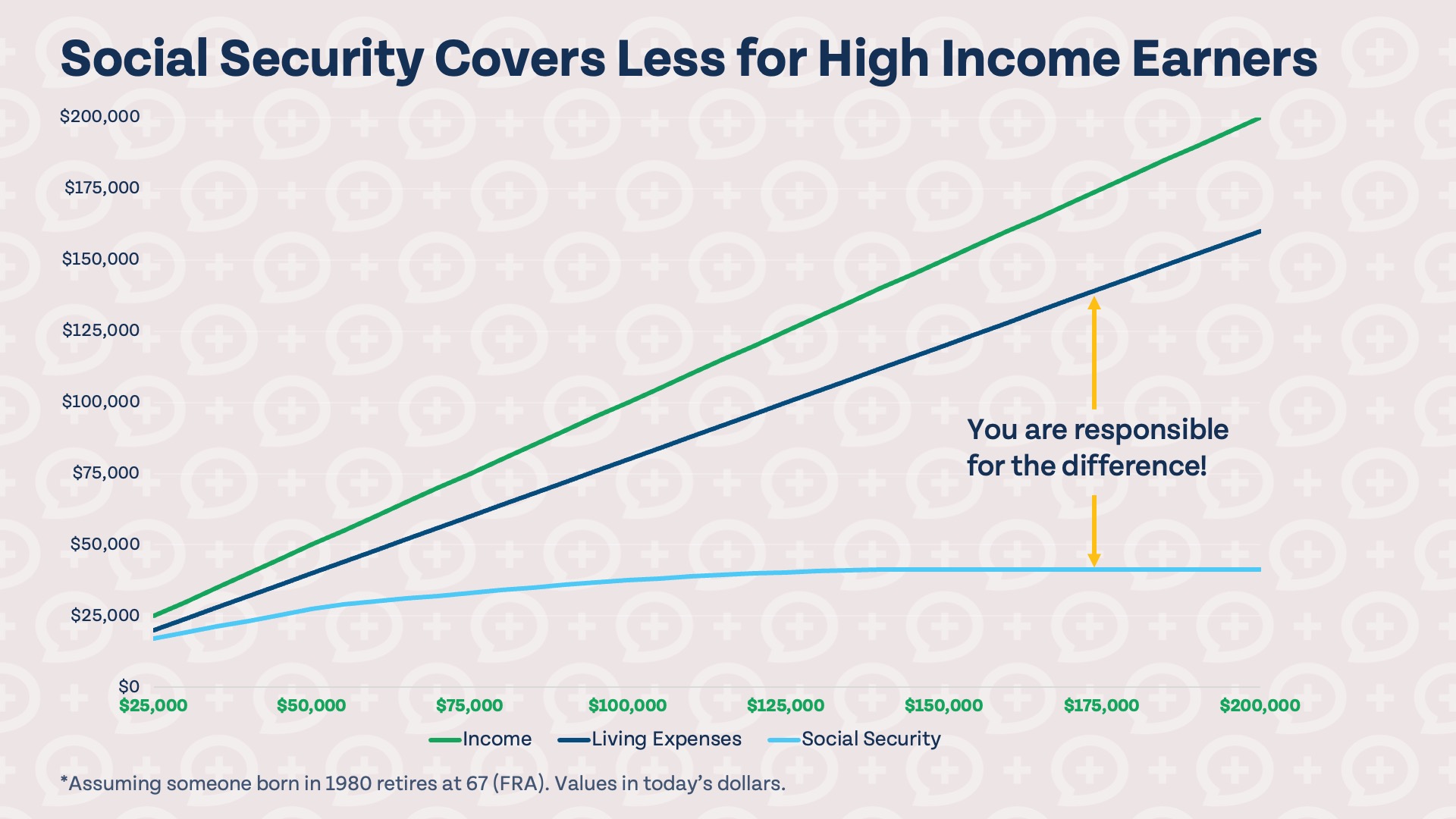
Brian: To me it came off as a very Eeyore-esque outlook. It was like, “Oh no, I only have a million and a half dollars for retirement. Oh no, how am I going to do this?” And the reality is that it’s actually pretty successful in a lot of ways. Let us show you some math on this. If you think about somebody, and as I said, we’ve adjusted the safe withdrawal rate up to 4.5%, that within itself is going to create a safe withdrawal rate of around $67,000 to just close to $68,000 a year. Add in Social Security. For a lot of people it’s going to be even higher than this. We just used average Social Security to keep it conservative. That’s right around $25,000. Your annual money coming in in retirement would be close to $93,000. If you do the math on that, that’s getting close to $8,000 a month. This is for somebody who likely doesn’t have much debt, is completely debt-free, potentially doesn’t have to save for retirement anymore. That’s a pretty good life.
Bo: That’s a fantastic standard of living for most people, for the average American. And if you’ve structured your assets well, you’re likely going to be in a lower tax situation. I do not think that a million and a half dollars is stark. But again, personal finance is personal. So what should you do? How should you think about this? Well, number one, we want you to assess your own personal and individual situation. Some article out there is not going to tell you exactly what you need to retire with to be able to live the life that you want to live on your terms. So there are some questions you should answer. What are my expenses going to be in retirement? Not what are the average expenses or what do people estimate their expenses to be, but what are my expenses going to be based on the life that I want to live? What other income sources might be coming my way? Do I have a pension? When am I going to take Social Security? Do I have rental property? What other things are going to be there? And then how much would you need if you want to be able to provide that lifestyle, based on your expenses, factoring in your income, at a safe withdrawal rate that’s appropriate to your age? If you’re retiring at 70, your safe withdrawal rate will likely look different than someone who is retiring at 50. Have you actually crunched the numbers and run the math on your own unique specific situation?
Brian: And that’s why I think it leads to this umbrella statement: understand that your retirement number can change. If you’re five years from retiring, you need to get really serious and hone in on all these things we just covered, the expenses, the promises of Social Security or pensions you have coming in, so that you can make a customized stress-test retirement plan. But if you’re somebody who’s 25 years away from retirement, there is nothing wrong with doing some napkin planning with safe withdrawal rates and just making sure that your savings and investment rate match and intersect with what you think your future retirement is going to look like. You just need to take all this and bring it together to have a plan that’s specific to your financial life.
Bo: And if you’re sitting there, no matter what stage you’re in, thinking, “Okay, well, I want a plan,” one of the things the article said is that being proactive helps have a successful retirement. We’ve actually done a lot of the heavy lifting for you. Will you hold that thing up for me? We actually have the Financial Order of Operations, which is a nine-step process to help you understand exactly what you should do with your next dollar as you’re building toward retirement, as you’re building towards financial independence. So we can remove the guesswork from it. If you want to get your free copy, you can go to moneyguy.com/resources and download your free copy, or if you want to do a deep dive on the FOO, you can go to learn.moneyguy.com and check out the Financial Order of Operations course.
Brian: So the overarching question is: is a million and a half dollars enough? Probably, but also it depends.
Bo: It depends. But you know what does not depend? Whether you should subscribe right now to this channel so that you are updated every time we put out brand new information, because every Tuesday at 10 a.m. we show up here. We put together some stuff to share with you guys and then we want to load you up because we care about what you care about. We believe there is a better way to do money. So right now we have the team out in the wings collecting your questions. If you have a question for us, if you want to get our take on something, if you want us to weigh in on something in your financial life, make sure you get your question in the chat right now. So with that, creative director Rebie, I’m going to throw it over to you.
Rebie: Yeah, we’ve got a lot of questions queued up. Let’s start with Steph’s Numbers. It says, “My company removed our 401k match and there are talks of salary cuts. We are a one-income family. Should I continue to put money in a 401k or do I stack cash? We have no debt outside of our mortgage. What would you do in this situation?”
Brian: Well, look, this is when you have to put on your Encyclopedia Brown context clues of life. I know that ages out of most of the population, but look, you pull up the Financial Order of Operations. We love step two, which is employer’s free money. But if you all of a sudden take away the free money, that changes the list. Now your 401k is more of a step six operation. What’s more important is now let’s make sure we keep your life out of the financial ditch with high interest debt as well as emergency reserves. And if I had an employer where the first sign is they cut off all, they start trimming down the benefits, this is not the okay sign that things are really good at this company. And then the fact that you hear there might be layoffs and other things coming down the pipe, I would start planning accordingly because I’d rather you have a frothy emergency reserve than a very lean emergency reserve if there is a layoff event potentially in your future. So I’d start planning accordingly, maybe boost up those emergency reserves. And then worst case, you come out on the other end and say, “Oh, that was just more of a fear or a scare.” I can always redeploy that money by dollar cost averaging or increasing future savings, but you at least will not be caught in a bad financial situation if you lose your job.
Bo: Yeah. In the face of uncertainty, liquidity and building up a buffer is going to be your best friend. And the worst thing that happens is you end up with more cash than you thought you needed. A lot of people think that the only reason why we save into a 401k is to get free money. There are really other great benefits to a 401k even if there’s not an employer match. So if you are funding your Roth IRA and you are funding your HSA, there are still tax-incentivized savings opportunities through a 401k, whether you’re doing pre-tax 401k contributions to save money on taxes today or Roth 401k contributions to save tax dollars in the future. And your 401k might have really good low-cost investment options. It may provide a mechanism where you could roll assets out of IRAs into the 401k in order to do backdoor Roths. So just because the match is not there does not mean you should automatically disqualify and skip the 401k step. Follow the Financial Order of Operations. Will you hold the thing up for me? Follow the Financial Order of Operations. Make sure that you are in the right step and it will be your guide to make sure you’re making the right decision.
Brian: But you do agree for Steph’s situation specifically, the employer is giving all kinds of indications that they might be taking on water financially, and they’re a single-income family. You probably want to go ahead and do that analysis of three to six months of emergency reserves, or maybe even beyond six months. If you’re sitting right at three months and they’re talking about layoffs, you probably ought to stack some cash.
Bo: Yeah, I said that to start with. I agree.
Brian: I just want to make sure we put an exclamation point on it because I don’t want people caught in a bad situation.
Bo: Agree. And I would do more than six months if I thought layoffs were coming. I would have a more frothy emergency reserve. It’s a little bit of both ends.
Brian: Absolutely. Do that and then take advantage of the 401k when things stabilize. Well, Steph’s Numbers, I hope that helps you make a decision that is right for you. We really appreciate you being here and asking the question.
Rebie: And I just want to let you know, we will actually be getting spicy today with a new segment later in the show. This segment is called Moneyverse Meme of the Week. We ran a contest on the Moneyverse, our Discord channel, and they have rounded up some quality memes for you to be the overlords that determine what’s the actual meme of the week.
Brian: Sure. Yeah. We’ve got several for you to look at.
Rebie: You guys will vote. Well, the Moneyverse all voted, so you’re going to see the most-voted memes. But anyway, that’s coming later in the show. We are going to answer more questions right now.
Rebie: All right, next question is from Aubra 622. It says, “Question: how does one maintain the FOO when others around them have a YOLO personality and they are the ones who view us as a miser?”
Bo: You just grin from ear to ear and you think, man, I’m so happy I have YOLO friends. Because YOLO friends are always down for a good time, right? They’re the ones that are going to say, “Hey, let’s rent the boat. Let’s do the thing. Let’s go have the experience.” And they’re the ones that want to go ham on doing all the stuff that you probably are wiser and think, man, I should not do that. So I would allow yourself to take advantage of their generosity of wanting you to be part of these experiences and part of these things. But know deep down that by following the Financial Order of Operations, making those sound financial decisions, you’re actually building for a great big beautiful tomorrow, not just focusing on living today and today only.
Brian: Look, I like having YOLO friends because they kind of make sure those of us who live such orderly lives are at least getting out of our uncomfortable zone and making memories and doing things. So it’s good to have YOLO friends. Even go watch that episode where we did financial mistakes you hope your friends make, because maybe they’ll go buy a boat or a jet ski and you’ll get to YOLO it up without having to pay the monthly payments. But there is something, and look, you keep yourself honest. We give you enough resources on our website, moneyguy.com/resources, and even some of the courses and tools that we’ve offered, to where you can figure out if you’re ahead of the curve, behind the curve, or right where you’re supposed to be. As long as you’re measuring twice to ensure that you’re right on the curve or ahead of where you’re supposed to be and that you’re not being a miser, then I would just go do that exercise to give you the peace of mind that I’m doing exactly what I need to.
Bo: And be honest if you are kind of ahead of the curve and you’re being cheap for the sake of cheap. Because there will come a transition in your life. It’s just like earlier in my career when I was the person ordering water at restaurants while people around me were ordering mixed drinks and beers, or we’d be splitting a salad. But then there comes a point where you realize, hey, because of our level of success, you just have to be prepared to throw your credit card out and not keep score of who ordered three drinks or fancy wine.
Brian: Even though I’ve complained about friends who do keep track of that, you just don’t let on. But it is one of those things where you know there are going to be progressions in your life. And that’s the thing I would say to keep it healthy: you have to know are you progressing where you’re supposed to be, not at the detriment of your financial success. There will come a transition with your success where you won’t keep score as much on some of the consumption items.
Bo: And look, I want to note somebody made a joke in the chat like, “I’ll find new friends.” And while that’s not exactly going to be prescriptive advice here, it is something to take note of. We are the sum of the five or ten people that we spend the most time with. If you do find yourself in constant circles with irresponsible financial decision makers, or people who buy the latest greatest car or go on the latest greatest trip and run up the credit card debt and do those sorts of things, it may be worth doing a self-assessment. Am I being negatively influenced because of the people I surround myself with? Or should I make sure that I’m also surrounding myself with sound financial decision makers that are doing the things that I’m doing and making the decisions that I’m making and value the things that I value? Because you want to be careful that you don’t slip into that behavior just because of proximity.
Brian: Well, also be the salt and the light that says, “Hey, I plan on retiring at 58 years of age. I’d like to have friends there with me. So can you guys at least do a little bit? Maybe fund that Roth IRA so that I’m not living my best life in retirement while you guys are still working for the man.” I mean, you can play it on the other side too and be like, “Hey, yeah, I know y’all think I’m cheap, but I’m building something here. What are y’all doing?” And make fun of that. That’s one of those things where I think it’s okay to present the contrast and maybe help them be better versions of themselves as well.
Bo: Love that. Love it.
Rebie: All right. I just smile a lot has a question for you. It says, “Hi, I’m 31, a high school counselor with a $75k salary on step four of the FOO. My pension is 11% of my income. My 403b has no match, but I currently contribute 2%. Should I stop contributions to the 403b and just do pension and Roth? What do you think?”
Bo: So whenever I get a question like this, I resort to the FOO. Brian, will you hold the thing up for me? Financial Order of Operations, nine-step process to help you figure out what to do with your next dollar. Your pension is automatically happening, which I love. You’ve got a $75,000 salary, 11% of that is already going into your pension, which is wonderful. So now, all right, I’m doing that automatically. You said you’re in step four, so you’re building up your emergency fund. Once you get your emergency fund fully funded, three months or six months of living expenses, then I do think you go to step five. Right now, in our opinion, the Roth IRA is likely going to make the most sense because you get to choose the provider, you get to choose the investment options, it’s going to be lower cost, it’s going to be portable. I think that’s likely where you would land. But some people would say, “Well, but what if I want to do the Roth 403b? Isn’t that the same thing?” I’m not going to fight you on that. I do think the Roth IRA edges it out a touch for the reasons I just mentioned. But if you’re still going to take advantage of the Roth 403b, I don’t think that’s necessarily a bad thing. Although the Roth IRA is going to give you more flexibility, more options, more release valve access if you had to have it. But so long as you’re doing one or the other and thinking about it in the Roth fashion, I think that makes a lot of sense.
Brian: Yeah. I do agree with Bo that I think the Roth IRA primarily because you get to choose the provider and the low-cost index options. Whereas I think a lot of this has been fixed, but earlier in my career teachers were getting hosed in a lot of bad ways with the providers. I mean, and I’m not going to name names, but they were primarily putting people in stable reserve funds. They were insurance companies putting the 403bs primarily in stable reserve funds that offered zero index options, and they were very heavy on the commissions and internal expense operating expenses of the investment options. So if you are going to go 403b, do a little due diligence to see what your options are. Now the fiduciary rule really blew up the world for a lot of these insurance companies where they actually had to start doing decent work for the teachers. So I think a lot of that’s been fixed, but it still doesn’t get you out of the homework you need to do. Go do that due diligence. Go look at the internal operating expenses. Look in the plan to see, are there index options that truly have the benefits of index funds, meaning they’re practically free? If you have an index fund that has an internal operating expense greater than half a percent, that’s not really an index fund. That’s a management fee pretending to be an index fund. So pay attention to those things.
Bo: But I think the FOO is going to be your friend. Bo is exactly right. You sound like you clearly need to get the emergency reserves right. Be thankful because I bet a lot of that 11% is also your employer funding that pension. And then let’s get the cash reserves right and then let’s jump right into maxing out that Roth IRA. And then step six, we can start piling some more money into that 403b as well.
Rebie: That was great. Well, thank you. I just smile a lot for the question. I hope that helps you think through your account types and what you’re going to do next.
Rebie: Zach W is up next. He says, “We are a couple, 34 and 36, with about $1 million invested and living in a low cost of living area. We are easily coast FIRE and don’t enjoy our jobs. Any advice on pushing for financial independence by 42 versus spending more on enjoying today?”
Bo: What if we were sitting across from each other? The question is: which do you want more? I never want someone to be miserable, and I never want someone to have a really rough time at it today. But there are times and seasons in our life where okay, I’m willing to take a little bit of pain, a little bit of discomfort, a little bit of extra discipline in order to have something greater in the future, something better. And so if financial independence by 42 is something that you and your spouse are thinking, “Man, okay, we’re going to do this. We’re going to hit this number. We’re going to be able to truly exit, be very early retired, and live the life that we want to live on our terms,” and you recognize that the tradeoff, the cost of that, is going to be walking away from some, not all, of the experiences and things that you could do today, but you’re okay with that, then that’s fine. Or you may arrive at the conclusion, “Yeah, we only get to be in our mid-30s once. We don’t want to wait all the way till 42 to start enjoying stuff. Who knows what could happen. Who knows what the future could hold. We want to have a more balanced approach.” Neither of those are wrong. But you guys have to decide for yourselves which one you desire the most and which one you are the most willing to commit to.
Brian: Zach, I’m going to tell you, I think your hatred of your job is creating extreme options that you’re choosing from. You dislike your job enough, and look, it sounds like it’s highly compensated because for you and your spouse to have a million dollars in your mid-30s, that’s way ahead of the curve. You’re doing great, but at what expense? It doesn’t say hate, but I’m putting the word hate in there because how do I know they don’t like their jobs? Because they’re saying, “Hey, I want to retire at 40. I want to be financially independent at 42.” I think it’s creating extremes because they’re looking at their job and thinking, “I could do this for another five to six years and then I’ll be financially independent.” I would rather you maybe really take a life inventory and say, is there something that I can take, being ahead of the curve, and pivot to something else that I would really enjoy? Maybe have a career change. Measure twice before you cut, obviously, but is there something else you should be doing that you’d enjoy? Because the problem I have with calling yourself financially independent at 42 is that there’s still so much life. Where are you with kids? Where are you with where you’re going to live and retire? There’s just so many people I’ve seen that think they’re financially independent at 45 or younger, when there are just so many curveballs that life is going to throw at you with health, with children, with family, with where you’re going to live. I just want you to make sure you have all that figured out and not just build toward a plan where you’re living this miserly life in a job you don’t like, and then wake up in your mid-40s thinking now is when you’re going to live your best life. I think there are some steps in between that you need to figure out how you can live and enjoy your life right now. Life should be happiness. There’s going to be struggle in life, but you shouldn’t wake up dreading going to work. I’ve been there, done that, and I think there’s a better way.
Bo: Well, and I just think this is a public service announcement. We’ve just lived through too many folks who had these amazing plans for the future. “I’m going to save. I’m going to do this. I’m going to do that.” And then all of a sudden, something they were not expecting, an accident, a bad diagnosis, an illness or whatever, and then that thing they were so looking forward to, that thing they were so excited about being able to experience, never comes to fruition because the time had passed or their health goes or the age catches up. If there are ways you can figure out how to enjoy today with a balance, like I’m still saving for tomorrow, still exercising discipline, still wanting to have something great tomorrow, but not sacrificing all of today, because tomorrow is not guaranteed. None of us know if we’re going to breathe our next breath or wake up tomorrow morning. And so we ought to put time and effort and attention into making sure that we enjoy all the seasons and all the phases of life as much as we can without reasonably sacrificing the future seasons and future stages. Because it’s just not worth it to get to the end, reach the goal, and then not be able to enjoy the fruits of that labor.
Brian: Money is nothing but a tool. And you’re frothy enough with how much you have that you ought to at least do a thought exercise to see if there’s a way you could start living your better life now versus just sucking it up and being miserable for the next six years. And maybe I’m over-editorializing your happiness, but to say you want to be financially independent at 42 is an indicator that something is not right, that you’re daydreaming about just being done at such an early age.
Bo: Yeah, always good thoughts. Thank you, Zach W, for the question.
Rebie: Andrew’s question is up next and then we’re going to get to some Moneyverse memes. So stick around. Andrew says, “Hi Money Guys. My retired parents still use CDs for their savings. Do CDs still have a place in modern personal finance?”
Bo: Have you ever heard of this before? Parents saving in CDs.
Brian: I thought you might have a thing or two to say. I definitely recognize parents that use CDs, and I’ve even had clients that have done laddered CDs as a portion. And I’ve done a good job, when I have clients or prospects that come in with these type of situations, of trying to let them still use this tool because it’s an appropriate risk-adjusted option. As you have more success, you are going to want to put a decent chunk of your assets in what we consider risk-off or very safe assets. CDs can play a part in that. But I don’t know enough here because this is where it depends. I don’t know how old your parents are. I don’t know how financially savvy or successful they are. But more than likely they’re going to want to have somewhere between 40 to 60% of their assets in something that can continue to grow in the background, and CDs don’t even keep pace with inflation over the long term. So it’s not a great wealth-building opportunity or even a protector of long-term purchasing power. I would try to work to get your parents to have a more full understanding of how money works so that they can use it appropriately but also not get undermined in the long term.
Bo: Yeah. The question I would ask is: what goal or what objective do you want the CDs to accomplish? If the question is, does cash or cash-equivalent liquid investment still have a place in modern personal finance? Absolutely. And depending on the business cycle we’re in or the economic cycle or where interest rates are, you may hold your cash in a number of different places. You may hold it in a high yield savings account online. You may hold it in your brick-and-mortar bank account savings account. You may hold it in a certificate of deposit or CD. Or you may hold it in a money market mutual fund. And depending on what’s going on with cash and cash equivalent interest rates, one of those four could very well be an option, but it’s not always the same. There have been times and seasons where locking in a CD at a really high rate made a ton of sense. We haven’t been in that season in a while now because high yield savings accounts and money market mutual funds have been more attractive from a return standpoint without any lack of liquidity. But there might come a time if interest rates rise and you can start locking in CDs at higher rates for longer terms that that could make sense. I don’t think the question is does it have a place in modern personal finance, because it’s still a tool that can be used. But is it the tool that makes the most sense to accomplish that today? Maybe, maybe not. And that depends very much on your parents and their personal preference.
Brian: Look, I don’t mind sharing. I don’t have any CDs in my portfolio. And my mother, you all know my father has passed away, and it was my mom and dad that had all the CDs when I was a kid. That was their idea of investing. And I helped mom out with her investments now, and we don’t have any CDs in that either. But that doesn’t mean that they don’t have a place if that’s your preference. Because I always try, when clients come to me, to know what their thoughts on money are, and I will build a successful plan around what they are comfortable with. And if you love CDs and that’s the way you’ve done things, I’m going to figure out a way to make that work with a portion of the assets, not all of the assets.
Bo: Now, one thing, because we’ve seen this: if you have parents or elderly people in your life that really like CDs, we’ve seen this happen where they’ll go around to all the banks and all the credit unions in town and open up certificates of deposit at each one of them. There’s not necessarily anything wrong with that, but man, does it create a logistical difficulty when it’s time to transition or even when it’s time to file their taxes and all of a sudden you have all of these different tax forms coming from 12 or 13 different institutions. There’s a better way.
Brian: Yeah. When it’s time to transition, it gets complicated. Realize if you have a brokerage account with the Fidelities and the Charles Schwabs, you can go buy CDs all over the country all in one account. We’ve modernized this. Your parents or grandparents don’t have to drive all across town putting money in different banks.
Rebie: That was a very fair, well-rounded answer. Thank you for that. Andrew, thank you for the question as well. We love that you were here on the live stream and asked the question and that we got to answer it.
Rebie: All right, it is time to show you guys some personal finance memes straight from the Moneyverse. They’re all personal finance related. They were submissions from real financial mutants in the Moneyverse. If you want to join the Moneyverse, just go to moneyguy.com/moneyverse. It’s free. It’s our Discord server. We’ve got all kinds of conversations going on there about the show and about personal finance. One note: bonus points were given if it was a Star Wars meme. So we did get a lot of Star Wars submissions. I just needed to say that so that Bo would be prepared if he doesn’t understand something. Maybe we’ll explain. Maybe we’ll just let him live. But these are all finance related and Star Wars related.
Bo: They’re all Star Wars related?!
Rebie: All Star Wars related.
Bo: Flips the table!
Rebie: I think people wanted to see you react to Star Wars stuff too because they know it’s not your skill set. We’ll say that. All right, let’s pull up the first one. It says, “I’m investing now.” And then Padme says, “In low-cost index funds, right?” In low-cost index funds, right. Brian giggled. Yes, this is a very popular meme format. Have you not seen this as a background?
Bo: I get the joke. I don’t know who these people are. Have you seen them before? No. Keira Knightley? No.
Rebie: That’s who that looks like to me. Are you just doing that for comedy sake? That’s who that looks like to me. All right, is that not who that is?
Brian: That is the future Darth Vader. That is Anakin Skywalker.
Bo: He looks so nice.
Brian: Let me go ahead and blow your mind. Spoilers. Luke and Princess Leia moment right there.
Bo: Oh, well, that seems sweet.
Rebie: All right, next one. Another common meme format. Have you seen this format?
Brian: I’ve seen this. I’ve never seen the Star Wars format like this, though. So we have a Padawan after one investing thread, holding hands with boring index funds and tax-advantaged accounts, and looking a little flirtatiously at tax-free passive income through a 19-step real estate strategy with nine refinances.
Bo: The meme I get and I think it’s hilarious. Are these actual characters from the movie?
Rebie: I think AI is utilized in a very fun way here.
Brian: That’s funny. I like this one. I get the meme and it’s funny, right? Boring index funds. Well done. And I love how it looks very Star Wars-esque. He’s even got a lightsaber on his holster there.
Rebie: I’m not announcing who’s winning these.
Brian: I think this one is better than the first one.
Rebie: We’ll make awards in the Moneyverse. You know who you are. Third one, we’ve got two more. This one’s a good one. We’ve got a picture of Yoda. It says, “FOO or FOO not. There is no try.”
Bo: I get that. You get that.
Brian: FOO or FOO not. There is no try.
Bo: Is that two impersonations? We got Eeyore at the beginning and now we got Yoda. Who else might show up? What a treat.
Rebie: That one’s cute, right? They did a good job. All right, and last but not least, we’ve got from the new Star Wars. I’m blanking on his name.
Brian: Kylo Ren.
Rebie: Kylo Ren. It says, “When an emergency fund happens and I need to refill my emergency fund,” and then we have the Kylo Ren quote: “I know what I have to do, but I don’t know if I have the strength to do it.” You both look confused about that.
Brian: I mean, I think look, Kylo Ren when he puts the helmet on has the coolest voice. You know, when I do Rise of the Resistance when I’m at Hollywood Studios, I still love how that voice sounds. But I feel like this is a little forced to get a cool character into a meme.
Bo: I don’t know the line. I don’t know the character. I have no context there. But I’m a big Adam Driver fan. That’s the actor. I’m a big fan of emergency funds though. I like those.
Rebie: Would you have the strength to refill your emergency fund?
Bo: I think you have to. You have to.
Rebie: All right. Well, that’s all we got. If you want to see the rest of the meme submissions, go to moneyguy.com/moneyverse.
Brian: Look, Bo and I are not involved in this stuff whatsoever. And I would love to know on a scale of how this was pitched, like, “This is going to be great. I can’t wait to see it.” This is probably one step above the arm wrestling that Bo requested.
Rebie: Noted. They did not like this.
Brian: No, I did not. Please don’t mishear us. I appreciate the creative efforts that went in from the Moneyverse. I just felt bad for Bo. I felt like the fish was like, “Please put me back in water.” He got two out of four.
Bo: I did. I knew 50% of them. Considering that he was at a disadvantage.
Brian: You can breathe on land as a fish.
Rebie: Go to moneyguy.com/moneyverse to join our free Discord server if you haven’t already.
Brian: Thank y’all for y’all’s effort and thank you for being part of the Moneyverse too.
Rebie: Yeah, it was really fun to see all of your submissions. I enjoyed it immensely.
Bo: Somebody just said, “I want to see fitness memes next.”
Brian: Now we’re talking. I like that. Maybe next time. And there are so many correlations between fitness and health and wealth. That could actually be pretty good. Health is wealth.
Rebie: All right, let’s get back to some questions. So there was a winner of those four, and that winner will be announced in the Moneyverse. And what do they get?
Brian: It’s probably going to be in the newsletter. Am I allowed to say what they get?
Rebie: Yes. There’s going to be a special role given in the Discord for meme challenge winners, and it will be those four folks.
Brian: Do you think one is more of a winner?
Rebie: Which one was the best? I guess I didn’t ask you.
Bo: I like the one where the Padawan is almost being distracted into investing in real estate or other types. Probably my favorite. That’s a good one.
Brian: The boring index funds and tax-advantaged accounts. That one was good. And Bo actually recognized that one.
Bo: I got that one. It didn’t have real characters in it.
Rebie: All right. Next question is from PJ Dad Life.
Bo: Can I ask, was that from like one of the old movies or is that like a new movie? Not when I say old movies, I mean like the ones that came out in the 80s and 90s, or are those modern day?
Brian: No, that’s the ones from the early 2000s. There are the late 70s and early 80s original three. I think you’ve seen those. And then George Lucas came back and he brought one, two, and three, the prequels, in. And then after Disney bought the franchise, they added stuff on the back end. They’ve just done all kinds of things now. It’s confusing now. And they made Boba Fett, well, not as cool. But I don’t think they killed him, you just didn’t love the character arc. My favorite character in the world. I’m not, you all know I love Disney, but I have been disappointed with some of the character arcs on some of these beloved properties.
Brian: Let’s get back into finance, not fitness. Let’s get back into finance. Let’s just say all my figurines that I kept from my childhood that I was like, “Man, these things could be worth a fortune when I’m like an old man,” because if Pokemon can be worth this much, Star Wars is going to be worth a gazillion dollars. Little did I know. Be careful, guys, with Pokemon. Someday they might just completely change some of these things that have tremendous value and then you realize it’s not worth as much.
Rebie: Warning from collector Brian. That’s the reason you shouldn’t invest all your money in Pokemon.
Brian: Well, I did think we had somebody, we did a collab, was it Austin and Robert? And we were talking about trading cards and stuff like that. I keep threatening I’m going to bring in my card collection and he says, “I don’t think those are going to be worth anything.”
Rebie: Are you ready to do some personal finance questions?
Brian: No, no. That was a different context. Who gave you the 1990s cards that were just given to you? Oh, it was our dentist. That’s what it was. They’re not worth anything.
Rebie: Next question. Our favorite, and I’m not going to say his name, is PJ Dad Life. And it says, “Money Guy team, loved your Making a Millionaire episode yesterday. You talked briefly about ESPPs. How much of your investable portfolio as a percentage is too much to have concentrated in your employer stock? What’s your take?”
Bo: Well, before we answer the too much, let me rewind to the beginning. What is an ESPP? It’s an employer stock purchase plan where, as an employee of the company, you are given the option to buy into the stock of your company, oftentimes if it’s a publicly traded company at a discounted rate. So I can get a 15% discount, and oftentimes even at a favorable price. So in a trading window across six months or three months, I get a 15% discount off the lowest trading price in that window. It’s a really really good thing because if something is worth $20 today but I can then go buy it for $15, I immediately have $5 of embedded value based on the discount. So employee stock purchase plans are wonderful tools. We think of them, Brian, hold the thing up for me, we think of them like step two of the Financial Order of Operations. Now, if you are someone who works for a publicly traded company and you have the ability to participate in an ESPP, but also some of your compensation comes in the form of restricted stock units or performance stock units or maybe even some sort of options, then very very quickly a lot of your capital, a lot of your financial wealth, can become tied up in your employer stock. And so the question that PJ’s asking is, all right, how much is too much? And I’m even going to add a tail end of that: how should I think about having a strategy for that moving forward?
Brian: Yeah. I think it’s always back to the fact that you have your human capital, meaning the hours you put in at work. There’s your investment capital. You don’t want to have everything tied into the exact same thing because then you literally have all of your eggs in one basket. But you also have this frothy opportunity where if they’re giving you pretty much a guaranteed rate of return with the way they discount, it’s pretty good to take advantage of this. So I always think, look, I think it’s somewhere between 5 to 10%. I think over 10% gets really scary. We’ve had young clients who have gone well into 50%, but they were in their 20s and they probably had a lot of chances of recovery. Because this is also where the it-depends comes in. If you’re somebody in your 20s who doesn’t have a lot of people counting on your income and your money, yeah, you can probably swing for the fences a little differently. But if you come to me and ask this question when you’re in your 40s and you’ve got a house full of a spouse and kids, it’s a different answer, and it’s going to put it somewhere in that 5 to 10% territory.
Bo: If you can get there. A lot of times though, we see this: even though your desire might be to only have 5 to 10% exposure, you may be in a place where the RSUs that come in for you just blow that up and 5 to 10% is not realistic. So what do you do in that circumstance? I would think strategically about how I maintain my exposure as the treadmill of incentives keeps flowing. Like if I have RSUs that are vesting today, I know that if I sell them today, it’s going to be my lowest tax cost point to sell because when they vest, that’s when I’m taxed on those when it comes to RSUs and PSUs. So I’m going to sell immediately, incur no additional tax burden, and then I can redeploy and rediversify. If I have ESPP shares and I just want to purchase at the purchase window and then immediately sell, I can wash those ESPP dollars. Most ESPP plans limit you to $25,000 a year that you can participate. I can sell those periodically as I acquire the shares, assuming there’s no holding period. So there are things, there are strategies you can do that as the stock becomes available to you, you can slowly start taking some off the treadmill as more gets put on the treadmill, so that you might not be able to get down to 5 or 10%, but you’re at least chiseling some off on the side to begin building up wealth outside of your incentives. Because some people, especially if you work in high tech or something like that, it’s hard to get to that 5 or 10% number just the way the compensation is structured.
Brian: Yeah. Matter of fact, there are probably some people at SpaceX right now that literally have close to 100% of their net worth in SpaceX.
Rebie: Thank you, PJ Dad Life, for that question and thanks for the answer. Brian and Bo, do you think PJ Dad Life was private jet or pajamas?
Brian: That’s what I was thinking about for the first 20 seconds of that question. I’m voting pajamas. Or is his name PJ? Because think about how different the context is between private jet dad life and pajama dad life. These are two very different individuals. Or he’s just a Patrick or Patrick Johnson. Yeah, probably more likely.
Rebie: All right, next one’s from Captain Morgan7352.
Brian: Got a laugh out of the entire writing crew. What does that say about our team?
Bo: Got a little captain in you. Pirate fans.
Rebie: All right. The question says, “The wife and I are both 40. We have three times our incomes in savings. Are we behind if we have no other net worth? Because I feel behind living in employer-subsidized housing compared to others who own their home. What do you have to say to Captain Morgan?”
Bo: Well, so we’ve done a number of studies, a number of shows where we look at the Fidelity study, and we’ve also added our own numbers in terms of milestones that you should shoot to achieve at certain ages. And we say by the time you get to your 30s, we want you to have one times your annual income saved up in liquid net worth in your portfolio. By the time you get to 40, we do target three times your annual income in a liquid portfolio. What’s a little bit unclear about the vocabulary you used is you said we have three times our income in savings. Are you going to interpret that as investments, not like a savings account, not like cash? Like I have three times in between my Roth IRAs and 401k?
Brian: Probably liquid portfolio. We’re going to give you the benefit of the doubt that that’s liquid portfolio because this is really about a housing question. And I think, begin with the end in mind, Captain. Where do you plan on retiring? Because based on the way you said that there’s employer-subsidized housing, that makes me think you might be in technology or something like that, because in some of those high cost of living areas you do see campuses where housing is even potentially provided. If that’s the case, we know a lot of people who work in these areas but then plan on retiring somewhere completely different. So what does that look like? Because maybe this is just the way it is and you should still be very productive and efficient at building your wealth in the background, but maybe have a plan for when you do finish or retire, maybe in your 50s, that you’re going to go and retire in a lower cost of living area.
Bo: Yeah. I don’t know when I read this off the cuff, not knowing anything about your unique circumstances or your personal goals, three times your annual income in investments could be military too. There are so many different ways you have employer-subsidized housing because then you have a pension. We don’t have enough context on the Captain. I don’t feel like, based on this, maybe what if this is actually a Captain in the military and his last name is Morgan and we’re just sitting here making alcohol drink jokes. We are horrible people.
Bo: Y’all are bad people.
Rebie: This is a guy serving our country and y’all are joking.
Brian: Thank you for your service, Captain. You’re not a pirate.
Bo: I don’t think Captain’s behind. It doesn’t seem to be the time. If you take housing out of the equation, our little rule of thumb of three times annual income in liquid portfolio, if you’ve already got that, I’d argue that it seems like you’re certainly on track. And if you are military, you’ve got that going on plus a pension building in the background. There’s a chance you’re actually out ahead of the curve.
Brian: Captain, when was the last time you actually drank Captain Morgan?
Bo: College. It’s probably been college. Seven to ten years for me too. I mean, not a big Diet Coke fan. Diet Coke was the one thing I liked with Captain Morgan if you were curious about that.
Brian: Thanks for telling us. Learning so much today. I don’t like Diet Coke at all.
Bo: Me either. There are some people who are gaga over it. I don’t like anything with the fake sweeteners. It has a bad taste to it. That’s why you drink those energy drinks.
Brian: I’m not going to give them a free plug, but they all have an artificial taste that I don’t like.
Bo: You’re wrong on that.
Rebie: All right, next one. Firefighter 725. It says, “I’m about to purchase land adjacent to my property on a home equity loan at 6.5%. Should I accelerate my payoff or continue to put money in my brokerage and invest?”
Bo: How old are you, Firefighter? If you’re in the chat, let us know how old you are. What’s the rest of your portfolio look like?
Brian: Firefighter, let me land on this. I mean, there’s nothing wrong potentially with using a home equity line in this way. If you’re trying to improve your land or make your property more valuable, it’s just: is it the right thing to do at your station in life and what you’re building? Because the thing at 6.5%, you just want to have a plan for how you can extinguish that debt. See what I did there? As soon as possible.
Rebie: That got a laugh out of the team in the wings.
Bo: Yeah. I think it depends on all the questions I sort of asked. If you’re in an income situation where you could pay it off quickly and you have a healthy financial foundation underneath you and perhaps you’re a little bit further out on the experience spectrum, I think accelerating the debt payoff makes a lot of sense. If you are younger, maybe you don’t have as big of a financial foundation and you have debt under control, I don’t think it’s crazy to think about building the brokerage assets because of how valuable the Wealth Multiplier can be.
Brian: Yeah. And if you want to be part of the FIRE movement and set your portfolio ablaze, you’re probably going to need to have money working for you in the background. So you’re definitely going to have investments out there working as well.
Rebie: Anymore? Anything else?
Bo: He’s going to work it into a four-alarm fire analogy.
Rebie: I thought he was going to make some connection with working hard with your back, your brain, and your hands, and your money’s working harder than you do.
Brian: What does it have to do with a fire station?
Rebie: Well, a firefighter is really strong. Works hard with his back.
Brian: Went there. All right, there you go.
Rebie: Okay, I’m just going to be quiet. I was just trying to think of what else you were going to say.
Brian: We all know firefighters are strong. This sounds like every romantic novel out there.
Rebie: Look, that sounds like a factual statement. Are you saying firefighters do not have to be strong?
Brian: I’m just saying my brain did not even go anywhere near that. Man, maybe at some point this guy’s going to take a shirt off.
Rebie: Oh my gosh. The way that you stepped into that far from what I meant. But I’m glad you know what that was.
Brian: No, you just said works harder and stronger than, you know, your money.
Rebie: As a firefighter, Brian, I sit at my desk and type. He has to fight fires and rescue people-
Brian: With his strong back.
Rebie: Oh my god. I’m so sorry, guys.
Bo: A lot of people in here guessing. I’m going to say it because you put it out there. A lot of people trying to guess what energy drink he was referencing. It’s none of the ones you guys have said. It’s a performance drink. I knew you would be offended by a few of these guesses. I don’t do this often, but I’m a C4 guy. When I-
Brian: Why would you give the brand?
Bo: Because look, I don’t want some of these. I’m like, “No, no, no. I don’t do that.” Now what I don’t want to say, but there is one.
Brian: I always think these things already have way too much caffeine, and you love coffee too. These energy drinks have so much caffeine already in them. We have one of our editors, I love this guy, but he buys one that is like double. These are already too much and they advertise. It’s kind of like when everybody realized cola was kind of not great for you. There was definitely Surge, and then there was another one that was even worse that was like, “You know what, we’re going to embrace that we’re unhealthy but we’re going to give you just more of it and that’s our whole marketing gimmick.” I don’t do the energy drinks. I’m just not into that. Look, I don’t do them regularly, but every now and then if I need some sort of preworkout or something like that. That’s coffee. I do coffee.
Bo: Yeah, but coffee for a preworkout is just a different vibe. Hot beverage preworkout, not great. Not a fan.
Borian You just ought to be a hot life.
Bo: Well, that’s true. I am.
Rebie: You guys said that this was going to be a spicy live stream. I think it was. I think it went everywhere, every which way. I did not expect it. I hope you all had as much fun as we did.
Brian: But I don’t mind sharing, just because anybody who watched this show, you all know I had this insecurity because I had a mole cut off my face yesterday.
Bo: Why would you bring it up? Just go ahead.
Brian: Because I was insecure about it. Because, go ahead, I can bring this back around to the Moneyverse. What’s funny is that we’re not famous, but we are nerd famous, meaning you never know where our people are because they show up in the strangest places sometimes. And yesterday when I was at the dermatologist, the PA comes in and she goes, “I was so excited to,” and she knew who we were. And I’m sitting there in just my skivvies, you know, because it’s one of those where they’re going to check everything. So it was just an interesting experience, but still very thankful that she followed our content.
Bo: So if you’re a very nice PA and you’re out there listening, thanks so much for listening to and supporting the Money Guy Show and for keeping Brian healthy for all of us.
Brian: But what’s funny is Bo said he had a similar experience. He wasn’t recognized, but he had them rolling. You had them laughing because he does uncomfortable situations. He tries to make people laugh.
Bo: If I’m ever in like a medical situation where I have to be in my underwear, I’m cracking jokes.
Brian: I probably would have done the same thing, but I was just, I didn’t know. When you’re sitting there half naked, you’re just, I’m not the funniest version of myself when I’m half naked.
Rebie: You guys can watch this and decide whose mind is actually the problem here.
Brian: I just meant that purely factually. You guys are the ones taking it places. No, you were the one that said, you know, because firefighters are strong and they work hard, you know, when I said they were strong.
Bo: Oh my god, I can’t.
Rebie: All right. Well, we do need to wrap things up. And thankfully, we did answer a lot of really good personal finance questions today and had a lot of good conversations. Those conversations always continue at moneyguy.com. That’s where you can join the Moneyverse. That’s where you can get free resources and calculators that help you on your financial journey. So go check that out and we’ll be back every Tuesday at 10 a.m. Central. Sometimes more off the rails than others, but thanks for joining us today.
Brian: I had one more thing I was going to say too. We had a collab go out and if you guys haven’t seen it, we did it with Austin and Robert. I would love for you guys to go check it out if you want to be entertained. This episode with Austin and Robert is actually amazing. You should go watch it. It’s on the Rich Habits podcast. But they made Bo look like he was my age in his 50s. And then they were like, “Hey, I bet Brian’s insecure about the bags under his eyes. Let’s go ahead and give him twice as many.” So go check it out if you want to be entertained. It’s just interesting. They did a fantasy football-style like wealth-building draft. So well done. They were like, “Man, those guys showed us how smart they are. Let’s see if we can humble them with these AI thumbnails.” You’re funny. Love you guys. I’m your host Brian, joined by Mr. Bo. Money Guy team out.


Free Resources
Here are the 9 steps you’ve been waiting for Building wealth is simple when you know what to do and the order in which to...

Free Resources
If you want to set yourself up for future success, find out how much you need to save every month to become a millionaire.

Free Resources
Here’s how you can buy a dependable car that won’t break the bank. Our free checklist walks you through the 20/3/8 rule and strategies to...

Articles
It’s easy to become discouraged if you have an average or below average income. Saving for retirement is normally more difficult with a lower income;...

Articles
It’s difficult to overstate the risk of spending too much in retirement (or saving too little for retirement). Running out of money means moving in...

Articles
Do you have a substantial amount of assets in pre-tax retirement accounts like a traditional IRA or 401(k)? If so, it could make sense to...

How about more sense and more money?
Check for blindspots and shift into the financial fast-lane. Join a community of like minded Financial Mutants as we accelerate our wealth building process and have fun while doing it.
Free Resources
Here are the 9 steps you’ve been waiting for Building wealth is simple when you know what to do and the order in which to...
Free Resources
If you want to set yourself up for future success, find out how much you need to save every month to become a millionaire.
Free Resources
Here’s how you can buy a dependable car that won’t break the bank. Our free checklist walks you through the 20/3/8 rule and strategies to...

It's like finding some change in the couch cushions.
Watch or listen every week to learn and apply financial strategies to grow your wealth and live your best life.

Episodes
From an 84-month car loan nightmare to a $400K net worth, Tyler and Mikaela prove discipline pays off. Watch us break down their full financial...

Episodes
What do real millionaires actually do with their money? We're back with our annual classic where we break down real data from our Abound Wealth...

Episodes
Hidden fees, forgotten accounts, and a Roth surprise could be costing you trillions in retirement. Bo breaks down five 401(k) truths and what you can...
Subscribe to our free weekly newsletter by entering your email address below.