
The first week of November was a big week for our country. I’ll admit, I started getting nervous around the end of October about what was about to happen. There were a countless number of articles online predicting what was about to change in our country, but I always wait for the official news instead of relying on “projections” from so-called “experts.” My anxiety and nervousness faded as I woke up to the news: the IRS had once again released its annual inflation-adjusted tax numbers!
Check out our ultimate guide to taxes, including tax planning strategies you can use to pay less in taxes, here!
Changes to retirement accounts
The Consumer Price Index, the preferred measure of inflation in the US, has risen by 3.7% over the last 12 months (compared to 2.9% this time last year). Some limits, like IRA and HSA limits, aren’t rising enough to keep up with inflation this year. 401(k) limits, though, are rising enough to keep pace with the increasing cost of living.
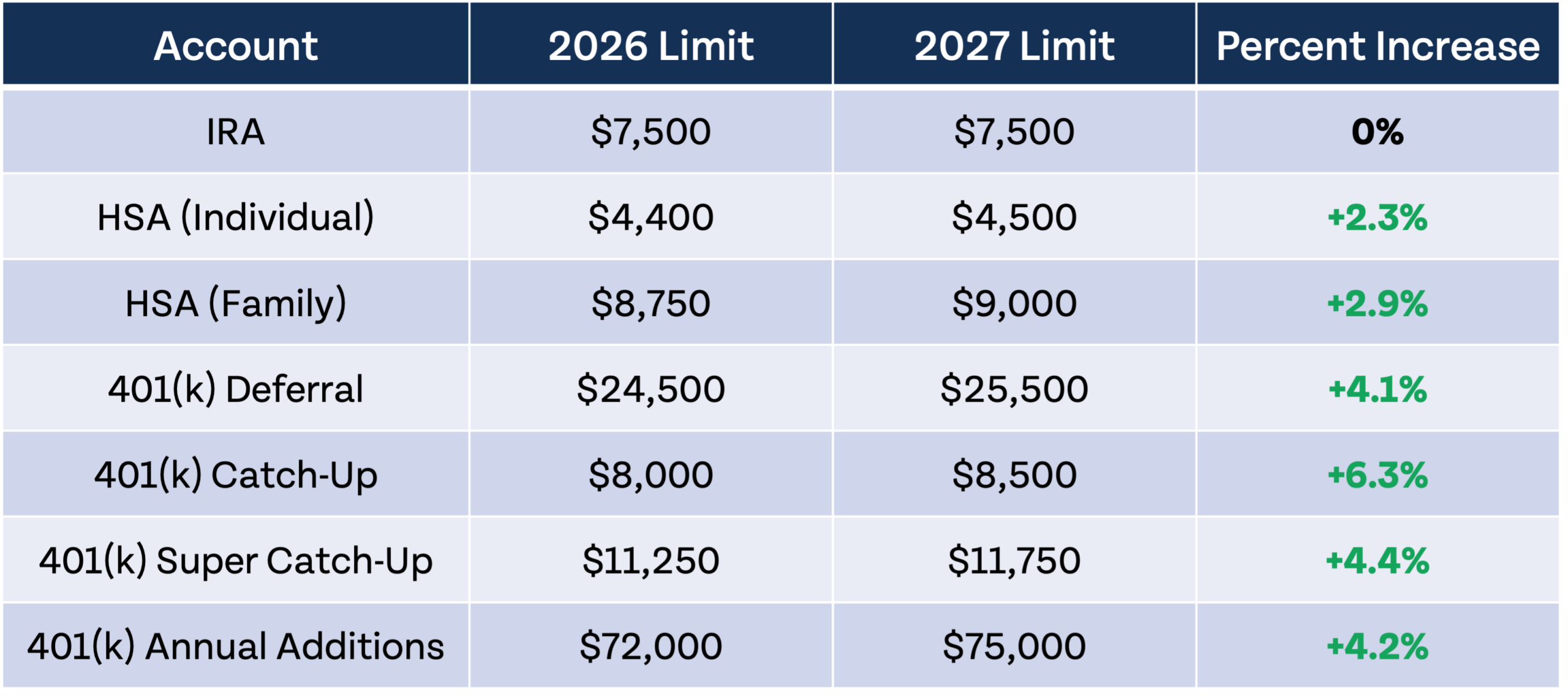
IRA limits went up by $500 last year, so an increase this year wasn’t expected, even though inflation accelerated. For those of you contributing to your Roth IRA every month, you will need to invest an even $625 every month to maximize your account. If your New Year’s resolution is to max out your 401(k), you’ll need to contribute a little over $2,000 every month to do so.
Like I mentioned last year, I like to keep an eye on the gross income someone would need in order to complete Step 6 of the FOO without contributing more than 25% of their income. This means maximizing your Roth IRA, HSA, and 401(k). Without contributing to any other accounts or being eligible for catch-up contributions, you would need to make $150,000 in order to complete Step 6 without investing more than 25% of your income.
Does this mean that if you make less than that you’ll need to invest more than 25% to complete the FOO? Absolutely not. If you are investing 25% of your income for retirement, you can consider Steps 6 and 7 of the FOO complete. This means you can potentially be saving plenty for retirement without ever coming close to maximizing your employer-sponsored account.
If you make over $150,000, on the other hand, that means you can’t stop investing after maximizing your Roth IRA, HSA, and employer account. You may be able to invest tax-advantaged dollars elsewhere if you have self-employment income, be able to use the mega backdoor Roth strategy, or contribute to a taxable account to reach the 25% target.
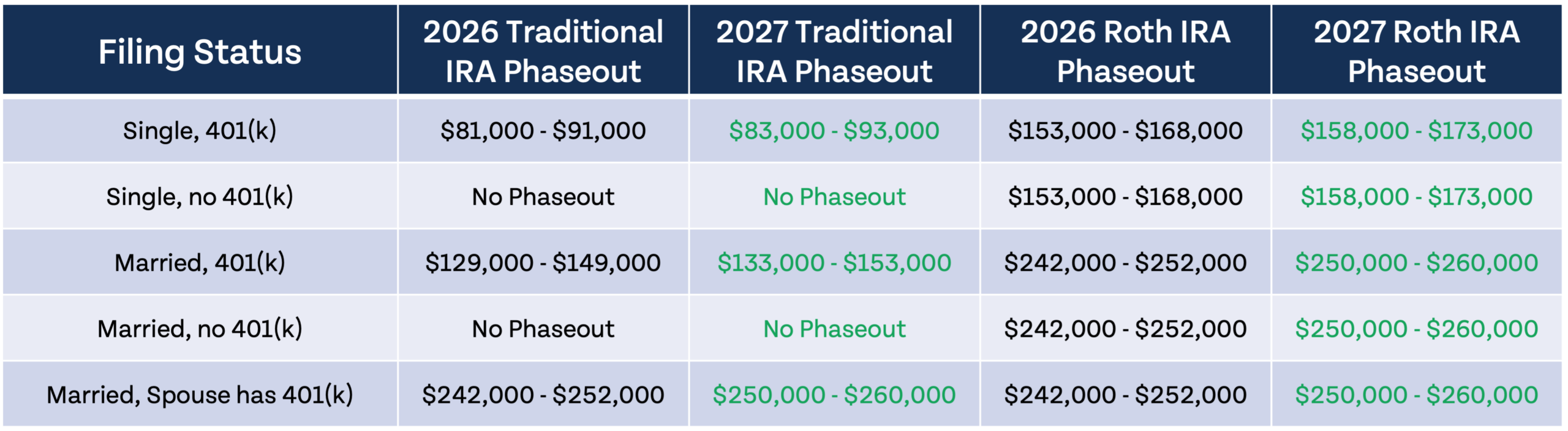
The income phaseouts for retirement plan contributions typically increase each year for inflation, which means if your income hasn’t increased in the last year you could now be eligible to make traditional IRA or Roth IRA contributions. The important column to keep an eye on below is the Roth IRA phaseout; if you think your income may come close to making you ineligible for Roth contributions, it is worth planning ahead and utilizing a backdoor Roth if necessary.
Standard deductions and marginal tax rates
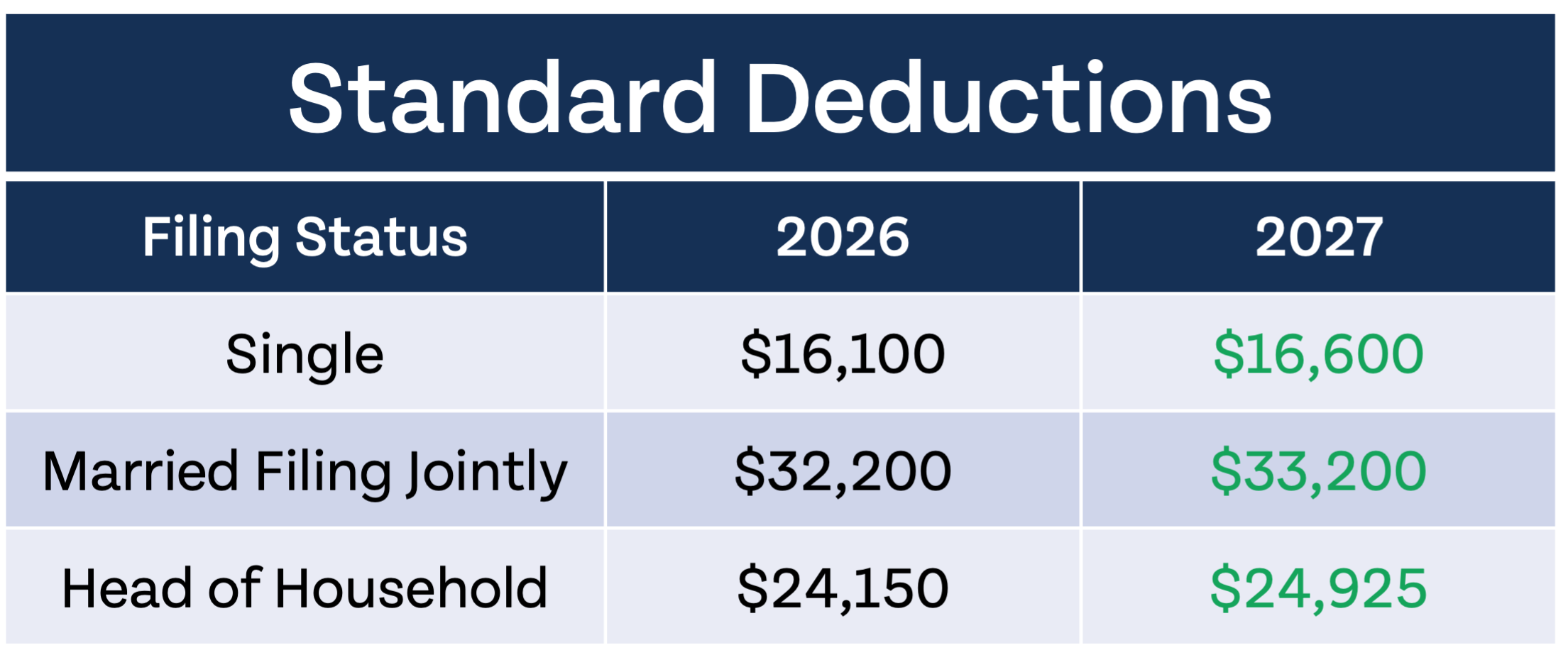
The standard deduction increased by a normal amount this year, after a larger-than-normal increase last year (courtesy of legislation passed by Congress). About 9 in 10 Americans take the standard deduction, which means if my napkin math is correct, the numbers below will apply to about 90% of those reading this.
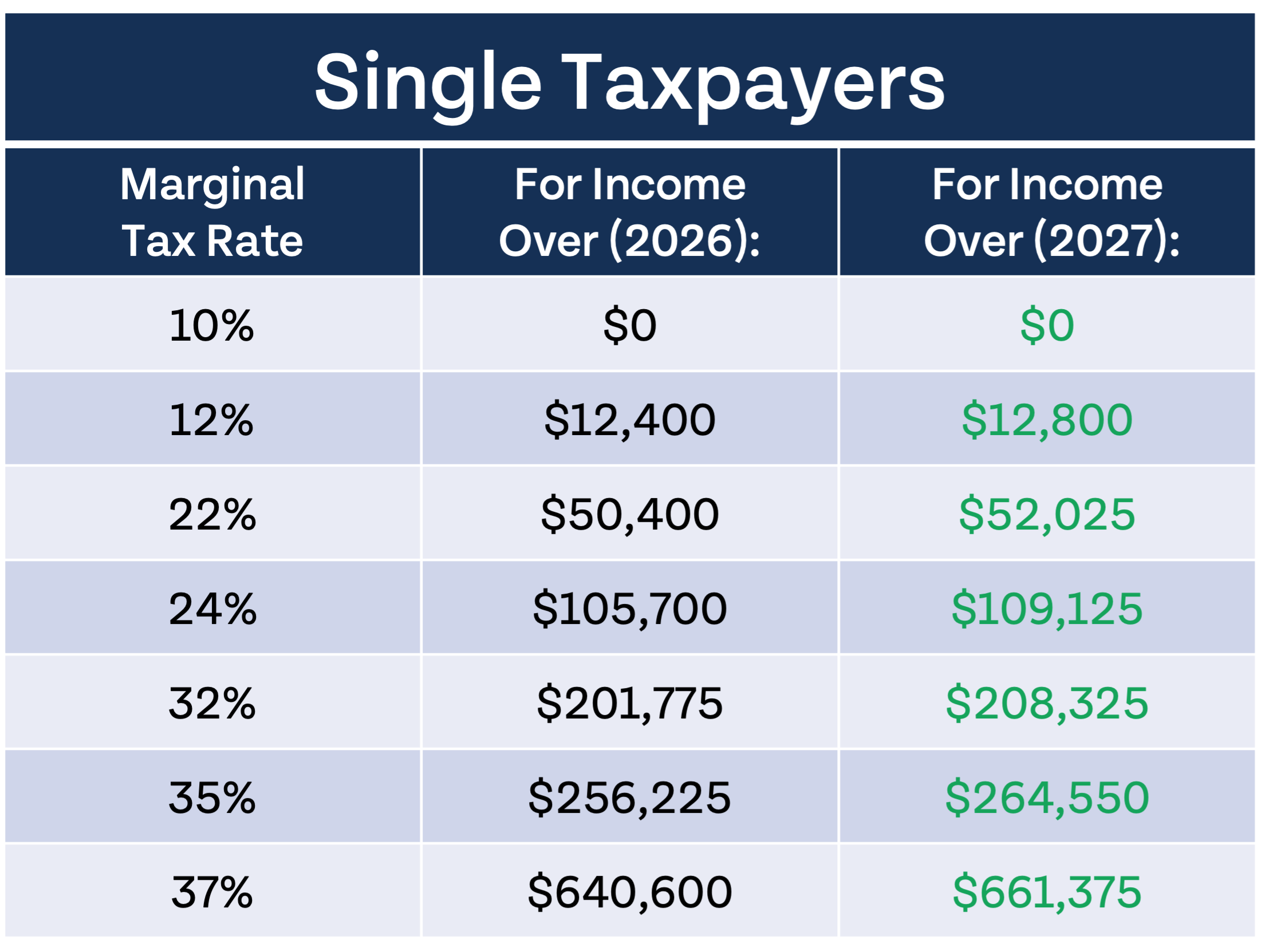
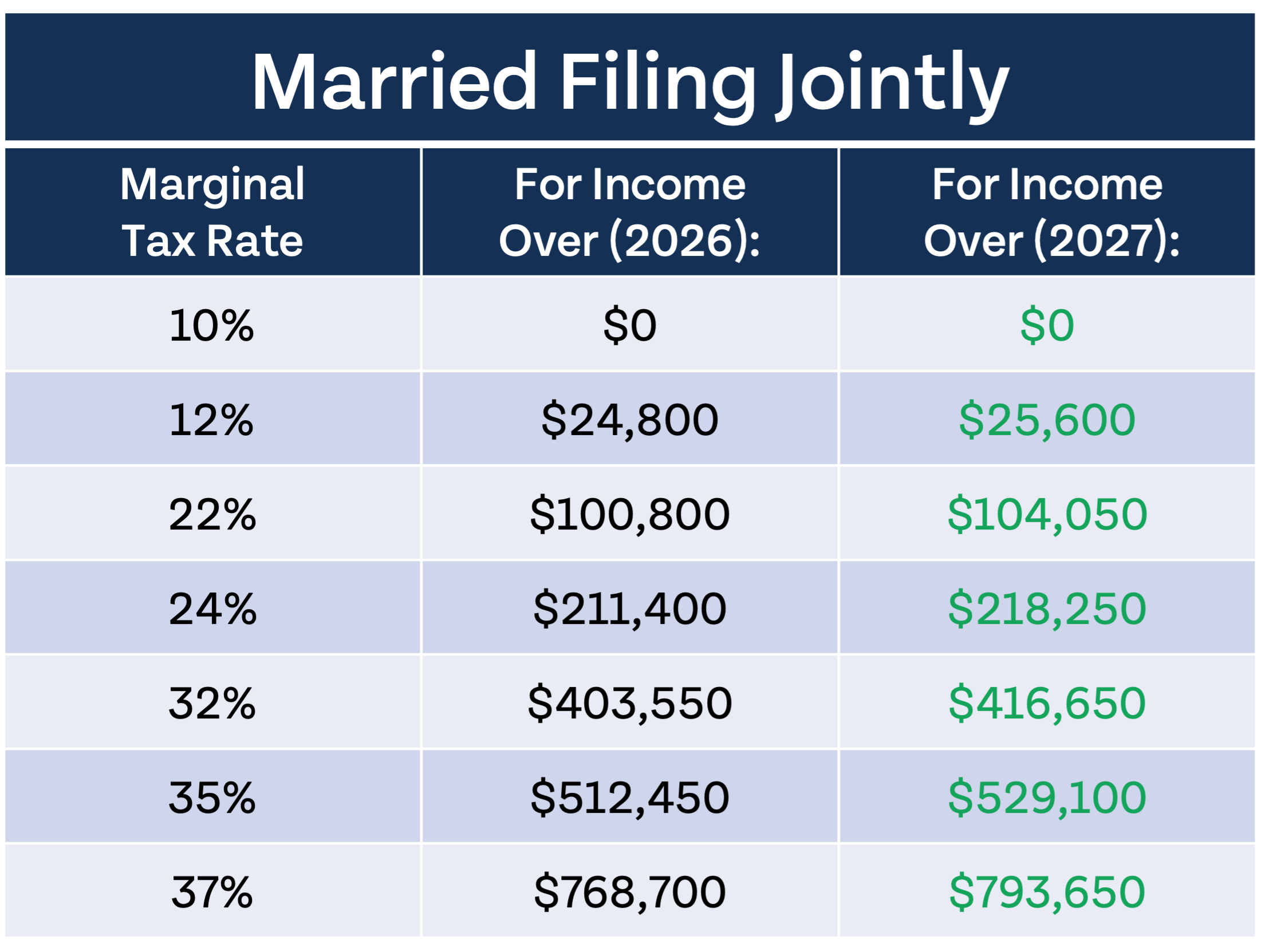
Tax rates remain the same as they have since the Tax Cuts and Jobs Act of 2017, and with a divided government until at least 2028, it may be unlikely we see major tax changes in the next couple of years. The thresholds for income subject to marginal tax rates are adjusted annually for inflation, and you can see what tax bracket you fall in using the tables below.
If you are interested in reading about all of the inflation adjustments going into next year, you can read IRS Notice 2026-66. If you are interested in learning more about tax planning, including tax avoidance strategies you can use to pay less in taxes, check out our recently updated tax planning strategies guide.