Change your life by
managing your money better.
Subscribe to our free weekly newsletter by entering your email address below.
Subscribe to our free weekly newsletter by entering your email address below.
What does it mean to be middle class in 2025? Depending on your state, the number ranges from $49,000 to $90,000, with the national average right around $69,000. But here’s the real lesson: income labels don’t guarantee financial success – your behaviors and decisions do. We walk through the state-by-state data, share the three key ingredients to wealth creation, explain why the Financial Order of Operations is your all-terrain vehicle for financial success, and answer live listener questions on mortgages, car rules, insurance, and more.
Subscribe on these platforms or wherever you listen to podcasts! Turn on notifications to keep up with our new content, including:



Brian: Have you ever been curious what’s middle income or middle class by state?
Bo: Brian, I am so excited to talk about this because today we hear this all the time. We hear middle class, middle class, and we’re going to talk about by state what it actually takes to fall into that category. And you may be surprised because honestly the range was different than I guessed it would have been and it’s like most things financial, it depends on where you live.
Brian: That’s right. Actually we pulled this data from Visual Capitalist and SmartAsset. But look at this. You can compare and contrast. There is a broad difference here. If I look at who’s the lowest, Mississippi $49,000. If you look at the highest, now there’s a few that were in the $90,000 range, but the highest according to the stats was Maryland right at $90,000.
Bo: And if you look at the average across all 50 states, it comes in right at $69,000 to be labeled middle class. So ranging from as low as Mississippi to as high as Maryland with an average right around $69,000. But the question becomes, okay, is this helpful? Is it valuable? If I know that I fall into the middle class, does that actually impact and affect my financial journey? Or is it something that’s even worth knowing at all?
Brian: Yeah. I mean, this is one of those things where I’m trying to figure out what’s the actual teachable things just from just knowing the data on where middle class falls. And so we did try to create a few takeaways for the audience so y’all can start, you know, seeing if there’s a teachable moment here or a takeaway for you. And the first thing is don’t get caught up in the labels. That’s right. There are times in our life that our incomes were in this lower side, but that didn’t define us at the time. It was more of the behaviors, the discipline. We’ll get into even that more so, but don’t let the labels define everything you are or you’re not.
Bo: Yeah. Income is crucial to being able to build wealth, but it’s not all that matters. It’s not the only thing that matters. And one of the things that we want to encourage you, no matter where you fall on the income spectrum, is figure out, are there ways that you could be harvesting the white space? No matter where you are, what stage, are there opportunities where you could potentially increase your income? Maybe you live in one of these states and you’re not middle class. Or maybe you live in one of these states and your income has you in that middle class range. But there are opportunities for you to expand that because the bigger your shovel gets, the more you can increase that. The more opportunities you give yourself to save and begin to build wealth. So are there side hustle opportunities? Are there other income things? Are there things that you could do even inside of your vocation to advance your career? Again, it’s not about moving from middle class to upper class. It’s about recognizing that there are three key ingredients when it comes to wealth creation. And one of those ingredients is margin. And if you have the ability to influence your income, you can then increase the margin you’re able to use to build towards financial independence.
Brian: And I love that because that leans into the whole discipline component when we’re talking about those three ingredients to wealth building. And that leads to the next point is that the FOO is your all-terrain vehicle. If you think about what FOO does for you, it fills in the basics of, “Hey, go get the free money from your employer. If they’re offering you dollar-for-dollar match, don’t leave that on the table. Stay away from the credit card debt so you’re not paying 20% to this bank while you dig a bigger and bigger hole for yourself with fake consumption dreams.” And then emergency reserves is of course going to create that buffer. It’s such an important thing that it’s steps one and four of the financial order of operations so you don’t have to make desperate decisions when life happens.
Bo: Yeah. If you would like your free copy of the financial order of operations, will you hold yours up for me real quick? Yours, the one that you download might not be laminated, but it could be. But if you want your free copy, you can go to moneyguy.com/resources to download that. And what we hope that you take away, and this is maybe the big summary point, is that when it comes to building wealth, your behavior is likely much more important, much greater than your income. Brian, we have seen people, and we have clients here at Abound Wealth who never actually made it past six figures of income as a household, and yet they are fully financially independent. And we have folks on the other end of the spectrum that have huge incomes that would certainly be labeled as upper class by income and yet they are not at financial independence yet. The behavior matters and it doesn’t matter what your label is. It matters are you using your resources to create the great big beautiful future that you want.
Brian: Yeah. The two that kind of I feel like marry nicely together is that the behavior and then the harvest the white space. If people can lean into the discipline of living less than you make and if you feel like, hey, that’s impossible because just life is too expensive for me to even have that margin, then go out there and figure out how we can increase that component, that shovel, the income. These are the things you don’t have to be stuck. What I love is after we record this live stream, we’re actually doing our millionaire survey where we actually look at all of our clients and we share the content that came from doing the survey of our clients. And what’s so amazing to me is how many of them, just like all the stats when I read Millionaire Next Door, I put the stats in Millionaire Mission and now even the surveys from all of our wealth management clients. How many of these people are first generation? That’s right. Meaning they are the first ones in their family that crossed into that seven figure sphere. You also have the opportunity if you just maximize that huge component of your behavior and taking control of what you’re doing with your financial life.
Bo: Brian, I love that we get to sit in this spot. I love that we get to answer the question, hey, do labels matter? Is that something I should focus on? And if not, what should I focus on? And what are the decisions I can make to better my financial life? It’s one of the joys that we get to do. We get to curate this content and put it together. But we also love that every single Tuesday at 10 a.m. we get to show up right here to answer your questions and load you up because we care about the things that you care about. That’s why right now we have the team out in the wings collecting your questions. So if you want to get our take on something, if you want to ask us a question, you want us to weigh in on your situation, make sure that you get your question in the chat right now. So with that, creative director Rebie, I’m going to throw it over to you.
Rebie: Yes, I have a question from Jerry to start us off today. It says, “Hi guys, what is the difference between step seven, hyperaccumulation, and step eight, prepaid future expenses in the financial order of operations? We are definitely past step six, but I’m not sure which step we are on now.” Thanks, classic FOO question.
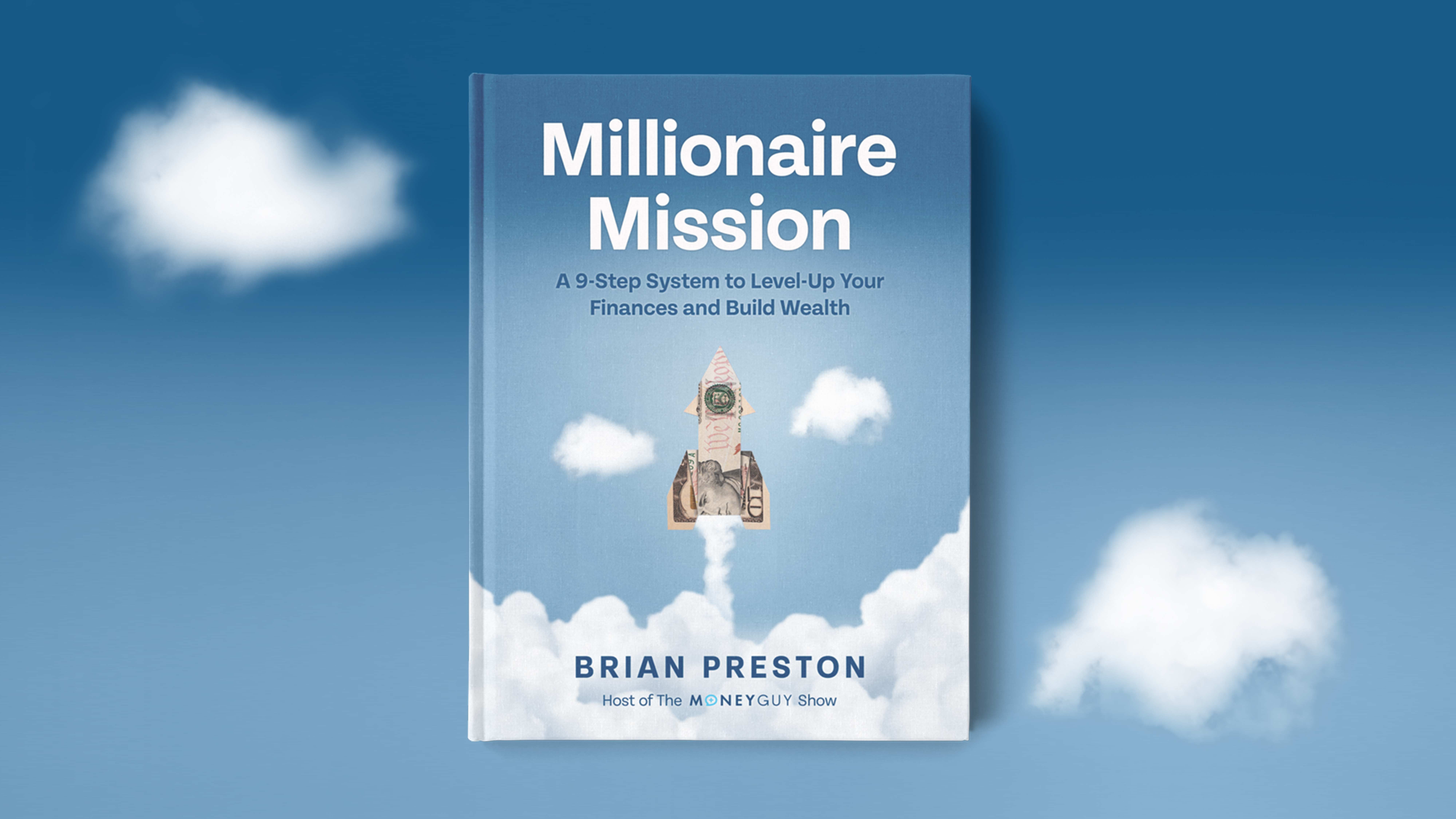
Bo: I love this question because I feel like we get asked this one a lot. For those that aren’t familiar, step seven is, Brian, you hold the thing up. Step seven is hyperaccumulation and then step eight is prepaid future expenses or I’m sure Brian will tell you has another cute little name for that. And this is one of the things that you wrote extensively about in Millionaire Mission. I think the same because you get asked this, hey, how do I know? Okay, I understand step six. I understand maxing out my employer sponsored retirement plan, but then what about seven and eight? Like how do I navigate this? What was it you wrote in the book?
Brian: Yeah, if you look at one of the things, this is why I do love the financial order of operations and the fact that it is an all-terrain vehicle. It serves you no matter where you are in your journey. A lot of steps, if you think about steps one through four, they’re really to keep you from making those desperate decisions, keep your life out of the ditch of making bad mistakes like credit card debt, missing out on free employer money, or not having that margin through emergency reserves. If you think about steps five and six, these are math and tax-based driven that they’re trying to give you how do you maximize the saving element of your life that lets you keep as much of this working for you as possible. It’s not until you get to step seven where if you think about hyperaccumulation, this is where I’m counting on you to be able to know, hey, how am I going to use this money? This is the first step that says, no, let’s not let this be formula based or maximization based. Let’s actually, how are we going to use these resources? Because personal finance is so personal. There’s a huge difference between somebody who says, I’m going to retire at 55 versus somebody says, no, I kind of, I think I’m going to work until 65 or 67. Your goals are completely different. You’re making different structures with how your accounts need to be set up. That’s right. So that’s why you can’t skip through step seven where it says, “Hey, how am I going to use this money in retirement? What does that look like from taxable assets, tax deferred, tax-free like Roth? When will I need to get into these accounts?” And then that will set up to where now you are educated. It’s not just a guess or a reward system. You get to now go to step eight, which we titled prepaid future expenses, but it also, I like Bo’s, right. I call it abundance goals is because this is now where yeah, do the kids’ college. If you want to get into residential real estate investing or commercial real estate investing, it’s okay because you have now a financial base underneath you. If you want to extend your lifestyle with maybe a nicer car or some other big expense or a trip or something that seems like it’s excessive, you’ve now put in the work that this is the right time to do it because you did all the work through steps one through seven.
Bo: I love it. If you’re someone again, you want to know more about this, a few ways you can learn about the FOO. One, you can go to the website. You can download your free copy of the resource, moneyguy.com/resources. You can also do a deep dive into the FOO course. You go to learn.moneyguy.com. We have a curated course with modules you can work through so that you understand that or you can pick up your copy of Millionaire Mission if you have not done that. By the way, it’s a great gift for a lot of your kids that are starting back as seniors or freshmen in college. It’s a great way to get them to start thinking about money the right way as they move into these big transition periods of life.
Brian: Yeah. The last review on Amazon currently, unless somebody writes another one today, was from late July and they were like, “This is the greatest book since Millionaire Next Door.” And I was just like, “This is okay if this is the last comment we ever get on here.” But it’s also, y’all have no idea how much it warms my heart when I see people look at this instruction manual that took some time to write and then people are actually getting a lot of fruit from it and it’s actually changing their financial lives.
Bo: That’s a hefty compliment. Oh yeah, believe me. That’s a Brian kind of compliment. I like that. I mean, that is, you have no idea if there’s like a bullseye on compliments. That one was like right in the middle. I mean, stuck it. That’s what he was going for.
Rebie: Well, Jerry, thank you for asking the question. It is your lucky day because it is Tumbler day and you got your question answered on the live stream. So, Jerry, if you would like a Tumbler, email [email protected] and we would love to send one to you.
Brian: The chat. Write another book, Brian. Write another book. Write another book. Write another book. What’s funny is that I had a lunch with my publisher yesterday. I try not to pressure you, but if y’all want to write another book, it would be okay. And I’m like, yeah.
Rebie: Your answer was good though. You were like, if something like comes to me that I’m passionate about, then I would consider it.
Brian: But like right now, Millionaire Mission is like, yeah, it’s still checking a lot of the boxes. And I even think, you know, one of the things that because I had a lunch with the publisher, he’s of course pitching ideas and stuff. There is probably going to be some opportunities for us even with Millionaire Mission to kind of do some additional things. So I mean you guys put on your thinking caps. If there’s things that you’re like, man, this was 99.5% awesome, what’s the 0.5% that we could have done better? There is going to come a point I’m going to want feedback from my financial mutants.
Rebie: Yeah, no I love that.
Rebie: All right. Next question is from Joe C. It says, “Hi, Brian and Bo. At what income threshold would you say it’s no longer appropriate to finance a new car with 20/3/8 and that you should pay cash instead?” For reference, I make $120K. I’m 32 years old and I’m on FOO step 7. So, is 20/3/8 for anyone or is there a point where you’re like, you should be paying cash. Give them some guidance.
Brian: I want you to kind of fill in the gaps here, but Joe’s got something that I hate that we’ve got a preconceived notion that I think is false here on the way this is set up is that we prefer cash on all cars. I mean that 20/3/8 is supposed to be a lifeline, a bridge for those of you who need good reliable transportation to get to your J-O-B because that’s your first step in building wealth. What would you add?
Bo: I was going to say, is there, okay, did I take it off? No, no, no, no. I love that because your question was what is the income threshold where I should consider paying cash instead of 20/3/8. I would argue it’s at whatever income allows you to do that. And so we have people who have again below six figure household incomes, but because of the way that they’re able to save and because of the way they’re able to build up and because of the way they do sinking funds, they save up for money in cash so that they can pay for cars outright without sacrificing saving 25% of their gross income to the future. We have other folks who have very high incomes that aren’t there yet based on their lifestyle commitments depending on the part of the country they live in and what their mortgage payment is and where their bills are going. They just don’t have the margin to be able to pay cash for a car yet. So, a lot of it does become behavioral. But our preference is always for you to pay cash. But if you can’t, if you’re not in that position, if for some reason you’re not allowed to do that, or if paying cash would cause you to have to do so at the consequence of being able to fund your other financial goals, then we allow you to do 20/3/8, where you can put 20% down on the automobile. You don’t finance it for any more than 3 years or 36 months, and your total car payment cannot exceed 8% of your monthly gross income. Now, a lot of people think this is only for new cars, but you can apply this to used cars as well. Any car that is new to you, we’d love for you to pay cash, but if you can’t pay cash or paying cash would cause you to deviate from your other long-term financial goals, we allow you to do 20/3/8 so long as, and there’s this third caveat, if you’re buying a luxury brand, you can’t do it. If you’re going to buy a luxury brand and you’re going to try to use 20/3/8 to justify it, our opinion is you are buying more car than you can afford. If you can’t pay cash for the luxury, it’s not time for you to go to luxury. That’s thing number one. Thing number two, we never want your monthly car payment to be more than your monthly savings and investment amount. So, if you have, we did this react video a couple weeks ago, it’s like $1,000 car payments. If you have a $1,000 car payment, buddy, you better be having more than $1,000 a month going into your investment accounts. If you’re not doing that, you’re doing it the wrong way.
Brian: I always, people want to know how do rules come to exist. You know, what is this? For me, it was more of a, we got to have a no hypocrite policy. I think about my journey to wealth building. And it’s easy for a guru to tell you you should just pay cash for all cars because cars are absolutely horrendous for the wealth building journey. But then I looked at my own life and I go, “Yeah, but there’s a portion of my life when I was in my early 20s where I got my brand new job and I couldn’t, I had like a thousand bucks to my name. So, how was I going to go pay cash for a vehicle?” No, I needed a, I needed to finance a car. So, okay, well, if we got to finance a car, how do we do it in a responsible way so that we don’t steal from our future self so we never have future success, you know, financially? And that’s where 20/3/8 comes from is because I think it’s sometimes in the choosing your expert that you’re following, there’s a lot of people that will tell you what you should do, but when you actually do the research on what is successful people doing, these are the absolutes that yes, in best case scenario, you know, you’d like to do it this way, but if we all had wings, we’d fly. I mean, and that’s just not the reality we live in. So, we’ve tried to give you the best system that actually meets you with the reality of where you are versus just making you feel really guilty because you might have to go finance your first car.
Rebie: Yep. Great job, guys. Joe C, thank you for asking the question and for being here in the live stream. And for that, we would love to send you a Tumbler. Just email [email protected] and we’d love to send you one.
Bo: We have a thing coming up. Are we, can we talk about the thing now or can we not talk about it?
Brian: The thing being very vague. There’s a lot of things. So, I’m curious to know what thing is. Usually, this is the role I play. I know you don’t. I don’t keep secrets very well.
Bo: This is the thing where I just, I was just going to tell our people to keep an eye out. We got like some audience financial mutant engagement stuff coming out in the future. I know it’s not ready yet, but I just want them to know that, hey, one of the things we value because I’m just watching the chat. I love all the stuff that comes in from the chat. Like right now people are throwing out, I missed what caused it, but like all kinds of merch ideas, right? And I’m like, “Okay, if we did merch, what would you want? Would you want a hat? Would you want a t-shirt? Would you want a Tumbler? Would you want a mug? Like what are the, actually, that’d be a great survey to do.” What I’m saying though is I love when we were able to get like insight and feedback and information from our financial mutant audience.
Rebie: So much so that we have some stuff coming out about that, right? Between now and the end of the year, we will have hopefully multiple avenues for you to do that and that will be amazing. I can’t wait to hear what you have to say because it really does make our content better and I just love hearing from you. So, watch for that. Make sure you’re subscribed here on YouTube and then make sure you go to moneyguy.com and click on follow us and subscribe to our email list because that’s where you get even more info right into your inbox.
Brian: I thought because you know we just had where we did, we went on Iced Coffee Hour and truly amazed to see how much of our audience, I mean wow. I mean that really the interview did great, really impressive. So thank you guys all my financial mutants that went out there and supported us on that. But I don’t know what’s in the air but we also have another collab coming out with Erin Talks Money because a lot of you guys in the comments y’all are like, you know, I like Erin Talks Money. Like good because we just did some. We do too. It turns out she’s amazing. She was awesome. Yeah, that was a really good experience. Having her come in studio for that, too. So, really cool things coming down the pipe for you guys. And then we even have some more collabs in the future that we’re working out the logistics on right now. So I don’t, I’m not saying it’s a new chapter necessarily because we do these things as they come available, but it is, I think we are seeing the power of it’s fun to kind of get with people who think about content, creativity and finances.
Rebie: Love it. I agree.
Rebie: Speaking of finances, want another question? Of course. John West asks, “Mr. Ramsey says investing while having a mortgage is the same as taking a loan to invest. Are the Money Guys okay with arbitrage but not okay with loan for investing. So what’s the difference?”
Bo: Now do you think this is in reference to Gordon Ramsey? Because I’ve not heard Gordon Ramsey’s house buying rules. I haven’t heard a ton of that. Yeah, we hear people say this all the time. Okay. If you’re going to invest, this is the way they pose the question, Brian. If you’re going to invest while you have a mortgage, if you had a paid for home, would you go take a mortgage out on that home and then use those dollars to go invest? Explain why that’s a straw man.
Brian: It’s a straw man. Because look, nobody, I’ve actually there are people that have done that strategy and I’ve even had a prospect that I’ve told you guys from all the way back to 2003 that’s when they came to me is that they had an adviser that was recommending they take a home equity line to go put it in the financial markets. I have never ever ever ever recommended that because, and but this is why it’s a straw man argument is because when you go take out debt on a house, there’s a lot of friction costs. You think about all the recording fees. You have to pay the banks to do the loan. There’s just a lot of things that go into it that’s a, you’re never going to recommend that. Plus, we don’t think it’s a smart strategy to have an asset and then immediately go and leverage it up. We’ve never been, and that’s the thing, and look, we’re not picking on Dave. Because I think Dave is trying to get people to focus who are really bad with money on how extreme they have to think to fix their life. But sometimes Dave does get carried away where he tries to expand the umbrella so far that us financial mutants get caught up in the wash of it too. And that’s the part I’m here to try to clarify is that yeah, know thyself. If you are a person that you can’t trust yourself that if you get a paycheck, you know, you’re already headed to the check cashing place as fast as you can get it to burn a hole in your pocket, then yeah, you probably ought to lean heavily on these absolute teetotal rules. But if you’re somebody who’s just always been good at math, you know, you were the kid in second grade or first grade, I can’t even remember what year you learned to do multiplication tables, but you’re the one winning all the speed drills. You’re like, “Wow.” And you get your calculator watch and you realize how cool just doing math is and you hear Dave’s rules and you go, something’s just, I know that I’m not going to run up 20% credit card debt that I’m paying 20% and all these other things. Then I would rather you have a balanced approach that we understand when we have, especially in historically we’ve had low mortgage rates and you have this arbitrage of that every month you can set up a systematic automatic for the people, behavior of putting a few hundred dollars in because remember I’m the guy that learned in high school $100 a month would make me a millionaire and that concept right there is what lit the light bulb off that said yeah, I don’t come from money, but man oh man, I can save $100 a month. And that is the power. I am the proof that this works is that you can put a little bit of today for that great big beautiful tomorrow. And that’s one of the things that, you know, and like I said, we love Dave and them, but it breaks my heart when I see people forego their employer match. That’s a dollar-for-dollar match because just compounding, if you go to moneyguy.com/resources and look at the wealth multiplier for a 21, 22 year old and then people say, yeah, but it’s only for two or three years that you’re going to miss out on the employer match. Go extrapolate that. You will be shocked that this one decision could literally be hundreds upon hundreds of thousands of dollars. Look at my book Millionaire Mission. I missed out on $10,000 of Roth IRA contributions back in the early part of my career and I still kick myself for that $10,000 because I highlight in the book with real performance of what I’ve done in my Roth IRA account and then even took it and said, “Hey, if I kept going at this pace, what does it turn into?” It was hundreds and thousands of dollars worth of decision. So, I’m not picking on Dave because I think that’s what John, you know, you’re bringing up Dave into this, but it is one of those things I think you just have to know thyself. And if you resemble more of a financial mutant and you know that credit card debt is not going to be hiding under your bed at night or credit card use is not going to hide under your bed and chip at you when you get up to go to the bathroom in the middle of the night or you know, you understand that you can pay down your mortgage in an accelerated fashion. By the way, I will give, because I even sent this to somebody over at the Ramsey organization that we’re friendly with. No names will be given. But when I paid off my mortgage, I got a text and I said, you know, it is interesting that I almost to the day I paid the house off within 10 years. That works and so and I know it’s a stat from if you remember from Everyday Millionaires, it says millionaires pay their houses off in 10 years. Yes. But I am a far journey from where I was when I bought my first house. And that’s something I always remind people. There’s a time and a place for all, even stats you have to be careful of is that yes, I’ve paid my house off in 10 years. But I was also in a much more mature place to where my mortgage and even the home value compared to my total net worth is just not that big of a deal. So that’s why I don’t want somebody who’s the opposite of that where you have zero financial assets but all of your net worth is in your house to think, oh my well, I don’t ever need to go, I’ll just pay off this house and then I’ll invest because it’s just, it’s harder and harder for you to build those financial assets that can work harder than you can with your back, your brain, and your hands.
Bo: That’s what I was going to say. And I want to be careful not to put words in Dave’s mouth because a lot of times people will say, “Oh, well Dave says this.” Well, it’s not actually what Dave says. It could be Dave-ish. But I hear people who will take this stance. So, I’m going to pay off the mortgage and then I’m going to invest. And I don’t think that’s exactly what Dave says, but let’s use that argument. So, say you take the time from 20 to 35 and you pay off that mortgage. All the time people say, “Yeah, yeah, if you’re investing, you’re not factoring in risk. You’re not factoring in risk.” No, there’s a very real risk that if you do not start saving until age 35, depending on the kind of lifestyle you want to live, you cannot make up for that time that you lost from 20 to 35. And so that’s why what we build into the financial order of operations, what we build into our philosophy around money is what decisions can you make will give you the highest probability of success given the things that we do know and the things that we are familiar and comfortable with. And we know that the earlier that you start investing, the better off it will likely be for you in the long term because time is one of the three ingredients of wealth creation that is so so valuable. We hate to see people, especially young people, miss out on that. So, that’s why we’re okay if you do a 30-year mortgage. We’re okay if you don’t put 20% down. We’re okay if you have a mortgage payment so long as it’s less than 25% of your monthly gross income because that leaves a margin for you to continue building for your other financial goals.
Brian: I have a stat that it’s now, this is not scientific because the population size is pretty small, but 100% is where the stat’s at for every person that comes in and does the studio tours or I meet out and they say, “Brian, I did something that you, hey, I follow Dave and I paid off my mortgage early.” And I’m always like, “Wait a minute, let’s dive into this because once again you have to be careful of statistics because they can skew.” I said, “I have a question for you on this because I think you might not be breaking my rules as much as you think you are by following what Dave suggested.” I said, “Were you saving and investing 25% of your gross income first before you threw that extra money on the principal of your house?” And like, “Oh, yeah. I was saving 32%.” And then I was like, “Well, you’re doing it.” That’s the whole part of the financial order of operations is when you get to steps eight and nine, do what you want with the money at that point. I just want to make sure that I don’t have 32 year olds not saving and investing a penny because they’re trying to pay off a 4% mortgage. That’s, that’s going to break my heart because I just know the value of that army of dollar bills. But that’s why I think we, I have found instead of this being a divisive issue that more often than not, you guys have the instincts to where you’re like, “Yeah, I want to pay off my mortgage, but I’m going to make sure I get that investment in there first.” So, I don’t think, be careful of straw man arguments because I don’t think it has to be an either or that you, I think that there’s a balance there where you can pay off the mortgage in a healthy period of time, but also make sure you’re building your army of dollar bills so you live your best life.
Rebie: Love it. Remember, if you want a refresher on the financial order of operations or the home buying rules, go to moneyguy.com/resources. We have downloads there that you can get for free so that you can actually look at it and internalize that and just have that in front of you even when Brian can’t talk to you personally in the moment. We have those resources for you. All right. And John, by the way, thank you for the question. Just email [email protected] to get your Tumbler.
Brian: People don’t think there’s a turf war between us and the Ramsey folks, do they?
Bo: No, I don’t think so. I think it’s just Dave walked in right now. We said, Dave, come sit down. Come hang out. Yeah.
Rebie: All right. Mrs. Sass has a question for you next. “I recently found you guys and we are trying to figure out what to do with our whole life insurance policies. Our premiums for the policies add up to $630 a month. If we close out the policies, we will lose $20,000 that we have paid in so far. Should we keep them and use them as an extra emergency fund in retirement or should we cut our losses and max out our Roth IRAs? Investing 25% and they are investing 25% and have $540K invested net worth.” And I also want you to talk about what you think about life insurance because she found you and now they’re thinking about their whole life insurance policy differently.
Bo: All right. So, we’re saving 25%, $540K invested. I’m going to give you the answer right away, Mrs. Sass, to what you should do. And the answer is it depends because unfortunately, we don’t know enough about the individual policies. And not all life insurance policies are created the same. What I’m going to imagine is going on right now is that you’ve been paying into this policy $630 a month, but if you were to surrender it right now, you said you would lose about $20,000. Now, I’m not sure if this has been a long-standing policy and you’re calculating the tax impact or more likely if this was some sort of product where there’s a surrender period where if you tried to sell the pro or tried to surrender the policy now, it would be inside the surrender. And so, one of the things that I would want to do if I were looking at these policies is I want to figure out what all of my options are. Okay, if I were to surrender today, what are the consequences of that? If I were to hold on to this policy for the next two, three, four years, what would the consequences of that be? Meaning, could I get past this $20,000 surrender charge to get to the other side of it and then potentially surrender? Or third, if I don’t want to continue paying $630 every single month for this, are there other options? Maybe I could turn this into what’s called a paid up insurance policy where I don’t, maybe I don’t have this amount of death benefit, but I’m going to take $100,000, $200,000 less in death benefit, but I don’t have any more capital outlay and the cash value in the policy will provide a life insurance benefit for the rest of my life. So, I’d want to go through all of the different scenarios available with this policy, and I’d line them up next to each other, and I’d figure out, okay, which one of these possible scenarios most closely aligns with the things that I’m trying to achieve with my money. Anytime you have an annuity based product, insurance-based product, something like that, you’re going to want to do this because it’s not a one-size-fits-all. It’s not that one answer is always the right answer. But the second half of this question, Brian, what do you guys think about whole life insurance? What are your thoughts on that?
Brian: I couldn’t because the question got taken down. I didn’t get to see it. What was, how much coverage was this? I don’t think it said the specific. That’s the thing that I think is also interesting. $630 a month is a lot of monthly. You think about if you were, then I think about because this and we’ll get to what Bo’s question is because I think I hate the question is an either or. Am I doing a Roth IRA which we love Roth IRAs or should I do life insurance? Well, we actually like life insurance. It’s just we probably would have chosen a different version of life insurance initially is that because I think when you’re starting out on your journey, your biggest risk to your loved ones is that you just, you’re not able to fulfill the promises of what your income or your future income is going to provide. So you got to fill something, buy something that will insure away that risk so your loved ones are left okay. And that’s why I like term insurance is because now it’s more of a math equation of hey, how long do I have this risk? And her and her husband just saw, so you’re paying $630 a month for $400K. Well we just did a, and I didn’t see their ages, but I know we just did a Making a Millionaire where we were showing what term life insurance costs and for the wife it was like less than $200 a year. I think that was $750,000 worth of coverage. For the gentleman and these were, they weren’t like 20 year olds. He was buying $2 million of insurance and it was still well below $1,000 a year. So I like term insurance because now look, it doesn’t have cash value. There’s no investment component, but I’m okay with that because I’m just trying to buy the insurance or the protection for my loved ones so then I can get to work on building my own pot of money to be financially independent and self-insure in the future. Now, there’s other components that Mrs. Sass that you got to look at. There is a true component that I don’t know your health. I don’t know your future health and that’s what insurance agents will scare you on. You do need to take into account, are you insurable in the future? Yeah. If you’re not insurable in the future. Well, that’s so you have to, there’s a, this is a very personal part of it. I just think that, you know, because I think in a very orderly way I don’t typically think people starting out, meaning you have zero assets when you’re starting your wealth building journey. Life insurance is not the first stop on the train stop to building my million-dollar portfolio. Now, it is true that once you get super wealthy, yes, life insurance can come into play in many different facets, but it’s not the component that should be the first thing that people throw out there as an investment. It’s more of a protection. Think about all the insurance you know in your life. Your car insurance, you know, disability insurance, these are things you don’t like to pay, but you pay because they provide you protection from catastrophic events happening.
Bo: Yep. It’s only life insurance that all of a sudden people go, “No, it’s an investment.” And you’re like, “Is it a good investment though?” And that remains to be seen, especially if you’re in the beginning part of your journey. Here’s another thing that you’re like, well why are there so many people out there selling it? Well, and Bo, you worked, I mean you can, you’ve worked on in the background typically on permanent policies that are not like term and so forth in the first year premium, pretty much all commission. Yeah, you could get almost 100%. Again, depending on the company, depending on where you are in your career, you could get like 100% of year one premium as a commission. So, you think about it. If somebody sells you a policy that’s costing you $600 a month, they could be making $600 a month on that in year one potentially. So, just ask yourself, what’s the motivation? How does this intersect with your needs? And I liked, and kind of bringing it back to your original question, I never tell people to immediately just go surrender insurance policies because that’s where the it depends really is very powerful because if you’ve been paying on this thing for years, go see what that paid up because you might have some now protection for the rest of your life. And it’s not going to be a ton of protection, but at least now that money can, you know, it’s paid up. You don’t pay any more insurance premiums on it, but now you’re freed up on that $630 to live your best life and figure out, hey, should I go with a portion of this, buy some term insurance to increase that death benefit because now I have multiple kids and I’m worried what happens if I die prematurely? But then maybe there’s enough margin on top of that that you can now go fund those Roth IRAs and make it happen. Because that’s the other part I don’t like about this question. If your insurance premium is so big that you have to ask yourself, can I, I can’t fund my Roth IRA, we have a problem because that, your insurance premium should not take away all the oxygen in the room so you’re not left with any wealth building capital to put to work.
Brian: And there, look, it’s not hard to go, just there’s tons of tools, tons of providers where you can go run term insurance quotes to see what term should cost you versus what you’re paying in whole life right now. And there are tons of options out there that you can use just to kind of give you an idea so you can see how vastly different those premium amounts are.
Rebie: That’s great. Mrs. Sass, you said you recently found us, so we’re so happy to have you as part of the Money Guy family, and I hope that helps you think through your insurance question. So, as a thank you and a welcome to the Money Guy family, we’d love to send you a Tumbler. Just email [email protected].
Bo: How fun is that? Like just found us and got, but a lot of people like I’ve been listening guys for years and I can’t get my question answered.
Brian: This is very special. Sometimes it’s better to be lucky.
Rebie: Yeah, we’re just, we’re glad to have you.
Rebie: All right, Brooke is up next. It says, “The hubby and I are 28 and 29. We want to move next year. We would be selling our current home. Should we rely on the proceeds from the house as our down payment or should we save up on top of that? My savings rate is 25%.”
Bo: Okay. So, this is a bit of a nuanced one. And Brooke, here’s what I want you to do. One thing really quickly. Very first thing I want you to do is I want you to subscribe to the channel right now because every other Monday, we have a Making a Millionaire episode coming out. And we actually have a few coming out. One specifically that I’m thinking about for a couple in a very similar situation trying to make a housing decision. And I want you to go watch how we counsel them on how to think through that and how to approach that because the question is should I count on my home equity? Well, a lot of people have to. A lot of people in order to be able to put a down payment on the house, I need the home equity to do that. But I don’t think it’s a bad idea whenever you’re going through any sort of life transition, whether it’s having a child, buying a home, moving, changing jobs. I don’t think it’s ever a bad idea to have a little bit of extra liquidity to help you with those unknown unknowns. Because if all you do is you say, you know what, I am going to just count on the home equity and that home equity is going to be what I use to do my down payment and then something happens, closing gets pushed back or the inspection comes back wonky and now all of a sudden you have to drop your sales price of your current home. Is that now going to put you in a position to where either you can’t afford the new home, meaning the bank won’t lend you the money, or your monthly payment is going to be so big that it breaches the 25%. So, there’s nothing wrong with having a little bit of extra liquidity. And then in the worst case scenario, you sell the house for what you think it’s going to be worth. You use that equity for the down payment. And then you have extra liquidity for the other stuff you haven’t thought about like blinds or lawnmowers or those sorts of things that tend to come with new home purchases.
Brian: Yeah. I mean, I always think it ties into what Bo was just talking about. Big life moves, they’re usually more expensive from a liquidity standpoint than we give it credit for. So, I think having a little extra margin in your life, not the worst thing. I do like people to put down 20% on that second home. Just because it keeps it in check. The big thing that I want people to understand is financial mutants and a lot of the survey and the data shows when you’re trying to build assets that are working harder than you are. You know, when you’re trying to replace labor and you want your money working for you, income producing, we’ve got to get it outside of just your home. Your net worth has to get outside of just your house. And so it’s a big component that I don’t want people only having housing assets and not ever funding their Roth, their 401(k)s and other things. So that’s why the home equity, I think it’s okay to let it roll forward into the new house, but then let you keep the behavior focusing after you get that a little extra cash because I know I’m giving you a little bit of this, but that is, you get to work as fast as possible, still building up assets so that your net worth is not all on the use asset of how big your primary residence is.
Bo: And also I love the fact that you’re saving 25%. Do you realize if you go to moneyguy.com/resources, we have a resource that says How Much Should You Save? Is that the name? Did I get it right? Is that the name of it? I think you did. How Much Should You Save? And it shows what 25% can do for you. If you just go look for a 28, 29 year old, which rounds up to 30, sorry. You can go see saving 25%, the trajectory that you’re going to be on. If you’re already doing that, there’s a good chance that you’re likely well ahead of the curve. So, if you have to pause for a moment just to make sure you shore things up for this new home purchase, that’s okay. That’s life happening. Get back to the 25% as quickly as you can and keep rocking and rolling.
Rebie: Keep rocking and rolling, Brooke. Thank you for the question. Got the name right. You say old dogs can learn new tricks. Forget the name of that download for some reason. You just, I don’t know. Struggle with that one. It’s very popular one though. Brooke, if you would like a Money Guy Tumbler, since we answered your question, we’d love to send you one. Just email [email protected].
Brian: Hey, if we ever did do merch, are we still doing Tumbler or is there other merch that we’ll start be giving away?
Rebie: Great question. Like maybe, like what do you think? Like maybe we don’t, maybe we have like exclusive like Q&A Tumblers that you only get from the Q&A.
Brian: See, honestly, that’s my, all these things. When we talk about merch, it always like my anxiety goes up when I start thinking about inventory. It’s nice when you have just Tumblers sitting in the back closet and that.
Bo: No, no, don’t tell them where they are. We’re going to have a run in the place. Don’t tell them where we, versus.
Brian: But you start adding hats. Where are we putting all that stuff? You know what? I bet Rebie’s got plans. If this happens, I bet Rebie’s gonna figure it out. Meanwhile, if it was up to me, I’d say, “Let’s just do 50 shirts, and that way I can have one, and then we’ll sell 50 until they’re gone.” And then the next hat I want, I’ll just do, well, let’s do 50 hats.
Brian: There’s got to be one with Brian. It’s like his face with a mohawk and a gold chain that says CPA life. No, I pity the fool. Right. I think we got to have that.
Bo: Oh, I thought you were going CPA. I was going Mr. T.
Brian: Okay, that’s not very good. That’s not obvious. I’m already, I’m already, I don’t know. We’ll see. Maybe when that turns into a shirt, we’re gonna put this in the marketing. I don’t know.
Rebie: We’re workshopping it. We’re witnessing brainstorming in real time.
Bo: Okay.
Rebie: Hey, no bad ideas in brainstorming. That’s right. That’s what she says in our meetings. No bad ideas.
Rebie: All right. Want to do another question? Sure. Yes, ma’am. We have one from Outta Here. It says, “I turned 46 last week and also just inched above the $1 million mark in savings and investment,” which is so exciting. Well done. “It’s all in target date index funds and money market funds. How do I know it’s time to quote unquote take it to the next level?” So, like it does kind of feel like, hey, I’ve made it. Now what? You know, like what happens next?
Brian: Oh, you do a good job. You always talk about there’s like three key things that we see when people hire us. What are those key big questions that kind of pop up?
Bo: Yeah. So, generally speaking, when someone makes a decision to take the relationship to the next level, one of three, if not all of these three things happen. One, the gravity of your financial decisions becomes so great that you begin to get uncomfortable making decisions by yourself. If I make a 10% uh-oh on $10,000, it’s probably not going to change my life. But if I make a 10% uh oh on a million dollars, well now that’s substantial. That’s like $100,000. That’s like more than I save. That might be more than I make in a year. So the gravity of the decisions becomes very, very high. Number two, life and complexity just kind of find you and you didn’t realize, man, there’s all these things that I didn’t know that I didn’t know. There’s all this new stuff that’s entered in that I want to make sure there aren’t things that I’m missing. I want to make sure that I’m dotting every i and crossing every t. So, I just want to make sure that I know the things that I should know. That’s the second one. And then the third one is life just gets busy. And I know that I should update my estate documents, but gosh, it just keeps getting pushed on the back burner. Man, I started when I very began. I started using target date index funds. And that was a wonderful solution. And I know that I should probably move from this generalized investment alliance to like a more specialized portfolio that has a custom allocation designed specifically for me. Ah, but I just keep not doing it. It keeps falling on the back burner. And you find yourself in a place where important things end up getting on the back burner. That might be the time when it makes sense to make sure you get someone in place to help you keep things on the forefront of your mind.
Brian: Well, and I think it ties into that on account structure comes into play too. You know, it’s one thing. We love index target retirement funds, but there is going to come a time, especially crossing into seven figure status, you’re going to be like, man, if I know I’m retiring before 59 and a half, I better make sure that I have access to some capital that’s not going to be penalized or other things. So, and plus I don’t like paying taxes to the government. It’d be nice if I could put this type of investment in this account structure and this where it’s tax-free growth. If I put growth assets over here, it’d be nice if somebody did that. And then that leads to the question, knowledge is one thing. Implementation is a completely different thing. And I think that’s one of the big elements that I’m always proud of is that we actually not only help you create the plan, but we implement the plan. And that’s what a lot of successful people, it’s just having somebody who will actually do the work and actually see it through the process. Because it’s one thing just to know, hey, yeah, I need, I know I need to do this. It’s like right now I have a garage door that every morning right now I’m raising and lowering this thing manually because my garage door opener is broken and I need to get it fixed.
Bo: You like disengage the lock and you walk over and you lift it up.
Brian: Yeah, it’s um, it’s a thing. And it’s, I need to get it fixed, but I just haven’t had time. And I know I’m going to hire a garage door opener repair person to come out to the house to fix it, but I just, I haven’t had, I don’t have enough time. And I’m like, every day goes by and I’m like, how in the world did I let another day go by? And I think that happens for a lot of us with just our finances is that we know we need to be doing some of these strategies, but we just the day gets beyond us. And then I’ll tell you the fourth one, this is kind of like an honorable mention. If you’re a financial mutant and you’re just absolutely crushing it, but you have a significant other that just is not into the financial game like you are, I want you to ask yourself what happens if you’re not here to navigate those and make those decisions. I think you’ll probably have a little bit of a fear or concern that man, if my spouse had to go navigate this without me, not being financially minded, do they know who would actually think like I think? Because that’s what I think a lot of you guys that are financial mutants, you’re like, “That’s what you love about us is that you’re like, “These guys get it. They think just like me. I don’t need to hire them because I’m already doing everything these guys are telling me.” But does that mean that that goes to your loved one as well? We have a lot of brilliant people that have hired us to essentially be the contingency plan just in case. And a lot of you are like, “Whoa, that seems like an expensive contingency plan.” Yeah. I mean, when you’re running, when you’re the CEO of a multiple seven-figure enterprise, you’ll start realizing, man, there’s a lot of expenses and costs that maybe it’s okay to pay a little bit to make sure that this operation keeps rocking and rolling for as long as possible.
Rebie: Love that. Love it. Out of here. Thanks for the question. If you would like a Money Guy Tumbler, just email [email protected]. It’s a well-earned Tumbler. I mean, basically let us give an infomercial on a question. That’s great.
Brian: I was thinking because he’s crossed a million net worth. It’s like a congrats. By the way, I did think that here’s another little tidbit that hit me when I was reading the question. We know that it takes 27, 28 years depending on what year you look at, the data was published for the typical millionaire on their journey once they started investing their first dollars and they’re typically right around 49 years of age. So well done for out of here to reach it three years ahead of schedule.
Rebie: I just like that you assume that that’s the accent. Like that’s the.
Brian: Was that an accent? Wasn’t that an accent? Like a Boston.
Rebie: I was just trying to add a little emphasis to it. I didn’t know I put an accent on it. So here’s my question. When you leave the house, do you go back into the garage to re-engage and then walk out the door?
Brian: I’m going to take the fifth because of security purposes for my house right now. So let’s not talk about that.
Rebie: Oh man. Somebody in the chat said they had the same garage door problem right now. It’s the, I’ve had it before. It’s the most frustrating thing in the world when the garage door doesn’t open.
Brian: It’s quite frustrating. How long has this been going on? It’s only this week. Okay. So, it’s not like it’s been like weeks. No, I’m going to do some, look, you know, Tuesday recording days are intense. I mean, we love, these are my, this is my favorite day of the week is recording days. We pack a lot in.nIt’s true. But it is, I mean, but it is, it is hard and the fact that you at the end when we hit stop recording at the end of the day, I’m usually like mentally spent.
Bo: Just bump high five. I’m like, so it won’t be today. That’s probably on my Wednesday list is find a garage door.
Rebie: Seems reasonable, honestly. So, don’t come rob me today or tomorrow.
Bo: You’re going to rob him. Just wait till after Wednesday. Don’t come. Try next week.
Brian: Oh my gosh. Maybe we should edit that out.
Bo: It’s live. Great. And not only is it live, it’s out there forever.
Brian: Definitely getting fixed tomorrow. Well done, Brian.
Brian: Oh, man. Why did I use that analogy? It was great. It was fun.
Bo: I thought it was great for me.
Rebie: All right. Are you ready for another personal finance question? Bo’s not, Bo hasn’t recovered. But I do have one queued up from Alex S. It says, “Good morning, Money Guy team. Which step of the FOO do you feel is the most overlooked for mutants in their 30s?” I don’t know. We like to talk about financial order of operations. We like to talk about the 30s in the messy middle.
Brian: So, I think it’s two for me, Bo. So, I’ll let you put the, I think three and four are the first two that grabbed me. And those are high interest.
Bo: Can we hold the thing up, Brian? Can you hold the thing up? You too can have one of these. Moneyguy.com/resources.
Brian: So, you’re saying you think it’s three and four? Yeah, which are high interest debt number three and then emergency reserves is number four. Really it’s steps one and four but people I think sometimes especially financial mutants think that cash is trash and I just don’t disagree with that.
Bo: Well, I think it’s, I think it’s a combination because you said Alex asked specifically in the 30s and I know a thing or two about being in your 30s and I think that what happens is, yes, there is this idea that man I recognize I went to moneyguy.com/resources. I looked at the wealth multiplier and I know how powerful every single dollar can be in my army of dollar bills and I don’t want any sitting on the sideline not growing for me. That is one side of the equation. But there is this other side of the equation. Something that often happens for people in their 30s is they get into the messy middle and all of a sudden life just starts happening and out of nowhere your kid has to have six fillings. Even though you just tell her every night, floss your teeth and brush and you try to not let her eat all the candy and stuff, but she still has to have six fillings. And it’s just like an expensive thing. And these things happen. And then all of a sudden the HVAC goes out. Then you got to replace tires on the car. Well, because you’ve been a diligent saver, you use that emergency fund. It’s what it’s there for. You pull money out and you pay for the braces and you do the HVAC and you replace the tires. But what you often forget to do is double back and say, “Oh, I need to go build that back up.” And so I had this emergency fund that was $20,000, but then I had $2,000 go here and then $1,000 over here and then, and then before you know it, you went on that vacation and your emergency fund that was supposed to be at $20,000 has now gotten down to like $15,000, $16,000, but you never like go back and revisit that because you left your savings the same. You still did your Roth and you still did your HSA and you still did your 401(k) and then something big happened. You’re like, “Oh no, the car just went out. I have to go replace it. I don’t have an emergency fund in place.” That’s something I feel like I see a lot of 30 year olds or people in their 30s fall into. So, one of the things that I encourage folks to do is every single year, you ought to be doing an annual net worth statement. If you don’t have a template, we have a free one at moneyguy.com/resources or we have a ballin’ one you can use at learn.moneyguy.com that is the exact same one that we use every single year. If you’re doing it at least annually, one of the things that you will always be able to hold true to is when you look at your cash on there, it will cause you to answer the question, is my emergency fund, is my emergency fund fully funded? Have I actually completed and left step four completed? I think if you can do that in your 30s and really at any age, you’re going to protect yourself from those unknown unknowns causing you to have to drastically veer off financial course.
Brian: I will say I stand corrected. I misread the question a little bit because Alex specifically said for financial mutants. I think for financial mutants without a doubt it is step four and you laid out the perfect case for why that is because people, it’s the trap of cash is trash or life, it just takes it or life changes. You get bigger income increases, your lifestyle expands, and nobody ever revisits what their emergency reserve should be. When I said three and four, the general population, it’s three. That is the trap that I think that if you probably look around you financial mutants and look at your peers, your friends, your family, a lot of them have consumption issues. And it’s not always an income issue. It’s a discipline issue on their lifestyle choices. But that’s not typically a financial mutant. Financial mutants are sometimes their own worst enemy by not making sure that they’re keeping enough margin or reserves there so they don’t have to make desperate decisions in the future.
Rebie: Love that. Alex S, thank you for the question. We would love to send you a Tumbler as a special thank you. Just email [email protected]. Lucky day to get your question answered on a Tumbler day.
Rebie: Let’s go. As Bo alluded to, make sure you are subscribed to this channel and then go to moneyguy.com. Make sure you’re subscribed to our email list because we have a lot of really fun and very interactive ways for you guys to help us shape the show coming up very soon and throughout the rest of the year. So, be sure to be on the lookout for that. We’re very excited and we love hanging out with you every Tuesday at 10 a.m. Central and answering your questions.
Brian: Things have been popping. I mean, it’s been kind of fun seeing where the numbers are coming in at the live streams. They don’t let me have a computer so I have no idea if maybe only six people showed up today, but things have been booming recently. We do not take that for granted and I appreciate it because that’s the thing that I love and it just shows the value of the message is I think people can tell we really are passionate. We did an interview, you know, we went on Iced Coffee Hour and I didn’t agree with every comment was out there, but one of the things that I did like, the consistency was that people could tell that we really are trying to make the world a little bit better on your decision-making. We want to play the role of educators on the wonderful world of personal finance. And I think that’s a pretty pure message that has never missed us. I mean it seems like the more we pay it out the more good things happen and that’s hence this is why we call it the abundance cycle is we have never been hurt by being abundant with our knowledge as well as sharing resources and letting you become the best version of yourself. So if you resemble any of the stuff and you’re starting to realize hey I am the CEO of a multiple seven figure or even first seven figure enterprise, we’d love for you to consider taking the relationship to the next level. We’ll leave the porch light on for you because this thing still has a lot of gas in the tank. I mean, we are absolutely loving creating this content for you guys, creating community with you. So, thank you, thank you, thank you. I’m your host, Brian, Mr. Bo, Rebie, and the rest of the content team. Money Guy team out.


Financial Order of Operations®: Maximize Your Army of Dollar Bills!
Here are the 9 steps you’ve been waiting for Building wealth is simple when you know what to do and…
View Resource
Net Worth Template
It’s our favorite time of year: time to complete your annual net worth statement!
View Resource
8 Questions to Ask Your Financial Advisor
These 8 questions will help you know for sure! Whether you’re looking for a new advisor or you’re already working…
View Resource

How about more sense and more money?
Check for blindspots and shift into the financial fast-lane. Join a community of like minded Financial Mutants as we accelerate our wealth building process and have fun while doing it.


It's like finding some change in the couch cushions.
Watch or listen every week to learn and apply financial strategies to grow your wealth and live your best life.
Subscribe to our free weekly newsletter by entering your email address below.