Change your life by
managing your money better.
Subscribe to our free weekly newsletter by entering your email address below.
Subscribe to our free weekly newsletter by entering your email address below.
Matt and Alex’s story is proof that financial independence is possible, even when starting in the red. After beginning their marriage with $35,000 in debt, they worked multiple jobs, embraced a 50% savings rate, and built a rental property portfolio across several states. Now, with a $4 million net worth before age 40, they’re planning for financial independence, legacy goals, and life beyond the military. Hear how they navigated debt, fought over pillows, and ultimately built a thriving financial future together.
Learn more about how you can incorporate millionaire habits into your own life and master your money mindset. Cultivating a healthy relationship with money doesn’t need to be difficult, but just like any other habit, it must be practiced and perfected over time.
Subscribe on these platforms or wherever you listen to podcasts! Turn on notifications to keep up with our new content, including:



Brian: 15 years ago, you were $35,000 in debt, negative net worth, correct?
Matt: We had no assets. And I looked at all of our bills and I was like, well, we can’t even make all the payments on all these bills.
Bo: And I looked at all of our bills and I was like, well, we can’t even make all the payments on all these bills. Like, we don’t have enough money to even cover the minimum requirement to keep us afloat.
Matt: Correct.
Alex: I mean, there was probably a healthy mix of fights and really frank conversations.
Matt: She is more of the spender of the two, and I’m obviously I would spend zero money if she gave me the opportunity.
Bo: You guys made some very hard decisions. Hey, we’re going to start saving 50%. We’re going to start building so we can get ourselves out of the hole. What’s next? Where are you going towards? What was the reason for all those hard decisions you guys made to put you in the position you’re at right now?
Bo: All right. So, from Tennessee, right? You said you were here for one year. Where were you from before Tennessee?
Alex: The Chicago suburbs.
Bo: Chicago. So, Chicago, Tennessee, and then went to Florida. Graduated in Florida. But y’all started dating or y’all just met sophomore year?
Alex: We dated briefly like high school dating for just a few months and then went our separate ways.
Bo: What was the thing that like brought you back together?
Matt: We always stayed in contact during college. So MySpace.
Alex: Yeah. I did have MySpace social media really. So it was like texting or whatever. And then my junior year in college or senior year in college, we just kind of rekindled and the rest is history.
Bo: I love it. That’s awesome. And how long have you guys been married?
Alex: It was 15 years last month.
Bo: 15. Happy anniversary.
Matt: Thank you.
Alex: Thank you.
Bo: What about the family situation? Any kiddos?
Alex: Oh, yes. Two. Two girls.
Bo: Oh, nice. Two girls. You know a thing or two about that.
Brian: You did, too. Until you had a son. Oh, yeah. I was in the two girl gang. And then we had a little boy.
Bo: How old are your girls?
Alex: Our oldest is 11 and our youngest will be three in September.
Bo: Three in September. Oh, those are fun ages.
Alex: They are ages. They are.
Bo: Would you guys say that you are in the messy middle? You feel like you’re at this stage of life where, man, life is just real busy, real crazy, real hectic all the time.
Alex: There’s a lot going on for sure.
Matt: There’s a lot going on. Work, home life, all kinds of stuff.
Bo: And what do you guys do professionally? What’s your vocation?
Matt: So I’m in the military. I’m a submarine officer. Been in for about 16 years now.
Bo: Nice.
Alex: And I run the operations and kind of back of house finance stuff for a large design build firm out of Washington DC.
Bo: So in finance. I like that.
Alex: I mean, I am not by any means. I am a COO. Very different. I just wear a very small finance hat.
Bo: Where do you guys live currently?
Matt: So we’re in Fernandina Beach. So Amelia Island area, very close. The base that my submarine’s at is in Kings Bay, Georgia, right across the line.
Bo: Gosh, you know how cool the sentence is? The base where my submarine is at is something I’ve never even come almost close to saying in my entire life.
Bo: Well, it’s wild because you guys shared a lot of your financial information with us. You sent us over a net worth statement and it was pretty crazy because how old are you guys?
Matt: So I’m 39.
Alex: 38.
Matt: 38 and 39. Thank god we got this in before 40.
Brian: Right. Still young. Still young in my eyes. The older I get, the younger everybody else is. Isn’t it kind of funny how true that is?
Bo: So obviously you guys still young, but you sent us over the net worth statement. We look at it. It is astounding. You guys are sitting here with a total net worth of nearly $4 million. Like you said, you haven’t even hit 40 yet. But it sounds like this is not, it hasn’t always been this way, right? Is that a fair assessment?
Matt: For sure. So, there was a lot of times I think I sent in some other information just about like what our incomes were early on. It’s definitely been a long building process where we had pretty high savings rate to start where I was pretty hard on her in terms of let’s not spend so much money or not spend any money almost. So, fortunately I’ve lightened up over the years, but yeah, we were, I enlisted in the Navy and so at the very beginning, we started out with, I think we were about $35,000 in debt.
Bo: And when was that?
Matt: So, like almost right when we got married, so in 2010.
Alex: Yeah, there you go. We’ve been married 15 years.
Brian: So, about 15 years ago, exactly. Started at zero.
Bo: So, hold on. You said 15 years ago, you were $35,000 in debt, negative net worth, correct?
Matt: We had no assets.
Bo: And here we are 15 years in the future with $4 million net worth. There’s a story there. Right. There’s some you got to walk us through how did this happen? How do we get here?
Brian: Well, I need to know how bad it was because I mean the air is pretty thin where you are right now, but I think a lot of people who are going to watch this, I want them to be able to see themselves and some of the struggles y’all had. And then let’s then we’ll get to be able to expand and say what changed and what made you guys like wake up and then what did you have to do to get yourself out?
Matt: Yeah. So when we first got married, the debt was car loan debt. Probably some bad decisions in terms of purchasing a car. Definitely not by the requirements that you guys have.
Brian: Give us some color on this. What type of car are we talking about here? You went in the military. Military guys are notorious for buying really expensive cars.
Matt: I did probably what everybody else does in the military as soon as you get your first paycheck. I think my first year I made $18,000 total and I bought a car, like a used Lexus that was like $25,000, more than my annual salary. So, we had that car loan. She had a car loan at the time and then we had some student loan debt and then she brought a decent amount of credit card debt into the marriage, too. So, we start out there and I think she moved up to where we were living in Charleston or where I was living in Charleston. And I looked at all of our bills and I was like, “Well, we can’t even make all the payments on all of these bills, like the minimum payments.” Yeah, the minimum payments and our rent and like we don’t have like that’s not even taking into account food at that point in time. Like we don’t have enough money to even cover the minimum requirement to keep us afloat.
Matt: And credit to her, like she uprooted her life when we got married and moved up there to live with me and I was like, “Hey, like we need to make more money.” And like right now. So she because you were making $18,000, making $18,000 a year at the time. And so she went out and got not one, not two, but three different jobs at that time. So she had like a 9 to 5 during the day. She also got a job working at a restaurant and got another job on top of that to at least get us to the point where we could pay off our bills and then I started reading personal finance books like a crazy person.
Bo: How long you have to do that? How long do you have to do like the three job thing?
Alex: Several years I would say. This was pre kids and we were 24, 25. It’s like a different level of energy. But yes, I was working 9 to 5. I was working at a restaurant and I was bartending at night. So, not, you know, seven days a week, but enough. And you know, his income is finite. Like, it’s fixed. There’s no, he can’t get a second job necessarily. So, it was up to me to try to make up for some of that. I spent a lot.
Bo: But obviously, there was something. So, like you made these car decisions and you had some credit card debt, like I’m assuming credit card, just consumption, general consumption stuff. Did your behavior change or did you just start making enough money that you could pay for the stuff you wanted or did you start recognizing, oh, maybe we don’t need to do the same consuming that we have been doing? Walk us through that.
Matt: Yeah. So, I think I’m very lucky in that personal finance has always been very interesting to me. So, I started reading, you know, I just started consuming as much knowledge as I possibly could just trying to learn on my own. The first couple books that I read were Rich Dad Poor Dad and then Dave Ramsey’s book. So, Total Money Makeover. Correct. Yeah. So, I from that I created a budget. Mint was still a thing back then. So, I created a pretty strict budget back then and just kind of convinced her to get on board with it and we started out like a year later probably. We created a savings rate of around 50%. And then just maintained it for the last, you know, 15 years of our life. It was tough back then. And it’s gotten easier as, you know, our incomes have grown.
Bo: So, but you’ve maintained it. Like it was 50% when you were making 18 grand plus three jobs.
Matt: So once yeah, once she got the three jobs and then we had that and we could cover our bills once we got to a point where that was possible. Like I think probably our combined incomes, my income obviously went up a little bit and then she was probably making around 50, once mine got to around the 50,000 a year and our combined incomes were around $100,000 a year. That’s when we probably hit an actual 50% savings rate and then just maintained it as our incomes grew.
Brian: Were y’all on the same page from the get go? I mean, truthfully, for Alex to go take on three jobs, you must have I mean, you caught fire, too. So, how did that whole discussion I mean, there has to have been a conversation y’all had where y’all had to sit down or something because these are not like something you just come to and say, “Hey, by the way, I’m going to need you to go get three jobs. By the way, we’re only going to live on 50% of what you make on those three jobs.” There has to have been some pretty stark conversations that were had there.
Alex: Yeah, there were definitely some bumps in the road. I am certainly the spender of the two of us and he is very much the saver. So there were a lot of I would say frank conversations. You know I mean I would do a trip to HomeGoods and come home and he’d say you can’t spend that kind of money. I mean it’s true. We were just I came from, you know, I went from my parents home to college and then I got married right after I graduated college. So I never lived on my own. I got married instantly and so it was very much a learning experience for me as well. And there were definitely some tough conversations, some tears.
Brian: Were there fights though? I mean, or did y’all just did y’all have very healthy conversations? Because that’s the thing. I just want people who watch this to know that there is a better way out and that no matter how bad things seem when you’re in the moment, if you’ll just start making those small steps, there is a path out. So that’s why I if you could share any guidance on the pain, but then also how you started getting traction through that because I think people will learn from that. And that’s what Bo and I were talking about when we looked at your situation. Like if we just show our public this is a $4 million attractive couple that, you know, is under 40, people are going to be like, they’re going to throw their hands up. And I think there’s a story here that a lot of people can learn from and I want y’all to be able to open up and be able to share that.
Alex: Yeah, I mean there was probably a healthy mix of fights and really frank conversations. You know, it was education on my part. And I didn’t get that education growing up. I’m an only child, so and basically when I got married, my parents were like, “Well, she’s your problem now.”
Matt: Yeah, there’s some we’re good bouncing off of each other because she is more of the spender of the two and I’m obviously I would spend zero money if she gave me the opportunity. I’d save 100% of our income. But there are some instances where, you know, some arguments that we had early on after we purchased our first home. I very much pushed for the real estate journey that we went on to buy like rental properties in the military. I don’t think she was fully on board at the beginning with that. There’s I mean there’s specific instances of arguments that we had, maybe not arguments is the best word, but she bought pillows one time prior to talking to me.
Bo: The pillows. They kill me. The pillows every time.
Matt: She spent like $100 I think on pillows before Thanksgiving one year where our family was coming.
Brian: Was that for all the pillows or just one pillow?
Matt: It was like two pillows, but for like Thanksgiving pillows, right? They were going on our couch. Like these are like just throw pillows that were going on our couch. I mean, we had a pretty big argument over that because I was like strict on the budget. I was like, we can’t spend $100. Why do we spend $100 on pillows? Like, what do we need that for? So those are kind of the small things that happened, you know, as we were going through our journey, especially at the beginning. It definitely got easier after we set those initial kind of guard rails up.
Bo: So was it budgeting that y’all did? Hey, here’s what we’re going to do. Like, were you strict about budgeting back then? Walk us through how. I mean, did you meet weekly to discuss? I mean, where’s the accountability?
Matt: I was updating the budget and I was encouraging her kindly to update the budget because you have to like categorize back then like all of the credit card like events that happened. And I was like, “Hey, we’re two weeks in and we’re already going to be $50 over in shopping. So, cut it out.” We called it a fiscal fast. We still use that word.
Bo: I love that.
Matt: To this day. Like, hey, we spent too much so far this month. Let’s go on a fiscal fast for two weeks and not spend any money other than food and water.
Brian: Were you on board or was there any resentment towards this initially?
Alex: I understood the why we would have to do that. Like you know there is a fixed amount of income. I’m just very used to being able to put things on credit cards and I just didn’t really have that money education in high school or college. So it was definitely difficult. But I think that we don’t argue too much. He’s just very much an educator and he presents, you know, the facts as they are on black and white.
Brian: Overwhelming arguments.
Alex: Yeah. It’s we can’t afford Thanksgiving pillows.
Bo: Thanks. We can’t afford.
Alex: Yes. So, the budgeting was new for me and I actually ended up enjoying part of it. It’s, you know, it’s very analytical, very logical. I didn’t love seeing the numbers be so low, but it was just kind of where we were at in our season of life.
Brian: And who came up with the idea that you should go get more jobs? I know, you know, Matt’s kind of laid out he couldn’t go get the job, but at some point there was a Eureka moment that we just need to go make more money. So, who came up with that idea?
Alex: Well I got my so you know I graduated in 2009 right on the heels of, you know, a pretty intense economic downturn. So my 9 to 5 did not pay well. And so there was, you know, an opportunity for me to get a job on base at a bar that paid very very well for very very little effort. Right. And I mean it was I feel like mostly me. I was like, “Hey, here’s an opportunity for me to do that” and he was working so much that it was either do that or be at home, right? And there’s at least a productive use of time. Yeah. And I wanted the Thanksgiving pillow.
Bo: So, you guys went, so you had this in 2010, you had this negative net worth and you said, “Hey, we bought our first home.” How? Because I know there’s a lot of people out there listening thinking, okay, I’ll never be able to buy a home. I’m not in a situation. How did you do that? You said you went on this real estate journey. Walk us through the process of even getting your very first home. Like, how did you save up for the down payment? Were you investing? What were the things that you guys were doing to allow you to just take that first step?
Matt: Yes. So, the first home that we bought and actually the first few homes that we bought, the military has a pretty nice availability of something called a VA mortgage. And VA mortgages, at least for your first home or even I think your first couple homes, you don’t have to make a down payment for them. You do have to pay like the VA funding fee and things like that.
Bo: So, 0% down, but there are some fees.
Matt: Yeah. So, it was probably we probably had to put 3% max down on that first home. So, we didn’t really have to save that much money. And I waited until I did get like my first bonus once I completed all of my training. Back then I was enlisted. So, completed all the training pipeline. They give you a nice bonus if you sign a contract to stay in for a little bit longer. So, we purchased our first home with only a fraction. And because I had read a couple books about let’s build some assets up, first home probably wasn’t a great investment property, but we learned a lot from it.
Bo: Now, are you all living in this home or was this rental property?
Alex: We’ve lived in every home that we rent out now.
Bo: Okay. So, you’re one of those you buy a house and then when you go to buy the next house, you rent the house that you were in.
Brian: How long you stay in it? Two years?
Matt: It’s dependent on, you know, how long I’m stationed somewhere. Usually that averages out to be about three years at each duty station. So, approximately three years. And we purchase each one of them with the intent to rent it out in the future. So, that’s another sacrifice she’s made because we’re buying a lot less home than we can afford just because those are the homes that’ll be profitable when we leave.
Bo: How do you feel about that? I mean, obviously, again, even that’s attention for, hey, we’re going to start our family and we’re going to grow our family and instead of buying our dream home or the home that really we love, we’re going to just buy this other home. We’re going to be able to rent and we’re going to rinse and repeat. How did you guys get on the same page with that?
Alex: Well, the argument changed from Thanksgiving pillows to, you know, hundreds of thousands of dollars worth of homes. But the first I mean, we have quite a bit in our portfolio now. And the first three, I would say, were pretty easy conversations because I wouldn’t say it was less than we could afford. It was probably right where would be like normal. Now, our last house is a little bit different. But he’s been more nimble in giving me some money to help renovate or make it somewhere where I am okay living for 36 months.
Matt: And I’m dangling the carrot of hey, when we retire, we’ll get you we’ll get the house that we want.
Brian: Oh, it’s coming. We know we kind of resemble the area y’all think you’re retiring to. So, we kind of know what you’re in for. You do, too, because y’all are from these parts, right?
Bo: So, did you know? Because again, I think a lot of people are curious. Did you know real estate? Did you have a background in real estate? Because obviously now you have a real estate portfolio. How’d you figure out how to rent them? How’d you figure like how’d you figure out all those pieces and parts out?
Matt: So, originally, and this has definitely changed over the years, originally this was my push to do this. So, I was kind of like here, I’ll do it all. I’ll pick the house. I’ll do all the work that’s required to like find tenants and then like the maintenance of the properties. We found out pretty quickly after the first house that I’m good at the numbers portion of picking a good rental property and less good at the managing tenants and finding tenants. So that pretty quickly shifted over to her. I think our first rental property-
Brian: Give me some color on that though. Is that mean you were having trouble with when they didn’t pay their rent being hard on them or was it meaning you were having trouble with just the ongoing maintenance? Where was the struggles at?
Matt: It was placing tenants was one of the problems. I didn’t do a very good job of doing like background checks and things like that. So, we put a convicted felon in one of our properties and someone who had defaulted on their previous or got kicked out of their previous rental property. That was the same family.
Brian: There wasn’t any sort of background process. Are convicted felons, are they at least consistent with paying their rent?
Matt: So, they left in the middle of the night. And we had something like a $10,000 like repair to do to fix the home for the next tenant.
Brian: Was this the very first?
Matt: This is the first one.
Bo: So, you guys went through this experience and you had a bad tenant and it cost you a lot of money and you still said, “Hey, you know what? Let’s keep this thing rolling.”
Matt: Well, that was like an expensive seminar. So, there’s a lot of things to learn there. But then we learned those things and then I transitioned that portion of it over to her and she’s done a much better job at managing the tenants.
Brian: So, what did you pick up and do? Because he’s already given you tremendous credit. So, you obviously first thing, we’re not going to put felons in our houses anymore. So, what did you process?
Alex: While personal finance is something that’s very interesting to him, I manage people all the time and so being able to be hard on people is something that comes naturally to me, but also like having an ironclad lease, making sure that I’m educating myself on state laws, tenant landlord laws in my spare time and you know it really just took an evolving of that and the vetting process and really everything else comes pretty smooth. We joke that when it rains it pours. We don’t hear from our tenants for like a year and then four of them have an issue. But so most of the time I’m just kind of smooth sailing but for example when he was on his last patrol we were turning over two properties in a different state and we don’t use a property management company. It’s me. And so that was actually probably the toughest time that I’ve had with the girls and then also working.
Bo: You’re having to like go to the property to go deal with it?
Alex: Find somebody to go to the property and do walkthroughs and, you know, work with our tenants who are moving out and find new tenants to move in. And so that was probably the most difficult time, but we weathered it and the good thing is we now have enough of a buffer that if it has to sit vacant for a month or two, it’s not the end of the world. And so that is very reassuring and, you know, a comfortable person makes better decisions I would say. So I wasn’t super strict on finding the next tenant who was even remotely qualified to move in. We’re just trying to find the best tenant.
Bo: That’s right.
Alex: And so, you know, it has definitely been a learning process but the lease education was probably something to fall back on for me. We’ve never had to initiate eviction proceedings. Thank god.
Bo: Well, they’ve been so kind, they just leave in the middle of the night. It makes it a lot easier.
Alex: Exactly.
Bo: Did you have a real estate strategy like, “Hey, we know that one day we want to own five rental properties or we know that we’re going to?” How did you approach or did it just kind of happen through time? Because again, I think a lot of people are curious about, hey, here’s where I am today and this where I want to be 10 years in the future. How strategic was your plan in terms of acquiring properties?
Matt: Yeah. So when I read one of those first books about like building up assets and things like that, I felt like there were three ways people made a lot of money in life. It was either through real estate, through owning your own business, or through the stock market. And so I figured, well, let’s try and do all three of those. I feel like real estate and managing properties is kind of like having your own business. So I wanted to build up those assets. But I had no idea what I was doing. And then also investing, you know, as much money as I could. So that’s why we had the huge savings rate.
Brian: Every one of your houses, ones that y’all lived in because you said that I think y’all said that clarification. So you kind of let life be the driver, right? You got relocated.
Matt: The probably the biggest mistake that I made, arguable that it was a mistake. We haven’t purchased every place that we’ve gone. So I went to New York very early on when I was still enlisted and didn’t make a lot of money. We could have purchased a home there which would have been a great time to purchase. This is like 2012 or 2013 or something that I could have purchased an apartment there and we didn’t. So, that’s one of my bigger regrets. But, it’s usually just been we either rent or buy and buy if there’s something that I can find that I think we can profit from when we move again and have to rent it out.
Bo: So, you’ve never bought a speculative rental property thinking I’m going to put a tenant there tomorrow.
Matt: No.
Brian: Okay. No. This is kind of like a quasi house hack. It’s not like you hear house hacking and you hear about duplexes, quadplexes and things like that. But in its own way, this is because we all know the government does have very good benefits for service members for all the things that they pay. There are benefits and other things. And this is you’re basically I was about to say exploit, but you’re really taking advantage of a loophole in the system on purpose, right, to kind of do a quasi house hack, right, that you’ve been able to build wealth off of.
Brian: Because the reason I say that and I want to share is that you’ve broken some rules, but I kind of, I mean managing property out of state is one of the hardest things. I mean you’ve already kind of explained some of it, Alex. And then also just getting into real estate at the beginning like before you had, you were broke as a joke and then your first endeavor into the wonderful world of finance is let’s go take a levered product and put tenants in there, convicted felons and see how we turn this. What could go wrong? But you’ve come out on the other side. So I’d love to know your insight on how is out of state property and then also looking because now you kind of have developed an expertise, right? What do you see for people looking at the market now? Could they do what you’ve done or have things changed in the landscape to a degree?
Matt: It’s definitely tougher now but we did just purchase a rental property because I just moved down to Florida within the past year or so. The home that we purchased was an assumed mortgage, an assumed VA mortgage.
Bo: Oh, that’s great. Good for you. The lowest rate. Hey, what’s an assumed mortgage? Can you educate our folks on what that is?
Matt: So, I don’t know all of the products. I know FHA loans and VA loans are typically assumable mortgages.
Brian: So, what’s the interest rate?
Matt: So it is the lowest interest rate that I have on any home as the home that we purchased a year ago. It’s 2.625%.
Bo: So, for those who don’t know, an assumable mortgage is one where someone is already in the house, they already have a mortgage, and when you buy the house, you don’t just buy the house, but you take over their mortgage payments. You just pay them the difference in the equity they have in the home. So, then they get to continue paying on that mortgage. So, rather than having to buy a home at today’s prevailing interest rate, you get to take it at whenever they bought the home. In this case, when it was 2.65.
Brian: You have to pay a huge premium for that.
Matt: So, yeah, the problem is you typically do have to bring some cash to that, especially if housing prices go up. So, that’s the highest down payment we’ve had to make. You got to make them whole to cover the difference. You can get like another loan to cover that if you wanted to. I didn’t really want to do that. So, we had to pay like a $100,000 down payment to make up the difference, but still it’s a $400,000 loan. That’s a super low interest rate.
Brian: That’s amazing. That’s amazing.
Bo: And I’m so curious. So, you have this like real estate portfolio, but you also, again, if we look at the net worth statement, you have a really healthy real estate portfolio, but you also have a very healthy liquid portfolio. So, it’s not like you did all real estate. How were you able to balance both of those? Because a lot of times we see people who try to go headlong just into the real estate thing and they have no liquidity. How are you guys able to do both?
Matt: Yeah. So I still have I mean there’s a lot of loans up there and a lot of money and debt. It looks like a lot. I don’t typically look at it nice and compactly like that. I feel like we’ve always had a healthy fear of debt. The Dave Ramsey’s book scared the crap out of me in terms of debt. So when we started out, my plan was to never buy a house or enough homes that we couldn’t cover just on our own. So I always wanted to make sure that we increased our either our income or didn’t purchase until we could cover all of that on our own. And then really it was the savings rate and then intentionally doing things that would help us increase our income later to where I could start saving more into the stock market.
Bo: So, as you were saving for the down payment for these houses, did you cut off your like 401ks and your IRAs or did you figure out how budgetarily to do both of them? Hey, we’re still going to save, I’m going to use 25%, 25% into the retirement portfolio, but we also save cash for the next down payment.
Matt: So, we were prioritizing saving into investing. So, hitting up all of our tax advantage space and maxing that out as early as I could. That was like goal number one was max out those. And then real estate was kind of a secondary goal as we went. And again those first few homes, I brought very little cash to the table. So the cash that we brought to the table here later on mostly just came from our investments. I would take out money from that as necessary to pay down payments.
Bo: I love it. So one of the things you were obviously doing is in addition to saving in the tax advantaged accounts sounds like you were using a bridge account. You’re saving into after tax brokerage accounts with the understanding, hey, this can be retirement money, but this can also be intermediate term money. That’s one of the things we talk about in step seven of the financial order of operations. When you are building up that bucket, it does give you flexibility when opportunities present themselves like going to assume a mortgage at 2.65%. You have capital where you can do that, which is awesome.
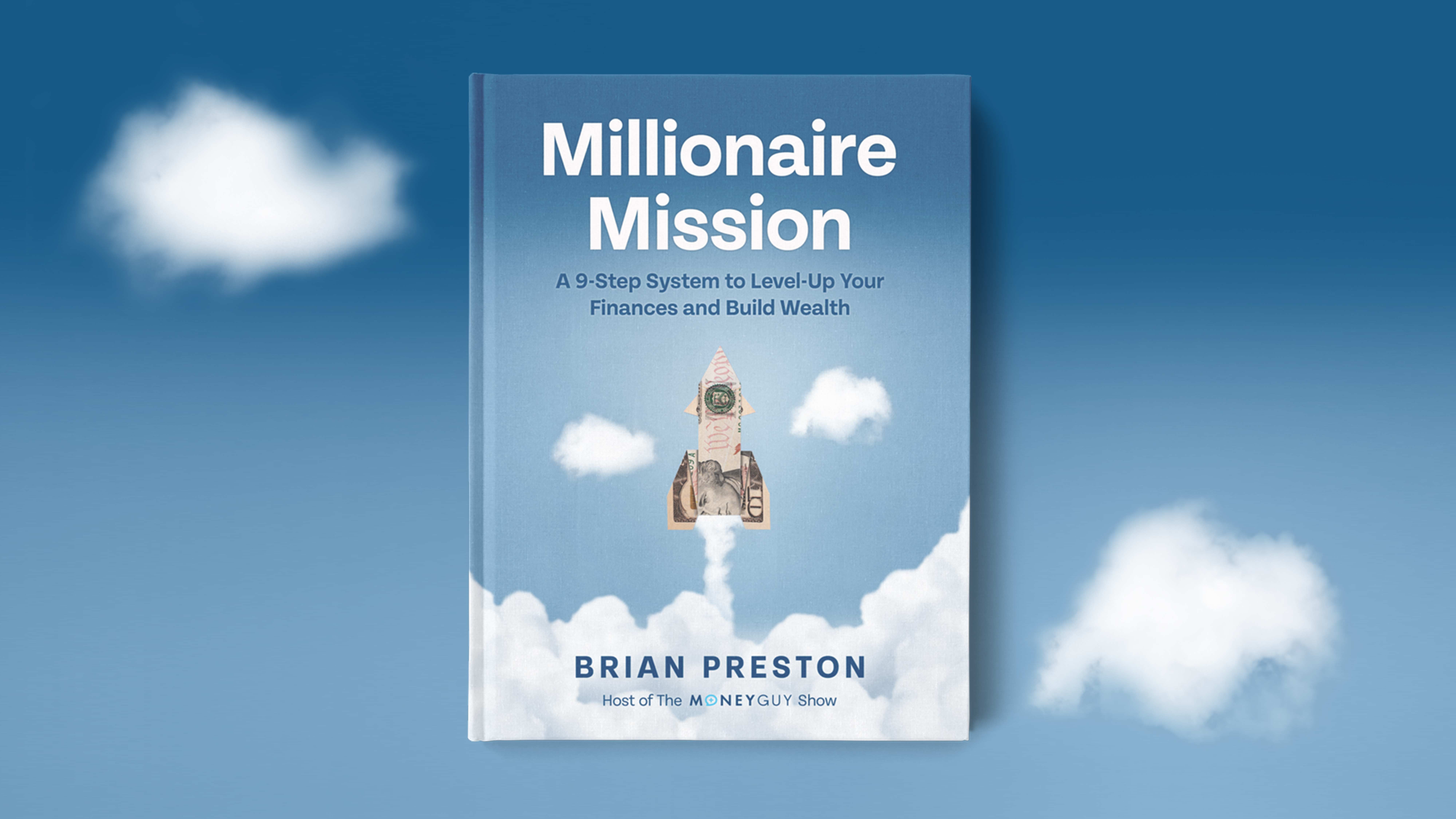
Brian: Yeah. A lot of people think cash is trash, but I’ve tried to and I explained this in Millionaire Mission is that I have found cash to be a very valuable tool in wealth building when you have extra of it when everybody else is scarce in the resource. And that’s exactly because I think a lot of people probably couldn’t go take that assumable mortgage that easily. So, you’re able to step up and that’s what everybody says, “Hey, man, you’re so lucky.” No, luck is that intersection of preparation and opportunity. And that’s why sometimes cash, now I don’t want you to do it. This is why I’d say step seven, eight is where I tell people to start building up extra cash for opportunity. It’s more of steps one and four to keep you out of the ditch. But it is one of those things where I think you guys have found some benefit in keeping extra cash around as well.
Matt: We wouldn’t have been able to, I mean, we are lucky in terms of where things were along the way, but we wouldn’t have been able to purchase this home and assume this loan 10 years ago because we wouldn’t have had the access to that kind of money.
Brian: I love it.
Brian: If you were given guidance to somebody who’s starting fresh because in a minute we’re going to answer some of y’all’s questions, is out of state real estate where you would start or do you think just because you had a unique opportunity being in the military?
Matt: Yeah, I think that is more of a unique opportunity. I do think you can learn a lot by just jumping in kind of and starting the process. Like if you do want to get into real estate, it’s good to like read up and learn about things before you do it. But really the place that you learn a lot is that first home through the failures. Is through the failures. Like you learn all the mistakes that you make. You learn all the things that are going to cost money, the things that you weren’t thinking about beforehand. So, there was a pretty big gap between when we bought our first one to bought our second home. It was like five or six years worth of like figuring some stuff out, learning that I’m not the person to manage it. She is. She’s way better at it. But yeah, that process jumping in. I don’t know that out of state real estate is probably where I would start. That probably increased the difficulties for us at the beginning. Probably local areas, you know the areas more, you know where people would like to live. You can go like fix the toilet clog on your own instead of paying 200 bucks to have a plumber come out and do it.
Bo: I don’t want to go fix the toilet.
Alex: We don’t really do that too much now, but having like local trades people like, you know, having your contacts that you can trust. Our homes are mostly in the same area. So that actually is really beneficial for us because, you know, there’s three homes that we have outside of Charleston, South Carolina, and we have the same plumber, we have the same HVAC person.
Brian: It’s not a bad place to have property, too. Those are great areas to have real estate.
Alex: Yeah. But the out of state piece, we didn’t really get a choice, right? So, we go where the Navy tells us to and when the Navy tells us to go there. So, it wouldn’t be something I would necessarily tell somebody who wants to embark on being a landlord. Out of state is definitely more difficult, but we just didn’t have that choice.
Brian: I do, and I don’t I know you probably have more questions, but I did want to talk about because y’all have done something so strict, meaning that you’ve only lived off of 50% of your money, but now we look at your net worth, it’s big. Are y’all transitioning to where, because you know there is a fine line between financial mutant versus financial miser. Do y’all feel like you’re loosening up? Because look, confessionally, I was a tight wad. We even tried to brand something, you know, where we were so proud of our type-wide lives. But as I’ve had more and more success, I’ve realized I had to give up my typewide card because we were traveling nicer. We were doing things and I felt like I was a hypocrite if I wasn’t honest. That my lifestyle creep, it was still very healthy based upon income and everything else, but there was a transition that had happened in my life. Are y’all experiencing that or are y’all still in this like, I mean I see you working. Are you guys the same person?
Matt: She’s probably got a great story of where she thinks that I probably changed or at least that’s where my sister thinks that I changed. But yes, definitely. I was a miser. She can talk about it.
Alex: Notoriously, you know, his friends and family know that he was a tight wad, cheapskate, however you want to phrase it. Some say frugal, some say. I say he’s like a chipmunk, right? He was like storing away for a rainy day. We already, you know, have on the table that I was the spender. So I was always trying to be like we can do this.
Brian: I don’t think by the way to live in this environment I don’t think you’re truly a spender. I think just in relative terms you’re the spender.
Alex: I appreciate that. I will be using that later. No but you know there I would I think that you said lifestyle creep is very much right on. We as have continued to evolve and have gone on a little bit nicer vacations. I think that’s probably what you’re referencing is we went to Italy and he did some serious shopping and got a little taste for some of the finer things in life and was like…
Matt: I bought two things.
Alex: Yes, he bought two things. But we knew, you know, we made a plan before we went there like, “Okay, we’re going there. This is what they’re known for. This is what we’d like to buy.” So it wasn’t like, you know, just frivolous or anything. He had gone with a little taste of what that could look like and came back and I wouldn’t say that it’s completely absolved but he has the pendulum hasn’t swung the other way.
Matt: In my mind I’ve loosened up, that doesn’t mean there’s a Ferrari or Lamborghini sitting in the garage.
Bo: I was not I was thinking maybe a watch.
Matt: I bought some Florentine leather shoes. They were like 100 bucks.
Alex: But for him, it was really a pivotal change for us because he was very used to not spending any money. And so, you know, we would joke when we got our credit card statements that it was like 99% me. But, yeah, that was probably where we started to see a little bit of a shift maybe. But I would say most people would probably still categorize him as a little bit conservative when it comes to spending.
Matt: Yeah. I mean, I recognize a 50% savings rate is higher than even financial advisors recognize.
Bo: Well, I’m curious about where we’re going, right? Because obviously 2010 we had a negative net worth, right? You guys made some very hard decisions. Hey, we’re going to start saving 50%. We’re going to start building so we can get ourselves out of the hole. I would say that you have now gotten yourself out of the hole. Here you are not even 40 years old. You have a $4 million net worth. What’s next? Where are you going towards? What was the reason for all those hard decisions you guys made to put you in the position you’re at right now?
Matt: Yeah, I’ve really been pushing the FIRE movement, especially to her. I really want to retire or at least have it to where I can do whatever I want. And if I make money at it, great. Or if I don’t make money at it, great. I want financial independence as soon as possible so that, you know, we have the availability to do whatever we want whenever we want. Both for me and for her. Like we’ve both worked very hard over the past 15 years and eventually when I retire the 20 year career so far and I want to be done and do something that’s just enjoyable or fun and have the availability to spend more time with my family because I go away for months at a time and don’t see or talk to anybody.
Brian: Refine that vision though because how many more years do you have in the military before you have the option to retire?
Matt: So not that I’m counting down or anything but I’m eligible for retirement September of 2029.
Brian: Okay. Okay. September 2029. And then do you think is that done done or do you think that there’s still a transition period even after that?
Matt: So done done in terms of like still being in the military? I mean so my goal is to be done done if I can. Like again if I find something that I truly enjoy I’m okay to continue doing that. And then we might need to bridge the gap just between then and full retirement. But in my mind, I’m done in 2029. And we’ll kind of shift roles and I’ll be the person that maintains the home and getting all the kids to practice.
Bo: So we’re gonna stagger retirement. It’s not you both are not planning on exiting in 2029.
Matt: Oh, I think that’s what we’re here to discuss. Yeah, exactly. I mean, if she can retire and we can get everything that we want, then, you know, that’s definitely on the table, too.
Alex: Yeah. I love my job. I have great flexibility within my work and I’m able to work remotely, so it works very well for our current life situation of moving quite frequently. So, I’m actually not looking to retire when he does. And I think that where we kind of want this conversation to go is kind of what that end goal is, why we have been acquiring these properties and living how we have been living. For me, my end goal is to live in a quote unquote forever home. It might not be forever, but it will be for longer than we’ve ever lived in another home where our children can, you know, go through primary and, you know, elementary, middle, like in one location. That is not something that we’re afforded currently. So, that’s my end goal is that I’d like to just maybe put down roots somewhere. That doesn’t necessarily mean I want to stop working. But it means that we don’t have to move anymore.
Bo: So when I hear this, even above even financial independence immediately what you’re looking for is foundation and roots like how do we be in a place where we can be in our forever home. One of the things that would be required I imagine would you have to be out of the military so that way you’re not moving right. So that’s got to happen. Have you guys decided like this is the area we want to be or this is the type, like do you have parameters around what the forever home looks like?
Alex: We have toyed with several locations. I mean, we’re fortunate in that the Navy has really beautiful places that they have sent us to up and down the East Coast. You know, I think we’d like to be in kind of the Nashville metro area which is where we want to, you know, set down said roots. But like you said, we can’t necessarily do that until 2029 or so. But, you know, we constantly are sending each other Zillow listings and looking.
Bo: The good news about this area is if you’re sending a Zillow listing now, odds are it’ll be the exact same four years from now.
Alex: That’s great.
Brian: That’s right. It’s not moving very much at all in every year. I do think it’s leveled out to a degree. It’s not doing what it was doing in 2021, right? So, I don’t think it’s going to continue to go up, but I don’t think it’s the crazy run up that we saw. I think that’s in general for all of real estate is that we’re not seeing these huge spikes in prices. Hopefully, there’s still going to probably be the inflationary run up.
Bo: So, when we think about planning forward, right? Because are you going to have to move more times in the military or is this last move to Florida the last one you’re going to do?
Matt: Maybe. Probably one more time. My current job will be, I’ll transition in about early 2028, maybe mid 2028, and I’ll still owe like a year and a half or so after that. So, I could move one more time or maybe there’s a job in the same base that I could try and get.
Bo: And if we move one more time, I’m assuming current home that we’re in, we’re going to rent that and we’ll go buy another house wherever we move to. Kind of continue this process.
Matt: Provided we can find one that’ll be profitable money-wise.
Bo: So, we have maybe one more move, one more home, right? In terms of the home, just so we can get some context when you guys look at homes to buy for this type of strategy, what’s the price point? I know it depends on the area, but historically, what where are you guys at in terms of the price of homes that you buy? Market value, right?
Matt: My goal is typically the PITI and the rent that I can expect from it having a $1,000 delta between that. So, the home values that we purchased have gone up. So, the home that we just purchased was about $500,000. It would probably be around that price point, but again, we’d have to find like an assumable mortgage or something to make the numbers work more than likely.
Bo: Meaning like, hey, if we have to go buy a house at 6 and a half, 7%, it’s probably just not going to work.
Matt: It’s not going to work. It would be very difficult or we’d have to buy a house that’s much cheaper. Like less than $200,000 would be the only way I could see that being possible.
Alex: Yeah. Based on the areas that we’ve lived in, rental potential houses there are not ones that you want to raise your two children in.
Matt: Right. Especially on your major military bases, too, because those are pretty built up areas usually.
Bo: So, as you guys think about 2029 and being retired and you kind of setting down roots, when you think about I mean obviously you do have a lot of debt, right? I mean, there’s not a lot of folks out there that have a million plus dollars in debt and you guys happen to fall into that camp. When you retire, is that something that has to go away or are you comfortable having debt when you retire? And we haven’t really talked about, you know, this dream home, like is it $500,000 or is it something different?
Matt: Yeah. So, I’m okay with the debt that we have there just because the rental property, there’s a delta there in terms of like how much money we’re profiting off of them and what the interest rates are on those. If we purchased a new home at like 6 to 6 and a half percent interest rates or whatever they are, to be honest, I’m not 100% sure because we haven’t I haven’t purchased a home with that interest rate. I would be much more inclined to pay that down quickly and get rid of that debt. And that’s kind of the plan if we purchase a home. Like the range that we’ve been kind of talking about and kind of planning for on our own is around the $2 million range. And then her continuing to work and me maybe getting some side work and paying that down at least as much as we can and maybe resetting the loan so that we have a smaller monthly payment because the fixed expenses are going to be significant.
Brian: Is there any desire that you just pay cash for the $2 million home?
Matt: I’ve thought about it. It makes me nervous to spend, you know, well half of what my portfolio might be in five years if we can continue on the saving train. Spending half of that immediately on it would make me more nervous than I would almost want to work longer just to pay it down with the money I make from a new job.
Brian: I like hearing you say that because there’s some maturity in that answer and the fact that I think a lot of people’s emotional reaction is let’s just pay cash for the house. We have resources. But I was telling Bo when we were reviewing your situation is there’s also a lot of value to being able to have access to your capital when you’re making big life changes. When you leave the military, when you move to a new part of the country, there’s just going to be a lot of moving parts that are going on that your life’s not going to feel completely settled and to basically take half of your capital, lock it into this house, it takes away a lot of flexibility, right? And there’s a lot of decisions I’ve made in life where yes, I pay a premium and I look at it as almost like an insurance policy where I’ll pay a mortgage or I’ll carry something, but it just gives me so much more flexibility for a time certain period. And then you can always go prepay a mortgage at some other times. Even and I know on a $2 million house, I mean, this potentially could be a $100,000 decision that you’re paying interest on a mortgage for a year or two and you might incur some interest, but I think it would be worth it because you guys are the CEOs of a $4 million, by this time, this will be well over $5 million. That seems like a small price to pay. I know on paper $100,000 for interest seems crazy, but for a $5 million enterprise, it seems like an okay thing to give maximum flexibility because I still don’t even know the thing the way you gave your answer. Will you be happy being fully retired? I mean, that’s why I think having access to capital is going to be a very valuable thing as you’re trying to figure out a lot of those life things.
Matt: Yeah, I might I see myself probably finding something to do with my time other than just, you know, sit at home and play golf all day. I mean, it could be anything. Like I really do truly enjoy consuming information on personal finance. So, I mean, I might try to get into that field. I kind of have planned beforehand and gotten my MBA while I was in school and started taking course work towards getting a CFP accreditation.
Bo: Let’s go. I wonder if there’s any firms in Middle Tennessee, Nashville. I’ll have to look through the Rolodex.
Brian: Some military guys who were actually clients that then transitioned into becoming financial advisors too. So yeah, that’s definitely there’s precedent for that.
Matt: There’s definitely interest in doing something like that and I think I would really enjoy it because I’d get the opportunity to help people and kind of go down similar path that I went down where I had some success from basically nothing and no true knowledge. So I think that would be interesting to me, but we’ll see what happens. I got to survive the next, you know, sea tour here and get through all the of a pretty arduous lifestyle for the next few years.
Bo: Okay, when you think about where you are today, you have cash flow rolling in from these rental properties. Are you using that cash flow to then satisfy the debt or are you building up that cash flow and just kind of letting the minimum mortgage payment happen on the rental properties?
Matt: So it’s we’re making minimum mortgage payments.
Bo: Minimum cash flow coming in at least a $1,000 delta was your goal per rental property coming in. You also have a 50% savings rate. So have you guys like played with hey just from where we are now if we think about the way that we’re going to accumulate and the way that we’re going to build just between 2025 and 2029, we’re likely going to have a lot of capital in 2029 to figure out how to make that housing decision. Right. Have you projected that out at all?
Matt: Absolutely. So, I actually went over it with her pretty recently. I think I listened to one of your shows where you did like an annual like meeting, took a day off of work and actually turned it into a really fun event. So, every once in a while, I’ll just show her like our net worth statement because I track it and update it. And I’ll just show it to her like, “Hey, we had a great year.” But I listened to that and I was like, “Well, maybe I should have like an actual meeting where we sit down and I show her the numbers on like where I plan to be and give her a couple different ranges of options to where we show, you know, what’s going to be possible when I retire in four years and how much money we’re going to have.” And that’s where we kind of came up with the budget of $2 million because we were talking about a higher budget, but I was like, I don’t think that we’re going to have enough money.
Bo: He’s like, I just bought the $100 pair of shoes. Don’t push me further back than this.
Matt: Here’s what the numbers look like. Here’s the doodoo plan. Here’s the, you know, down to earth and then here’s the like probably best case scenario. And I showed her what those numbers would be with the different projections and how much we’ll have and that’s kind of what we’re basing our budget off of.
Bo: So on your projection, are you going to have the ability to pay cash for the home and you’re going to be able to make the decision either we pay cash for the home in 2029 or we do a mortgage? Have you projected out that you’ll have the flexibility to do that?
Matt: I do think that we’ll have the flexibility to do that. The numbers that I came up with based on our savings rate and how much we save per year was that our actual investable assets would have or our actual investments not including the real estate that we’ll have would be around $4 to $4.5 million depending on what kind of rate of return the stock market in our portfolio gets. So yeah, we could pay almost half of our investable assets down to do that. There would be a pretty big tax liability I feel like that we’d incur if we did that. And I don’t love that portion of it. And then that would put a lot of money into just our primary residence, which I don’t love doing that either. So I think I’m leaning more towards taking out a loan and just making a down payment, but it’ll be an option.
Bo: Well, one of the difficult things to project is there’s just so many variables that can change. I mean, obviously you have young children. You don’t know exactly what your lifestyle is going to look like. You’re going to have one other move, so you don’t know exactly what 2029 is going to do. But what you do know is okay, we have this high probability of this outcome that we want to have. And I think you’re doing the exact things necessary by taking the steps now to build towards that. So that when you get there, you do have the choice to say, “Okay, well, we have capital. We can either pay for this home or we can have a mortgage.” Because what we’ve seen working with clients is that it’s not an all or nothing one or the other. A lot of times we’ll have clients who end up retiring or going into financial independence and it makes sense for them to liquidate portfolio assets and be completely debt free. In other scenarios based on where interest rates are and based on where cash flow is and based on where portfolio assets are, a mortgage makes a lot of sense or even account structure. It made no sense to go gut the portfolio for the sake of paying taxes just so we could be debt free when there was probably a more balanced approach that let you in a tax efficient way make the decision, still prioritize paying off the debt but not just giving uncle sam more money for the sake of just being cash, you know, debt free right out of the gates, right? So the difficult question to answer is what is the right move and it’s going to depend even from now until the time that you get there, but you’re doing the things necessary to position yourself to be able to make that decision at that time. Does that make sense?
Matt: Yep.
Bo: Is that helpful?
Bo: Is it helpful that our answer was it depends?
Brian: I would love to know if there’s any specific questions you guys would love to get our input on. Because I was I told Bo when I saw y’all’s situation, I was like, you guys have done such an incredible job. It’s commendable what you’ve done, but the things if I was your adviser, I would love to kind of be your personal coach on how to maximize the life component, too. Because I see a lot of coachability here on that you’ve built tremendous assets, but you’re probably trying to figure out how do you transition to where you’re still saving or building, but also you’re just maximizing your 30s, what’s left of your 30s, but then you don’t say it that way. No, but as a guy my age, I just want everybody and there is a balance there because the crazy thing is you get to the top of the mountain and you start checking off all the boxes of all the things you thought you wanted to do financially. You’ll find that that’s kind of empty if you don’t build it back into the memory category and the life experience category all the stuff that lets you feel life well worth the living, you know, and fulfillment and all the other things. It’s not just about getting to the goal. It’s the journey. I know that sounds so cliche, but it really is the truth of life. And that’s the biggest things that I was looking at y’all situation. They need a coach because y’all done so good at developing and building. But who’s making sure that y’all are actually saying it’s okay to release? Because that’s the hardest thing for most people like you. I bet y’all are going to have a very hard transition into spender or consumer of these resources because you’ve been so rewarded for being as tight as possible that there’s just a balance there, right?
Matt: I mean it’s definitely something I’ll need help for because I think that was one of my questions when we sent in our things was, you know, I’m already nervous that we’re going to spend too much in retirement and I’m concerned about, you know, things like sequence of return risk and like what’s going to happen. Are we going to spend too much money immediately? I think I’ll need to be pushed to spend money. I’m going to be like, if we can live on what we got right now from the rental properties and just my pension alone, let’s just let everything else grow, we’ll be fine.
Bo: How does that make you feel when he says that? When he says, let’s just live, let me retire and let’s live as small and as tight as we can. How does that make you feel?
Alex: Well, I mean, the pendulum has really, we do live a very comfortable life now. Our children want for nothing. We have I feel a good amount of discretionary income. We go on fun trips. We fly the way that we want to fly. And you know I don’t think that we are missing out on anything. The military is probably what limits us the most just based on like what we can do and when we can do it. So I am very excited for when that limitation is off and we can book a trip, you know, six months out. We can’t do that right now. And so I am, you know, I trust Matt inherently and, you know, he’s certainly led us on this journey and been very, very successful. We certainly had some bumps in the road in the very beginning, but I feel now we are well into our groove and feel very comfortable with how we manage money together as a team. It’s always been a very team effort. And so I mean, you know, I listen to what he has to say. It’s his passion and he really really enjoys it much more than I do if I’m being very honest. And you know I we have lanes within our marriage and this is his lane. And so I know that he wants what’s best for his family and so I would follow him.
Matt: So she I’m usually the green light. She’s we’ll spend however much I want. Sounds good to me.
Bo: I love it. I love it.
Bo: So it sounds like you’re in a pretty good place with that. But is your desire, okay, hey, we’re just going to live off the rental income and we’re going to live off the pension? You also got a pension that will be coming in, right?
Matt: Well, it’s not my desire. So, I’m planning on like once I retire having a 3% withdrawal rate just because I am retiring so early and using that as necessary. If she does decide to continue working, even if that’s an option or not for her to stop, I may delay that, you know, a few years. We probably don’t need to. We probably could start withdrawing that, but we would use that money to pay down the house that we purchased if that’s what we decide to do. But she does push us to do more. I mean, we flew Southwest when we came up here, so it’s not like we were flying first class when we came up here.
Bo: Every seat is equal on Southwest.
Brian: We used to be Delta boys coming from Atlanta, but Nashville, you very quickly become accustomed to flying Southwest.
Matt: Yeah, that’s right. Yeah, it was the only direct, so that’s great.
Alex: We got a two year old on the plane.
Bo: Because you’ve probably done this exercise, but if you’ve gone to moneyguy.com/resources, we have this little wealth multiplier tool. We even have like a compound interest calculator. And if you just like fast forward to what your assets are going to be in 2029, you just drop that in there and said, “Hey, if we just left these assets and let them grow and we have a 3% withdrawal rate,” they get really big, right? Like it, you know, you’re well, it’s going to be over $10,000 a month. I mean, it’s going to be big big numbers. And so I guess my question is what’s the when you look 40 years into the future, what’s the long term goal with these resources that you build? Like I know your goal immediately is to survive, but what’s your goal at the end of the line?
Matt: I mean, that’s probably some joint stuff. I would like to not leave just like an enormous, you know, estate to our kids.
Bo: You’re picking up exactly where I’m going. What a better way. You picked up what I’m saying. 50% of your money is going to lead to a lot of money. And we’re not suggesting that you spend more money needlessly. But we also don’t want you to not do the things that you really care about doing and you really value doing. Just because you can live on this like small lifestyle doesn’t mean that you should. And that’s where I do think having these like annual meetings, my wife and I do it. At the beginning of the year we said hey what trips we want to go on this year and let’s plan all the trips out, big ones, little ones, quick ones, long ones and we do that and we make sure we stay calibrated around making sure we’re doing the things now that we really find value in, really create memories in while also still planning for the future, right? Because I’m just I don’t want to say worried, I’m never worried about somebody having too much money but like you guys are very much in that camp that it could happen if you stay so tight forever. Does that make sense?
Matt: Right.
Matt: So, I mean, traveling is something that we do love to do. So, we’ll definitely do more of that when it’s available. So, I think our travel budget will definitely grow. It’ll probably take some pushing though from her or maybe my sister’s pretty good at pushing me. She likes to travel with us, too. We enjoy some time as a family. So that’ll be a big expense. I love to play golf. Don’t have the opportunity to do it as much. We’ll probably join some type of club to where I can play a little more golf and be part of that environment.
Alex: And I think, you know, our children’s education, right? So, you know, college is we want that to be something that, you know, they might not have to incur debt to do so they can start. We had planned to not leave them a ton of money in our estate. But we want to be able to cover their education expenses to get them kind of on the right path and any potentially like additional schooling that they would want to do. So that would probably be another large expense that we would have to incur several years down the road.
Matt: I think we have some philanthropic ideas and thoughts that we wanted to do. One of the biggest benefits I had even though we did have a decent amount of debt when we got married was I didn’t have any real school loan debt. And that’s a pretty big aid in starting out your life. So maybe creating a scholarship somewhere in the places that I’ve been, the places that she’s been for people that, you know, you want to be a submarine officer, great. Here’s free tuition. So maybe we could fund something like that, I think, to use some of our wealth to kind of give back and give people some of the same benefits that I had when I started out.
Bo: Did you always know you wanted to go in the military? How’d that come to be?
Matt: No. So I thought that I was going to be a professional baseball player.
Brian: I know somebody else thought that.
Matt: Yeah, as a 5’11” right handed pitcher that throws like in the mid 80s, I thought for sure MLB was where I was going to be. So yeah, got through college, used up all my eligibility. Nobody called, unfortunately. And so that was a pretty big drastic life event where I was like, man, I don’t know what I’m going to do now. Then that’s when I enlisted in the military just kind of off of a whim. I literally went down to the recruiter’s office, walked in, and the first person that talked to me was a Navy recruiter. And so that’s the reason I joined the Navy.
Brian: That’s how you decided.
Matt: That’s how I decided.
Brian: Yeah, the serendipity of what life happens. Man, how lucky is he didn’t walk into the rodeo clowns were the very first ones that were sitting there? Holy cow.
Matt: Yeah, it was very very fortunate.
Brian: Which branch of the military is the rodeo clowns? Well, I was, that joke doesn’t hold water if you really play it out because those guys, the branch of the service love picking on each other. I was going to make you put you on the spot. I’m not going to say that one, man.
Bo: You guys are in a fantastic spot. You guys are doing all the right stuff. Are there any other things that we can speak to? Anything else that we could answer for? Anything you’re curious about as you do plan? You’re still a number of years away from this next transition, but as you move towards it, are there any questions we can answer that’d be helpful for you?
Matt: I mean, I’m most concerned about, I felt very comfortable and did a lot of research on building wealth. I have not done and there’s really not that much out there. I feel there’s not like a ton of people writing books about like here’s how to draw down your retirement assets. That’s what I’m concerned about. I know I should build some different buckets of money to have different options, but in terms of like planning that portion out, no clue. I have some ideas in my mind, but I don’t know what the most efficient ways to get that done are going to be.
Bo: Do you know why there’s not a lot of literature written on that? It really popped in my brain, too. Because it’s pretty individualized. It’s pretty specific, right? Everybody’s, if you even just think here in the past couple months even the way that our tax policy operates is different today than it was last year, you know, just based on legislation and so how you’re going to draw down your assets is going to depend specifically on your unique situation. I mean there’s some like general rules of thumb when we talk about the financial order of operations, you know, you fill up your tax free first and then your tax deferred and then you do your after tax. Well in distribution you kind of move in reverse order sort of. You pull out after tax and then tax deferred and then tax free unless there’s a reason to do it a different way, right? And so there are things where when you get into this, you guys are going to have a huge planning window from 2029, early 40s, all the way out until age 75 when you have to start taking RMDs or age 65 when you are eligible for Medicare. So, there’s tons of planning that you’re going to be able to do that how you draw down your assets will likely change year to year or even if you draw down. With a pension coming in and with rental property income coming in, you may not be drawing down. It may be how do I shift my buckets, but that’s where it gets so unique that there’s not literature on it because it’s not a one size fits all. It’s a one size fits one in most circumstances.
Brian: Yeah. I had a gentleman who reached out to us who’s, you know, trying to get his CFA. I was asking for some life insight and one of his questions that kind of made me chuckle because I think a lot of people, he was like if y’all use passive investments how do you add value to your clients? And because I mean we’re we’re very transparent. We love index funds, you know, and if you’re hiring a financial planner for just investments, you’re going to be woefully disappointed because I feel like investments has been commoditized in a lot of ways because of how efficient index funds work. But what I tell you are our gravy. And I’ll even say the biscuits and gravy of what we do is really the financial planning for clients just like, you know, somebody like yourself who doesn’t, because everybody’s journey is so different. You really do need somebody that kind of holds you accountable both in the good way of I think people are shocked. They think of Susie Orman who told everybody no no on everything they did if you were around in the 90s and you remember those shows. We’re the exact opposite. I’m like go go go. Because well it’s just because so many people are so rewarded for being disciplined and I’m all about it but at some point you have to ask yourself what’s the why and what do I enjoy and so I don’t have regrets because that’s the thing like I said you get top of the mountain you just don’t want to have regrets because you realize how precious life is and talking about the kids my oldest is a senior in college and it’s so cruel and I’ve talked about this a lot of times. If you’ve done your job right your child gets more and more independent, which rips your heart out because the older you get, the more sentimental you get. So, I just try to make sure every one of my clients understands that money is just a tool and we have to take this tool and figure out how we get as much life to where you come out the other side, not just to give your kids money so that they’re entitled and they don’t want to go work, but so that they get the best life and the memories so they hopefully come around more and you get to really feel like you’ve checked the box on everything in the best version of yourself. And that’s the part that I think that we’re never going away as financial planners. That’s why we can do this abundance cycle where we give away so much free advice because we know at the end of the day the complexities of life and success is going to bring more and more people through the doors. I didn’t mean to turn it into an infomercial, but it’s just but it is one of those things where I think a lot of people go, “What do financial planners do?” And this is exactly why I love that we get to do this show because Making a Millionaire opens up that curtain and lets people kind of walk in and have these discussions. And because I love analytical couples like yourselves because I would have loved if I could have met y’all in your 22 and 23 year old versions because y’all now, y’all have so much confidence. You’re very humble about what you do, but between you running the analytics of understanding the lease terms of each state, I mean, it just made me smile internally. It’s like, oh my god, she’s become an expert on these terms. And then you’re obviously you have an aptitude towards personal finance. And it’s just fun for me to see people as they grow and develop this expertise that there’s also another transition that’s in your future on how you become the CEO of this enterprise to just navigate the fun parts, the analytical parts, and just build a life that you’re very happy with.
Matt: Yeah, we were definitely throwing darts at a wall to start out. So I do feel more confident.
Brian: Some of those darts hit. Y’all done well.
Brian: Again, this show is completely different because I’m curious to see where you go because normally we give homework at this time and I haven’t heard us. I mean, we’ve really been this has been like a TED talk. Thank you for the TED talk on how you build wealth incredibly well starting from zero. Hopefully, a lot of people are going to learn a lot from this.
Bo: Here’s what we know. You guys in 2010 had a negative net worth. You said literally our debt payments were so much that we didn’t have enough money to cover the minimum payments. And here we are 15 years in the future with a $4 million net worth. So when I think about homework items for you guys, homework item number one, keep going. Keep doing the things that you’re doing. What has given you success is the same thing that takes you through this next transition as you move towards 2029 for potentially your first retirement and figure out where your retirement lies. The second thing is this is the time to begin thinking about what am I actually retiring to? I know what I want to move away from. I know that I want all this freedom once I have it. What are the things that I’m going to do? What are the things? Because I’m still going to be pretty young as a retired dude. How am I going to navigate that? And then the third thing I think will be so valuable for you guys is figure out what are the goals like the long term life goals you have that you want your money to allow you to accomplish. You had a goal a number of years ago that hey, we want to be financially independent. It is very likely that the next couple years you will have checked that box. We are indeed financially independent. Okay, then what’s the next goal? What are the outcomes you want your money to allow you to be able to do and begin dreaming about those things because that’s when you actually move into that abundance level of wealth where life is about more than just doing what you want when you want, how you want. It’s about knowing what you value and doing what gives you purpose on a daily basis.
Matt: Yeah, that sounds good. Thanks for having us on. I look forward to planning out the rest of it. It’s exciting now. That’s why we’re doing it so far in advance is because it’s fun to kind of think about being financially independent because that has been a goal of mine and ours for so long now that I look forward to planning the fun part of it, which is living the life after we built it.
Brian: Matt, Alex, you’ve been a joy. I mean, this really has been fun. I feel like we’ve learned a lot. Hopefully, the audience has learned a lot. If others want to apply for Making a Millionaire, where do they go?
Bo: Yeah, if you’d love to be a guest on Making a Millionaire, you can go to moneyguy.com/apply. Or if you want to check out any of our tools and resources, you can go to moneyguy.com/resources.
Brian: So guys, thank you for tuning in, Matt. Thank you, Alex. It’s been a pleasure. I’m your host, Brian Preston, joined by Mr. Bo Hansen, Money Guy team out.


Financial Order of Operations®: Maximize Your Army of Dollar Bills!
Here are the 9 steps you’ve been waiting for Building wealth is simple when you know what to do and…
View Resource
Home Buying Checklist
Before you make one of the biggest purchase of your life, make sure you're ready with our Home Buying Checklist.…
View Resource
Net Worth Template
It’s our favorite time of year: time to complete your annual net worth statement!
View Resource

How about more sense and more money?
Check for blindspots and shift into the financial fast-lane. Join a community of like minded Financial Mutants as we accelerate our wealth building process and have fun while doing it.


It's like finding some change in the couch cushions.
Watch or listen every week to learn and apply financial strategies to grow your wealth and live your best life.
Subscribe to our free weekly newsletter by entering your email address below.