
In this highlight, Brian and Bo discuss what you should do if you are unable to make after-tax contributions and give practical step-by-step advice on how you should approach this situation.
-
▼


Transcript
The next question is from Brian J. If you make it backward, not to be confused with Jay Brian. Okay, Brian asks, "If you make less than $116k and therefore will reach 25% savings before maxing out retirement accounts, is it a concern that you may never reach the after-tax bucket and the hyper-accumulation step of the FOO for those that don't have high income?"
Yeah, so if you're hearing this for the first time and you're not familiar, this, we walk through the Financial Order of Operations. Brian, you want to hold it up? It's the nine-step tried and true process, and we say that by the time you get to step seven, hyper-accumulation, we want you to be saving 25% of your gross income because if you can save 25% of your gross income, you're likely going to give yourself a lot of options and a lot of flexibility later in life. Well, Brian's saying, 'Hey, I want to save 25%, but I also know you guys talk about this three-bucket strategy where I want to have pre-tax dollars, and I want to have tax-free dollars, and I want to have after-tax dollars. What if I hit my 25% before I get to the after-tax bucket, before I get to hyper-accumulation?'
Well, this is one of those unique areas, Brian, when we talk about personal finance, is personal, it is unique to you, it is very specific to you. We put together the Financial Order of Operations to service guard rails, there you go, hold it up, to service guard rails to help you make wise decisions as you're allowing your financial journey. But when it comes to your situation, you have to figure out what your personal Financial Order of Operations is because what may happen is, if you're someone who says, 'You know what? I want to retire at 50. I want to get out of the workforce early, and I know that if I'm saving in a pre-tax account, I can't get access to that until 59 and a half or I have to be employed on my 55th birthday to be able to draw to that, and I know I can't get to my Roth until I'm 59 and a half.' You may have to rethink, okay, maybe at some point in the future, I do need to start saving in that after-tax bucket so that I can begin building that to bridge that gap.
Now, if you happen to be someone who says, 'Well, you know, I'm just going to work until I'm 60 or 65 years old, and I'm going to keep doing the Roth, I'm going to keep doing the pre-tax, I'm going to do the 401K,' and you don't actually end up building the after-tax bucket, I think that's okay. We have people to us all the time, come and say, 'Yeah, I've got two million, three million dollars in my 401k, and I've saved my whole career, and I feel like I have enough to retire,' and we do the analysis and stress test and work through it, and the answer is, 'Yeah, yeah, you can retire, but there's a caveat.' You know when you get your dollars, they will be expensive because you have to pay ordinary income tax when you pull that money out, but it's not the worst thing in the world.
What I'm trying to accomplish is my Financial Order of Operations that will allow me to reach the goals that I want to reach. So, Bizarro O'Brien, because he's Brian James, you know, and Superman had Bizarro Superman, so I just want Bizarro Brian since you've got my initials backwards. Look, we wrote this in, I want to have a quick experience share as we were speaking to a group of engineers who loved this company. A big room full of engineers every year, and they brought us in to kind of educate them on the Financial Order of Operations. I'll never forget; this woman raised her hand and she goes, "Hey, it's kind of mean that I'm making this money, I'm saving this money, I want to save for my kid's education. How am I going to do that, but under your system, all that money will go to retirement?" Both of us are like, "No, no, let's make sure we clarify this." All we're asking for in step six of the financial order of operations when we talk about max out retirement, is to get to 25% of your gross income, exactly what Bo said. Once you've done that, because we recognize there are people that are going to make less than $116,000, as the government keeps increasing what you can fund, we give you the freedom to move on to step seven, which is hyper-accumulation, then step eight, which is the prepaid expenses, which is going to allow you to fund the kids' education. All that stuff happens, and that's why we cover this. I love giving away a free resource, but that's why we also, sometimes, to accelerate your success, we have to give curated expenses that cut through all the noise out there to let you see what is actually the most efficient path. And that's why we did a course on the Financial Order of Operations, learn.moneyguy.com, so that way maybe you're not at the point where you need a full financial planner, but you are at the point that you're beyond the free resource, but you need something that curates and gets you the answers when you don't need to spend thousands of dollars for a financial planner yet. This is the path, this is the way that's going to help you accelerate that out there, and that's why we did it because we cover all the whys, all the details that's kind of impossible. Yeah, we like I'll answer this, this will be a highlight, but there's going to be a group. You have another question, and it's going to show up in another Q&A though maybe we did two months ago. This lets you cut through it all and really fast-track your success.
The Money Guy Blog
Read through our thoughts and tips on how to manage your money better.
Free Resources


Free Resources
Financial Order of Operations®: Maximize Your Army of Dollar Bills!
Here are the 9 steps you’ve been waiting for Building wealth is simple when you know what to do and the order in which to...

Free Resources
Wealth Multiplier By Age
If you want to set yourself up for future success, find out how much you need to save every month to become a millionaire.

Free Resources
Car Buying Checklist
Here’s how you can buy a dependable car that won’t break the bank. Our free checklist walks you through the 20/3/8 rule and strategies to...
Episodes

Episodes
Are You Doing Better Than the Average American?
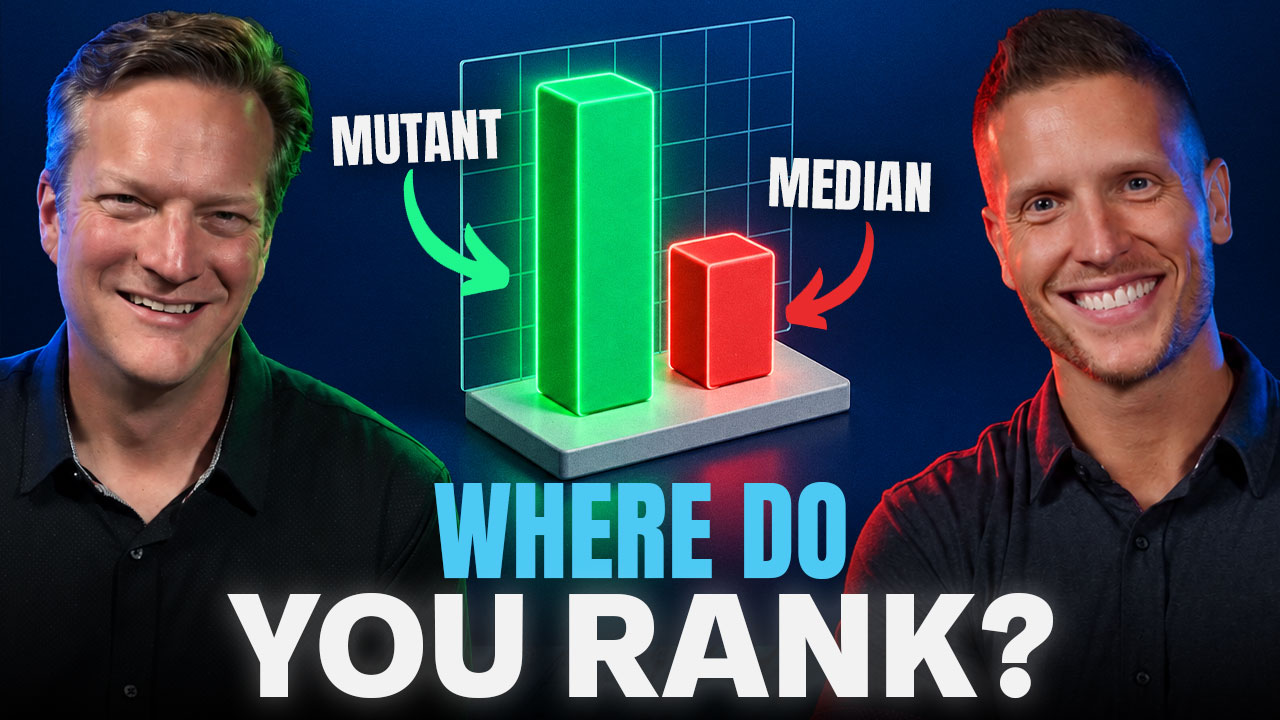
How do you stack up against other serious money optimizers in 2026? In this episode, we reveal median financial asset benchmarks by age and share...

Episodes
Was His $120,000 College Degree a Huge Mistake?
$120,000 in debt. A closet full of untouched sneakers. And a plan to be financially free by 50. In this new episode, meet the 28-year-old...

Episodes
How to Retire at $1M, $2M, $3M, and $5M
Wondering if your retirement savings are enough? In this insightful episode, we walk through four portfolio benchmarks - from $1M to $5M - and the...
Financial FAQs

Courses & Tools

How about more sense and more money?
Check for blindspots and shift into the financial fast-lane. Join a community of like minded Financial Mutants as we accelerate our wealth building process and have fun while doing it.
Free Resources
Financial Order of Operations®: Maximize Your Army of Dollar Bills!
Here are the 9 steps you’ve been waiting for Building wealth is simple when you know what to do and the order in which to...
Free Resources
Wealth Multiplier By Age
If you want to set yourself up for future success, find out how much you need to save every month to become a millionaire.
Free Resources
Car Buying Checklist
Here’s how you can buy a dependable car that won’t break the bank. Our free checklist walks you through the 20/3/8 rule and strategies to...
Articles & Insight

A little knowledge is an amazing thing.
Get your money's worth of answers to your financial questions and more niche topics.
Episodes
Are You Doing Better Than the Average American?
How do you stack up against other serious money optimizers in 2026? In this episode, we reveal median financial asset benchmarks by age and share...
Episodes
Was His $120,000 College Degree a Huge Mistake?
$120,000 in debt. A closet full of untouched sneakers. And a plan to be financially free by 50. In this new episode, meet the 28-year-old...
Episodes
How to Retire at $1M, $2M, $3M, and $5M
Wondering if your retirement savings are enough? In this insightful episode, we walk through four portfolio benchmarks - from $1M to $5M - and the...