Change your life by
managing your money better.
Subscribe to our free weekly newsletter by entering your email address below.
Subscribe to our free weekly newsletter by entering your email address below.
At just 25, Daniel and Lindsay have already checked off major life boxes: marriage, homeownership, career changes, and a net worth over $240K. But now they’re planning for a new phase: starting a family (and possibly living on one income). In this episode of Making a Millionaire, we coach them through optimizing their finances, avoiding common investing missteps, and making smart decisions about their rental property. Whether you’re early in your financial journey or rethinking your short-term goals, this episode offers tactical advice you can use right now.
Learn more about how you can incorporate millionaire habits into your own life and master your money mindset. Cultivating a healthy relationship with money doesn’t need to be difficult, but just like any other habit, it must be practiced and perfected over time.
Subscribe on these platforms or wherever you listen to podcasts! Turn on notifications to keep up with our new content, including:



Daniel: My name is Daniel.
Lindsay: My name’s Lindsay. We’re 25 years old and we live in Boston.
Daniel: Welcome to Making a Millionaire.
Lindsay: We’re originally from Pennsylvania. We both grew up about an hour outside Philly. Then met in college in Philadelphia, got married a year later, bought a house in PA, and then I got a new job and Daniel had to ride along with me up to Boston.
Brian: Tell us what each of you do for a living. Brag a little bit about yourself.
Lindsay: I’m an apparel designer doing active wear.
Daniel: Yeah. And I’m a structural engineer.
Bo: Aren’t those cool jobs? You know, when I hear like apparel, athletic wear, athleisure, that gets me super excited. I love it. That’s awesome. And so, it sounds like you had a job change and that job changed. What took you from Pennsylvania to Boston? How long had you guys been married before that happened?
Lindsay: About a year when that happened.
Bo: So, you got married, you bought a house, you changed jobs, and you moved to another part of the country, all inside of 12 months.
Brian: Starting to notice a trend here. Wow. You guys might be on the achievement track. Do y’all feel like are y’all running mental checklist of all the things that you’re trying to check off?
Daniel: Feel like we try not to. We might both have that tendency a little bit to lean that way, but don’t want to be completely governed by that.
Bo: Okay. Well, you guys have done a fantastic job because you’ve already mentioned that you’re 25 years old and you were so kind that you shared with us a net worth statement of where you guys are today and we thought it’d be helpful to kind of look at that to level set to kind of give people an idea of where you are presently today and then we’re going to talk about okay well if we know where you are today where do we want to go what are some of the things you guys are thinking through and you can see here you guys have done a fantastic job by 25 years old I think a lot of people would look at this and be pretty envious of your situation right now in cash and cash equivalents you have about $64,000 saved up. How did you guys come up with that? Because look, you have an emergency fund and then there’s another thing called sinking fund. Walk us through what’s the thought process between those two different buckets.
Daniel: Yeah, so the emergency fund is the kind of three months to six months of cash just to have on hand that we would just kind of keep no matter where we’re at. And then the sinking funds is a big combination of things. It’s everything from a fund to buy a car in the future, to other things we’re saving up for, maintenance on our house, things like that.
Brian: Haircuts.
Daniel: Haircuts. It is a lot of things in there. And then it’s also actually just some other money that is now kind of in CDs. It’s for a future house purchase. Some things that we don’t have invested right now just because the time horizon might be a little shorter but is above and beyond even the sinking funds.
Bo: Now you say future house purchase. You already own a home correct? Can you kind of walk us through that?
Lindsay: So, we purchased a home thinking that we would probably stay in Pennsylvania for the long term, but you know, with job changes, life throws curveballs. So, we’re thinking that we don’t know exactly where we want to end up long term. It could be back near family in PA. It could be somewhere else. Even within Pennsylvania, our families are split between different towns. And so, we’re just not positive where we might want to end up in the future, if the home that we bought would be a place that’s big enough for the family that we want to grow into, things like that that we just anticipate could be a purchase in the future.
Bo: What was the reasoning behind or how did you guys decide, okay, we’re not going to sell the house and move, we’re going to keep it. How’d that go down?
Lindsay: Many conversations, many— Yeah. Lots of advice from family and friends, realtors, different people like that. We ultimately decided that since we had bought it so recently, we didn’t want to have to go through closing costs and finding a buyer so quickly. And it just really worked out that we had friends who were looking for an apartment to rent and they were willing to rent from us. So we heard advice that, you know, having reliable renters who would be taking care of our home would help it to be an asset that could continue to grow.
Brian: Are they still interested in staying in the house or is there a time certain that they want to move out?
Lindsay: The next year they’re planning on staying, but we haven’t discussed long-term plans with them.
Daniel: And I’ll just add also part of the decision to keep the house was looking into some things like capital gains tax and knowing that we would have had to pay that for owning it for such a short time and just some of the other money considerations. We had just done some renovations pretty much right when we moved in so we had sunk some money into it. Again we really thought we were probably going to be there for a while and life led us a different way but so that was part of the decision as well.
Bo: Do you feel like you have that figured out? Are you still trying to figure out what do we do with this house? Do you guys have a plan in place?
Daniel: We feel okay with where it’s at right now but we feel like we need some sort of plan moving into the future. Partially still because of capital gains taxes. I’ve looked into rules about like how long you have to live there in a certain period of time and some things like that that might make a difference of like should we move back for a time and live in that house for a little longer, something like that. It obviously depends on what life brings as well and there’s so much unknown in the next few years. But we do and we still question sometimes whether we should have kept it. There have definitely been times where that’s been like a big question mark. So we still go back and forth. We don’t feel totally settled.
Bo: You both kind of looked at each other when you said there’s been times. Did something happen? Was there a thing that made you question whether it was the right choice?
Lindsay: The day after we moved out of our house and then our friends moved into it, there was a big leak in the basement bathroom and there was like a nine grand replacement to replace a piece of the sewage pipe that was going out to the street. So, we were wondering like where was this issue when we lived there and had the right insurance coverage and everything.
Bo: So, literally your friends move in, you guys move out, you’re out of state now and all of a sudden this leak happens. The joys of being a landlord, right? People talk all the time about like, “Oh, I’m going to have a rental property. I’m going to have someone else pay the mortgage.” This beautiful thing, but sometimes like unknown unknown things happen, right? Out of curiosity, how’d you pay for the leak, the $9,000? Were you able to do that? Did you have to go into debt or did you guys—?
Daniel: Yeah, we had plenty of cash at that point in our emergency fund and honestly, some finance shuffling a little bit. So, it was kind of like even after we paid that nine grand, we still had our full emergency fund and just kind of then got things set from there.
Brian: Something you keep saying I just wanted to get a little clarification on is the capital gains. Now, if y’all lived in this house for a period of time, even if you moved for another job and y’all definitely moved far enough away that there’s a proration of the tax-free gain, did y’all look into that rule at all to see how that would apply to you?
Daniel: No. I guess it was my understanding. I didn’t look a ton into this, but I thought that it was something about like two—you have to live there for two of the last five years in order to not pay capital gains, but I didn’t know anything about the proration.
Brian: But there is a little asterisk, okay, that if something—because the government’s somewhat reasonable—that if you have to move for a job and they have a distance test, they have these things you have to go through the checklist on. But for a lot of times, you can then take the—for a married couple, it’s $500,000—and depending upon how many months you lived in it, you could prorate the gain. And more than likely, y’all wouldn’t have had that much of a gain if you had any after all the transaction costs. I only bring this up is because you said something that intrigued me is because when I was doing the research for the show, I was like, I wonder if they’d be willing to go move back into the place for a month or two because your biggest hangup is going to be you have to live in it two of the last five years. And I don’t know, y’all have only been moved away for a year, so you’re still within the 5-year window. But you could definitely do some planning and work with your tax professional. We’re not giving professional tax advice, but I just know that there’s some avenues that you might actually qualify for more if you just needed another way to even think about the decision. Now, we’re not saying sell it though because if you have great tenants and the place is appreciating, I mean, that might not be the perfect answer, but I just wanted you to know all the variables so you knew exactly what you were dealing with.
Bo: And it sounds like there’s some question around, okay, how should we think about the house? But before we dive into that, I want to keep going through the net worth statement because I think we just stopped at cash. When we look at your investments, you guys have done a great job of building up liquid investments at such an early age. You both have health savings accounts. Daniel, yours has about $4,700 in it. Lindsay, yours has a little over $3,000. You both have Roth IRAs. Daniel, yours is at almost $24,000. Lindsay, yours is at almost $14,000. And you both have 401(k)s. Daniel, yours is at a little over $6,000 and Lindsay, yours is almost $15,000. So when I see, okay, I’ve got HSAs, I’ve got Roth IRAs, I’ve got 401(k)s, I’ve got cash. Where are you in the Financial Order of Operations? First of all, are you familiar with the Financial Order of Operations? This is a thing that you’ve heard of, right? It’s this nine-step process of what to do with your next dollar. We’ve literally written the book. If we were to ask you the question, where do you guys think you are in the Financial Order of Operations? What answer would you give us?
Daniel: I would say that we’re probably on step five. We got very close to maxing out our Roth IRAs and HSAs this past year, but not quite there. Although and I’m sure this will come up, we’ve also jumped ahead a little bit and are doing some of step eight and some of step nine.
Bo: Okay, at the same time, we’re just kind of like bingo card in Financial Order of Operations, right?
Brian: Well, this is the thing. I mean, I was when I looked at y’all’s net worth, I was like, I’m so curious. So, when I look at the Financial Order of Operations and then I look at your net worth statement and I ask you guys, did you max out your Roth IRAs last year?
Daniel: Not quite.
Brian: Okay. So, you’re like, Brian, why are you being hard on them? And then I find out that there is a 529. If you look in the upper right hand corner, how many children do y’all have? How old are your kids?
Lindsay: We have zero. No kids.
Brian: What are we doing? I mean, seriously, what are we doing? I mean, my favorite investment account is tax-free. Y’all are 25 years old. Every dollar you put to work is going to be multiplied 40 plus times over. How in the world do we not max out the Roth IRA? And then somebody—I don’t know, y’all can tell on each other—one of you said, you know, I got a great idea. We don’t have any kids yet, but why don’t we go ahead and set up a 529. How did this even come to be?
Lindsay: Well, we affectionately have a future child that we call Timmy. And Timmy is representative of just our future children that we want to support in college.
Bo: And so Timmy, you already started—Timmy kind of exists.
Brian: We’re obviously going to want to come back to this and really hone in on how do you avoid the Roth maximization for Timmy? What do you do when the first child’s actually a daughter? Is it still Timmy?
Lindsay: No. No. No.
Bo: Okay. So, we’re gonna—we’ll come back to that. So, you’ve kind of bounced around. You have your primary home. You said you just bought it a couple years ago. It’s worth about $350,000 presently. You have the 529 for Timmy that we just uncovered. And then you do have a mortgage on the home. And then you have the mortgage you owe about $240,000. The rate on that is about 5.875%. So when we add all this up at 25 years old you guys have a net worth of almost $241,000. I mean, that’s pretty impressive. I mean, you have to feel pretty good about that. And do you guys recognize how unique that is? I mean, a lot of 25 year olds are nowhere near. So, obviously, you’re doing something right. You’re making some decisions very well. And you obviously have a really healthy income. Total household income for you guys is about $175,000. So, that’s amazing. So, it’s not like you guys are not on the right course. It’s okay. When you think about the course that you’re on, are you on the best course? Are you on the course that you ultimately want to be moving on?
Daniel: Can I just add something real quick? I just want to say like part of that how we’ve gotten to this point is we’ve been very lucky and very blessed by family members who have helped us out along the way with everything from college to wedding to house purchase. So, really, we’ve been very blessed in order to be at the place we’re at now.
Bo: One of the things that kind of gives us concern and pause is what about the short-term goals? What about the things that happen between now and retirement? I’d love to just hear from you guys. You mentioned some of them. You mentioned going down to one income potentially. We’ve exhaustively talked about Timmy thus far. What are some of the other short-term goals that you have or what are some of the things that give you guys pause or anxiety or things you think might be difficult for you to achieve in the short to intermediate term?
Daniel: I think the biggest things are the college for kids—that’s not super short term obviously—at least 18 years.
Brian: Did either one of y’all get any scholarships when you went to college? I imagine your children just with the way y’all are wired as parents and stuff I bet they’re going to do all right too.
Daniel: The other part of it that I think is more shorter term is the going down to one income. Just to have that flexibility when we have kids. We look at that season and think that kind of the biggest factor that will allow or not allow us to do that is the cost of housing and like what our mortgage payment would be or what our rent is. So kind of doing whatever we can right now to be reducing that amount in order to give us that flexibility when we get there. So that’s part of the reason that we’re putting some extra money towards our mortgage payment right now, which the idea for that is—
Bo: It’s totally fine. Everything’s fine. Everything’s fine.
Brian: I know why Bo is breathing in deep is because how hard if you needed that money that you’re prepaying on this mortgage in an out-of-state rental property. How hard is it do you think to get that money back out?
Daniel: Very. Pretty hard.
Brian: Yeah. So if you’re thinking this is going to be your margin or cushion to get you into one income, I think—
Daniel: I guess the idea was that that money would then be used to if we were moving into a new house would be used as a down payment for a future house which would then reduce the monthly cost on that house.
Brian: But what if you couldn’t sell that house and you still needed to buy the house?
Daniel: I don’t know that we—we probably—
Brian: But you see the point. But I’m just saying is that because margin is going to be your friend with these big life decisions and there might be a better way to structure that.
Brian: And what we want to do is we want to create a plan where you guys have the maximum amount of flexibility to be able to do the things that you ultimately want to do. And some of the decisions you make when you put funds into a specific thing like I’m going to prepay the mortgage or I’m going to put money into the 529 for the not yet established Timmy then those dollars become captivated there. And what we want to say is okay is there a better way for us to think about this? Is there a better way for us to kind of look at this?
Bo: So let’s talk a little bit about housing because we see we kind of keep coming back to that one. For our audience so that they can kind of understand, walk us through right now when we think about your current mortgage payment, how much is your current mortgage payment and then how much rent do you have coming in? And then how much you’re having to pay for rent in the place that you’re renting now. So, we can kind of have those numbers to level set.
Daniel: Those numbers are all pretty even. Our mortgage with the interest and taxes is about $2,300. Our the rent we’re bringing in is $2,150.
Bo: Okay.
Daniel: And the rent we’re paying is $2,200.
Bo: Awesome. So, yeah, they’re all kind of in the same ballpark. Right around there. So, we are very close, it sounds like, on the Pennsylvania home to being cash flow neutral, right? It’s a little bit. Now, for these friends that are in there now, if they’re listening, I’m sorry, friends, but I’m going to ask the question. Are they paying at market rent or is this a sweetheart deal? How is that deal structured?
Daniel: It’s at market.
Bo: At market. Great. Okay. So, whenever I think about someone who has an out-of-state property, and it’s an out-of-state property that they’re not necessarily doing as an investment, per se, but they want it to be this thing that’s sort of a contingency plan, if I’m describing that right. One of the things that we would love to see is, okay, is there a way to make it cash flow neutral so that it kind of is compartmentalized and sitting over here by itself rather than pulling from present-day consumption? Because right now when I think about your housing, you’re paying $2,200 in rent plus an outflow to cover the shortfall that the Pennsylvania house is generating. Would you agree with that assessment?
Daniel: Yes.
Lindsay: Yeah.
Brian: Y’all are reserving—what is it, $400? How much a month are you putting into repairs?
Daniel: Yeah, it’s at least $300, $350 maybe into that sinking fund.
Bo: How many months have you had $350, $400 worth of repairs?
Daniel: No, not zero. Right. That one single event.
Brian: And that’s why I think it is recency bias because I mean houses—look, houses are great but they’re also scary outside of your heating and air system, the sewer, and then your roof. I mean that’s really your core systems. Y’all covered the sewer, it sounds like. How old is the HVAC system on the house?
Daniel: It doesn’t have AC, but the heating system is on the older side. We know we’re going to have to replace the boiler probably sometime in the next—
Brian: What does that cost? Do you know?
Daniel: Not really. Several thousand is the number I have in my head, but that’s rough.
Bo: That’s a pretty easy thing to figure out. Some quick AI or Google research or even just calling a local technician to ask them, hey, what would it cost to replace a boiler? And that way you at least know the number you’re shooting for because it seems to us we looked at—because you were so helpful that you sent us your sinking fund breakdown.
Bo: When it comes to cash management, we like for you to have an emergency fund where you keep 3 to 6 months of living expenses compartmentalized. And then some people like to use a sinking fund because they know they have short to intermediate term goals coming up. Hey, I know I’m going to have to replace the car or I know I’m going to have to have this vacation or I know I’m going to— But it’s interesting when we look at your sinking fund. There are a lot of different buckets here. Kind of walk us through these and how you guys are thinking about this excess cash.
Daniel: I get the haircut comment now. Yeah. So essentially this was a catch-all for all the expenses that aren’t monthly expenses. So that’s why something like haircut or clothing ended up its way on there. That’s not something we can predictably allocate every month. So it just ends up in a sinking fund where it’s like a smaller amount that goes in there every month and we have it to spend down. And then there’s the bigger categories of a future car down the road wanting to have money for that. The car maintenance, same thing. Just, you know, you get hit with several hundred dollars here and there, but not every month. And then the house maintenance as well. Just thinking to have that for big expenses. The escrow is actually because we pay the taxes and insurance out of our pocket now. It’s not part of our mortgage. So, that’s why that’s there. But then yeah, the smaller things are just kind of miscellaneous things sprinkled in there, I guess.
Lindsay: Allowing us to spend freely
Bo: And I imagine this is sort of guilt relief, right? Hey, if we have this, so I don’t feel guilty when we spend. Well, let me ask you a question. If I were to ask you what your monthly burn rate is based on your current—because budgets are so unique to every person, every couple does it a little bit differently. So when I ask you guys what’s your monthly burn rate what would your answer to that question be?
Lindsay: $7,327.
Bo: But who’s counting, exactly right? So okay, study up. So if our monthly burn is about $7,300, $7,500 a month and we would say okay you’re a two-income household where you both earn about the same. You don’t have any other dependents counting on you. You could reasonably argue that three months would be an appropriate emergency fund for you guys. In your minds, instead of thinking through all of these different sinking funds and contingencies for all these different things, what if we just increased the monthly cover to four months or five months? And we know that what those additional months are going to do are cover some of these other costs. Because what it looks like is happening is you have a bunch of different contingencies that are likely not going to all happen at once. I mean, you’ve already said right now you have $8,700 in your rental maintenance budget. You’re adding to that every month, waiting for the sewer line to break again, and you just had that happen, right? So, it seems to me that it might be practical or prudent. Instead of having three months of living expenses, you could have five months or six months of living expenses, then you know what your true cash exposure is. Because what I worry about with you guys, and we see this with clients all the time, is that we compartmentalize this cash and what we end up doing is being way, way, way cash heavy, where instead of having our money actually working for us, doing the things to help us move our financial circumstance along, we’re way overly conservative and we’re way cash heavy. And I think for a 25-year-old couple at your stage, you probably are a little bit more cash heavy than you have to be.
Brian: Especially when you didn’t max out the Roth IRA. I know you said it was only $1,000. But in my book, I detailed how I went back and calculated what every year that I didn’t get the full maximum Roth. It was only $10,000 total, but I calculated it out and it turns out to be the equivalent of close to $400,000 by the time I’m retired. So those little decisions of here and there because it’s tax-free. So, I’m not going to let that go because I think that y’all have the cash. It’s not like you were in this squeeze of life to where you had to make this sacrifice and the Roth was the thing that you just out of your shaking hands, you just couldn’t do it. Y’all actually had it sitting in your sewing and your hair budget. Nobody’s taking anything away from you. It’s just that you have way too much cash when you’re not maximizing some of these investment goals that should be prioritized earlier.
Bo: You guys laid out for us how you currently think about your saving. Like when we think about how we’re deploying our paychecks every single month, you put together for us your saving strategy. And this is what it looks like. Now, every month you have about $360 going into your HSAs. You have about almost $1,100 going into your 401(k)s because you have match and you’re doing enough to get the maximum match available. You have about $900 a month going into your Roth IRAs. So, not maxing them out, but you still are contributing there. But then we have $400 a month going to the 529 that we’ve already established perhaps if we’re following the Financial Order of Operations is a little out of whack. That’s like a step eight when we haven’t even fully done step five yet.
Brian: I thought about giving it a family feud. I just did not like that.
Bo: And then we have the home equity, which that’s part of—you have a down payment fund for a future house that you said you would only buy the next house if you sold the current house. And if you sold the current house, you have equity in that house for down payment, but you’re also building another down payment fund to go on top. And you’re sending extra money like $400 or $500 a month towards the mortgage. That’s built into the house. And you’re putting both of those. So, this is like an additional down payment fund, an additional equity fund, and you know, it’s not like your mortgage is super low interest, but it ain’t exactly high interest, right? So when we think about your savings rate where you guys are, we would call it 16%. Because we know that prepaying the mortgage as well as 529, that’s like—that does not go into my savings rate.
Bo: If we were going to improve upon this, like if we were going to think about truly letting your dollars maximize their potential for you with every decision you make, we put together a different savings plan that we think could potentially make sense for you guys. Rather than on your HSAs, not maxing out, what if we did $713 every month to get those to fully max out? 401(k)s, leave those the same. Get the employer match that you’re getting, but now get the Roth IRAs maxed out. Instead of $900 every month, have $1,167 going across both of those and you’ll max them out. Let’s stop contributing to Timmy’s 529 because we’re going to have plenty of time for doing that. And instead of having an additional down payment fund and instead of having additional money on the mortgage, let’s cut that out. And so if we actually look at this and we think about the cash outflow, what this does is it frees up an additional $481 for you guys every month. And the question then becomes, okay, well, what do we do with that $481? How do we think about that? What’s the best way for us to deploy that?
Bo: We could obviously look at the Financial Order of Operations and we could say, okay, we’re maxing Roth and we’re maxing HSA. And so, the natural next step would be, let’s just dump that into our 401(k). But you’ve already expressed to us, hey, there’s some anxiety we have around being able to fund some of these short-term goals. And one of the short-term goals, and I think you’ve said it a few times now, is, hey, what if we wanted to go to one income? What if we did want to start a family? What if we want to do that? What’s that look like? Well, one of the things that we think would likely be necessary for you to go to one income is you have to figure out how to compartmentalize that Pennsylvania house over on its own, right? So that way it’s not actually pulling away from current living expenses from current cash flow. It kind of self-sustaining because you already let us know that the rent you have coming in doesn’t quite cover the mortgage, especially when you take in account the maintenance budget and other stuff. So, what we thought would be interesting is to walk you through a few different ways that we could think about making that cash flow neutral or maybe even cash flow positive. And as we were kind of spitballing this, we think there’s really three ways we could potentially do this.
Bo: The first is you can just increase rent over time. If the rent that you have coming in has a natural cost of living adjustment where it goes up by 3 or 4% annually, naturally, that’s going to move you into a place where it’s going to become cash flow neutral, cash flow positive. So, first question, does the lease that you have with your friends have automatic rent adjustments built into it?
Lindsay: No, we manually negotiated that with them.
Bo: Okay. So, is that something—are they just one year at a time doing that lease? Okay, great. Do you guys have any desire to do a longer term lease where it would be something where you rent to them for 3 years or 5 years or is that too uncertain still?
Lindsay: Because it’s too uncertain, I think, just with what we want to do.
Bo: Okay. So, increasing rent is one solution.
Bo: The next solution, and we all love this one, is you could potentially consider refinancing your mortgage. Right? We know that your mortgage right now was what was it? 5.875%. Is that the number? Ideal time to refinance. Rates likely right now are not a whole lot lower, but that doesn’t mean that rates might not go lower in the future. I mean, we know that historically interest rates kind of go up and down and we’re probably still sort of more towards the higher range right now. And we said, okay, well, what if rates did change? What if something happened economically that allowed them to fall and you had the opportunity to refinance? Look at what happens to your payment. We know that right now, if we just factor in your principal and interest, your current mortgage payment is $1,666 a month, and that’s at 5.875%. Well, if you were to refinance now, and let’s just say that 5% was the prevailing rate now. Well, just doing that and continuing to pay your mortgage on the same timeline. So, not recasting it another 30 years would drop your payment from $1,666 down to $1,286.
Daniel: Wow.
Bo: That’s pretty exciting, right?
Lindsay: Yeah.
Bo: But maybe rates don’t fall just yet. Maybe it takes some time for rates to get down in there. But in the future, and let’s say 5 years, that’s just sort of an arbitrary number that we’re using. What if even in 5 years, you could potentially refinance? Well, obviously your mortgage will have continued to be paid down, but at that point in time, you could refinance to 5% and your mortgage payment goes from $1,666 to a little under $1,100 a month. Well, if you have $2,100 coming in, your mortgage is only $1,100, that’s a pretty great spot to be in. The question you have to ask yourself, okay, well, when are we thinking about wanting to start the family and go to one income and those sort of things, but here are some options you have. We also did the math on how it changes if you were to have a 4.5% refinance option.
Bo: Now, the thing that is unfortunate about refinancing is we don’t get to control when rates change. I mean, I think we’re all hopeful that rates will come down to provide people who recently bought an opportunity, but it’s not guaranteed. It’s not something you can bank on. So, we said, “Okay, well, what is something that you likely could influence? What is a strategy that you could potentially deploy to try to get the Pennsylvania house to be cash flow neutral?” And one of the things we came up with was potentially looking at some sort of mortgage recast. Now, do you guys know what a mortgage recast is?
Daniel: Not really.
Bo: Awesome. Great. Perfect. All right. So, we put together sort of a theoretical example. You know, we borrow money and we pay out a mortgage over like a 30-year time period, right? And they calculate at the beginning of the mortgage what that mortgage payment’s going to be in order for us to pay it off in 30 years. Well, a lot of times mortgage companies will say, “Hey, if you are building up and you get to a place where you want to make a capital infusion, you have some money on the side and you just want to pay down the principal. You can pay down the principal and keep paying your same mortgage and you’ll just pay it off more quickly.” Or one of the things that some mortgage companies will let you do is they will let you recast the mortgage where you put a big principal payment down and you ask them to recalculate what the mortgage payment would be to pay it over the same timeline. So, you’re not stretching it out. You’re not changing your interest rate. You’re just saying, “Hey, we put a big capital amount down. Recalculate our payment.” So, you can see sort of graphically you were paying along the gold line and let’s say that 10 years in this example on the line, you had $50,000 that you could just pay on the mortgage. You asked them to recalculate your payment. You get a lower payment and pay it off in the same amount of time. Does that make sense?
Daniel: Yeah.
Bo: The margin between the two lines would be the interest that you ultimately save because you’re paying it off and you’re just asking to recalculate. So, what we said for you guys is if we had this five-year timeline and we had this $481 excess that you have right now and you kept saving that towards cash building towards an amount to recast, you’re looking at a scenario where potentially 5 years in the future, if this were to manifest, you could drop your mortgage payment from $1,666 down to $1,066 even if interest rates don’t change.
Lindsay: Can you do that at any time when you have money to put towards?
Bo: It’s dependent upon the mortgage company. So, one of the pieces of homework we’re going to give you is, hey, call your mortgage company and say, “Hey, I would like to think about a recast. Is this something you allow? Are there any costs associated? How do I go about doing it?”
Brian: This is kind of related. Whenever we talk about refinance shows, the first thing I always tell people before you refinance your mortgage, call your lender and ask if they’ll do what’s called a rate modification. Because realize lenders, they’ve already—they don’t want to pay the friction cost either of going through the whole process of going through underwriting and everything else. So sometimes it’s easier for them to keep an existing customer, especially a customer that pays their bill on time. So like a rate modification, there’s typically a fee associated with that. And just like with a mortgage recasting, there likely would be a fee associated, just a few hundred. But that’s why you wouldn’t want to do it every year. You wouldn’t want to call them, hey, it’s me again. I just sent you another $1,000. So, it’s going to be more of a deliberate and intentional transaction to where that’s why $50,000 is what we use in the example—it would be something y’all are making a decision that you would like to have a little additional margin because you’re living off one income and you had this excess cash, but you don’t get better rates. How do we make the best of this situation? This was just an option that we thought we’d at least share with you.
Daniel: I honestly wish we had known about that. Now looking back on this, this might have been a bad decision, but we did put a pretty big amount of money down on our mortgage payment from a gift that we had gotten. Probably last year, we put like $25,000 down on it. So, not knowing that this was an option maybe to recast it when we did that.
Bo: Well, so here’s a wonderful thing. I would tell you call your mortgage company and say, “Hey, just last year we put a big amount down on this. Would it be possible to recast our payment?” Because even though you’ve already made the principal, now they may say no or they may say, “Oh, we would have had to have done that before you made the deposit.” But there’s a good chance they still could. The fact that you’ve already done that, you’re already ahead of schedule. You’ve already paid that principal down. So, it’s at least worth asking the conversation. The second best answer they can give you is no, right? So, you might as well ask. And then what you do is you tell them, “Hey, mortgage company, rates are looking pretty good right now.” I talked to another bank and they said that right now they would let me refi at my current rate. And if you are not interested in the recast, I’ll just move my mortgage over to someone else who’s willing to do that. Now, you want to make sure you actually have the leverage and somebody that’s willing to do that. But that is a way that you can make your mortgage company fight to keep you as a client or as a customer instead of just telling you, “No, tough, we’re not going to do that.”
Brian: Now, I loved that when we asked what your monthly burn rate was, it was $7,327. What did we say the dual income goes down to one income looks like? Because I’d like to have some discussion on that too.
Bo: Yes. So, we built you sort of two separate budgets. Well, we know that if you were to go down to one income after we factor in taxes, we think that your gross income take-home goes from $10,200 down to about $7,800. There are some changes we’ve already said we’re going to make. If we’re able to recast the mortgage and get the mortgage a little bit cheaper, it goes from $1,666 down to $1,200. We’ve already argued that $400 maintenance on the rental may be a little aggressive. So, what if we were to cut that down to like $200? So, what we’re calculating is if you were to go to one income right now, present day, you’d have about $7,800 of income, about $8,000 of outflow, you have negative cash flow, about $250. And so then, if you were to continue saving 10%, because remember, you said, I feel like it’s not hard to think about saving for the future and saving for retirement. We wouldn’t want you to cut that down completely. But if you were to still save 10% of the single income, you would be at about $1,000 deficit per month as it stands today. So the question we have for you is, okay, if you were going to go to one income today, is there $1,000 that you could either cut out of your budget or is there a way to create $1,000 of additional income right now?
Daniel: Probably. And that’s something we’ve talked about that if we do go down to one income, someone working part-time a little bit or there are probably some areas of our budget we can tighten up a little bit too and some combination of those things. That sounds a lot more realistic than I would have thought.
Brian: Well, here’s where I want to get into the coaching part is because right now I still feel like you’re a little divided in your attention. It’s just like we know that you’re prepaying the mortgage. It sounds like you got a gift and you sent more to that mortgage. You’re kind of being—you’re playing the part of a debt crusader and it feels good to pay down that mortgage debt. But I will tell you what I see coming up is this whole life decision on you guys doing the family planning, figuring out y’all are both successful. That’s going to be a lot of discussion to figure out which one of you or is it going to be a hybrid where one of you works from home but you still have to hire somebody to come help out on some services. So there’s going to be a discussion and that’s why whenever we have big life decisions I tell everybody to put on their 3D glasses. And what I mean when I say that is that I want you to essentially—and I’ve seen your spreadsheets. You’ll have no problem. I was like, is this legitimately their spreadsheet? So, you’re gonna have no problem putting on your 3D glasses is because I do want you to write out kind of a five-year or whatever period of time y’all want to do your family planning with and create the dream plan. This is where everything works out beautifully. You all get pay raises. You know, you keep getting promoted. You’re getting these huge bonuses. You know, you tell them you want to work from home and you’re going to have screaming kids in the background. They go, “Great, no problem.” That’s the dream plan. But I also want you to do the down to earth. Meaning that maybe when you go talk to your employers or one of your careers is doing something that the other one’s not, and you start making real determinations on what you think will happen for you from a cash flow. And then don’t skip the doo-doo plan. That’s where you actually do another tab on your spreadsheet says, “Oh my gosh, what if things don’t go like we plan?” And here’s why I want you to do the doo-doo plan. How many doos can I put in there? Is that you right now you’re allocating so much cash to debt and all these other things. If you did this exercise, you’d probably quickly realize, man, maybe what we need to do in this transition, not only save for the Roth, do the 401(k) and these things because that’s already getting us close to 20%. But maybe we could start building up an after-tax account. And then you could figure out is that cash or should it be slightly invested? You know, you’d have—you would know because you’ve done the three plans to kind of know when you would need cash flow. And then you get to control the access to it. Whereas right now, you have a lot of variables. You’re very disciplined, but you don’t control the access because that mortgage—that $25,000 you sent to the mortgage company, if you called them and said, “Hey, just kidding. We’ve decided we’re going to have a baby next year. Can I get the 25 grand back?” They’re just not—they’re going to make it very hard. It’s hard to—you have to refinance. It’s not like they just send you the money back. And that’s why I want to caution you, build it into the plan so that you have maximum flexibility and you get to address this stuff head-on and also control the access to it because that also allows you if you have lean months. Do you know what gets you through lean months? Having extra cash and extra capital that you control. And that’s what’s going to get you through this. Y’all are so successful, but it’s just these little nitpick things that I think would really improve your plan and also take down the stress level. Kids are already going to be stressful. This is going to give you all just maximum flexibility so that you hit that and you don’t even feel—it doesn’t even feel like a speed bump to you.
Bo: You know, it’s interesting. One of the things a lot of times we’ll show people a projection. Hey, if you do the things that we’re recommending, this is what age 65 will look like for you. This is what financial independence— You guys have already said, hey, we’re not—the thing that we’re not struggling with is age 65. We’re struggling with the near-term. So, we thought, man, wouldn’t it be helpful if instead of showing them something, you know, 30 years, 40 years in the future, what if we showed them just 5 years in the future? If we think about where they are today and they were to implement some of these changes, if they were to make some of these adjustments, how might their situation look at the time when they’re seriously considering going to one income or starting a family or making some of those changes? And so we actually did project that out for you. So we said, what if we assume that your investments over the next 5 years can grow at 8% annualized? That seems reasonable for a couple that’s 25 years old. Let’s assume that the house that you currently own appreciates in value at the rate of inflation about 3%. Let’s assume that cash does the same about 3%. And then we’re going to assume that your emergency reserve actually doesn’t grow at all. We’re just going to have it be finite. Same number. Pick a number. Stick to it.
Bo: Well, when we look at where you are today and we lay it side by side with where you’ll be, it’s pretty exciting. You can see that just contributing the same amount to your 401(k)s that you’re doing right now, your 401(k), Daniel, goes from $6,300 to almost $36,000. Lindsay, your 401(k) goes from $15,000 to almost $76,000. Again, this is just five years in the future. Daniel, your Roth goes from $23,000 to $78,000. Lindsay, your Roth goes from $14,000 to $63,000. Your HSAs go from about $8,000 to $64,000. So now your liquid portfolio, without necessarily putting tons of focus on that, without really throwing the kitchen sink at it, still over the next 5 years, you’re able to grow it from $66,000 up to $317,000 by the time that you guys get to 30 years of age.
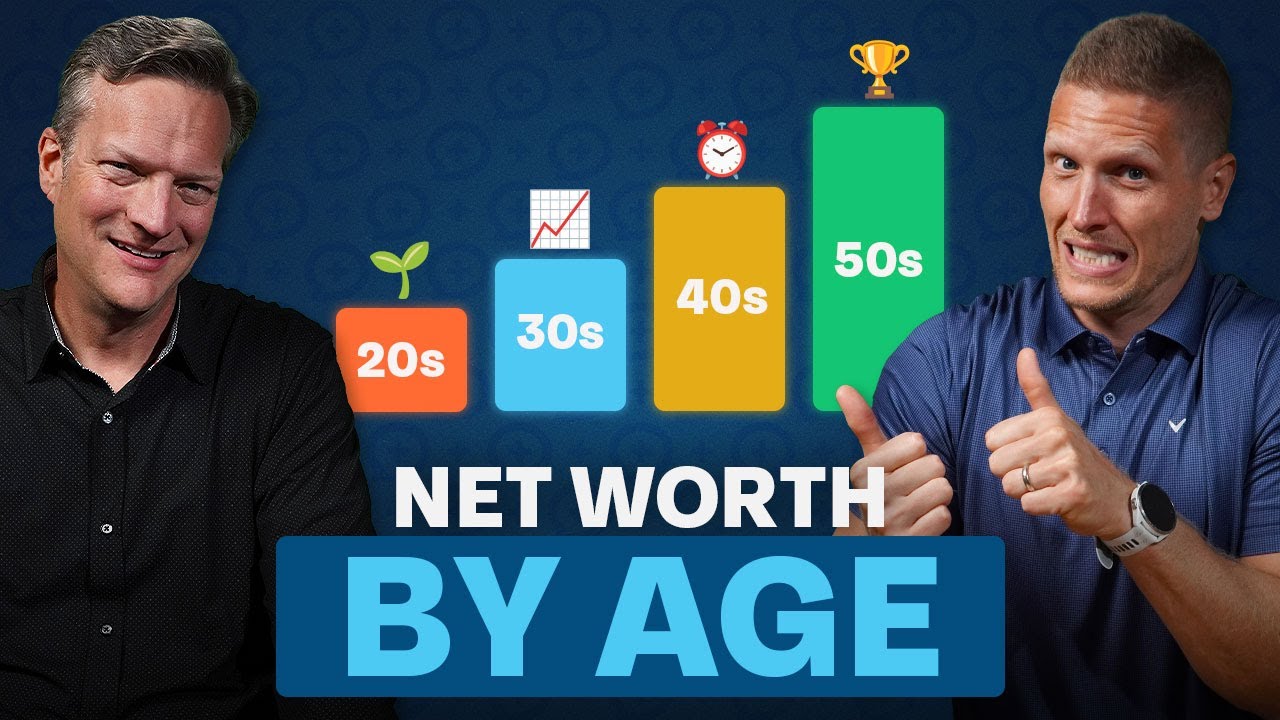
Brian: And do y’all know when we do our net worth by age, we always say you should have an aspirational goal of having your net worth be one times your income annual salary. But and we haven’t gotten into net worth yet. I mean, if you look at all the assets, I mean, y’all are—you will be three to four times—
Bo: It’s amazing. It really is. You can see that the Pennsylvania home goes from $350,000 to $400,000. The 529, we’re gonna stop contributing to it but it’s still gonna grow for little Timmy—it’s going to be at almost $7,000. Your cash, if we’re going to do the recasting scenario and we’re going to focus on that goal, you could grow that from $10,000 up to $43,000. And then we still have your emergency fund—that $54,000 stays intact and your mortgage just paying it on the normal pace is still going to go from $240,000 to $224,000. Your net worth in a five-year span just by redirecting how you’re pointing your dollars and optimizing your situation. You could go from $240,000 today to $616,000 five years from now and be primed and positioned to go to one income, to move back to Pennsylvania, to start—
Brian: And you don’t have to wait five years.
Bo: This is the old man.
Brian: My kids, my oldest— Everybody buckle up. But my oldest is, you know, a junior in college. I wish we’d had more and I wish we’d had them sooner because my wife and I were married close to six years before we had our first child. Money is good, making the planning for it. But y’all already kind of laid it out in your interview with us. It’s just a tool. It’s not the center of your life. As you guys think about this, how do you want the next five years to look?
Daniel: I think the biggest thing is I hear a lot about retirement and retirement planning and that’s always kind of a big thing in the financial world as it should be like for good reasons, but to kind of see these numbers laid out of looking at it and analyzing it for the short term is super helpful. It’s not something that we’ve done a ton. It’s not something I would have even known how to go about exactly, but it’s comforting to see that like this is possible and having some different strategies to do that with the house like recognizing that that payment is going to be one of the most critical things for us. But there are other ways to kind of figure that out rather than just how much money can we throw at it. So that’s I think that really helps and it seems like a simpler way to look at it.
Bo: And what I love is this is not still putting emphasis and power into the long term. You’ll notice your assets are still building towards retirement. Your retirement portfolio is still growing. It is one of those things though that as life happens, it is a journey and you are on a path and money is nothing more than a tool that allows us to accomplish the goals that we have. And if some of those goals are short-term or intermediate term, then we ought to use our money accordingly. And so in this season of life, if that’s the way that you guys need to prioritize, that’s totally okay. You’re not going to have a 25% savings rate going towards financial independence and building towards retirement, but you still have something going there. You’re still using the Financial Order of Operations. You’re still maxing your Roth, maxing your HSA, so that even though you’re not doing it necessarily by the book, you’re still moving towards that common goal, and you’re not sacrificing these years that are going to be so valuable in your long-term wealth building journey.
Brian: What about you? What do you think?
Lindsay: I think I just get a little bit deflated when I see the 529 amount and I’m just wondering kind of your thoughts about how we would go about getting that up to where it would need to be when our kids are old enough to go to college.
Bo: So we tend to overestimate what we can do in the short term and underestimate what we can do in the long term. In 18 years you can do a remarkable amount of saving. In 18 years you can do something crazy when it comes to saving for kids’ college. And you’ve actually lived this.
Brian: Yeah. I mean like I said my oldest is a junior in college. Soon as she was born I started setting up doing quarterly 529 contributions. And it wasn’t a ton and I was just trying to maximize the tax savings in the state of Georgia at the time because they actually gave you 6% off your taxes. And it’s paid all the way through her junior year. Now she got some scholarships just like your kids will. She got a scholarship that covered 60% of her tuition through achievement. So, but we’ve covered the rest of it. And then yes, for her senior year I’m going to have to come out of cash flow. But I think that’s okay, you know, because realize y’all are looking at life through the eyes of 25 year olds. When your kids are—this level of success, that tuition is going to be like you’re just paying it forward to children that you love. You’re going to have plenty of resources to make that and you’ll still feel well rewarded for starting that fund when they’re born. Not now. Look, you might already have the gap covered just because Timmy’s already got a fund set up before Timmy’s even on the planet yet. But I just tell you that’s one of those worries that I think is going to fix itself. You know, be deliberate and active, but also know that your children will probably qualify for some scholarships. You’re going to set up these automatic investment plans and the money will be there because that same discipline that’s built you guys up to a quarter of a million dollars at 25 is going to be the same discipline that’s going to have college waiting for them and any other financial goals that y’all desire to conquer.
Daniel: We definitely need the perspective. So, appreciate that.
Bo: So, before I give you the homework, what questions do you have for us? What else can we answer that might be valuable for you guys?
Daniel: This is a bit of a miscellaneous question about budgeting, but it ties in with as we’re setting that up for the future. We’ve had some tension about how to budget in terms of—not between the two of us, I mean, but just between two— I was like, “Oh, this is about to be good.” Between the idea of budgeting for what we see in a normal month, and that’s kind of how we have our budget set up right now. It’s for two paychecks, which is—we each get paid bi-weekly, so that’s normally what we see, but that actually leaves two paychecks a year out of the budget. So there’s this extra chunk of money and like this past year we used that to honestly most of it to put into our like end of the year HSA and 401(k)s or Roth IRAs to get them closer to the max. So but it’s just a question of should we be budgeting on the actual amount that we see like our annual income divided by 12 or what we see in a normal month just those two paychecks.
Bo: I think the safest way is you budget on the base. Like you budget on what you actually see. So, if you know you’re going to have x amount coming in this two weeks, you budget based on how much is going to flow out in that two weeks, right? Do it over a month because it’s a little bit easier to think about 12. But I would base it on that. And then what happens is as you have those additional paychecks that weren’t accounted for come in. That is where you can do some of the other miscellaneous stuff. Hey, I didn’t quite get the Roth maxed out. I’ll do that. Or hey, now instead of having a sinking fund that I built every month, I’ve got this one extra paycheck that’s going to be what we’re going to go on our trip with or that’s going to be how I’m going to fund this goal. Because if you can make life work on the base, when that additional income comes in, it’s just gravy. And you don’t have to have any guilt about using that for the things you actually want to use it for.
Brian: I look at your expenses as monthly things. And then of course you’ve got your one-offs like the property taxes, but you’re already putting that in a sinking fund. But then when you think about saving for your retirement, you know, you’re getting 26 pay periods, you think about that in the terms of the percentage okay and then what that turns out to be on an annual basis so you can do both—believe me I’ve seen your spreadsheets, you are multifaceted and talented—so you can look at your expenses more on the you know what do we need to do monthly or quarterly depending upon how these things hit, but then on the income meaning versus saving side of it it’s okay to think about it in those 26 pay periods and then plan accordingly as a percentage.
Bo: Okay. Is that how do you do—do you do everything on—we noticed you did everything on a spreadsheet. Any reason why you don’t use some sort of software or some sort of tracking app?
Daniel: Biggest thing is we don’t want to pay for anything. We’re frugal. I also enjoy doing it every month and then it’s something like we can talk about after I run through everything like how do we do this month, where should we adjust.
Bo: And do you find that you guys actually adjust? Like if you go over in a category, do you actually switch your behavior moving forward or you just say oh we went over and then you move on?
Lindsay: It’s a good question. More mentally noted I think.
Daniel: Yeah, we don’t do anything super concrete. More tracking than fully budgeting probably.
Brian: Yeah, that’s fair. Yeah. Well, it seems like you’re doing okay. I mean, I’m not—I’m not going to pick on you. I wouldn’t even encourage—I think down the road you guys could graduate to what we call money management plan. The cash management plan is when because I don’t like to budget anymore. I mean, once your income gets to a level and you can automatically set up where—I call it forced scarcity where all the money is going in the places it’s supposed to so that you know you’ve checked the box. Then what’s left over you can spend with reckless abandonment and not feel guilty about it. Seriously, because you’ve—that’s what the whole forced scarcity is—if you ever feel like you get a pay raise or something or you get a bonus, you can always allocate more towards the automatic bucket. But then you know what’s left is for expanding lifestyle or going on trips and making memories and doing all the cool stuff. So you don’t have regrets when you get to be older.
Daniel: As we’re thinking about how our money is invested in those retirement accounts, right now we have most of it in target retirement funds or like index funds. I’m wondering is that what you’d recommend? Is there a different way you’d allocate that and how would that change moving forward?
Brian: Yeah, I mean I noticed you’re in the Vanguard. I mean way out there and that’s probably—it’s done really well. So I mean I think in the beginning for sure because what we like about index target retirement funds and that’s the key thing—are they index meaning super low cost? Yours is in Vanguard and all you have to do is think about how much can I save and when do I need it because your savings rate is so much more powerful than really anything else if I got into the minutia of the asset allocation and they’re doing all that for you automatically. Now look, y’all are going to get there really quick probably about the time you’re 30. Sure. You guys are going to be getting close to that six to seven figure mark. Well then yeah asset allocation starts making a lot more sense. But since these are retirement accounts, you can change asset allocations without tax impact, without any problem whatsoever in those retirement accounts. And we’d rather you focus on the things that have the largest impact on your financial life. And that’s going to be budgeting and where your dollars are going and how much you’re saving and what buckets you’re saving to efficiently. It’s going to be way more valuable than trying to tweak the assets. The target retirement funds are going to be good enough to get you from where you are now to the next stage you ultimately want to be at.
Bo: Okay. All right. Here’s your homework. You ready?
Daniel and Lindsay: Yes.
Bo: All right. First thing I wrote down is we got to fix the FOO. You guys were kind of going along and then you kind of went scatter-shot. You know, we want you to be in straight FOO. So, what fixing the FOO is going to mean is going to be maxing out your Roth IRA. It’s going to be maxing out your HSA. It’s going to probably mean cutting off the 529 and it’s probably going to mean cutting off the prepaying on the mortgage and thinking about, okay, we’re building those dollars towards some other common goal. Another thing that we want you to do is we want you to call your mortgage company and ask them, “Hey, what options are available to us if we want to recast our payment? Is it something we can already do since we’ve made a large capital infusion or is it something we can do in the future if we want to make an additional capital infusion? And what would that look like? What are the costs?” The other thing I want you to do is we want you to talk about your timeline. All right, we got this plan. We know what five years could look like. When do we actually think we want to do that? When do we want to go to one income? When do we want to potentially move back to Pennsylvania? When do we want to start a family? What’s that look like? And we want you to look at that through the 3D glasses. What’s the dream plan? What’s the down to earth plan? And then what’s the doo-doo plan? And then plan accordingly. And then the last thing I have on here is get excited that you are and are going to be able to continue building your great big beautiful tomorrow. You guys are in thankfully an amazing spot and I think it’s only going to keep getting sweeter and sweeter and sweeter and sweeter. Y’all are doing awesome.
Daniel and Lindsay: Thank you.
Brian: This was a lot of fun because I saw so much potential. You’re already crushing it. I just want to make sure you’re taking in deep breaths. Enjoy each phase of your life, which it sounds like you are. So, but just don’t put so much pressure on yourself because a lot of this stuff is just going to build itself based upon your good discipline and your good decision-making.
Daniel: Awesome. Thank you.
Lindsay: Thank you, Bo.
Brian: If others wanted to find out how they could also come on Making a Millionaire, what should they do?
Bo: That’s right. If you would like to be on Making a Millionaire, you can go to moneyguy.com/apply. Or if you want to check out all of our free resources, you can go to moneyguy.com/resources. Guys, I’m your host Brian Preston. Mr. Bo Hansen, Money Guy team out.


Financial Order of Operations®: Maximize Your Army of Dollar Bills!
Here are the 9 steps you’ve been waiting for Building wealth is simple when you know what to do and…
View Resource
Home Buying Checklist
Before you make one of the biggest purchase of your life, make sure you're ready with our Home Buying Checklist.…
View Resource
Net Worth Template
It’s our favorite time of year: time to complete your annual net worth statement!
View Resource

How about more sense and more money?
Check for blindspots and shift into the financial fast-lane. Join a community of like minded Financial Mutants as we accelerate our wealth building process and have fun while doing it.


It's like finding some change in the couch cushions.
Watch or listen every week to learn and apply financial strategies to grow your wealth and live your best life.
Subscribe to our free weekly newsletter by entering your email address below.