
-
▼


-
▼


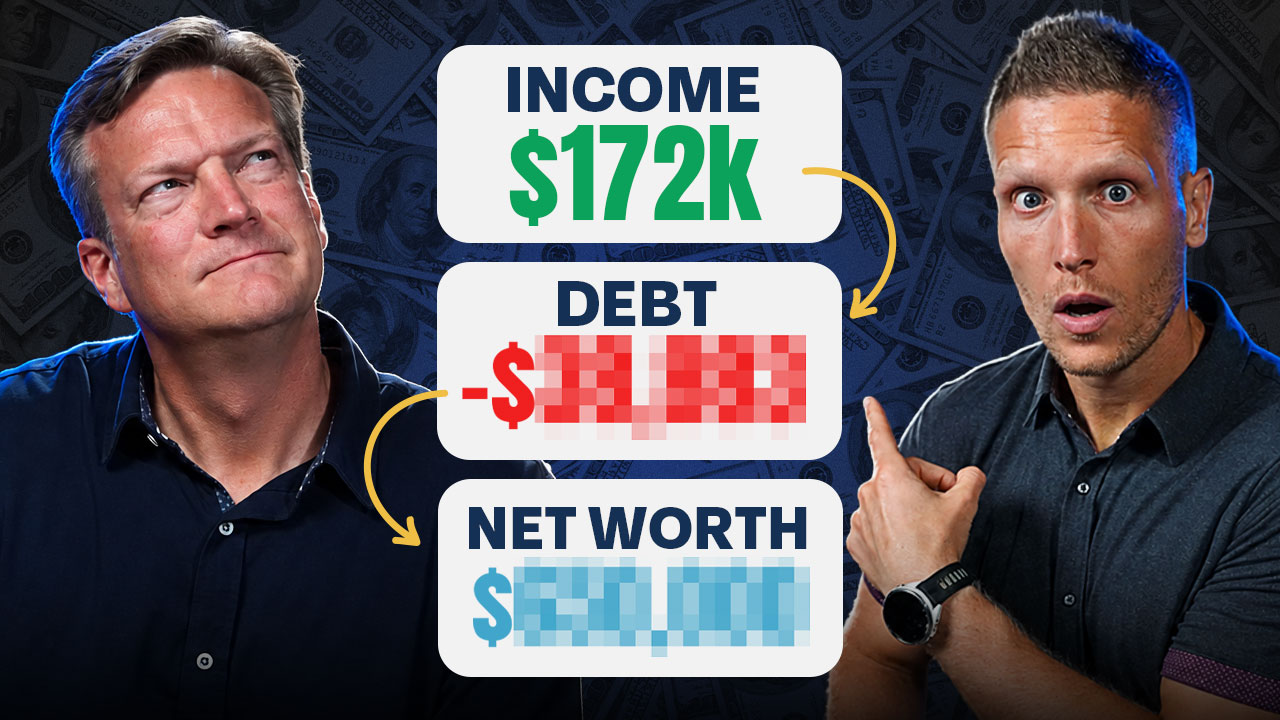
Can you give someone a financial plan in five minutes? We put it to the test! Our good friend JC Rodriguez hit the streets and asked complete strangers about their money goals, and we had not seen a single clip before we reacted. In this episode, we build quick, on-the-spot plans for five real people, from a 32-year-old with student loans, credit card debt, and a Bitcoin-heavy portfolio, to a 36-year-old earning a strong income who feels behind on retirement and a household racing to pay off their last credit card. Whether you are paying down debt, wondering if you are saving enough, or dreaming about real estate, their stories might sound a lot like yours.
You will also hear how we think about each situation and what to prioritize first. Check out the Financial Order of Operations to see where to put your next dollar, and the 3/5/25 home buying framework to see how first-time buyers can approach a purchase with a mutant mindset. Then grab the free How Much Should You Save? resource to find your own savings target. See how we would tackle each plan, and find out which one hits closest to home for you!
Enjoy the Show?
Where You Can Watch and Listen:
Subscribe on these platforms or wherever you listen to podcasts! Turn on notifications to keep up with our new content, including:
- Episodes of The Money Guy Show every Friday
- Episodes of Making a Millionaire every other Monday
- Mini-shows every Wednesday
- Ask Money Guy Livestreams every Tuesday
- Tons of other fun content!



Can We Help Strangers With Money in Five Minutes? (0:00)
Brian: Can you give someone a financial plan in five minutes? Guess what? We’re about to find out.
Bo: Brian, I am so excited because we’re about to do something that we have never done before. Complete strangers out on the street are opening up and revealing their money goals, and you and I are going to help them out.
Brian: So, I’m Brian, he’s Bo, and this is the Money Guy Show, where two financial advisers go beyond the basics to show you a better way to do money. And with that, let’s dive right in.
Bo: All right, Brian, before we jump in, quick PSA for you guys. If you’re not subscribed to the channel right now, make sure you do that. We are on a push to get to 1 million subscribers. So, we need you right now. If you’re not subscribed, subscribe. So, Brian, this is so exciting. We have our good friend JC Rodriguez. He went out on the streets to ask people about their financial goals, where they are, what questions they have. And we have not seen these clips. And what we’re going to try to do, based on the information that they give to us, is write some quick little five-minute financial plans for each one of these strangers on the stream.
Brian: Oh man, strap in. This ought to be good.
Mike: Student Loans, Credit Cards, and Bitcoin (1:10)
JC: What’s your name and age?
Mike: I am Mike. 32.
JC: All right, Mike. What’s your current career?
Mike: I work as a sales rep at a Bitcoin financial services company called Unchained based out of Austin, Texas.
JC: What is one financial goal you have in the next 5 years?
Mike: Let’s say, yeah, I’d say one, pay off all my debt, whether that be student loans or old credit cards, stuff like that.
JC: What type of debt do you have?
Mike: Mostly student loans for a degree that I don’t even use.
JC: What was the degree?
Mike: Building science. So, I went from building science to construction management. Turns out I didn’t really like that, to commercial real estate sales, and then fell down the Bitcoin rabbit hole. So, I work in sales at a Bitcoin company.
JC: Do you know what type of student loans you have? Federal, private?
Mike: Federal. Yeah.
JC: Okay. What is the interest rate on those loans if you know?
Mike: I think it’s relatively low, around 4%.
JC: And what’s the balance on the student loans?
Mike: It’s north of $70,000.
JC: What was your thought process when you got a student loan?
Mike: I always wanted to go to Auburn and wanted to make it happen and I was like, I’ll figure it out later.
JC: Do you have savings?
Mike: Bitcoin. So that’s all I’ve invested. Not financial advice, but I look at Bitcoin as, you know, it’s still an adopting asset. It’s only, I guess, north of 17 years old and you’re slowly seeing it become an adopted asset. It’s very volatile day-to-day but if you kind of look at where it’s going, I think it’s worth at least putting a little bit.
JC: So all your savings are in Bitcoin right now.
Mike: That’s correct. Yeah.
JC: Do you have any money set aside for emergencies?
Mike: Small, small amount. Yeah. Which I think is, you know, in the event you’re laid off or anything, important to have. And Bitcoin also is a very liquid asset. So, you know, you could buy or sell at any point in time.
JC: So, are you renting around here?
Mike: Yeah, I rent.
JC: Is that eating up a chunk of your income?
Mike: Yeah, I mean, it’s $1,800 or so. But for me, I don’t own a car. I’m remote, so I don’t have to work driving to an office.
JC: So, as far as payments, you have a student loan payment. You have no car payments. Your rent’s around $1,800. Do you have any other debt obligations?
Mike: I have some credit card debt that I’m attacking, probably $600 or so per month.
JC: And your income right now, is it irregular or is it consistent?
Mike: No, it’s consistent. Salary plus commission.
JC: Solid. Okay. So, you have the salary. What is an average paycheck for you looking like?
Mike: $2,600 every two weeks.
JC: You’ve got a shovel there to help pile on.
Mike: Sales director for three years. Hopefully be promoted to a sales director and then have an increase on that. And then, well, obviously still a lot of student debt but kind of attack that more and then just build towards overall savings and, you know, hopefully one day retiring soon.
JC: Yeah. Early. Are you making the minimum payments on the student loan?
Mike: A little bit more than that.
JC: More than that?
Mike: Yeah. A little bit more, I guess.
JC: How much is your student debt payment?
Mike: It’s $277 a month.
JC: Okay.
Mike: Probably making about $350 a month.
JC: How much do you invest into Bitcoin each month?
Mike: Well, it’s a small amount. It’s like $5 a day. It’s relatively small.
JC: Do you do any other investing right now?
Mike: No, just Bitcoin.
JC: All right. So, yeah, there’s a great resource. It’s called the Financial Order of Operations, made popular by the Money Guy Show, and they’re a couple of really smart financial advisers. And I’m going to turn it over to Bo and Brian. They’re going to give some real talk on how you can tackle the student loan debt.
Why Bitcoin Isn’t an Emergency Fund (4:20)
Bo: All right. So, Brian, this is interesting. I’m going to do a quick little summary here. This is Mike. He works for a Bitcoin company, has tons of student loan debt, has some credit card debt. He says that he has an emergency fund, but it’s really in Bitcoin. A bunch of stuff here that I think we’re like, nope, nope, nope. Let’s change. Let’s change. Let’s change. Let’s improve.
Brian: I wish we would have also heard if he had a 401(k) or something like that. And like I said, I don’t know how long he’s worked for this Bitcoin company. But I think we have to take this all the way back to step number one, because deductibles covered, you know, because where exactly is Mike in the Financial Order of Operations?
Bo: Bitcoin, it’s too volatile to be considered an emergency reserve. So that’s the first thing that I would take him back to, step one of the Financial Order of Operations. He said that Bitcoin is incredibly liquid. And when he says liquid, he means that, oh, I can buy and sell it. That’s what he means by liquid. But when it comes to cash, savings, emergency reserves, it doesn’t just need to be liquid, you need to be liquid without the risk of loss of principal. That’s why we like for it to be cash or cash equivalents. Your Bitcoin, your $100,000 of Bitcoin today, may look very different in terms of what that’s worth one week from now. If you have wild undulations, that’s not an emergency fund. So, the very first thing I think that I would have him think about is, I need to reframe the way that I view cash and the way I view Bitcoin. But even, Brian, I’m going to argue before it even gets to saving up that emergency fund, he’s got this credit card debt, and it was unclear. He said, “How much do you have?” And he said, “$600 a month.” I think what that means is he’s paying $600 a month on some credit card debt that’s sitting out there. I think outside of getting that deductible covered, we don’t know if he has an employer match, he’s got to knock out the credit card debt. Just racking that up at his age is not worth it.
Brian: Well, that’s why we don’t have enough information to know, because step one is just the highest insurance deductible. So, we’d need to know a bit more information on that. Step two, if we knew about his employer plan, then you’re spot on. High-interest debt, credit card debt, and that’s where we always say we’re perfectly fine with people using credit cards. Credit card use is a-okay, but credit card debt is no way. So, make sure you’re not running a balance on that. Now, I think the big thing, because Mike’s watching this, he’s going to be like, “Okay, that is Captain Obvious stuff that I need to pay off the credit card. I want to know about my student loans.” This is what’s going to be interesting for Mike to hear us talk about: student loans we would classify differently from the credit cards, because he said that this was a federal student loan that also has an interest rate of around 4%. Mike is 32 years of age. So I would consider this isn’t high-interest debt. This is actually very usable debt. Now, I want him to get this paid off, but there are some other goals like emergency reserves, Roth IRAs, and other things that need to be in order before we can start attacking that student loan debt.
Bo: Yeah, I think that he should not be doing the $5 a day in the Bitcoin. I don’t think he should be paying any extra on the student loans. I think he should have every bit of excess capital he has going to knock out that credit card debt. Once that credit card debt gets gone, then I think he needs to move to that emergency fund. For him, he says 32, single. I’m thinking he probably needs three months of living expenses in liquid cash available. He said his paychecks are $2,600 every two weeks. So let’s call that $5,000 a month. So maybe his living expenses, let’s say, are 50% of that. So maybe he should have an emergency fund somewhere around $7,500 to $10,000, somewhere in that ballpark of cash readily available. Then once he does that, he can get into the good stuff, because once he starts building and once he starts saving, for a 32-year-old, Brian, you would have to know what the wealth multiplier is.
Brian: I got it right here. The 32-year-old wealth multiplier is $18. So, every dollar that Mike deploys, puts to work for himself, whether it be in a 401(k) or his Roth IRA, if he invests it, and I’m going to say in something besides Bitcoin, like a low-cost index fund, S&P 500, it has the ability to turn into $18 by the time he retires. And that wealth multiplier is only going to continue to decrease the longer and longer he waits to get his dollars working.
Bo: Yeah, I’d close it out with Mike as understanding, look, nothing wrong with Bitcoin, but that’s more of a step eight of the Financial Order of Operations. Let’s get your financial foundation. And also, if your employer is exclusively doing crypto and Bitcoin, you already have career risk tied into this cryptocurrency marketplace. Why not build some independence outside of that market by using traditional investments? I would encourage you, Mike, if this is all brand new information to you, go to moneyguy.com/foo. That’s our financial order of operations ultimate guide. It will tell you everything you need to know to get started on your journey. Thanks so much for letting us be a part of your financial journey.
Hayden: Feeling Behind on Retirement (9:10)
JC: What is your name and age?
Hayden: My name is Hayden. I am 36.
JC: Hayden, what’s one money goal that you have for yourself?
Hayden: I think it’s building up the investment piece of it.
JC: When it comes to investing, are you trying to retire by a certain age or become work optional?
Hayden: Yes, I wanted to become more optional. Not kind of fighting the uphill battle.
JC: Do you feel a little behind with investing for retirement?
Hayden: I’ll be the first one to say yes. You know, when you’re 20, you’re starting to work, you’re starting to grind, you’re having fun. You know, traveling maybe, and then all of a sudden your 30s hit and it’s like, okay, shoot. I need to start kind of prioritizing those kinds of things.
JC: How much are you investing per year?
Hayden: I’m down like 20, 30.
JC: Current value of your retirement accounts at the moment?
Hayden: Maybe like 80 to 100.
JC: What do you do for work currently?
Hayden: I work in IT sales. Keeps me very busy. I also started an AI investing company, like a consulting firm. So again, that’s a part of growing the investment piece. You know, side cash, extra money coming in, not going out.
JC: No, that’s great. That’s, I mean, that’s a genius fintech idea right now. Those are popping off for you. What investing accounts do you have open? Like a Roth IRA?
Hayden: Yeah, currently dumping in a Roth IRA pretty hard. I do have a little bit of stock. It’s not managed by anybody, just in a brokerage account. Yeah, just, you know, 401(k) obviously.
JC: Are you maxing out your Roth IRA right now?
Hayden: Trying to. I haven’t for the last couple of years. So I think, again, one of those priorities is if you don’t have $7,500 throughout the year and you make under a certain threshold, it’s a very good option. Obviously, if you make more money, that becomes unavailable. So, I think it’s really important to just kind of know where you’re at, what you can, you know, what’s offered to you.
JC: And from your best estimates, what percentage of your income or paycheck goes towards your investing?
Hayden: I would say at least 6 to 10%.
JC: Is anything automated when it comes to investments or are you manually moving money?
Hayden: A little bit of both. I think it’s more automated, but there is a fun aspect of managing it yourself.
JC: Do you have any other debt obligations that you have to take care of before you can go all in with investing?
Hayden: I mean, minus a rent payment every month, I don’t really consider that a debt expense. I was fortunate enough not to have any college debt coming out of school. So I kind of took the untraditional route. So, I didn’t come out of college with just an immense amount of debt.
JC: No student loans?
Hayden: No student loans.
JC: You got a car payment?
Hayden: No.
JC: Heck yeah. All right. So, you’re debt free. You have some savings?
Hayden: I do.
JC: You’re on top of it, bro. And then last thing, we have financial planners going to watch this and give you some free game about how you can retire early, become more optional. What question would you ask a certified financial planner if they were watching right now?
Hayden: Oh man, that’s a really loaded question. I would say the biggest question is, at what age is it almost too late? I like to work backwards. So I know that’s kind of a weird question, but at what age do you really start to feel like, whether it’s at 30, is that 40? Is there a specific amount that you need to have, let’s say, come age 45? What’s it look like at 50? What’s it look like at 60? Those are the numbers that I kind of like to work backwards from. Yeah, that’s probably the biggest question that I have.
A Strong Income, But Is He Saving Enough? (12:15)
Brian: Man, this one’s going to be good.
Bo: I want to lay down some prerequisites here, Brian, because he gave some conflicting information, so I want to make sure that we’re responding and answering in the same place. So, he’s a 36-year-old, no debt. We asked him, “Hey, how much are you saving and investing a year?” He said 20 to 30. So, generally when people give you a range of how much they’re saving, it’s actually the lower number most often. So, let’s say it’s $20,000. And then he said, “Well, what percentage of your income do you think you’re saving?” He said, “I think I’m saving probably somewhere from 6 to 10%.” So, let’s say he’s saving 8% currently, and 8% represents $20,000 of annual savings. That puts his income at $250,000, which checks, I think, because he makes more money than he could to be able to do direct Roth contributions, since he made a reference that if you make too much money, you can’t do a Roth.
Brian: I picked up on the exact same thing. I was like, “This guy makes some decent money.”
Bo: So, let’s assume he’s a 36-year-old with $250,000 income who currently has $80,000 to $90,000 invested. Let’s start there. What would you begin telling him?
Brian: Oh, Hayden, man, I need you to get motivated because I want to show you some net worth targets. I mean, we tell you, you’ve already passed this first one. We always want people to have one times their gross income by the time they’re 30. By the time you reach 40, you’re not quite there. We want you to have three times your income. So, now look, use this to motivate you, because I have another thing I’m about to share with you.
Bo: I mean, that puts him way behind. He should be at $750,000 and he’s, with three to four years to get to $750,000, sitting at somewhere between $80,000 and $100,000.
Brian: So, way behind with a huge shovel. And that’s why, look, we did a show recently that just went off and we called it the wealth window: between ages 32 to 48, you cannot screw this up. I get it. Life starts getting busy because for a lot of people, we call this the messy middle. Hayden is right there. I mean, he’s closer to the beginning of this window than he is to the end of it, because he was asking, “When is it too late?” Hayden, it’s not too late for you, but you’ve got to get really serious. In the show I shared, you’ve got to get to your first $100,000 like your life depends upon it, and I would tell you, you’ve got to get to your first half a million, because if you’re making this much money and you only have less than $100,000 to show for it, that wealth window is going to close on you. And the problem is you’re not taking an active role in your life. Make something happen now.
Bo: Yeah. Your last question is, at what age is it too late? I’m going to argue that’s not the right question to be asking, because you are not at the age where it’s too late to make up time. But every year that you wait, it becomes more and more difficult. So, at what age does the pain of the decisions I have to make become so great that I would be unwilling to make those? Because that’s really where you are. A $250,000 income is huge. Your goal should be, I want to save 25% of my gross income every single year for the future. So 25% savings on a $250,000 income is going to be, what’s that? $60,000 a year. Did I do good math on that? Is that right? $60,000 a year ought to be what you’re saving at least to begin to get yourself back on track. Now then the question goes, okay, well, where do I save that? That’s why we have the Financial Order of Operations. Brian, will you save that thing for me?
Brian: So obviously, if you have, and it sounds like you said you have a 401(k), we want you to get your employer match. You don’t have any debt. We’re assuming you have an emergency fund in place.
Bo: Even if you can’t do the Roth directly, we want you to do a backdoor Roth. Once you’ve done a backdoor Roth, assuming your account structure fits, then we want you to go back to your 401(k). Begin maxing that out. Now, remember, your target savings goal is $60,000. So, you’ve got $7,500 into a Roth, you’ve got $24,500 going into your 401(k). You can even now still go to step seven and begin building an after-tax brokerage account, buying low-cost index funds. If you can get yourself on that 25% savings rate, you’re going to start putting yourself on financial footing to actually have a bright financial future.
Brian: Well, look, I’m going to put Hayden on notice. I didn’t see a ring on his finger. I think he’s enjoyed life because he was talking about traveling. He’s got a smooth voice. He’s got a lot of things going for him. But I’m worried for Hayden. If you don’t get serious, the easy button’s about to go away. That’s why we talk about this wealth window so much. So, Hayden, here’s the challenge for you. I want you to go to moneyguy.com/resources and take advantage of our brand new free calculator called Know Your Number. This is going to tell you ahead of the curve, behind the curve, or right where you’re supposed to be. You’re behind the curve. Use this to actually find out how far behind and what you’ve got to do to catch up so you can actually use all this good stuff. You’ve got a lot of great things going on in your life. Let’s actually turn it into a positive for you so you don’t have regrets when you get into your 40s, because you alluded to it in the beginning. You’re like, man, it just goes so fast. You’re in your 20s having a good time traveling and then one day you wake up and you’re my age. When am I really behind? You ought to feel like that timer is ticking and the buzzer is going to go off any time now. Make something happen today.
When Financial Mistakes Get More Expensive (17:13)
Brian: Bo, when you’re young and starting out, a bad money decision might cost you a hundred bucks, which is not really a huge deal, and you just course correct and move on.
Bo: That’s right. But as your net worth grows, that $100 mistake can turn into a $100,000 mistake. It could be a poorly timed Roth conversion or a gap in your estate plan or even something as simple as insurance you didn’t know you needed. When the stakes get high, that’s usually when people want a second set of eyes. And that’s where we can help.
Brian: That’s right. Here at Abound Wealth, we are fee-only fiduciary advisers, legally required to work in your best interest. We can help you stress test those big decisions before you make mistakes, so the $100,000 mistake never even happens in the first place. If the gravity of your decisions is bigger than you feel comfortable navigating alone, check us out at aboundwealth.com or click the link below. We would love to connect and be a part of your financial journey.
Shannon and Dave: Buying Their First Rental Property (18:13)
JC: What are your names?
Shannon and Dave: Shannon and Dave.
JC: How old are you?
Shannon and Dave: 39. 39.
JC: 39. 39. Okay. At this point, what is one financial goal you want to achieve?
Shannon and Dave: We want to build properties, rent them out, and just make money so we can send our kids to college and them not have to worry about, you know, loans and stuff like that like we did.
JC: How many kids do you have?
Shannon and Dave: We have two.
JC: Two. Oh, what ages?
Shannon and Dave: Yeah, four. Eight and four.
JC: Okay. Okay. So, you’re trying to go the real estate investor route. What are some things that you need to do to prepare for that?
Shannon and Dave: Work. Work. Save. Work.
JC: Do you have any debts to pay off?
Shannon and Dave: No, debt free for the most part. Yeah.
JC: Okay. Heck yeah.
Shannon and Dave: Besides our mortgage. Besides mortgage. No consumer debt. Yeah. No consumer debt. No credit cards and no student loans.
JC: Love it. And do you have an emergency fund?
Shannon and Dave: Yes. Yes.
JC: And you have your own primary residence?
Shannon and Dave: Yes.
JC: And now you’re just trying to diversify and get into your own real estate.
Shannon and Dave: We have a motor home that we travel around in and then when we’re in different cities, we’re like, well, we could buy a house here, you know, rent it out. So that’s our next step, hopefully next year, is to get our first rental property.
JC: Sweet. What are your careers in?
Shannon and Dave: We both work in healthcare.
JC: Both in healthcare?
Shannon and Dave: Yeah. Nurses. Now I’m a surgical tech and I’m a nurse in nest.
JC: Oh, heck yeah. That’s a lot of school.
Shannon and Dave: And that’s so little school but such a good return on that.
JC: Oh man. At this point, what are you doing to save up for the home? Like where are you putting the money to save up for this next property?
Shannon and Dave: Right now just in the savings account. High yield savings account.
JC: Are you currently investing for retirement?
Shannon and Dave: I mean, 401(k)s. Yeah. Just through the job.
JC: Are you getting the match?
Shannon and Dave: Oh god, we’re maxed. Yeah, we maxed out and our company’s maxed out. They give us half of what we put in.
JC: Okay, that’s nice. Do you have a Roth IRA?
Shannon and Dave: I do not.
JC: Well, that’s another vehicle to invest for retirement as well, too. But it sounds like you do have a big goal of trying to, you know, get that next property. Again, it’s real estate investing. Have you had experience with that before, being a landlord?
Shannon and Dave: No. Still learning.
JC: Hey, there’s a lot of good podcasts out there right now. Are there any financial pain points you have with kids being so little right now?
Shannon and Dave: We’re trying to take care of them first.
Are They Ready to Invest in Real Estate? (20:26)
Bo: So Shannon and Dave, it sounds like they’ve got a lot of really good stuff going on. First of all, they’re messy middle, 39, two kids. They said, “Hey, we want to be able to,” and these are my words, not theirs, create some sort of financial system sustainability so that we can provide for our kids. They started with it. We don’t want our kids to have student loans like we did. And they ended with it. Hey, we take care of our kids first. And there’s nothing inherently wrong with that. That’s noble. We want to make sure you’re doing things at the right time in the right order. Because did you, Brian, perceive it when they said, “Oh yeah, we’re maxing those out”? You think they’re both doing $24,500 into their 401(k)s and then they’re also getting the 50% matches on top of that? Is that what you think about maxing it out?
Brian: I mean, I don’t think so. I think that they’re probably getting the employer match. You know, if the employer match is like six to 7%. Now maybe these employers are even more generous, because we have seen those cases where people can put in 12, 13, 14% and the employer match fills up the other side of the bucket. But either way, if their income is over $200,000, which I’m starting to think it is based upon both of their career fields, you don’t need to count the employer match, because I think they get a false sense of where they are from a savings rate. I would really encourage them to try to get to 20 to 25% of their gross income into the Roth IRAs, into the 401(k)s, and building up those after-tax investment accounts, especially since they want to get into real estate. Real estate we love, we know a good bit about real estate, we’re real estate investors as well, but you’ve got to have a good financial base underneath you before you jump into real estate. Real estate is step number eight of the Financial Order of Operations and I just don’t want Shannon and Dave to run afoul of that, because that’s when big pockets take from little pockets whenever we hit those downturns in the real estate market.
Bo: And so let’s assume again, we don’t know where your portfolio is. We don’t know exactly what your savings are, but let’s assume that you have the foundation established and now you really are in step seven and you’re wanting to move into this area where you’re being a real estate investor. There are some things that you ought to know about real estate investing, because I think so often we see the brochure. Oh, it’s this beautiful thing where I’m going to go buy this property. I’m going to put someone in it. They’re going to pay the mortgage. I’m going to get all the appreciation and I’m going to get income from it. And oftentimes that’s not exactly the way that it works out with real estate. So, we thought it’d be helpful to kind of walk Shannon and Dave through just a few dos and don’ts when it comes to real estate investing.
Rental Property Investing: Dos and Don’ts (22:56)
Bo: So, the very first thing to do when you buy real estate: you want to make sure you have some skin in the game. There’s nothing wrong with using leverage. There’s nothing wrong with having some sort of mortgage on that property, but I would be careful using too much leverage. I want to make sure that we are reasonable in terms of how much equity we have in these properties in case the worst case scenario plays out.
Brian: And then analyze the cash flow. I mean, look, we’re in a marketplace right now where interest rates are high, but also property values are high. So, if you’re not looking at that cash flow to see how this is going to flow, you could be setting yourself up for a bomb, because if you have to use other people’s money to make it and you don’t have big cash reserves or other things, the leverage might eat you alive.
Bo: Yeah, that’s the exact next point. You know, JC asked, “Hey, do you have a fully funded emergency fund?” They said, “Yes, we do.” I would argue if you’re going to be a real estate investor, you need your emergency fund plus some more, because you want to make sure that you have reserves on the real estate so that you can pay for repairs and pay for maintenance and cover vacancies and those sorts of things, because there are all kinds of things that come with real estate that are not on the brochure. The toilet goes out, that’s on you. The HVAC goes out, that’s on you. You don’t put tenants in there for two or three months, that is on you. So, you want to make sure that you’re prepared for that. So, those are the things that you do. Now, let’s talk about on the real estate side, Brian, some of the things that you don’t do.
Brian: Yeah. And we’ve alluded to a few of these, like don’t buy before you have a solid foundation. I want to make sure your pockets are deep enough to weather not having a tenant in there for a few months, or having to make a much bigger repair than you anticipated, or having to put a roof on the house. All these things need to be taken on. Don’t just count on things working out and have too much debt. You know, nothing wrong with starting with just one house, right? It’s amazing how many people try to stack these things to get as big as possible and sometimes they take on too much debt too quick. And then I have to share this, and Bo, we have so many stories: real estate, to do it right, is not a passive activity. And a lot of what I felt like Shannon was talking about is that we want to set some of these things up so we can live our best life, you know, make sure our kids don’t have student loan debts like we did. Still go into it knowing this is an active investment that you’re going to be hands-on with if you want to do it right.
Bo: And then one question I would ask you, again, I’d love to see your current net worth statement, your current balance sheet, because you said, “Hey, we already have our primary residence. We already have a mortgage on that.” So I’d argue you already have real estate exposure when we think about your total enterprise portfolio. If you go buy a rental property or multiple rental properties, how much of your total wealth is going to be wrapped up in real estate? And then are those real estate investments similar? Meaning, are they in the same geographies? Are they all single family homes? Are they structured in such a way that if something went bad either in the market, in the area, or in your financial circumstance, it could cause the entire house to come crumbling down? If that’s the case, I would argue you’re perhaps too concentrated and you should reconsider that or at least wait until you have a stronger financial foundation built around you. By the way, if you’re getting into real estate, now look, we were primarily talking about primary residences, but I think a lot of the same things apply: real estate is location, and a lot of things about understanding what you’re getting into. We did a great show on the uncomfortable truth about real estate investing. I would encourage Shannon and Dave to check this out, because there are just a lot of things that you can fall into as a brand new real estate investor and we want to protect you from that, to learn from our experience, learn from the stories we share, so you can come out on the other side that much better.
Nicole: Saving to Buy Her First Home (26:22)
JC: What is your name?
Nicole: My name is Nicole.
JC: What’s one major money goal you have?
Nicole: To buy a house. It’s a little hard right now, obviously, but yeah.
JC: How are you saving for that goal currently?
Nicole: Currently, I was just doing a savings account, but I paid off most of my debt, so it’s just mostly savings account.
JC: So, was that a priority for you to pay off debt first before buying a home?
Nicole: And then I bought a car used, in cash. So, that was another thing, too.
JC: Oh, you bought a car in cash?
Nicole: Yeah.
JC: Heck yeah. Okay. Why was paying off debt a priority for you before buying a house?
Nicole: I wanted to obviously get my credit score higher. I thought it was going to get me easily approved.
JC: So, what down payment do you want to put on this home?
Nicole: So, because of the current economy, I think between $30,000 and $40,000, but I know there’s assistance out there for certain programs to help you.
JC: Is this going to be a first-time home?
Nicole: Yes.
JC: Okay. For sure. There’s going to be definitely benefits for you. And what is your home budget?
Nicole: Because I’m a single woman, I was thinking, ideally I would like to go $275,000 but no more than $400,000.
JC: Is there an area you’re looking at?
Nicole: Montgomery County, Pennsylvania.
JC: Pennsylvania. Okay. Well, look that up to see how realistic that is, too, and like what you can afford out there. What do you do for work?
Nicole: I work for a hospital in the insurance field.
JC: Okay. Very nice.
Nicole: And luckily they helped pay my student loans, too.
JC: Yeah. Reap all the benefits that you can. And at the moment, how much of your paycheck goes towards saving for the home?
Nicole: Probably only about 20%.
JC: 20% savings rate. That’s good.
Nicole: Is it?
JC: Yeah. Most people save nothing. Most people’s 20% is going towards their car payment.
Nicole: Also, I do have to add, I do have a part-time job, too.
JC: Okay. So, you’re hustling. What’s the part-time job?
Nicole: I’m at a retail pharmacy.
JC: Yeah. Okay. So, you’re doing all you can to bump up your income as much as possible. Now, it’s about where to put that money to optimize for this home. What is your timeline for buying a house?
Nicole: Hopefully within the next two years.
JC: And how much do you have saved currently?
Nicole: Only $20,000.
JC: Say only, like a little.
Nicole: I know. Everything goes fast in the market though when buying a house. So I want to see if I could, like, not get overbid and stuff like that.
JC: Well, yeah. I don’t want to speculate on how the market’s going to be the next two years. But you’re doing what you can do in your control and at the current moment. Is there anything else that would hold you back from reaching your home purchase goal?
Nicole: No. Well, besides me DoorDashing, eating out all the time. If I could just calm that down, and traveling, which we’re doing now. That’s it. That’s it.
JC: Do you have anything invested for retirement?
Nicole: I don’t, besides a 401(k).
JC: Okay. So, you have the 401(k) and that’s automatic.
Nicole: Yeah. And I do match.
JC: You’re getting the company match?
Nicole: Yeah.
JC: And do you invest more outside of that? How much do you currently have invested for retirement?
Nicole: 401(k) is probably around $50,000.
JC: Okay.
Do First-Time Buyers Need 20% Down? (29:00)
Brian: Here’s the cool thing about Nicole, if she will listen to us. She doesn’t have to change how much she’s saving. It’s more of how she allocates. Because I think about the house I grew up in. My parents were great at being disciplined and saving money. They just didn’t allocate the resource well, so it never turned into wealth. Nicole has everything, every ingredient she needs to be successful. She just needs somebody to tell her how to spread that money out.
Bo: A lot of folks, because interest rates are so high, because home prices have increased so much, they see this idea of, I’ve got to save 20% down. I’ve got to do, I’ve got to do, and they begin thinking, “Oh, I can never afford this house.” But what I think is really interesting, Nicole, is that for first-time home buyers, we actually want to give you a little bit of a reprieve. We believe that when you buy your first home, you should follow the 3/5/25 rule. But what that means is, rather than having to put down a 20% down payment, we think you could put down as little as 3 to 5%, so long as you believe that you’re going to be in that house for at least 5 years and your total housing payment does not exceed 25% of your monthly gross income. So, if you’ve already got $20,000 saved and you say that you’re looking for a house between $275,000 and $400,000, there’s a good chance that you may actually already have enough for your down payment, depending on the price of the house that you actually find.
Brian: Yeah. And that’s getting into what I was kind of alluding to, that Nicole probably can go ahead and start taking action on this dream. But now that 20% that she’s saving every month can fit quite nicely into the Financial Order of Operations. Look, I’m not even going to pick on her for jumping immediately to pay off the student loans or to pay off debt, because you can tell she’s just very disciplined. We’re not looking backwards anymore. We’re looking forward and I think she has the potential, after she tops off buying the house and the emergency reserves, to get into the exciting stuff of loading up on that Roth IRA and maxing out that employer 401(k). Nicole is going to be a success story. She just needs to know how to allocate this money that much better.
Bo: Yeah, Nicole, we actually have a great episode that we did titled “Is It Too Late?” or “How Should I Build Wealth If I Already Feel Like I’m Behind?” What’s great is at 42, you’re still young. You still have a lot of working years. You still have a lot of power in your army of dollar bills. But just like Brian said, you have to begin allocating it correctly. Am I actually putting my dollars in the place where they can be the most impactful and most valuable for me? I think you can save for a house and be on the home ownership side of things and also build towards financial independence without having to change a whole lot of your behavior.
Brian: And if you don’t know how to work one of these nerdy financial calculators, don’t worry. We’ve got you covered. If you just go to moneyguy.com/resources, we actually have a home buying calculator for you. Nicole, you can go in, put your personal numbers in, and make that house happen.
Jay: Paying Off Credit Cards and Hoping to Retire Early (31:57)
JC: What’s your name and age?
Jay: Jay and 38.
JC: What’s one thing you’re trying to do financially?
Jay: Man, right now we are in the middle of getting out of debt.
JC: What is your debt made of right now?
Jay: Mainly credit cards, like most people.
JC: How many credit cards are you trying to pay off?
Jay: Oh, really? It’s just one.
JC: One left.
Jay: One left. Yeah.
JC: Oh, congrats. Okay, so you’ve been at this for…
Jay: We’ve been at it. We’ve been at it.
JC: Yeah. At its highest point, what was that credit card debt balance?
Jay: Probably around like $30,000.
JC: And what’s it at now?
Jay: At about $15,000.
JC: What’s this last big credit card?
Jay: So, it’s Amex.
JC: It’s hard to reap the benefits when you still have this huge balance building up, right?
Jay: Yeah. Yeah. You know what though? We’re trying to get away from it. Like, we just want to hold it just for, like, you know, you get the lounge. We do like the lounge when we travel. Other than that, we don’t really try to use it.
JC: How much are you putting towards your credit card debt each month?
Jay: Since we’re attacking it, about four grand. We’re trying to get rid of it ASAP. So, we’re going hardcore.
JC: What do you do for work?
Jay: I’m a dog trainer. Self-employed.
JC: How much of your income then is going towards your debt payment? Like a percentage?
Jay: So, we’re a two income household. So, right now about 40 to 50% of our income is going towards debt.
JC: Yeah. Are you investing currently?
Jay: Through my wife’s job, she is. Currently, no. We’re embracing that step two fully.
JC: Just for the young people watching, what investing accounts do you have opened up?
Jay: The IRA through withdrawal swap. And then the Fidelity is a 401(k) through a job.
JC: So, you paused investing right now?
Should You Pause Investing to Pay Off Debt? (33:21)
Jay: Yeah, paused investing right now to pay off debt.
JC: Do you have a goal age for when you want to retire?
Jay: I’d like around 50 or so.
JC: 50 or so.
Jay: Yeah. I would love around 50, not have to, but I enjoy work. I love what I do.
Bo: So, there is no doubt here that they have discipline. Jay, it sounds like you and your spouse are committed to changing your financial circumstance. Kudos to them.
Brian: Yeah. Now, look, here’s the cool thing. Just doing basic math here, if they’re saving four grand a month and they have $15,000 of credit card debt, this thing will be extinguished in the next four months. But I do have a quick pickup for them. Look, baby steps does get you out of debt, but I’m trying to think beyond these four months that they’re going to be in debt. And a lot of people will be like, “It’s only four months. What does it matter?” No, I’m telling you, free money from your employer. Your 401(k) is likely a 50 to 100% guaranteed rate of return. Make sure that your wife is doing the minimum on the match, because it’s just not going to be that much money to disrupt your savings or debt payment plan. And I just want to make sure you do that pickup to start building that wealth. But let’s extinguish the debt and then let’s graduate beyond the baby steps, because there is a better way to do money, and consider doing the Financial Order of Operations.
Bo: Now I think at 38 years old, you guys are still young. You still have a lot of opportunity but you do have to take it seriously. And so what I would love to see is, in these few months when you get this debt paid off, rather than deploying that $4,000 a month to lifestyle and to other stuff, if you could just shift it and move it directly into saving and investing, funding those Roth IRAs, funding that 401(k), putting money into your after-tax brokerage account, you can begin building up your army of dollar bills. Retiring at age 50 or being work optional at age 50, it’s going to be a difficult charge. But if you can shift that four grand a month and start doing that as soon as that debt is paid off, you’re going to give yourself the highest likelihood, highest probability of actually being able to do well.
Brian: And that’s the key part, because I mean, doing it the baby steps method, he’s going to need more than 15%. Our savings rate is 25%, and it’s of gross income, not net. I just tell you that because you’re already doing 50% towards paying off this debt. So, it’s already going to feel like an automatic pay raise once this debt is extinguished. I would just love you to keep it going. And then I would also encourage you to go to our website, moneyguy.com/resources. We will have how much you should save based upon when you want to retire, because if you think you’re coming out of the workforce at 50, it might even require a savings rate beyond 25%. And look, if you love the baby steps, you’re going to love the Financial Order of Operations. Go check out a recent video we did, the wealth-building plan that could change your life, and I think that you will be amazed.
Brian: Jay, the last two cases definitely had all the components of behavior, like discipline and so forth. It’s just a matter of how you’re allocating these resources. And I think you can see, from just doing this type of content, for a lot of people it’s the basics. And that’s why we love on you and we give everybody, go to moneyguy.com/resources. Take advantage of all the free stuff. You do the free stuff, right? You start building wealth. Guess what happens 10, 15, 20 years in the future. Your simple life that you just got all this free information for all of a sudden is going to start feeling really complicated. Especially as you’re getting closer and closer to crossing seven figures, that’s when we’re going to leave the porch light on for you. We work with clients all across the country. We love giving away free advice to our listeners so you can become the best version of yourself, and we just hope you’ll remember who planted those seeds of knowledge once they’re starting to bear fruit. That was an absolute blast. Thank you. Thank you, JC, for spreading the Financial Order of Operations. It’s so cool being content creators that are paying it forward. I’m your host Brian, joined by Mr. Bo. Money Guy Team, out!
Free Resources


Free Resources
Financial Order of Operations®: Maximize Your Army of Dollar Bills!
Here are the 9 steps you’ve been waiting for Building wealth is simple when you know what to do and the order in which to...

Free Resources
Wealth Multiplier By Age
If you want to set yourself up for future success, find out how much you need to save every month to become a millionaire.

Free Resources
Car Buying Checklist
Here’s how you can buy a dependable car that won’t break the bank. Our free checklist walks you through the 20/3/8 rule and strategies to...
Articles


Articles
How To Win With Money in Your 20s (and Set Yourself Up for Life)
The first decade of adulthood is one of the most important periods of your life. The course your life takes when you are younger can...

Articles
How To Get Affordable Health Insurance in 2026
Health insurance premiums may make up a significant portion of your budget. How can you find more affordable health insurance? Is it ever worth going...

Articles
6 Financial Changes To Make in 2026
There is no need to wait until an arbitrary date on a calendar to make positive changes in your financial life, but if you are...
Financial FAQs
Courses & Tools

How about more sense and more money?
Check for blindspots and shift into the financial fast-lane. Join a community of like minded Financial Mutants as we accelerate our wealth building process and have fun while doing it.
Free Resources
Financial Order of Operations®: Maximize Your Army of Dollar Bills!
Here are the 9 steps you’ve been waiting for Building wealth is simple when you know what to do and the order in which to...
Free Resources
Wealth Multiplier By Age
If you want to set yourself up for future success, find out how much you need to save every month to become a millionaire.
Free Resources
Car Buying Checklist
Here’s how you can buy a dependable car that won’t break the bank. Our free checklist walks you through the 20/3/8 rule and strategies to...
Recent Episodes

It's like finding some change in the couch cushions.
Watch or listen every week to learn and apply financial strategies to grow your wealth and live your best life.

Episodes
Are You Still Middle Class? (New Fed Data Revealed)
How do your income and retirement savings compare to other Americans? In this chaotic livestream, we unpack the Fed's consumer finance data, share middle-class benchmarks,...

Episodes
Financial Advisors React to Outrageous Money Clips
From a financed cheeseburger combo to a $40,000 tax surprise, these financial advisors react to viral money clips and share the rules and tools that...
Episodes
We Asked 20,000 Americans How They Manage Money. Here’s What They Said.
How do your numbers compare? We're ready to reveal our 2026 Financial Mutant Survey results from 20,000+ viewers on net worth, household income, savings rates,...