
Change your life by
managing your money better.
Subscribe to our free weekly newsletter by entering your email address below.
Subscribe to our free weekly newsletter by entering your email address below.




Nathan and Crissi’s story shows how you can honor a legacy while building your own wealth. With separate finances, a new business launch, and twin newborns, this couple in their late 30s navigates an unexpected inheritance while creating their own financial independence plan.
From Nathan’s impressive personal savings rate to Crissi’s business projections, they face a critical question: how do you merge financial lives without losing what makes your system work? We reveal an unprecedented dual-system approach with the Financial Order of Operations that respects their separate financial lives while planning a roadmap that turns competing priorities into a cohesive plan.
Learn more about how you can incorporate millionaire habits into your own life and master your money mindset. Cultivating a healthy relationship with money doesn’t need to be difficult, but just like any other habit, it must be practiced and perfected over time.
Subscribe on these platforms or wherever you listen to podcasts! Turn on notifications to keep up with our new content, including:



Crissi: So, my dad passed. His goal was to leave a legacy for his children. He left a total of about $600,000.
Nathan: Crissi and I have kept our finances separate. Not for any reason in particular. It’s just how we were both brought up. We don’t itemize each individual purchase. Like, we’re splitting dinner. We’ve just kind of arranged our life so that I pay the mortgage, Crissi buys the groceries, I pay the electric, she pays the gas. That has almost prepared us for this situation.
Bo: I want to make sure that we’re meeting you guys where you are. We design a plan that works for the way that you guys operate. What I am seeing in terms of just a plan building where we’re going to have a little bit of friction.
Bo: Who are you? How old are you? What do you do? Run us through the quick bio.
Nathan: So I’m 36. I work as an incident management coordinator for the state department of transportation.
Bo: What’s that mean?
Nathan: So when there’s really bad days on the interstate, we have a whole program that goes out and tries to clear it up as quickly as possible. You all can probably appreciate it because one of the most important parts of that is the economy. You know, any delay costs money.
Brian: So, that’s a branch of the tree of being an engineer, though. You kind of have an engineer background. Really orderly logistics. Returning to normal operation.
Nathan: Exactly. Returning to normal operation. Feels good.
Crissi: I’m Crissi. I’m 38 years old and I just recently opened my own travel agency. So, I now own the agency, but I’ve been a travel agent for eight years as an independent contractor for somebody else. And so I’m now stepping into agency ownership just this last month.
Brian: And what do you specialize in? Is that like cruises? Is that like international travel?
Crissi: Thank you for asking. I personally specialize in family and luxury cruising. However, the agency books everything that you would like. We’ll make it a luxurious experience for you.
Bo: Everyone else is stepping on your own. What was the thought process?
Crissi: Having the twins made me realize that I want to be able to leave a legacy that they can step into eventually and I will never be able to do that working for somebody else. And I’ve grown in the field kind of to the point that my own personal knowledge is now of a lot of value to anybody new in the industry. And I want to be able to train new agents and give them the expertise that I wish I had when I was starting out.
Bo: So like you will be the one who has like agents underneath you?
Crissi: Yeah, exactly. I have many agents that are joining my team to learn from an expert.
Bo: And how long ago did this take place?
Crissi: The LLC was formed in December. So it’s been like fresh off the press.
Brian: Welcome to entrepreneurship. That’s awesome.
Nathan: I’ll toot Crissi’s horn a little bit that her agency already has over $100,000 in sales. Or just about over now. Maybe made some bookings last night. I don’t know.
Bo: Or just about over now. Maybe made some bookings last night. I don’t know. But well, they say that when it comes to like big life changes like you know going out on your own, starting your own business, having kids, you should get as many of those things crammed into a short period of time as possible.
Nathan: Right. So that’s kind of like I guess probably why we’re here. Feel like it’s three things. It’s you know starting the messy middle with the twins. We’ve got the inheritance you know kind of hitting which has tax implications. And then also Crissi’s business.
Crissi: So all kind of at the same time.
Nathan: Yeah. All the same year, you know, and I know that depending on how we do things now could really affect how it plays out later, you know, financially. So we want to try to take advantage of all those components, you know, arrange them in the right way that we’ll get a good outcome.
Bo: You guys were kind enough to share your net worth statement. Just kind of level set with where you guys are right now. So, you’ve already said 36, 38 years old and as we sit here, you’re officially in the two comma club, which is wild to be a million dollar net worth before you get to 40 is huge. So, just stop for a moment. You’re way ahead of schedule. Y’all done something right in that aspect. Total household income right now $210,000. So, you guys have a big shovel, able to fund a lot of stuff. And it’s actually a really good looking net worth. We’ve got $64,000 in cash, about $713,000 in liquid investments. You have your primary home, which is right at $327,000. And your mortgage, you only owe $56,000 on. Is that something that you guys have been like working towards knocking out? Why is that number so low for folks in their late 30s?
Nathan: Yeah. So, I guess the story there is we bought it back before the house prices were crazy, at least from my perspective. So, it was $185,000 at the time, 2014. And I at that point, you know, I didn’t really understand money that well. I was 24 years old, maybe 25. And I was kind of like, I got to get rid of this number, you know, because I didn’t like having debt. It was our only debt, fortunately. So I was putting in like I think $150 into my 457 and just everything I could was putting onto the mortgage.
Bo: Was this the original interest rate, 4.125% that you had in 2014?
Nathan: I definitely missed some refinance opportunities.
Brian: Well, you get to a point where it’s too small. They don’t really like to refinance once it’s below $100,000. I get that completely.
Nathan: It was a goal of mine to pay off the house and, you know, help us sleep better at night. And probably what kept us, you know, from having kids earlier is being financially comfortable.
Bo: Should I say you wanted to wait until you were financially comfortable to do the family thing?
Nathan: Yeah. And eventually, you know, kind of age caught up and we were like, well, we got to make a decision. And I have realized now you’re never really ready.
Brian: Exactly. I’m trying to get that message out there. You know, if you’re going to do kids, don’t wait until you can afford everything because you’ll still feel overwhelmed.
Bo: So, you mentioned there’s also an inheritance, right? Something an inheritance has come in. You guys are trying to figure out what to do. Walk us through when that happened and how you guys have thought through that.
Crissi: So, my dad passed. He was diagnosed with pancreatic cancer at the start of January 2024 and he passed in July of 2024. It was pretty quick. Growing up, he is, I’m so proud of him. He was homeless at 16, alone at that point, and turned himself into the director of anesthesia for Johns Hopkins. I mean he’s got an incredible story. But his goal was to leave a legacy for his children. And he did that. And I’m very very proud of him. So he left a total of about $600,000. Not all of it has been distributed to me yet. I have two siblings. So we each get the same. I think the tax implications of it that we are trying to balance is that there is part of it in an inherited IRA that from my understanding we have to withdraw within 10 years and it is taxed to me when I withdraw it. And we’re already two years into that clock. And the complicated part is that of my three siblings, I’m the only one with actual income. They can kind of play. They have more options. I’m trying to kind of balance when do I take it out, you know, how can I, now that I own my own company, could I, you know, leave all my commissions in the company and not pay myself and, you know, use that to offset the tax implications for that part of the inheritance. Because it is really important to me. One of my dad’s big things was, you know, to minimize tax as much as possible. I mean, uncovering his estate, there’s some lessons learned there. Some things maybe he was too passionate about that. We missed some tax filings.
Nathan: Yeah, we had to take care of those first.
Crissi: But I want to make sure that I, you know, do right by him and also, you know, I don’t want to give it all to the government, but I also want to make sure I do it legally. And I want to make sure that we’re getting the most benefit out of what he left us because it was, you know, something he worked for his entire life.
Bo: Well, we talk about all the time, you know, tax evasion is illegal. It’s something that will get you arrested. But tax avoidance, highly encouraged. And we have an entire tax structure that is a system by which if you understand how it works, there are ways that you can minimize that.
Bo: With the inheritance, you said it’s kind of still settling out. Is this what’s already reflected on your net worth statement? Okay. So, included in this inherited IRA is that $195,000. And I’m assuming the brokerage account that’s in your name is the other piece of that from the inheritance.
Crissi: And then there’s still like about $80,000 that’s still in the trust for me. So there’s like three times that, but my portion is $80,000 to be distributed later.
Bo: After tax to be distributed, that $80,000 that’s in the trust.
Brian: What conversations have y’all had? Because you know the thing is that inherited assets are unique in the fact that they have some special protections from the government. But then they also create this weird dynamic with couples. I’ll just throw it out there because I’ve had to deal with some uncomfortable conversations in the past. Sometimes you’ll see in marriages even though they have these special protections, the other spouse, not the one that lost the parent, will say we’ll just throw it in the joint account. And we’re always like, well let’s kind of make sure that we structure this for what is in the best intent of the person who left the money, what’s the legacy, but also paying respect to the legal protections. But then also we do want to honor y’all as a couple because two become one. So, what conversations have y’all had about the inheritance?
Nathan: So, let me, if you don’t mind, I’ll jump in here. So, what’s kind of funny is Crissi and I have kept our finances separate. Not for any reason in particular, it’s just how we were both brought up.
Bo: What do you mean kept them separate? Because that means a lot of different stuff to different people. What does that mean to you guys?
Nathan: There is one joint account. It’s got like $4,000 in it and we never use it. It’s basically because we have a mortgage checking that came with the mortgage. So, it’s our spot where we can kind of exchange. I got to pay you back for this. So, we don’t, you know, itemize each individual purchase. Like, we’re splitting dinner, you know? We’ve just kind of arranged our life so that I pay the mortgage, Crissi buys the groceries, I pay the electric, she pays the gas, you know. So it’s kind of funny because that has almost prepared us for this situation.
Brian: But what’s the incomes? What’s your income? What’s your income?
Crissi: They’re almost equal.
Brian: Even with a brand new startup.
Crissi: Yeah. So the way travel works is I do get paid when the travel happens. So right now I’m getting paid for travel I booked like a year and a half ago because it’s traveling now. So with my new startup, it really shouldn’t be a big change except that I’ll actually be in control of when I get that income and pay myself rather than getting paid by my previous agency. But no, it’s about the same. So, you know, mine is purely commission based. So, I bring in $100,000 before taxes. Nathan brings in about $100,000. Yeah. So, it’s about the same.
Nathan: About maybe $130,000. Kind of. It doesn’t totally line up here.
Crissi: Nathan took the brunt of our family’s finances while I was getting started in the travel industry. I was previously a behavioral therapist. And we were making the same at that point, but that was 10 years ago at like $60,000 each. And Nathan helped us kind of keep all the bills paid while I established myself and my career. And now, we’re both really strong in our careers.
Crissi: We kind of both grew up with parents that managed finances separately. And it’s just something that made his parents relationship really strong. My parents relationship maybe not as strong, but it made their divorce less messy. And so I think it’s just something that we both learned pros and cons to the strategy. But we both learned a lot of lessons from it. And I think something unique, hopefully not that unique about our relationship, but something really powerful about our relationship is that we both really prioritize each other over ourselves. So like as soon as we get any windfall, if I make a large booking I’m always like I can take Nathan on a trip or I can do this for Nathan and he does the same thing for me. So it’s always been something that having our finances separate has allowed us to kind of spoil the other person and also protect the other person too. So with the inheritance it is all in my own name at the moment. And you know Nathan has his own retirement accounts but we do kind of view it even though they’re in separate bank accounts. We plan on retiring together and living together our whole lives throughout retirement eventually and supporting the children together forever. So, it’s in my name, but it’s a mutual decision. Everything, that’s how it’s managed.
Bo: How’s the home? Is the, because you said you pay the mortgage, but is the house in your name or is the house owned jointly?
Nathan: Well, back then when I bought the house, we weren’t married yet, so it’s in my name.
Bo: So, mortgage in your name, house is in your name?
Nathan: Yes. But given the fact that we’ve been married for 10 years, I think there’s some law that says, you know, it’s owned by both.
Brian: There still would be some protections for your original investment into the house is typically the way that that plays out. Any power struggles? Because even while you’re doing the buildup of the business, you gave Nathan a lot of credit there. But were there ever months that you had to go to him and ask for money and it was just a weird dynamic?
Crissi: No. I guess I’ve always been pretty fiscally responsible. And I really, actually, no, that’s false. I take that back. I was previously fiscally very irresponsible when I had a lot of money. And then I learned that I could live on very little when I didn’t have a lot of money. So, there were months that we maybe didn’t get to eat at Chipotle as much. And we had sandwiches at home because food is from my budget, right? And you know, we had a couple months where, you know, travel isn’t always, you know, like I have some months that pay a lot more than others. And he’s always told me I can always ask him, hey, you know, if you don’t have enough for food this month, just tell me. But I’ve never had to do that. And I know that if I did.
Nathan: I feel like almost we’re digging into something that’s like never been a real issue. And it’s funny because I had been saving for retirement all this time and kind of like got into money a little bit earlier than Crissi and you know had been like really working on the net worth statement and stuff. And then she gets an inheritance like totally bypasses me in terms of you know net worth. And I can’t feel anything but joy for that. I mean I’m happy for her and you know we’re just here to figure out how we can both contribute and arrange things in a way that makes it work out, you know, minimize taxes and set us up.
Bo: From a curiosity standpoint only because this is fascinating to me because it’s so different than the way that we don’t know anybody else like us. So like you said that okay, you do mortgage, you do food, but there are sometimes where you do have to like pay each other back. Give me some examples of things where you’d have to like exchange funds.
Nathan: I got one. So we recently with kids, you know, the house can become a mess, right? So we have just needed some help, right? So we had actually our dog sitter is very helpful. So we were like, “Hey, would you mind coming and helping us tidy up the house?” And so play with the dog while you’re here. Sure. But also just the house, pick up a little bit. That’d be great. That’s not a bucket. Like we just never have done that. So Crissi, because she had paid for dogsitting before, right? She paid our dog sitter. And then I was like, “Listen, I really wanted to do that for you. So I’m going to write you a check for that.” So there’s an example, but I mean that is so rare, probably once every year or two where we do something like that and it’s mostly because it’s easier for one of the others to pay for it and then just pay each other back.
Bo: Do you reconcile like all right well I spent this much on the household this month and I spent this, so you don’t even have an accounting for like, really you just hey I take care of the food and I take care of the mortgage and it’s just kind of?
Nathan: Right.
Brian: What about big purchases, cars? You all just have separate cars and you just whatever you make, buy your own car?
Nathan: The more you dig into it, it’s kind of funny.
Nathan: So I pay all the insurance right and I bought my car. Crissi got a car for her birthday.
Brian: You like, it was a gift you gave her for her birthday?
Crissi: It’s his my mom.
Nathan: From my mom. So we’re extremely blessed.
Bo: Most mother-in-laws don’t do that.
Nathan: Extremely blessed.
Bo: Like his mother did this. When did this shift happen? We should establish that.
Brian: Was this like a push present?
Crissi: No. Crissi drove a paid-off car that was, oh my goodness, not quite safe for like 6 years because we didn’t want to spend the money on a car.
Brian: So grandma was like now we’re getting somewhere because this is what I’m trying to figure out. Are there any warts under the surface? Like you driving this car for 6 years even when it was unsafe?
Crissi: It wasn’t unsafe for 6 years. It was towards the end. It was unreliable. Yeah, it was unreliable towards the end.
Bo: Having children was the impetus to change that. Like okay, we need something different here.
Nathan: No, but just his mom, just his mom decided it was time. What can I get for her birthday? And I was like, listen, if you really want to get her something that will last forever, a car. And it’s not anything, you know, it’s just a Chevy Bolt. At the time it was before the potential for it to catch on fire was known, but you know it was at the time. Turns out an unsafe car, but it’s been remediated.
Brian: So there really isn’t any like big grievances or things?
Crissi: I think probably the only time that there was the potential for that was when I was a therapist. We both were making around $65,000 a year and he was working a state job mostly 9 to 5. I was working 9 to 3 in a clinic, 4:30 to 7:30 in somebody’s house and then coming home and doing paperwork and emailing. You can actually bill insurance for that time, but it all has to get done. And if it doesn’t get done, then you can’t be available the next day to work with the kiddo that you’re supposed to be doing therapy for. So, I was working a ridiculous amount. I never saw him and I was really drained. And so, when I decided to make the shift into travel, they overlapped for a little bit. And then eventually we decided that I would pursue travel wholeheartedly, but that meant giving up my salary as a therapist. And that was probably the only time that there was the potential because I probably told him that I wanted to do it about 2 months after I really wanted to do it. But I wanted to like make sure that I was prepared, that I knew what the financial burden on our family would be. And I guess I was just afraid of disappointing him that like, you know, hey, I’m going to take this money away from us. And it was actually a conversation that he was like, I’m so proud of you and I know that you can do it. And it took me probably about 6 months to regain my income in my new field. And during that time, I took a job teaching preschool so that there would at least be some regular money coming in. It wasn’t anywhere close to what I was making as a therapist, but it was like all of our bills, we will be able to eat and we will be able to have gas in the house and even if I have nobody going to Disney World, we will be okay. It was actually a conversation where I felt like I had the biggest supporter and he was like, actually, you know what? I don’t want you as a therapist anymore. I want you to pursue this. I know you’ll be great at it. And if we hadn’t had that conversation and if there hadn’t have been maybe the push of like you do need to replace your income, you can be a travel agent all you want, but you have to replace your income. Because, you know, it’s something that I want to be able to continue living the lifestyle that we had previously. And I’ve not only replaced it, but now surpassed it considerably. It was a potential for grievance, but it turned into a motivation.
Brian: Checking account, is that joint or is that in somebody’s name?
Nathan: They’re separate.
Brian: So, there’s actually two cash accounts, correct? Okay. How are those broken out currently of that $64,000?
Nathan: I believe $15,000 is yours. $15,000 is yours and then so about $50,000 is mine.
Brian: Okay. The other question, if we could flip over to your monthly expenses. I just think it’d be an interesting exercise just to walk through each of these main categories and y’all just kind of, I don’t want to spend a ton of time but I do just kind of want to understand. Mortgage. You’ve already, Nathan, you’ve already let us know that’s you.
Nathan: Yep.
Brian: Utilities, is that also you just because the house is in your name so it’s probably structured that way.
Nathan: Nope. You got water and electric is me. So that’s about $350 we’ll say. And you know the gas kind of goes up and down depending on the season. So gas times $400 a month by itself in the winter, but other months goes down to $20.
Brian: Groceries?
Crissi: That’s me.
Brian: Food. Okay. Dining out also.
Nathan: Mostly me.
Crissi: Mostly. Yeah. Mostly Nathan. I do special treats, but usually dining out is him.
Crissi: Insurance?
Nathan: Me.
Bo: Okay. Internet, phone?
Nathan: Me.
Crissi: No, we split it. I pay my own phone now.
Nathan: Oh, well it’s $25 a month.
Crissi: Okay, that’s right. I pay my own phone.
Nathan: That’s true. I was thinking internet.
Bo: Travel?
Crissi: Me.
Bo: Okay. Subscriptions.
Nathan: It’s both. That’s both.
Crissi: Both.
Bo: Okay. Online shopping.
Crissi: That’s both. But I think Nathan didn’t ask me what my online shopping was. Maybe that was on purpose. But I definitely, we have our own online shopping, so you buy whatever you want. That’s the part of having a separate account that’s really wonderful is he doesn’t necessarily know how much I spend on clothes and I don’t necessarily know what he spends on technology.
Brian: Keep a pin in that because I’m going to come back. I said two, I actually have three questions because I want to go over one other thing that we don’t actually know the answer to yet that will tie into that. So keep going though. Children?
Crissi: That’s me.
Brian: Okay. And then health.
Crissi: That’s me. That’s like our insurance pays for most everything but they have a few things like their chiropractor and stuff that I pay for separately.
Brian: Have y’all balanced to see, because y’all, since y’all make about the same amount of money, have y’all actually laid these side by side to see how close you guys are?
Nathan: Nope.
Crissi: No.
Brian: Okay. Just out of curiosity.
Brian: And then the other thing and Bo, I’ll let you jump back in after this is I don’t know y’all’s savings behavior because of something you just shared is that in a minute we’re going to talk about the goal. Y’all done a great job. You have a million dollars, but I know half of that or close to half of that is this legacy that’s been paid forward. At some point we might want to have a conversation, hey y’all need to load up the Roth IRAs for both of you. You know we need to make sure we’re maximizing, somebody might have a great retirement plan, or you have a solo, if you start making enough money we’re going to tell you hey there’s some great planning opportunities with solo 401ks. I’ll be curious to see if the savings behaviors also impact this desire because I’ll ask a question but then also just give you this clarification. We wanted you to have, your personal finance is very personal. So, we want you to do what works for your household. I will tell you I have my own bias. Talk to us about savings behaviors and investment behaviors. What are y’all currently doing?
Crissi: So, I will also say that I’ve always known and my dad has been very verbal that this was his plan and that this was, he passed earlier than he would have liked, and he had this dream of leaving each of his children a million dollars and he’s always been very vocal about that. And anytime we would be like talking about saving for retirement, he’d be like why, why I’m doing it. And so you know and that’s not, you know it shouldn’t, it’s not good to be reliant on that, but so you know my inheritance was not a mystery or a secret or a surprise I should say. So it was part of my retirement planning with the caveat that like you know his health could go at any time or things could change so I can’t rely on it but I do know that, or he could just change his mind. I’m thankful that he didn’t but he could have right. So it was part of my saving strategy. And my previous, you know before the twins came along before I got pregnant and expenses changed, I was saving over half my paycheck almost every month. Just whatever was left over from my commission that month would go into my Robinhood just personal investments. And that’s most of it is in Royal Caribbean stock because that’s just my choice. But that’s what I was doing and it was simple and easy for me and it’s turned out to be very profitable because this was during COVID.
Brian: Put a note on that. We’ll have to talk about that. We can talk about that later, I’m sure. Let’s work in the travel industry and then let’s invest in the travel industry. Keep going.
Bo: You believe in what you’re doing, right?
Crissi: Believe in what you’re doing. So, you know, some months I have a lot, some months I don’t. But I was always very diligent to never like tap into a previous month if this was a low month. And that was, you know, my strategy that worked for me. His strategy is kind of the opposite. He has, you know, accounts that are linked to his job that are prefunded before he even gets paid. I didn’t have that option as an independent contractor. Now I’m able to kind of look at what options I can create for myself moving forward. But previously as a 1099, I just whatever I had left, I would put into savings. And then I also had that sitting there come tax time so that I wasn’t ever a burden on our family and I always had the money to pay taxes on it when I needed to.
Bo: Do you guys file jointly or file separate?
Crissi: Jointly.
Nathan: Yeah, jointly. But we always run the calculation. So you calculate each of our taxes separately. We’ve completed it separately or I guess we usually start with joint. It’s like, okay, we’ve done our taxes jointly. Now let’s erase everything, break it down. It’s better for both of us to file jointly and like a tax return. We would just split that.
Crissi: There was one year where we did file separately and I filed as self-employed and that made a big difference. But I think it was the first year that I started when we kind of took a loss on my travel agency for the first year. But then after that once it was profitable it made more sense for us to file jointly.
Bo: But when you do your tax return you determine who has the larger tax burden. Do you, like you said if there’s a refund we just split the refund. But being self-employed, you’re likely going to, equally yoked, self-employed likely going to have a higher tax bill than you as an employee. You guys, you kind of calculate that and then equalize that out.
Nathan: Yeah. You know, it just kind of works itself out. I can’t really explain it too much.
Bo: Here’s one of the things I’m trying to do.
Crissi: But usually we do. If I did owe money, a lot of times, we would start to put in Nathan’s. What happens is we put in Nathan’s first. We’re getting this massive refund because he withholds, right? And then because the state withholds for him, right? And then I do withhold, but in my own personal bank account, right, after I get paid commission. So then we put in my numbers and all of a sudden our refund goes like way down. And so then we get a refund still and Nathan will just keep it to offset my taxes basically.
Bo: Do you make estimated tax payments based on your income?
Crissi: Not previously.
Nathan: To keep the money until it’s tax time.
Brian: So you just get to keep the money if there was any refund. But things are changing. I mean, you see the inefficiency and then you just like it’s fine because you’re not actually sending her an invoice for that.
Nathan: It’s not a big deal. I mean, you know, on the percentage of our yearly, you know, situation, it’s like whatever. You know, we settle that one thing at the end of the year every year. And now our situation’s changing because you’re no longer going to be 1099. Now it’s, you know, that’s why this is kind of like a whole new chapter for us.
Bo: With your new agency, you said you have a lot of agents underneath you. Are they W2 employees or they independent contractors?
Crissi: Independent contractors.
Bo: So you don’t have any employees. It’s just going to be you.
Crissi: Correct.
Bo: So one of the questions you asked us is, hey, we have this inheritance coming in. We want to figure out where we are in the Financial Order of Operations. And this is going to be a fun little exercise for us to figure out. Just in case you don’t remember, we have it right there. But also, it’s going to be a fun exercise for us because, you know, if I were to ask you, what does it cost to run the household for six months? Is it going to be a pretty accurate estimate for you to look at that $7,000 budget and just say $7,000 times six months be $42,000, right?
Nathan: So, I guess what I would say is it’s probably not exactly like that. At least when I play that situation in my head, we’re not paying for Netflix. If it was like, okay, we need to double down and just do what it takes to run the house, you know, there’d be a lot of cancellations going on. Sure. Right. But I think if you were to just say, you know, look at the last 6 months, $7,000, $8,000 probably per month.
Bo: If one or the other of you is carrying a larger load of the expenses, I want to calculate, okay, what’s the appropriate emergency fund? Like, because we desperately want y’all to work through the Financial Order of Operations together, but what I’m hearing you say is, yeah, we’re going to kind of do it different, which is totally okay. And so what I want to do is figure out where each one of you is in the Financial Order of Operations and kind of go that way because I even imagine when it comes down to saving, that’s probably the way we’re going to have to tackle it, right? All right. Well, you’re at this point and now you can fund a Roth IRA or you can, well at this point you’re going to max out your 457 or we’re going to move and it’s while it’s likely going to be a cohesive Financial Order of Operations once we put it together, it’s probably going to be two separate FOOs. Am I discerning that correctly?
Brian: Well, and it’s even more complicated because I’m sitting here like Crissi, if we find out like we heard she only had $15,000 of cash, but she also has this inherited brokerage account. If a portion of that, we could always backfill that by looking at the asset allocation in the investment portfolio and backfill the emergency reserves and then even go to step five, Roth IRAs if she ain’t got enough money to fund her Roth IRA, right? We can backfill it with the, it’s so unique, you guys. And I’m trying, I’m trying to poke holes from a behavioral standpoint, but I mean I get it. Like I said, every couple’s unique, personal finance. I see where there’s some probably raw spots that could break the barrier, but so far they’re holding strong with you guys. So, I mean, there’s no reason, that’s probably one of those things where if I was your adviser, I’d be like, “Okay, we’re going to circle this in the client file, but let y’all keep doing.” And then if ever down the road there was a breakdown and y’all needed a facilitator of communication, I would probably come back to my notes and be like, “Yeah, that’s where I thought the weakness was going to break down,” but at least we have a path out. But yeah, because we want y’all to have the best plan that works for y’all.
Bo: And so I’m thinking we probably have to construct these two independent Financial Order of Operations. And then what I want to have a good idea of is what’s the goal that we’re ultimately working towards? Are you guys going to retire at the same time? Is that the plan? How are we going to navigate college for the kids and that kind of stuff? Is there going to, if there is a stagger and when one of you leaves the workforce and the other one leaves the workforce? Walk us because again when you don’t have a plan, we have to begin with the end in mind. We think about what the finish line we’re working towards is. Have you guys had that conversation? What’s that finish line look like or is it two different finish lines in two different races?
Nathan: So this is probably one area where we have the same goal of what we want to do in retirement, but we don’t know how old we will be when we’re there, right? So I know for myself based on my age and years of service, I’ll probably be able to retire at like 57. So that would be kind of minimum if I wanted to just do my typical career. But you know, Crissi with her new business, it’s kind of like well depends on how things go.
Nathan: Yeah. And we’ve talked, we have talked about like what’s our why because you know I’m the money guy person in the family. You know I’m kind of bringing Crissi here.
Bo: And she’s like who are these guys?
Nathan: I was like they’re going to ask us what our why is. And I was like I’m not sure we know the answer to that. And so yeah that’s I think that’s, I don’t know if you have a different perspective on it than me.
Crissi: No I think I’m pretty much in agreement. We both want to be able to set our kids up for success the way that both of our parents have. That is like kind of continue that legacy. We talked about in the car, the two of us, it was like the first time we’ve had six hours to talk to each other since the kids have been born. So, we had a lot of discovery in the car on the way here. But, we talked about how we want, you know, a lot of inheritances kind of fall apart in one generation and we want to not be that way. We want to be able to have our kids, be essentially set up for financial success by the time they’re 18 and obviously continue to choose their own path and to grow as individuals, but to always have financial security from day one would be a game changer for them in today’s world. That’s kind of our why is to, you know, if it takes me longer to retire, but I’m able to have my kids set up financially, I don’t know what number that means that they need to have in their name. But, you know, if I can do that and work till I’m 60 or 65, fine. If I can do that and only work till 55, even better.
Bo: Now, when you say have money in their name, you’re talking about like, oh, we want to like save for college, so at 18, that money is there. You’re like, no, no, when they’re 18, I want them to have a chunk of money that they can operate with moving forward.
Crissi: I want to start creating accounts for them now and contributing to them now so they can start building wealth now as opposed to when they’re 38.
Bo: Is that a higher priority for you than even like your own financial independence?
Crissi: I wouldn’t say they’re higher, but I think that it’s something that’s pretty high up for me in my emotional priorities. I would say it’s like one and two for sure, before like you know having us to be able to travel and to live luxuriously. If we can live frugally and be retired and then our kids have financial security, that would be more important to me.
Bo: Same. Is that true for you, too? You feel the same way?
Nathan: I think maybe similar, maybe a little different in terms of, you know, I don’t necessarily need my kid to have a million dollars when they’re 18, but I want to make sure Crissi and I are able to provide whatever they want, whatever they need at any time in their life. So, you know, if we think it’d be beneficial for their development to go to summer camp, you know, I don’t want us to be like, well, I’m not sure if we can do that, but we don’t need them to pay for it themselves.
Brian: There’s one thing to make sure college is paid for because there’s a tool that facilitates that, the 529s. But then there’s another to say, “Hey, I want to make sure the kids have this amount of money that’s working in the background.” And in a minute, I’m going to give you the good news, your kids, the twins, fall into these new Trump accounts. So the government’s going to go ahead and prime the pump with $1,000 bucks for each of them. I’ll talk about the tax implications on that, but definitely get the free money, but these things, there’s potentially a better option for what y’all could be doing with your money. Take the government’s free money, right? But then let’s talk about what you should do. But I want to make sure that I’m on the same page with the legacy because I’m hearing, because your dad said, “Hey, I’m going to give you a million dollars.” And that was kind of something that rang throughout y’all’s household. That’s unusual because most, because from a behavioral standpoint, that’s a scary thing to tell kids because it’s essentially saying, now it seems like it didn’t manifest this way for you, Crissi, because you seem like you’ve been very responsible, but you tell the right kid, “Hey, don’t worry. I’m going to give you a million bucks,” well, what do I need to do? I mean, I can go live my best life right now. And we all know the secret to success that I’ve told a lot of people like when I go to talk to high schools the first thing I say, deferred gratification, learn what it is because if you talk about the formula for wealth when we talk about discipline, that discipline of living on less than you make so you can generate money, that margin between living on less than you make, you give that enough time to invest and grow, that’s the secret sauce. So, if you tell your kid, “Don’t worry, it’s on me,” I’m worried we lose the behavioral side of getting kids motivated to save. So, I want to make sure we’re on the same page because one thing to do education, another thing to make sure they’re millionaires at a certain age, we need to kind of know the difference. But so, when we create the plan, it reflects both of you.
Bo: If we’re going to design a plan that’s going to be well thought out, we kind of have to know what the end goal we’re working towards is. So in your mind, Crissi, when you say, “Hey, at 18, I want them to be,” I know you said, “Hey, I want to be able to, we want them to be able to do anything they want to do.” That’s not what we call a SMART goal. It’s not specific, measurable. You know what I mean? There’s not time. So, let’s talk about, we get to 18 and the kids are ready to rock and roll out of the house. How much would you like to be available for the kids at age 18?
Crissi: Well, I would like to have their college paid for. That’s something that you know both of us benefited from in different ways. But and you know or a trade or whatever they decide to do after high school but I’d like to have their continuing education paid for. And then I’d like to have, and I know this is a weird number, but I’d like to have enough for them to be able to if they so choose buy their own first house, which is like you know what, our house’s down payment.
Brian: Or is that pay for the house?
Crissi: No, no like a down payment. A down payment.
Bo: So give me a number in today’s dollars like if they were 18 today what would you hope they had available?
Nathan: $60,000.
Crissi: They don’t need to be millionaires at 18. But I would like to have them $60,000 outside of college. Outside of college, I’d like them to be able to feel like they have like resources and have choices and not feel forced or stuck, you know, like we did at 22. There was like no option except, you know, living either living at home or eating ramen. And I want them to be able to feel like they have freedoms, you know.
Bo: All right. So, $60,000. And by the way, do you agree with those? Are you cool with those?
Nathan: Yeah, I guess so. I mean, I don’t know that we need to, I guess. Are you saying like we write them a check?
Crissi: I don’t know. I haven’t, we haven’t really thought this out and I’m feeling a little pressured.
Brian: We don’t, believe me, we’re not trying to stress you out.
Nathan: No, we do. This is important stuff. It’s only 17 years and 6 months away. So we got plenty of time but you know.
Brian: And goals can change.
Nathan: For how I guess my upbringing went, my parents paid for my college which is a huge benefit otherwise there’s no way I’d be in this financial situation we are now and that allowed me to, it was some forced scarcity where I got a job, you know I had a job when I was 16 and I so I wasn’t paying for the college but I was paying for all my own, anything I wanted I had to make up my own. So of course you know we got allowances here and there just so that we had some money when we needed it. But you want your kids to have that experience or not have that experience? I think I want, that was what we would like them to have that experience.
Crissi: And that is, that’s where we are similar. My schooling was paid for and my housing at school, but anything else I’ve always had, we both bonded on how we had our first job at 15 and we’ve always, anything that we wanted we paid for but all of our needs are met by our parents and we want to be able to continue to provide that for our twins. You know, whatever they need, what’s always been taken care of and then they can learn financial responsibility for their wants.
Bo: So, we have this goal, have college fully funded and then $60,000 for each child, you know, available at age 18. Now, talk about financial independence. This is the next part. So, when you guys think about, I know the timeline’s going to be a little hard. We got 57 for you theoretically, but when you get to financial independence and the kids are out of the house, what’s that look like for you guys? Like if you were retiring today with no kids, how much would it cost you guys to do the things that you want to do and live the life that you want to live?
Nathan: I don’t know. More.
Brian: More. Okay.
Nathan: Well, so I think something we’ve talked about when retiring is we’d like to do a world cruise.
Bo: Okay. So you know any good travel agents?
Crissi: I only use a travel agent when I travel. So that’s a potentially, you know, pretty big expense right at the end of retirement. In today’s dollars, it’d probably be $150,000. I don’t know.
Brian: Per person or couple?
Nathan: Total.
Nathan: Total. It’s all year. It’s all year. All food, you know, entertainment, everything’s paid for potentially. Who knows? At that point, you sell the house and, you know, after the cruise, you kind of get to start over.
Bo: But even once we get past year one, so let’s say we do that. Right now, y’all live on $7,000 roughly? Is the standard of living you have now what you would like to have in retirement and financial independence? Or are you on a higher standard of living?
Crissi: And that includes our mortgage and you know, right now. So we could definitely make that work. I think if we didn’t have a mortgage, $7,000 a month would be, so when I bought the house, I say I, but it was really we, we looked at the house together, right?
Nathan: So when we bought the house, this was when I was making $50,000, right? And I intentionally didn’t take out more than I could afford. I was like, I’m cut off. Right. And we’re still in that house. But remember that was two 25 year olds, right? And we got two kids. Now the house feels small.
Brian: Okay. We’re about to make a, we want to do an upgrade.
Nathan: So, not necessarily, but we have made that work. We have made that work and we’ve accommodated the situation. And there’s a potential that when we pay the house off, you know, maybe that can be sold in our down payment or half of, you know, something, a new house. Because I think that is a big dream of Crissi and I to either build a house or find the perfect one.
Bo: A dream for like the near term, like while the kids are in it?
Nathan: Okay, within the next 10 years.
Crissi: 5 to 10 years.
Bo: By the way, I love this. This is great. So, we have these goals for the kids to be financially set up. We have these goals to be able to be financially independent and do the world cruise and be able to live that kind of life. We have this goal for like be in a new home, be able to. If I asked you to prioritize those goals, hey, this is the number one most important, number two most important, number three most important. How would you guys lay that out for us?
Nathan: You want to do it on three? We’ll see if we do the same one.
Crissi: You just do it.
Nathan: So, house.
Crissi: Yeah.
Brian: Okay. Right. What was the other one? House, kids, cruise.
Bo: House, kids, and I’m going to say financial independence. Cruise was a mechanism.
Brian: Do we understand? You might because you’re a better listener than me. Do we know what they have automatically saving? Like I don’t know what your savings rate is.
Nathan: I can tell you that. Sure. For me anyway.
Brian: I just like, it’s just shot in the gut. I try not to make a face. I’m the worst poker player in the world. But keep going.
Nathan: I can tell you that. Sure. For me anyway. So, for the 457, I’m putting in about $1,300 a month. And that’s up as of like December because I paid a car off and I told myself I would put my car payment into my retirement. So, I paid it off.
Bo: Pre-tax or Roth?
Nathan: Pre-tax. Roth. Yeah. 457b. I don’t know. Keep me honest.
Bo: Yeah. You’re putting pre-tax contributions.
Nathan: Pre-tax contributions. Yes. And then there’s also a cash match plan. So, you put in $40, they’ll give you $20, but that’s the max match. So, I do that, too. Post tax, I do $1,000 a month into a Roth until July, which is when I’d hit the max and then I also try to put in $1,000 into regular investments.
Bo: So like starting in January or at July after the Roth is filled up?
Nathan: After the Roth is filled up.
Brian: Okay. So I keep contributing all year. Perfect. So we’re doing $1,300 a month to 457 plus another $12,000 on top of that.
Nathan: Yeah.
Bo: What’s $1,300 times 12? You did that math already?
Brian: Yeah, I already did that. It’s like $15,600. And then so it’s $27,600 for the year pretty much.
Bo: That’s like a 27.6% savings rate. I’m just doing rough math here. But that’s awesome.
Brian: You pass the test. All right. Now we have to flip over.
Nathan: I wouldn’t have always passed the test. I’ll just say that.
Crissi: So previously, well I continue to do, I fully fund my Roth in January every year.
Brian: Are you doing that out of savings or is that coming out of the inherited assets?
Crissi: Well, no. I didn’t get the inherited assets. So he passed in 24, but it wasn’t distributed to me until recently. So no, I’ve always been just out of my commission in January. It’s usually a pretty high commission. So just out of my checking, I fund my Roth. And then it’s not the same every month, but just kind of whatever is left over. And it averages not as high as Nathan, usually around like $700 to $800 a month in savings that I contribute towards. I’ve just had like a high interest savings account. So not like the brokerage, just in cash.
Brian: Just in cash savings. So is that getting cleaned out though?
Crissi: Because we heard like no, it was all deposited, it was all put into the brokerage once we opened the brokerage so it’s now there. But now with the twins I’m not really saving much anymore now that they’re here. I’m pretty much paycheck to paycheck with the twins and Nathan’s kind of doing our savings for us each month.
Bo: So something I just heard right there, we kind of gave a huge kudos right like 27.6% savings rate based on his income, right? But if we think about a household and we look at total household savings, that number gets cut in half. So that’s something we want to, and one of the things that we’re going to cover and I just, and again, this is me just kind of getting a feel for how we’re going to go back and, you know, go back in the lab and start, you know, twiddling the knobs. You’re going to have a lot of really exciting opportunities for saving in terms of like solo 401k and profit sharing. Like there’s going to be some cool stuff that we’re going to be able to do with you. But what I just heard is there’s not a lot of margin left over for that, right?
Crissi: Not right now. Hopefully once the twins are off of formula, things will change. But right now, that is where the money is going. We should have bought stock in Enfamil instead of Royal Caribbean.
Bo: And one of the questions that I have is if we continue on this path, right? And we designed this plan and let’s say that we don’t even adjust the savings at all, but we have all of the retirement savings accumulating in Nathan’s bucket. Is that an acceptable outcome to you guys? Because what that means is when we do get out here to like financial independence and that sort of thing, it’s going to be a lot in his name and not necessarily a lot in your name. Right now. Even in terms of how we’re thinking about if we’re going to save for the kids for these big goals, you just said right now, like again, based solely on your, it’s so tight. There’s not a ton left over, but we’re going to have to figure out how to allocate both towards college, saving this $60,000 for each kid goal, and then also like this new home thing. So, what I, here’s what I don’t want to do. I don’t want us to go back and put together a plan where we’re like, “Hey, let’s throw all this in the pot and figure out the best way to chunk it out.” If you guys say, “Hey, that’s not the way it’s going to work with us.” I want to make sure that we’re meeting you guys where you are and we design a plan that works for the way that you guys operate from a personal finance standpoint. But I am seeing in terms of just a plan building where we’re going to have a little bit of friction. Does that make, give me some feedback when you hear me say that?
Nathan: Well, I guess for me it’s probably really realizing that we need to reallocate some or recognizing that our savings rate is going to change over time, right? Because Crissi is starting a new business, so essentially we’re hoping that income comes up. Sure. And you know, she can get back to normal savings. On the other hand, maybe I should start, you know, giving Crissi some money every month.
Brian: But that’s just not how, I have some ideas. Let me ask you this question. This is just more of a fact finding for me. Y’all’ve done a great job of building up all these assets, but now life is starting to get messy. I mean, you got kids, you got big goals. This is the rubber meets the road. You can do a lot of stuff when your life is simple, but just success and life creates complexity.
Brian: What is wrong with y’all keeping a lot of the stuff that you already have separated separate, but then y’all go open up a joint checking account and then your commission checks go into that joint checking account. Your payroll goes into that checking account and then you also set up a joint brokerage account and y’all start thinking about from this point forward, you know, how we plan life together out of these accounts. And that way you still get the dividends of the life you’ve lived in the past and how well it worked. But now we’ve kind of restructured for this new path forward. You guys are in a much better situation than the typical couple because you got 10 years of experience. Would that be catastrophic or does that seem like maybe there is a new way here?
Nathan: I think we could definitely do that. I guess it’s to me feels risky to upend how we’ve been doing things because there is no friction currently, right? Whereas if then we change what we’re doing like that.
Brian: But does that still stand after, I mean, is there no friction? Because we’re just telling you some planning things. And then I immediately saw, oh man, we just gave a gold star to Nathan. Crissi’s over here feeling like we’re picking on her because she’s not saving. Right. Meanwhile, she’s got a new business. She’s got babies at the house. She’s talking about baby formula. And I’m like, man, this doesn’t seem like there’s not friction anymore. It feels like, hey, there’s something here.
Nathan: Yeah. Well, maybe that’s what we need to do. I don’t know.
Brian: But I don’t want to put words in y’all’s mouth. I’m not, I don’t have to go home and do this six hour ride with you guys.
Nathan: No, no, no, no. I’m not worried about that. I mean, it’s clear to me that Crissi and I’s bond is, you know, not solely reliant on our financials. You know what I mean? Thankfully, that’s not the case. I’m sure we could make some adjustments in this next phase, which is basically why we’re here. Sure. To figure out what we need to do next because until now, it’s worked fine, right? You know, we’ve each kind of created our own success and reap what we sow essentially. But, you know, now that we have something together, like kids, I guess we’ve always had our marriage, but now that we have this, I mean, it’s a crazy different kind of expense, right? We just maybe we do need to just align our goals for one another.
Bo: One more question for you, Crissi. Again, this business is so new, when it starts really taking off, right? Because it sounds like you’ve done it for so long. You’re obviously very good at it. Do you have like some income expectations of where you think it’ll, before it’s like a fledgling business? Like what’s the goal you’re working towards because I think maybe that might help even in terms of how we’re planning some of this?
Crissi: Currently I mean we’ve already hit $100,000 in sales in one week of being officially registered with different suppliers.
Brian: So that’s revenue.
Crissi: And so that brings in about, we’re right now we’re at $12,500 in commission in one week. And then most of that currently is mine. My new agents are just starting out. But that’s in just one week, which is just wild. It’s awesome. So, I’m really, and with just myself and currently two agents selling and I have five more in the pipeline, but I plan to grow very quickly. So my goals, I want to be selling $100 million a year, which is what only some of the top agencies are doing right now, within 5 years and that’ll be bringing in about $10 million in commission. And you know, leaving me with $1.5 to $2 million a year left over in the company. That’s the goal within 5 years.
Bo: $1.5 to $2 million net for you or after you have to pay your agents?
Crissi: Net for the company. Yeah. And that is the plan and I, you know, we’ll grow over the next 5 years to get to that point by hiring agents that are dedicated professionals.
Bo: So we have the, I’m going to call the doo-doo plan is where you are like right now, nothing changes, right, you know, it doesn’t improve. I love the idea of the dream plan being hey I’m making a million and a half, $2 million bucks a year. Is there a middle ground plan? Is there something in there like hey maybe it’s not quite that but something that lives in that middle space?
Crissi: So kind of, I think my plan is to get there eventually. My targeted growth is to get there in 5 years. It could take 10 or it could take 15. So you know with building a business that’s all based on relationships, you know, you have one client that continues to travel year after year and then they refer you. So, generally most travel agents, if they are professional and they are applying themselves, their sales double each year. So if I were to hire more agents, I could grow faster. Or if I were to hire, you know, maybe a couple agents that are really, really strong, I could grow even faster. So, my plan on growth is 5 years. And that’s average based on the number of agents that I want to hire. But maybe not all of them are as successful as I am. Maybe not all of them are applying. So it could take 10, it could take longer. So the same numbers generally would be as far as the middle of the road plan, but it would just take longer. So in 5 years I would be looking at $500,000 instead of a million.
Bo: So right now based on the intake you have, your income at like about $100,000 a year, but realistically you think the next year it’ll probably be $200,000?
Crissi: I’m already on track to be just by myself at $200,000 for 2026.
Bo: Okay, got it.
Brian: How are you structured? Because you said something gave me a clue. You said I could hold off not paying myself. So, are you, how are you structured?
Crissi: It’s an LLC and then I’ve been told to file as an S-corp, but I haven’t filed taxes yet.
Brian: So, you haven’t done an S-corp election yet?
Crissi: Not yet. No.
Brian: Okay. Are you just a single member LLC?
Crissi: Yes.
Brian: The IRS, because they probably watch our show, too. I’m just assuming that because we have a lot of really smart people and they’re smart people with the IRS too, they probably cringe a little bit when they hear I’m just not going to pay myself and I’ll let that… Now the thing is with an LLC, all the income’s going to flow through to you automatically and it’s going to be subject to not only income taxes but it’s going to be subject to what’s called self-employment tax. And self-employment taxes for Medicare and Social Security, it’s about 15.3% plus your income tax. A lot of people, this is the part where it’s a planning opportunity, but this is where the IRS leans in, go, oh, here we go. Let’s see what he says. If you pay yourself a reasonable salary, what you’d have to pay, because as a business owner, you’re in this weird situation. You have two things going on. You work in the business, but then you own the business and they have two different pay structures. You know, any business you do working in the business is something you would have to go hire an employee to do. There should be wages for that. Now if you own a company there can be, you know, essentially your investment, the capital investment into this business and the flow through that comes out just because you now opened up this endeavor, that can be separate and that doesn’t necessarily, that’s not a wage because you didn’t work in the business, that’s more of an investment so it doesn’t need the social security and Medicare on it. And the way you do that is you pay yourself a salary for what the work in the business is and then you collect the money that, you still pay income tax on all of this, but you just avoid paying the social security and Medicare or the self-employment tax on that. But you have to be honest with yourself as to what you’re worth to the company. Now, in the first two or three years that you start a company. I think the IRS even gives you some grace because they realize, holy cow, you’re doing this, you’re bootstrapping it. You probably couldn’t afford to pay anybody to do this job. But I always tell people as you start getting traction, be honest. And that, because I’ve sat in audits and I always tell people you want to be on really solid ground with the government when you sit in those audits. Because they do pay attention to this stuff and that’s why I always, it makes me cringe a little bit when somebody says well just it doesn’t matter if you make $300,000, $400,000 just pay yourself $25,000, $30,000 a year. The IRS will love you. And I’m like no, not quite. Be careful because I’ve even, I’ve seen the IRS go after, we’ve had some professional clients that were even paying themselves over $100,000 and the IRS came and said that’s not enough for the specialization that you’re actually making this money off of.
Brian: So I always tell people be careful because everything’s deductible until you get caught. And I’m here to tell you I’ve worked on taxes for 16 years representing clients before the IRS. You want to be on good ground. That’s why we say do everything as legal. You want to be legal. Tax evasion is illegal. We want to, but we want to help you do tax planning to make sure you’re maximizing the moment, but also sitting across from the IRS with a smile on your face because you have your ducks in a row and you’re not scared that they have anything that you don’t know, you know, that’s going to bite you in the butt.
Brian: All right, before we go to work, what questions do you guys have? What things have we not spoken to that you’re curious about?
Nathan: Bring up the inherited IRA one more time in terms of what’s the, that’s kind of looming over me of like how are we going to avoid not just getting wrecked by that one year, you know, is maybe that comes in the plan, but is there anything that either I can do or the business can do or Nathan can do that we can help offset that?
Bo: There’s not necessarily any things that you can do to get rid of the income. But what you can do is think through, okay, if we’re in this situation right now, we know we make $200,000 a year, but there’s a likelihood that in the future we’re going to make substantially more than this and be in a much higher tax bracket. It’s arguable that man, right now we’re in a lower tax bracket rather than letting this money continue to grow tax deferred all the way until the end of this 10-year period and then we get this big tax thing happen unless we know that we’re just not going to work in that year. Perhaps we start taking some out strategically now. We look at our tax return this year and we estimate where our taxable income is and hey, we’re in the 22% marginal tax bracket and that’s acceptable to us. Maybe we’re going to take out a fifth of this this year and we’ll take out a fifth next year and a fifth and you can kind of game based on where you think your income is going to go and take advantage of being, because what you don’t want to do is let’s say that you do hit the $100 million in commission, right? And you’re making a couple million bucks a year and you guys are in the highest marginal tax brackets and that’s in the year that this RMD is required to pay out. Well, then you’re paying, you’d have been better served taking it out sooner, not spending the money, but just redeploying those dollars elsewhere to get away from that structure. So, that’s likely what you guys should be thinking through realistically. What’s our tax situation look like this year? How much wiggle room do we have? If we do take a distribution, are there things that we’re going to miss out on? Would we lose child tax credit? Would we lose other types of deductions that the income may push us over and you play a little bit of that tax game to figure out maybe it does make sense to take more out sooner rather than later. Outside of that, there’s not really a whole lot you can do with inherited IRAs because the government kind of makes you take that money, right? There’s no like clever way to like hide it, QCD type. There’s just that’s just not an option for you guys based on your age right now. So, you’re going to have to take that income. It’s just a matter of when you want to take that income.
Bo: All right. I got a few homework items for you guys on the ride home. You ready? I think it’d be helpful. You guys ought to have a conversation just defining the end goals, right? You’re not going to have to necessarily have it all figured out yet, but hey, what do we want financial independence to look like for us? Hey, when we think about buying this next home, when do we want that to happen? Is this something in the next year? What size home are we going to pay off this house, sell it, and use that as a 50% down payment on the next home or use that as a 20% down payment on the next home and figure out what that looks like. And then put timelines to these. Hey, we want to be in the next home by this. We know that our kids are going to be 18. We want this goal by this. When do we want to actually be financially independent together as a couple? And then I do think it would be helpful for you guys to talk through the RMD strategy. Hey, we know that we got this 10-year window. We can wait 10 years, but maybe we want to accelerate that. And some of that will be the planning we do if we do accelerate it. Here’s what that could look like. Here’s the tax implications of doing that, and this is where those dollars could go to fund some other goals. Does that make sense? Awesome. I’m excited. This is a new one for us. This is going to be a fun one to kind of crank through. You guys have been awesome. Thanks so much for coming to hang out with us today.
Crissi: Thank you.
Bo: Brian, what a great conversation we had with Nathan and Crissi. Very unique in the way that they were set up.
Brian: Yeah, I thought it was interesting. I mean, on paper, they are millionaires, but there’s kind of an asterisk to it because a lot of this money came from legacy money or inheritances that Crissi received from her father. And that’s going to play into some of these financial planning issues, but it still kind of created something that we’ve got to kind of address from a behavioral standpoint. And then the other thing that made them unique, not really a traditional financial structure. They want to kind of keep things separate.
Bo: Yeah, it was really interesting. I think we kept waiting for there to be some shoe to drop that made, oh wait, here’s this, but they’re actually kind of doing it separately. So in terms of honoring making personal finance personal, we did our designing, we kind of designed okay here’s what it looks like separately, individually, and then this is what it looks like as we bring these together. And so they were kind of sharing with us they have some big goals, right? Some of those goals shorter term in nature, some intermediate and some long. And obviously they said that one of their goals is they want to be in a new house. Like that’s a thing that they want to do. They have huge goals for their kids, you know, in terms, obviously Crissi’s father cared about leaving a legacy and providing opportunity for her and they want to pass that on to their kids. But then they also have this goal of financial independence. And so it’s kind of figuring out how do you squeeze the balloon to be able to do all of it.
Brian: So, let’s, we’ll let them kind of drive the ship on this. Their biggest goal was the new house. So, let’s kind of, let’s jump into that and look at the numbers. Is this a goal they’re going to be able to accomplish?
Bo: Yeah, I think so. One of the things that we saw is because Nathan was so aggressive in like paying down the mortgage, he has a ton of equity inside of their current home. So, if they were to sell the current home, they would walk away with about $271,000 of equity. We also know that we wanted their mortgage payment to stay about the same. So, we recalculated based on today’s interest rates. If we know we want their mortgage payment to be about $2,000 a month, how much could they borrow? What would the mortgage amount be to generate a $2,000 monthly payment? And that’d be about $249,000. So, you take $270,000 worth of equity versus a mortgage of $249,000. They could realistically look to afford a home somewhere around $520,000.
Brian: And that’s a pretty nice upgrade because I think they’re in the low $300,000s currently. They go up to $520,000, that’s going to obviously get them more square footage, nicer house, and I love that their mortgage payment is going to stay the exact same.
Bo: Yeah, there’s no additional cash outflow here. So, in terms of like achieving goals, that one seemed like a check.
Bo: Well, then we have the second level of goals, and that was the kids. And this is one that was, I don’t want to say aggressive, that’s too bold of a word, but man, they have some big things they want to be able to do for the two.
Brian: Let’s see if we can, because I what I recalled was, want to pay for college but then also want to even go beyond just like Crissi’s father had done more for them because remember he had this goal of he wanted to give a million dollars to each kid. Unfortunately, he didn’t live long enough to fulfill that but he still left quite a nice legacy but they wanted to go beyond college funding. They wanted to and I think we kind of, we had to figure out how do we honor this and we couldn’t come up with a million dollars but we said hey how about a house down payment? Is that where we settled?
Bo: That’s right. That’s exactly right. And so I think what we said is, okay, if the idea, if they want to build legacy for their kids, maybe one of the things that we could do is we could use the legacy coming from her father to be the thing that kind of seeds that. And we know that in the next year and a half, two years, she’s going to have another part of the inheritance come in. It’s going to be about $80,000. We said, “Okay, if we just thought about isolating that $80,000 and if that money were to sort of just, we took that said, okay, this is going to be for the kids. We’re going to put this aside in an account. And if over the next 18 years or 16 years that $80,000 could grow at about 7% per year, it would have the ability to turn into almost a quarter of a million, $244,000. So we said, okay, well, if that’s what that chunk of money grows into, will it be enough to satisfy these two goals? Will it be enough to satisfy college for both kids but also have some seed money left over for them? So we had to make some assumptions. And we said, “Okay, what if for college, not knowing scholarships and where they’re going to go and cost of college, but if we say, hey, we want to pay $20,000 for each kid each year of college, what does that look like in terms of a drawdown?” So, we did that over four years from age 18 to 22. You can see that that $244,000 pot of money turns into a $132,000 pot of money.
Brian: I mean, I got to tell you, it’s pretty, from a legacy standpoint, kudos to the deceased grandfather because this $80,000 gift is going to come in, has the opportunity to grow to close to right under a quarter of a million, looks like it’s going to potentially be enough to pay for a lot of college, if not all of it, and then leave $132,000. If you divide that by two, I mean, that’s a pretty good house down payment. A little over, I mean, you think about that. If you’re doing a little over $65,000 per child, that’s one heck of a legacy. Now, look, we did this in the order that they wanted. You know, they were kind of focusing on the house down payment. They’re focusing on the kids, you know, as part of the Financial Order of Operations. We typically don’t take care of the kids before we take care of our own retirement. But this was a unique scenario because of the whole legacy thing with the deceased grandfather. What is this going to look like now when we put on our oxygen mask first? What does their financial independence or retirement look like?
Bo: Yeah, we don’t want to, we want to make sure that funding these other two goals does not prevent them from funding their goals. And so because they keep finances separately, I said, “Okay, what if we built a Financial Order of Operations for each of them?” Because they kind of think about saving and building separately. And so for Nathan, what he was already doing is already putting $1,300 a month into his 457. He was maxing out his Roth IRA at $1,000 a month. And then once he hit that max, then it began spilling over to a brokerage account. So when you look at the total savings there between those three different account types, he’s saving about $27,600 a year. And based on his income, that’s a 26% savings rate. So for him, we get a big check. He’s doing the very thing that he should be doing. It was on her side because of some job changes and life changes and that sort of thing where we had to make a few adjustments.
Brian: Yeah. I mean, good on Nathan in the fact that he’s basically the biggest change I think here was after he finishes funding the Roth is doing that after tax account. But Crissi is a little more work here. So, we had to kind of make some assumptions for what she’s going to do. Now, to add a layer of complexity to this, Bo, she started a brand new venture.
Bo: That’s right.
Brian: But, it does sound like it’s going really well. I mean, we had to actually put some governors on where Crissi’s taking this thing because she gave us projections that she thinks in the next few years she could be making a million dollars a year. And we hope she knocks it out of the park and does it. But for our planning purposes, we pulled it back to around $200,000. So, how did we then take that $200,000 and turn that into savings goals?
Bo: Yeah, we said if she could get her income to $200,000, perhaps she’s going to pay herself a salary of like $150,000. And so we’ll kind of use $150,000 as our planning number to plan off of. So when it comes to her Financial Order of Operations, we obviously want to see her max out a Roth IRA. That’s $7,500 a year. Then she can open up a solo 401k, likely do the Roth there as well at $24,500 a year. And then in order to get to the 25% savings rate, we’re going to need a little bit more savings. Well, one of the benefits of being a small business owner that can control your own retirement plan is we can also do profit sharing contributions in addition to salary deferral. So, if she were to do an extra $18,000 profit sharing contribution or about 9% of her pay, that would have her saving about $50,000 a year, which would be a 25% savings rate on her gross $200,000 income.
Brian: Okay, now this is cool because we’ve created a Financial Order of Operations for each of them independently because they like keeping their finances separate. But if you consolidate this, because remember Nathan was a little greater than 25%. We got her pretty close to it. But as a consolidated plan, it actually works out to be as a household they’re saving over 25%.
Bo: Yeah, it’s right. It’s a FOO for you, a FOO for me, and a FOO for us. And when you look at the total savings they have building towards the future, it’s just a touch under $78,000 a year or just a little bit greater than 25%. So if they can save that way and if they can build that way, the future looks pretty bright because where they sit right now, they have about $713,000 built up. So if they have that $713,000 and they’re able to save $77,000 a year, by the time that they get to age 55, they will have a portfolio of almost $6.3 million. By the time they get to 60, that portfolio could be almost $10 million.
Brian: Well, and the crazy thing, now look, we had to make a lot of assumptions here and they’re probably undershooting a little bit what they told us because a lot of life is still going to come in the years. But what they had told us on the cuff was assuming we take out all the kids goals and everything else, $7,000 a month. Well, at this level, they’re going to blow past that. But I think that this leaves the margin for additional life to happen.
Bo: Exactly right. We always say that when it comes to planning, we want to build our doo-doo plan, our down-to-earth plan, and our dream plan. And I think in Crissi’s mind, her dream plan was like a million dollar a year income, right? I think that this may even be what I would call the dream plan, even though perhaps it’s more down to earth. I hope that’s the case. But if I were them, I would think about, okay, if we could just get to this level, we’re set up for our financial goals, but what if we don’t quite get to this level? What does a more down-to-earth plan look like if I only make $100,000? What’s a doo-doo plan look like if I don’t make a whole lot more than I’m making right now? I do think that’s some additional work that they should work through to figure out where reality actually lies.
Brian: Look, they’ve got a lot going for them. I mean, an impressive net worth for their age, but I think that still the big question mark is a lot of this is the legacy that Crissi’s father left for them. I’m hoping that our conversation as well as what we’re laying out today will catch traction and we see that this Financial Order of Operations that has this huge legacy element turns into their own story both separate as well as joint story. It’s really exciting.
Bo: Yeah, I think that they have a lot of opportunity if they can get that lined up to build financial independence on their own, but also honor legacy that was given to them and create legacy opportunities for their kids.
Brian: So, Nathan, Crissi, thank you for coming on the show. Bo, for anybody else who wants to come on Making a Millionaire, what do they need to do?
Bo: Yeah, if you’d like to be a guest on Making a Millionaire, you can go to moneyguy.com/apply. Or if you want to check out any of our free tools or calculators, you can go to moneyguy.com/resources.
Brian: Nathan, Crissi, y’all are crushing it. Well on your way to building your great big beautiful tomorrow. I’m your host, Brian, joined by Bo, Money Guy out.


Free Resources
Here are the 9 steps you’ve been waiting for Building wealth is simple when you know what to do and the order in which to...

Free Resources
If you want to set yourself up for future success, find out how much you need to save every month to become a millionaire.

Free Resources
Here’s how you can buy a dependable car that won’t break the bank. Our free checklist walks you through the 20/3/8 rule and strategies to...

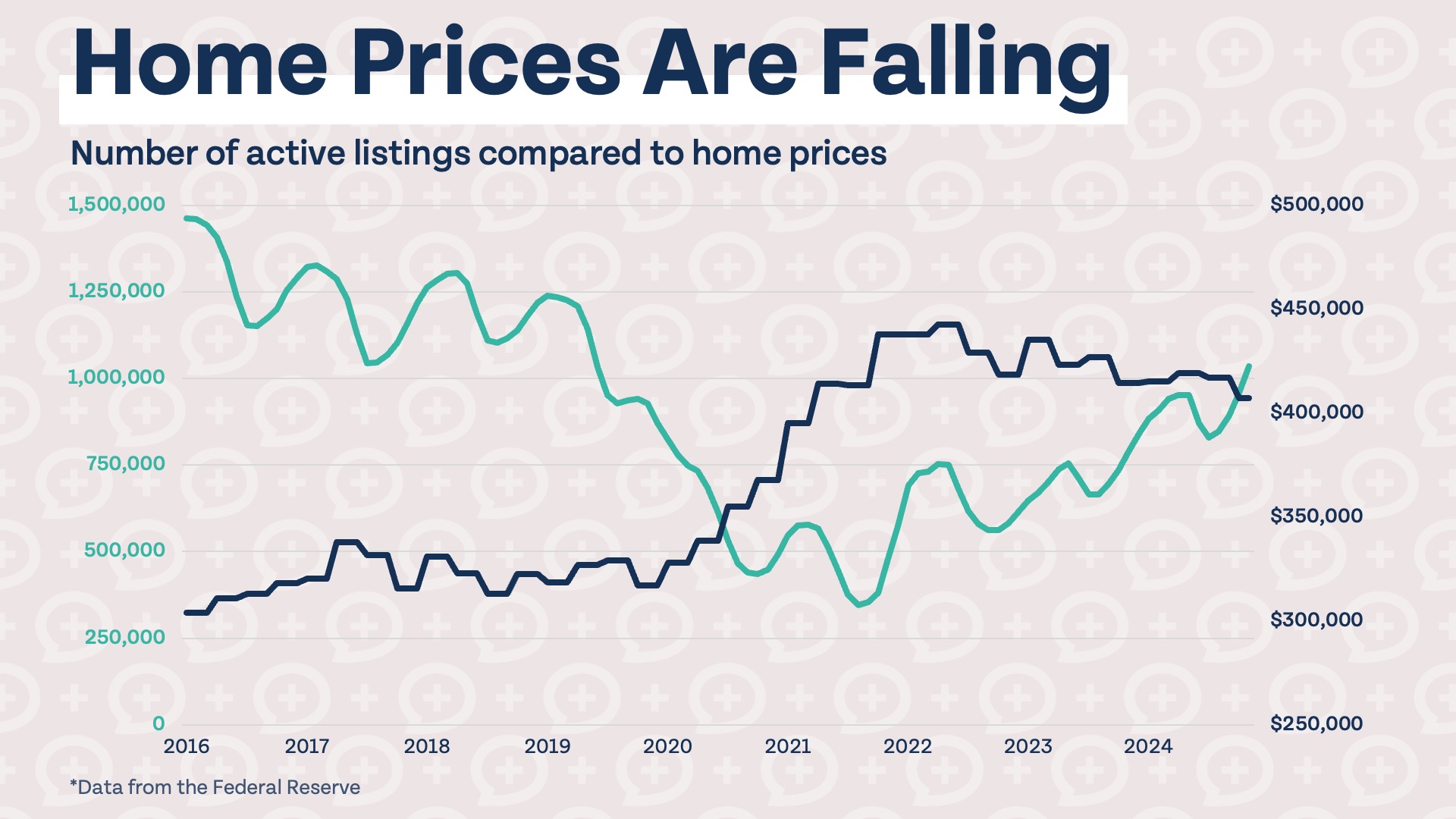
Articles
As mortgage rates have held relatively steady over the past few years, with average fixed 30-year rates between 6% and 8% since September of 2022,...

Articles
The desire to become an entrepreneur is alive and well in the United States. 62% of Americans wish to be their own boss, and among...

Articles
Money is a ubiquitous stressor. 71% of Americans say that money is a significant cause of stress in their lives. Financial stress is frequently caused...

How about more sense and more money?
Check for blindspots and shift into the financial fast-lane. Join a community of like minded Financial Mutants as we accelerate our wealth building process and have fun while doing it.
Free Resources
Here are the 9 steps you’ve been waiting for Building wealth is simple when you know what to do and the order in which to...
Free Resources
If you want to set yourself up for future success, find out how much you need to save every month to become a millionaire.
Free Resources
Here’s how you can buy a dependable car that won’t break the bank. Our free checklist walks you through the 20/3/8 rule and strategies to...

It's like finding some change in the couch cushions.
Watch or listen every week to learn and apply financial strategies to grow your wealth and live your best life.

Episodes
You won't believe how easy it can be to build wealth with three tax buckets. This episode breaks down the three buckets and how you...

Episodes
It's not buying an expensive car or too much house, but it can cost you $1M in retirement. Brian explains a subtle pattern of decisions...

Episodes
Do you need a six-figure salary to build lasting wealth? We walk through the median household income, share why knowing your number can change everything,...
Subscribe to our free weekly newsletter by entering your email address below.