
-
▼


-
▼


It’s Hammer Time! Join us for a very special guest appearance as Brian and Bo audit Caleb Hammer, host of Financial Audit. This is an audit only the Money Guy can do, with a deep dive into Caleb’s real estate portfolio, business, house, and more!
This case study should not be considered specific investment advice for any individual, it is for general educational purposes only. Always consult your own legal, tax, or investment advisor before making any financial planning decisions. Caleb Hammer is not a client of Abound Wealth and was not paid to appear on our show or provide any endorsement of our services.
Enjoy the Show?
Where You Can Watch and Listen:
Subscribe on these platforms or wherever you listen to podcasts! Turn on notifications to keep up with our new content, including:
- Episodes of The Money Guy Show every Friday
- Episodes of Making a Millionaire every other Monday
- Mini-shows every Wednesday
- Ask Money Guy Livestreams every Tuesday
- Tons of other fun content!



Introduction – Flipping the Script on Caleb Hammer (0:00)
Brian: Time to break the internet. The collab you’ve asked for, Caleb Hammer. I am so excited about this because we got to sit down with Caleb and do something so fun. We flipped the script and we audited Caleb Hammer, but only the way the Money Guy could.
Brian: You are known everywhere and we’re super excited to have you on today.
Caleb: Thank you for having me on your show.
Bo: And I love that you’re going to let us do something that you normally get to do. You’re normally the guy that audits other people and you said hey, you know what, I want to sit on the other side of the table. I want to know what you guys think. Tell me what you think about what I have going on because sounds like the last 18 to 24 months have been kind of crazy, right? It’s been an exciting ride.
Caleb: I’m getting double team financial audited. I love it. First time Money Guy’s training being run on me.
Bo: So, well that’s a weird way to say it, but okay, I’ll take it.
Brian: No, this is going to be positive. I think my guess at the end of this you’re going to be like I need more of that. That’s my goal anyway. And also I want to go ahead and let you know this beautiful thing, Financial Order of Operations. If you perform well enough Caleb, I’m going to share with you two laminated things that we have brought for you because we all know everything laminated feels more permanent. And if anybody needs something like that, I feel like we ought to pay it forward. I do want to know, here’s the big thing. You’ve had so much change. Bo has talked about it. The last 18 months you’ve been on a rocket ship. So give us kind of a layout. What do you think the next few years look like for you and then we’re going to kind of hone this into some additional questions to give you some direction as well.
Caleb: That’s the hard question for YouTube channels, isn’t it? Because you never know what the algorithm is going to change. You never know how things are going to happen. Next few years, I mean I would love to be doing this. I’d love to grow the business. I’d love to do extra shows. We’re looking at getting a bigger studio where we can host some more shows and that’s what I would love the next couple years to be like. YouTube channels, they can go whoop boop. So guaranteed? No, but I think we could have a solid three years out of the show.
Bo: What I think is wonderful is so many people find that same thing. Like if I’m in a job right now and the job’s going real well, they’re like oh I don’t know, I don’t know if the next year or three years or five years are going to be the same. But what’s interesting is as circumstances change, people don’t necessarily change, right? Like people kind of stay relatively the same. Talk to us a little bit before YouTube, before all this crazy stuff that happens. How would you describe you as an individual for like your saving and spending behavior? Are you a saver, spender? How did that play out before YouTube?
Caleb’s Backstory – From Debt to Financial Mutant (2:36)
Caleb: Saver and spender definitely before YouTube. But go back a decade ago and I needed someone to have the conversation with me that I have with everyone on a weekly basis or that you’re about to have with me. That’s a conversation I needed because I was, well this is your show so I’m going to hold my normal potty mouth down, but I was a piece of poo when I came to saving money and spending money. I was student loan debt, getting a family loan so I could go put a down payment on a car debt and private student loans and two credit cards, three credit cards. I don’t know, it’s been a long time now, but mostly just McDonald’s swipes and an iMac that’s financed that actually one of my employees still uses. So I mean, kind of worked out. But that was like 10 years ago. And even my first, I opened my first credit card at 18 so I could get a digital piano. Makes all sense in the world, right? I am not blaming my mom who has seen this, I love you, they’ve learned a lot about finance. I talked to them a lot about finance and they’ve become really good. But she was like yeah, everyone should get a credit card at that time. Just get it, put it on a credit card because that’s the normal average American piece of crap when it comes to that 10, 11 years ago. But come like six years ago, you know I really started to fall into the financial literacy area. I started getting into the overall finance side of things via Bigger Pockets when it comes to real estate. So I got interested in real estate and you start heading down that path, you start heading down almost the personal finance side. So you got to take control of that to get into the real estate part. So just being introduced to different YouTubers, different books, different podcasts from there has been a big pull for me that got me to the point of just wanting to learn anything and everything I could for personal finance so I could get myself out of debt, so I could set myself up for financial freedom, so that I could have a place to live that I own and have retirement set up so that I’m not dying on the Walmart floor as we often say on this show.
Caleb’s Biggest Fears – Income Volatility and Responsibility (4:29)
Brian: So you just covered a lot of ground, but I want to kind of hone it in because you said something just a few seconds ago about you’re worried, you know, you see channels that go up like this but then they fall right back down. What are financially speaking, what are your three biggest concerns? Because I want to make sure this is something we’re always trying to figure out, what are the things that give you insecurity with your money decisions? What are some of the biggest things you worry about? Is it that the channel goes away? What are your concerns?
Caleb: Well, the income side of it, the business income side of it. Two people quit their career paths at companies to come work for me full time. I feel a big piece of responsibility to make sure that they’re taken care of, they can pay rent and that they’re contributing to retirement and everything. So that is like the biggest pressure on. And we’re looking at renting a studio as well, like a larger studio. So that’s going to add an extra line item and you really can’t get into commercial real estate that’s like less than three years, you know, two years if you’re committing hard. So that’s a big concern for me. My next biggest concern would be, you know, what am I going to do when the algorithm plays out or whatever it could be for the lifespan of YouTube? What’s my cash flow? So right now my goal is like everything, everything other than a little bit of fun money spending, I just want to turn it into cash flow opportunities. And I actually have some interesting things to bring up when we get to that, some moves that I’m considering.
Caleb: Since like my senior year of high school we were getting foreclosure notices in our house and everything like that. It really puts in perspective where I want to be, where I’ve come from. We weren’t necessarily doing bad, but I think we’ll definitely start at lower middle class in terms of dad being a gas station clerk and my mom being a front desk person at like an eye place. She went back, got a nursing degree, she ended up doing well with that and my dad’s business has taken off recently. So the youngest brother, he’s living the life. He’s not doing the same thing that you had to go through. But where I come from though, they made it look like through the shield of debt that was a classic middle class lifestyle. I didn’t need to want for anything, nothing like that, but you just fake it. You see it later on, taking out second mortgage, taking out all the credit cards, putting everything on financing. It was, I want to make sure if I ever have kids that’s not where I want to be. I don’t want them to feel the stress, the same thing that you felt.
Brian: What are you hoping to get out today? What’s the biggest thing you’re like, man, when you knew you had the Money Guy team showing up, was there anything that you’re like I hope at the end of this I’ll at least have this figured out, even fast forward to a year down the road? If we could lay some steps on you, are there any things that you have that you were hoping we could cover today?
Caleb: I mean you guys have been very successful in terms of just helping other people manage their finances and you know my main focus has been helping people get out of debt, get their emergency fund and take control of that part of their life. Getting a second and third opinion I guess out of my overall financial situation now that my life has just been turned completely upside down this last year, making sure I’m being smart, making sure I’m going down the right path and setting myself up for success. That’s critical. And then if there’s anything that I’m doing now that I need to take control of and change because you know it’s been a big change like overnight. So that’s hard to deal with.
Brian: It wasn’t like a slow increase. It was like you’re in the deep end quick. That’s exactly what happened.
Cash is King – Emergency Funds (8:04)
Brian: So Bo, because you just said cash reserves. Bo and I had a lot of conversations. I couldn’t figure out, does Caleb have three months covered? Does he have six months? Can you walk us through what your cash reserves in your mind, I don’t want to give your private information out, but I do want to kind of know what do you have covered with your cash reserves?
Caleb: So I have in my business checking account, and this is not enough anymore, this is what it was at the beginning that someone recommended with the size we were, $25,000 for the business. That’s what I have minimum in there like before any distributions or anything. This is within the business checking account. So way too small for where we’re at today. I just, again, haven’t adjusted to the quick change and bringing our employees and everything like that. I always have minimum $50,000 in my checking account.
Brian: That’s for you personally?
Caleb: Yeah, yep. So I mean, doesn’t make sense for that to be double the business, I don’t know, but I mean that covers me for 6 to 9 months.
Brian: Wait a minute. You said that covers you 6 to 9 months? I know for a fact your mortgage, your mortgage is more than that. Your mortgage is $7,000 a month.
Bo: I know, public math is a scary thing.
Caleb: So I always give the calculators. Let’s see. I mean it would cover what I need to do for the mortgage for six months.
Brian: What about food?
Bo: What about the folks sitting over here?
Caleb: They’ll cover it for seven months but you don’t need to lose weight anyways, so it’s fine.
Bo: It’s really interesting as you sent us all your stuff. It was great because now we have like a really great insight. Tell us a little bit though, it seems like because you even are talking about okay I’ve got this money in the business checking account but then these are my expenses. Do you have everything completely separate? Like do you have all of your personal, if I asked you hey what’s your monthly burn rate for the business, you give me that number and then I said hey what’s the personal burn rate? Because we see small business owners all the time that they get started and all you’re trying to do at the very beginning is just make sure this thing works, right? And we don’t always segregate things quite as cleanly as we could. Do you feel like you have a solid grasp where your business has a separate set of financials, a separate set of expenses, a separate set of income tracking that is unique and distinct from Caleb or is it kind of all meshed in together?
Caleb: We’re definitely getting a lot better at it now. I only formed an LLC eight months ago or so. So I mean even within the first quarter of this year, there’s some overlap and there’s still some ongoing subscriptions that I have on my personal side that are business that I just haven’t flipped over yet. And I’m pretty good about using my business card for only business things. I think I’ve seen a couple slip through just, ah crap that was on my Apple Pay, you know, like I didn’t mean for that to happen. So it’s definitely better separated now. There’s always more progress to make but I’ve made a lot of progress from when I first formed the LLC.
Brian: Before we get into structural stuff, I wanted to kind of, I’m not trying to come back but I just want to make sure I get you in a good place with the cash. I know this thing has grown like a rocket ship and as your income has exploded, I know there’s this thing called tax liability that’s building up in the background. Are you making estimated tax payments or are you caught up on that part of it or are you supposed to be running a big cash buffer so that you can write a check in April? How are you handling that?
Caleb: That’s how I’m going to be doing it because it’s like the first full year. So next year I’m going to be doing quarterly. Right now, these are a little out of date because I wanted you to have the same documents as the Graham Stephan audit on my channel just because it would be interesting to see how you guys are and everything. So I said about $200,000 in a SoFi high yield savings. That’s for my tax set aside. Now it’s about $300,000.
Brian: Okay good. So you are, that’s so when you gave us the numbers of 25 for the business, 50 personal, you were just carving out that 300 doesn’t count?
Caleb: Yes, and I’ve done a big catch up these last couple months on that.
Brian: That makes me feel so much better. Because I was just worried because as a public accountant who did a lot of tax prep, one of the worst things that I would see with small business owners is they start getting traction, they start making money and then I do the tax returns and then I tell them hey you owe the government $100,000, $150,000. They’re like what? And they just finally feel like the sky has parted and now here I am telling them. And when they don’t have the money because they bought a big piece of equipment or something else, it’s a disaster. So that makes me happy that you’ve got that carved out. That’s good on you.
Bo: So when you say you want to be able to provide for yourself no matter what happens with YouTube, one of the ways you do this is you have to know like what you’re spending. So do you actually know your monthly burn rate? Like this is what it costs to keep the household running, you know, mortgage, utilities, food, the things that I want to spend money on. What’s that number for you? What’s that monthly like here’s how much it costs for me to do the things I want to do the way I want to do them?
Caleb: The way I want to do them? Okay, because I know my minimum, like if I had to, I could aggressively, aggressively cut back everything to about $8,500 a month. I know the mortgage payment is $8,000 but that’s what I put towards it. It’s $7,000 something actually that’s required. So I could do that.
Brian: But even if you cut that down, you could live off $1,000 a month? Like you could, outside of the mortgage, $1,000 a month would cover the lifestyle that you would want to live?
Caleb: My lifestyle hasn’t really increased too much. I think one of the most expensive things I’ve done this year so far is I’m going to do a music festival in a few weeks that cost $3,300.
Brian: I think you can afford to do that. I think you’re going to be okay.
Caleb: I do have a challenge though. I know and look, we just came up on the studio, beautiful speaker boxes in the trash can. We walk in, beautiful speakers and I couldn’t help but notice when I was looking at the statement because it was very much, because I’m a gadget freak. I love gadgets, I love wearables, I love sound systems. I was going to ask you, do you have a subwoofer in the Jeep? I mean because I had the feeling you probably do.
Brian: Okay. Never mind. I unknowingly lied. When I bought this house I did, I put money into it to make the space I wanted to make it, but that’s not an ongoing. So what you saw, that was definitely me setting up my rec room. I’m not calling you out on that. It could all go away to where you really could live off $1,000 to $1,500 plus the mortgage payment. Done.
Caleb: My last project that I feel I need to do to make the house what I wanted it to be. There’s things I want to do but they don’t need to be a thing. Like I upgraded an Apple Watch, that’s not a house thing, but I upgraded an Apple Watch, did not need to do that, don’t need to do that. So I mean I spend a little bit on fun when it comes to my income. It’s a very small percentage, but it’s something that if it dropped down to like $9,000 a month, $9,500, $8,800 or $8,500, like I would be happy cutting back and just living the lifestyle that I’ve lived essentially my entire life because I haven’t upgraded my car, I have no intention to.
Bo: But your goal is not to get to a point where you can live that lifestyle. Your goal is to get to the point where you live the lifestyle you want to live. So what’s that number? Like hey, here’s to do the things I want to do, what is that number? Because you’re past the point of trying to figure out what your bare minimum is. Now you’re at the point you’ve had some success, how do I replicate this? How do I build up a base large enough that can support me even if the income goes away? And that’s the number we want to figure out that we’re trying to replace.
Caleb: Dream cash flow on a monthly basis? Dream cash flow, $50,000 a month. What I’m trying to shoot for my goal is $25,000 a month.
Brian: Okay, great. So $300,000 a year. It’s great. And then how much is your business burn rate? Because Bo asked you that, but I know because I could sense the heaviness of you know you carry the weight of your employees but also now you’re going to take the commitment of rent and other things. What do you feel like you’re spending a month on the business right now?
Caleb: We’re spending a lot on the business. That’s because I want, so the burn rate isn’t something that needs to be the burn rate and I’ll explain. So as the channel does better, when people come in we give them a higher rate for traveling here and saying thank you. If the channel decreases, we give them a lower rate. A lot of their, the money they, both make over six figures a year and I want to do that because I make good money, the channel makes good money, they make good money. If the channel makes less, they’re going to make less. So I mean, other than them, which are expensive right now, I could do the channel on almost no money because everything’s done right here. So that is, in my own personal income, we talked about getting that studio and then I could, I love you guys and don’t want to get rid of you, that’s not what I’m saying, I could get away with both of their positions being hired in Austin for about $80,000 in total a year if I wanted.
Brian: If I could push on one thing is that I would encourage you because I also feel the weight of employees but I love it. It’s also my favorite thing because the more people I have, it just is very fulfilling when you know these people through something you’re creating is paying for people to have cars, houses, families and everything else. It is incredible but it does have a lot of responsibility. I’d rather you fatten the cash up so you don’t have to, because I’ve had, Bo was one of my first real employees and we had in 2008 and 9, I did have to tell him hey if the market goes down anymore I’m not going to fire you because I love you, but we’re going to renegotiate your pay. But what I’ve learned through my decades of owning a business, if I just carry fat on extra cash, I don’t have to have those uncomfortable conversations because I can hopefully weather out whatever is coming. And your $25,000 in the business is pretty lean and that probably scares the heck out of them too to hear you talk that way. And I don’t want to, but I would, whereas as you mature in this and as it stabilizes, just run fat on cash. And a lot of people think that having extra cash is wasteful because cash is trash, but even right now cash makes 5% or around 5%. But also as you’re getting into, because you’re about to rent studio space, if you can run fat on cash, when real estate has struggles and other things, you’re going to find an opportunity where you can buy commercial real estate and then start paying rent to yourself, your own studio. Like run into, and so cash is actually a tremendous wealth builder. So don’t walk away from boosting what cash can actually do in your wealth journey too.
Caleb: That’s why I run really fat on cash just to make sure that I can cover the employees, cover my family, and then if things just go bad, I still got enough, a little slack in the system to be okay. And I think that’s good advice for anybody.
Bo: From your investigation into the business, into personal, what would you recommend that fat cash be at a minimum? I mean multiple, I mean because you have multiple employees now and independent contractors that you’re doing. So I’ve seen, and I think it’s great that you’re very generous with rewarding them, but that probably, because they’re both in six figures plus the rent you’re going to be taking on, I mean it needs to be six figures. I mean it really does. So minimum $100,000. I think at the very minimum that would be you taking a pretty severe pay cut. So I think once you factor in, once you factor in rent and that sort of thing, I think you probably have to be closer to maybe $200,000 of cash just to stay in the business. Because what we’re trying to figure out is okay, no matter what happens, algo changes, some negative publicity, whatever that thing is, for the next six months even with suppressed revenue, I can cover all the obligations that I have while I’m trying to figure things out. Because what we’ve seen in our experience where business owners get themselves in trouble is that it’s not if bad things are going to happen, it’s when and how prepared are they for that. So if you can give yourself 6 months to cover that, you are going to be cunning and cracked enough to figure out how to rebound. You just got to get through that six-month period and you want to have enough cash that you can do that.
Brian: Plus I love you having multiple six figures and the fact that if you get to tax time and your CPA is going to be like hey man, Uncle loves you this year because you’re going to owe so much in taxes, but guess what? If you can make a contribution to this, the government will fund 40% of it and you’re like man I’m glad I’m running fat on cash. Or you get to, and somebody comes to you like, because Rebie, our creative director sitting right over there, we’re hiring a new employee, need new computers or we’re buying new piece of equipment or a camera. If you run, you just don’t have to worry about the scarcity mindset because you said something earlier that I was like, Caleb doesn’t realize it’s never going to get cheaper. I’m just going to go ahead and tell you, this is never getting cheaper. And that’s a good thing because success is going to keep building, stacking to where your $200,000 to $300,000 of cash I want you to run is going to turn into where you’re eventually going to be running $600,000, $800,000. And people listening be like this is insane that he’s saying this, but I promise you it will pay off in tremendous dividends as you continue to build on this enterprise.
“This Money Doesn’t Exist” – Investing Strategy (21:24)
Brian: And I think this is probably a good time, Bo, because I had a hard time when we looked at all your numbers to know. I know you’re making good income and maybe you even have a hard time, your income has shot up, but I could see where you’re basically dumping in like six figure contributions to your investment accounts. But I couldn’t tell how much of this is automatic or is it just like you look at the account, be like holy cow there’s a lot of money there, let’s transfer some over to my investment account.
Bo: We couldn’t figure out what you’re saving as a percentage of your gross income whatsoever. And ultimately we have to break it down like we just talked about a lot of the risk management stuff, cash. But you said hey my goal is I want to get to where I can spend $25,000 a month, I’ve got enough to support me to do that. So while income is flush, what steps are you taking? What buckets are you saving? I think that’s the question you’re asking. What buckets are you saving into on a monthly basis to work towards that?
Caleb: Okay, just to address the last point real quick, I’m going to make it the goal for the business at the end of the year by January 1st I have $200,000 cash. So that’ll be my goal.
Bo: And 50, based on your $8,500, if $8,500 is your baseline personally, I think $50,000 to $60,000 personally in cash probably makes the most sense.
Caleb: Okay, cool, perfect. Okay, so yeah, what I’ve been doing for myself, a lot of it, and recently where things have changed and I can discuss, has just been throwing, after I stopped investing into some properties in my hometown because just rates have just been ridiculous and I wanted to see where the market was going a bit there, I’ve just been throwing everything into the stock market. In terms of percentage of income, the way I do it is like I sit down at the end of the month and I’m like okay, too much money came in, I don’t understand it, it’s a number that doesn’t really exist, I’m just going to throw it all into my overall portfolio. And usually I break it down by mostly S&P 500, a little bit of NASDAQ as well. But you know those NASDAQ companies are in the S&P 500.
Brian: We’ll talk about more of that in a second. We’ll get into this in a minute because there’s some fun stuff in here.
Caleb: There’s some fun stuff. I like the extra. Well because my QQQs have been incredible. Well actually these last few, the first six months of the year they were fun. So I put like 30% into that, 70% into the S&P 500. And I was mixing up with some more international, some at one point I ended up switching this. So I don’t think that it’s going to be seen on yours even. Graham recommended that I put a little in international and I had some more mutual funds and stuff and I think I have a few left over there but now much is in them.
Bo: Bring it back percentage. We want to know percentage of gross income. I feel like we’re dancing here.
Caleb: Sorry, sorry, you’re right, you’re right. Yeah, so of what came in on the month that you guys have seen in terms of running the business, paying out monies and stuff like that, was about 31%. And then 51.8% went into investing. Debt payments, which is mostly, it’s actually pretty much all on real estate.
Brian: But if I’m questioning you on this, you did a six fig transfer and I imagine that didn’t come in all. This is two, so that’s two months. So does that mean you’re saving 15% or is that because you said you did 31%, 51%?
Caleb: 51% of the money that went out of my account. So if that was two months, that would be around 25%.
Bo: Ding ding. I like that number. I’m going to do some real easy math for you. You said your goal is to be able to live off of $25,000 a month. Real math, $25,000 a month times 12 is going to be $300,000. We’re trying to figure out okay what steps are you taking to move towards a portfolio that can sustain that long term or move towards an asset base? So if you use a very conservative safe withdrawal rate of like 4%, divide 300,000. We switched it to 3% these days, you know. Hey, let’s use 3%, let’s be conservative and use 3%. You’re talking about $10 million. You’re talking about somewhere between probably $6 million to $10 million that you’re trying to get saved up as quickly as possible. Is that a fair assessment that’s the goal that you’re trying to get to? So you’re saying that right now you think realistically based on the income you have coming in, you’re saving 25% to 30% consistently on a monthly basis, minimum?
Caleb: Minimum.
Bo: Okay, what accounts? When you think about how you’re saving that, is that going into like are you doing 401(k)s, Roth IRAs, SEP IRAs, like how are you saving those?
Caleb: I did my backdoor Roth like towards the beginning of the year. So I mean that was just finished, you know, $6,500. And after that I focused beginning of the year I did a focus on real estate, then I did a focus on saving up in taxes, and then I did a focus on getting to $500,000 in the overall stock market, which put the net worth over about a month ago over a million, which was exciting.
Brian: Millionaire, yay. Welcome, congratulations.
Caleb: Celebrating. That’s a huge milestone. Incredible. It truly is.
Avoiding Taxes – 401(k) Plans (26:29)
Brian: I mean I just see so much potential. I do. This is where the CPA in me comes out. Do you like paying taxes?
Caleb: Does anybody like paying taxes? Of course the answer is no.
Brian: And I want, because I know that the thing I didn’t see, and I see this with a lot of entrepreneurs, you have all this money coming in and pretty much yes you did the backdoor Roth, but as a percentage of what you actually have going on, it’s cool, it’s good from a planning standpoint, but it just doesn’t move the needle that much. The government is basically begging employers, hey set up retirement plans for your employees and guess what, I’ll reward you by letting you just stash chunks of money and then take a big tax deduction to where in all effective means the government’s funding 40% of your retirement. Have you done, because I didn’t see a SEP IRA, because typically when I deal with entrepreneurs you see a progression. You see them go SEP or solo 401(k) because they don’t have employees. But as soon as they add employees, a lot of times they used to do SIMPLE IRAs, but those have been kind of replaced. You don’t see those. They’re like going the way of dinosaurs. So then you see full 401(k)s with like a safe harbor 3% match for your employees, but you get to load it up. And we could add some new comparability testing and other things. And then if that goes well you add profit sharing and then you add cash balance plans. Where are you at on that? Because I haven’t seen any of that.
Caleb: Absolutely. So I mean just a little bit of context as we’ve just been building so quick in such a short amount of time, I just got them on W-2. They were contract originally. Just got them on W-2. So the next step is to set up an internal retirement plan that I can contribute to. Why I didn’t pursue that for myself on like a solo 401(k), it’s because I didn’t know 100% what I wanted to do with the cash at that point. I wanted to throw it in the market. I was okay with the risk when it came to that overall situation, but I didn’t know if I wanted it to go to real estate or stay in the stock market. And that’s where the fun thing I want to show you.
Bo: But you realize like $22,500 of a salary deferral into a solo 401(k), if you’re an LLC or solo whatever, that’s going to save you like $8,000 to $10,000 in taxes off the front end, right? So like even though you’re putting in $22,500, like $8,000 is coming from Uncle Sam, right? Like that’s the part that gets so exciting. And I don’t think it inhibits you from being able to still fund real estate and we’re going to talk about the real estate and some of the thought process there. But it is one of the absolute number one best ways to legally hide money from the government for business owners. And even now that you have W-2 employees, it really doesn’t change the mathematics all that much because there are amazing plans you can put in place that are still great for you the business owner and a benefit for your employees that aren’t cost prohibitive. I would be willing to wager right now that the tax benefit that you would accrue would cover substantially more than what you’re going to pay to administer the plan as well as what you’re going to put in for your employees’ behalf, meaning you will save more in taxes day one to fund everything else. So then it’s all gravy money after that.
Caleb: That’s why I love this conversation. I’m glad we’re doing this right now.
Google Sheets?! – Organizing a Small Business (29:39)
Caleb: Because I focused for years so much on just the personal finance aspect side of things, I never really thought I would be a business owner. So that side of it never really interested me in terms of learning every little loophole behind the scenes when it comes to business. So that is, I’m playing catch up on that.
Brian: Well I want to go a little deeper on something I saw. Do it. And I feel like a doctor here because I was like please, please don’t, please don’t let this be the answer. And so we sent you some follow up questions and when I was like Caleb what accounting software are you running your business off of, what do you mind sharing with our audience what technically?
Caleb: QuickBooks.
Brian: Wait wait, no, that is not what you told us. That’s not what you told us. That’s not what showed up here.
Caleb: I do it myself on Google Sheets, but I have everything.
Brian: What was that?
Caleb: Google Sheets.
Brian: Google Sheets. Again, this is no longer the lemonade stand. Like this is a legit business.
Caleb: Exactly. But it’s been a legit business for like 5 months. So I’m catching up. I am catching up. So everything’s been started documenting since I got my business checking account. Everything’s automatically been going to QuickBooks and I’m able to send that to my tax guy so he can help. But in terms of my own manager, I’m like what is this software that I’ve never used before? Google Sheets, I know.
Brian: You know, and this is something I want to caution you on because you run a successful enterprise now and a lot of times I used to have business owners come in to me and they’d be like can you just take this off my plate? They want to delegate the accounting system and the transactions and essentially bring the shoe box full of receipts and credit card statements. Is my business at a point of having? I have no problem if you outsource and hire a bookkeeper even to do some of these things. But nobody is going to love your business like you’re going to love your business. So I encourage all of my business owners at a minimum while you’re learning the language of business, the debits, the credits, knowing how everything’s coded, lean into that so you can actually know all the transactions in the beginning. Like I love it when I find out people using QuickBooks and they’re using QuickBooks Online and they’re actually downloading the transactions because they’re connecting the corporate credit cards, they’re connecting the corporate bank account, they’re connecting the corporate money market account because you’re going to be keeping extra fat cash in there. And just let that stuff flow in and look, hire the person to help you with it, but get them to educate you on the process because a more educated consumer and more educated business owner is going to be a better just navigator of how all this is going down. And a lot of times business owners who aren’t naturally accounting minded will think I can just outsource that part. And there’s so many things that I always tell people yes, go figure out what you don’t want to do and outsource it, but at least get the knowledge so that you don’t fall in some traps. Because when you hear about business owners who are extremely successful and then all of a sudden they’re broke one day because somebody ran off with their money, I’m always like that person didn’t know the nuts and bolts. They were not watching what was going on because you have to kind of have a flow. I mean Bo and I go through the financial statements quarterly at least quarterly. And then I always, this is everybody picks on me, I still run my own payroll. We have 30 employees and I’m the one running the payroll. Everybody knows I run around high fiving all the employees and I’m like we ran it, we did it again. I mean it is, I know it’s the silliest and most ridiculous and I’m the most overpriced bookkeeper you’ve ever seen.
Bo: Like you use like Creator Studio on YouTube, QuickBooks is no different. Like you can peek into it. Imagine having that same sort of view into your business that you do as a creator on YouTube or whatever social. It’s amazing.
Real Estate…Why?! (33:27)
Bo: So you said you had this focus earlier in the year. Like your primary focus was real estate, then you focused on taxes and now you’re focused on saving. Talk to us a little about the real estate. What have you been doing from a real estate perspective, why were you doing it and why did you start there?
Caleb: I’ve had some pretty decent success except for my Illinois property investing in my hometown. And the way I do it because it also vibes with like my own morals and everything like that, I tend to find through my broker who I actually rented from when I lived in that town, which is kind of interesting, I find a dilapidated property that no one’s willing to buy. So no one’s going to buy it to live in it because I get it at 30%, 40% under asking. The only way to do that is because no one else is putting offers into it. So I get it, then I put some money into it and then I get a minimum 12% cash on cash return. Just overall, so that’s what I like going for. And then I set in additional, and that’s after rental property management fees, and then I set some more money aside for repairs so that I feel like is a really good path forward in terms of overall cash flow if the YouTube thing were to go away. So real estate has been something I’ve been really interested in.
Brian: Do you see the judgment in my face?
Caleb: Yes, I won’t, you crack me up.
Brian: In the fact that you have this beautiful enterprise here that is exploding. I mean it is allowing you to hire people, you’re making dreams come true. And it reminds me, I had a client who worked in the telecom sector and he was like you know look I’m frustrated because I invest in this, I invest in this. If I just spent $10,000 and put another crew out there working, I would make this. And I was like you’re exactly right. I was like yes, I’d make more money if I manage more, but you ought to put as much as you can in the business that will get you not a 12% rate of return but a 50%, 200%. You’re making, your business just quadrupled in the last year. I mean you were on such an explosive rate that you remind me of, have you ever heard Warren Buffett talk about how he started investing?
Caleb: Yeah I think so.
Brian: He talked about when he first, and he had success just like you’re having, I have no doubt you’re making this 12 and a half percent, having success. But Warren Buffett described his initial investing as he’d walk around and find cigars that have been smoked and he’d pick them up and take a few puffs and then smoke down what was left and then throw it down. And then he realized what am I doing smoking all the, yes I’m getting value out of this but it’s not, the bang for the buck of what I’m doing is not really how I can make money. And I think cancer, well but I’m just making, nobody should be smoking cigars, they make you also taste, your mouth will taste like somebody, a cat came by in the middle of the night and did something inappropriate to you. But it’s just, it’s not good stuff. I would tell you your cash cow is this business. All this other stuff is noise.
Brian: When I saw because I’ve had out of state rental property, not on purpose, it’s just accidentally happened. Like I had my primary residence in Georgia that I couldn’t sell at the time so I rented it out. And out of state even property is hard. And then having a property manager who’s taking 10% off the gross, I’m assuming that compresses it. And you are just so good at your day job. I’d love for you to just let the real estate be after you’re loaded and wealthy and do it through commercial real estate where you’re paying yourself rent and you’re getting the QBI and all the other sexy things that come out of cost segregation, depreciation and all the other cool stuff. And leave the residential real estate stuff till later because this thing is a shot that people just dream about for what you have created. So you ought to lean into it because I started podcasting in 2006 but I just enjoyed the ride. I didn’t maximize it and turn it into a business. YouTube when it came back around in 2017 when we got into YouTube, I have now fully invested with staff and other things. And I would just encourage you, don’t do the stuff you think rich people do. Lean into what you’ve caught, the magic thing. And I think you can do tremendous things for you Caleb, I really do.
Caleb: Can I add a bit of context just to see if that changes anything?
Brian: Okay.
Caleb: I probably spend maybe 10 minutes on the phone once a month and that’s it when it comes to this.
Brian: But see the thing is I’ve done too much research on you because here’s the, you are a good dude and I heard, tell me if I get this right, the franchise, you no no no hear me out. I’m not going to pick on you on that yet. Well I decided not to. I know but here’s, you have a tenant that hasn’t paid much rent, no rent, threatens people, no rent, threatens people, anytime you have repairs done has hired an attorney to not pay you rent. She’s out by the way. Okay good. But you realize and I heard you when you were doing the interview on this, you were worried where would she land if you evicted her. And I’m like Caleb’s too nice to be a landlord. You really are too nice.
Caleb: I think there’s good ways to be about it. That’s why I try to buy the houses that people won’t buy to live in. I try to buy them in transitory areas where people don’t buy to live because it’s near a college, people stay there max 4 years, so it just kind of goes with. I want to make sure I’m feeling good while also making the money. And so the people that manage for me, she wouldn’t have qualified to live there anyway. She just came on with the purchase and we knew there was going to be a hassle for a few months. Like she was a tenant when you bought the place.
Brian: Got it. So we already knew going into it that that was going to be something that had to happen because of potential violence and stuff like that. So I recognize that. And again, I probably spent five minutes on that personally because I didn’t have to do anything.
Bo: But doesn’t that give you anxiety knowing that all that drama went on?
Caleb: For an incredibly anxious person, for some reason not really. I don’t get anxious about that stuff.
Bo: Is it a correct assumption because you said there’s a reason this kind of aligns with what you want to see happening in the world? So this is a little bit like philanthropy for you, right? You’re kind of saying like, I mean you’re certainly benefiting from it because when I hear 12% cash on cash return that sounds amazing. Yeah. Walk, can you walk us through the numbers? Like walk us through realistically what are we talking about here?
Caleb: So bought this one for about $100,000 here or purchase $110,000. What I get post collection from, sorry post management is $1,400. Plus I’m actually wrong about the value on that. The value, what was it, it’s upside down. This is now valued at about $135,000. So $1,400 times 12 is, so that’s giving me this is giving me a monthly, I’m getting 12.7% on that number right there after monthly management fees. There’s a couple that I’m looking at that are getting right about at that 12%. I actually purchased these in cash but there’s some expenses there aren’t there? I mean there’s property taxes, there’s insurance. I mean there’s, I know there’s no mortgage because you just paid cash for it.
Brian: What’s the actual expenses on this?
Caleb: Yeah, the expense, the property taxes there are quite minimal up there. In terms of repairs, I’m setting an additional 6% aside on a monthly basis, 6% of the overall gross. So that brings it down to about 11-ish on the $100,000 that you spent, right? Right now it’s worth $135,000 if you were to sell it. So yeah, 12% yield on that, on this specific rental right here. What about these other two you have? Two other ones you have going on, right, that we did not pay cash for?
Caleb: Well, let me see, right, yes. So the Illinois, this one, this was my first one, I rushed in, this one wasn’t as good. I have three right now that I’m considering. One of them with its conservative projected rent, and every time she’s given me a conservative projected, she gets easily hundreds more than that, but she just gives me minimum what she thinks she could collect. But why I do all this, it’s fun. It is fun.
Brian: Do you actually enjoy, you enjoy the rental real estate business?
Caleb: Yeah, I mean that’s what I was first interested in before personal finance.
Brian: Okay, but you’re so good at the personal finance stuff. That’s what I’m just trying to make sure.
Caleb: This, what we’re doing right here, this is the longest I’ve had to sit down and actually like think about this in a while. So one, I’m considering purchasing after rental property management fees will give me 12.3%. So I’m considering purchasing that and putting money in, all expenses paid, of $225,000. And that will give me $2,767 after prop management fees. It’s a 3-unit property. $2,760 net cash flow, $2,767. And then there’s another one that I’m going to be going all in after repairs and everything and purchase price, 5-unit property, $357,000. That is going to be giving me $4,260 a month after rental property management fees. That one right there is slightly, by 0.2%, no by 0.1%, just under 12%. So just under 12, just under. But again, these are the lowest expected run, the lowest possible expected runs.
Brian: Here’s my gut. I’m just going to give you my gut, sure, and I have to go to my trusty source here, the Financial Order of Operations. I love the Financial Order of Operations. So here’s the thing is that if I look at this, we’ve already covered, I think you know, I’ve heard you on the phone, you have health insurance for yourself. You even got health insurance for the animal. You got number one, you have crushed it.
Caleb: They just saved me $1,000 today.
Brian: Employer match, you are the employer. So we’ve talked about that one. We’re going to put a check on that. High interest debt, you don’t really, I got to tell you your credit cards, I mean I do think you live a pretty minimalistic besides the subwoofers and all the electronics. You’re pretty good.
Caleb: No I, seriously, I’m giving you a compliment on that.
Brian: Emergency reserves, we’ve already covered that. You’re working on that. You already, you’re doing backdoor Roth, you’re crushing that. But this one, max out retirement, and here’s what I want to bring you into focus on, is that you have caught the tiger that everybody’s chasing. You have the magic. I think I can hear you tell the story of it and you can tell man you feel like the most blessed fortunate person that you get paid incredibly handsomely for it. Well there’s opportunities with all that income coming in that you really should be doing like 401(k)s and other things. You’re going to get that 37%, you’re going to get on just the federal side with tax savings is going to just be incredible for you. And it gives a foundation because I want your focus to be how do I make my YouTube channel and the platform of content creation as big as possible. And then I want to start having money building up in the background, just don’t even think about it. Set it, forget it, just piling up what step six with the maxing out retirement. And then hyper accumulation, that’s where we get into when do you think you want to be fully financially independent with the three bucket strategy, all the things you just talked about.
Brian: Because I have no doubt you’re great at real estate and we’ve had Scott on from Bigger Pockets and we love those guys too. But I do think it’s one of those things that it’s a step eight thing and let me explain why. Is if the algorithm is like a dysfunctional significant other, it works in 28 day cycles. It loves on you, you’re like oh my gosh this is the greatest thing ever, and then it goes away and you’re like oh my God how do I get it to come back and pay attention to me. So it’s already got a lot of emotional ups and downs. I worry about with real estate because I’ve done taxes, I did them for 16 years and I worked with a lot of real estate investors. And you know what happens? These things are completely outgoing extroverts in the fact that real estate values will fall while the stock market falls, while the algorithm will be treating you bad. And I just worry about if you don’t have enough foundation under you financially to where your tough situation of the algorithm not loving on you and maybe your revenues down, if all of a sudden you have a few tenants out because you’re running multiple properties, you’ve turned a bad situation into a full-on dumpster fire because it just gets really scary without the deep pockets. That is where buying in cash does help risk mitigate, but I do get exactly what you’re saying. But it’s back to now step six and also the do-goodness of you want to give your employees matches. So I mean there’s a lot of things that I feel like that you could come and you’re going to get to. I think the great thing is you get to do this too. It’s just you’ve got to do it after you’ve gone through the other steps and then you get to do the wealthy people stuff like buying real estate.
Brian: But I think where your real estate’s going to come in is because I work with a lot of entrepreneurs and I’m always shocked when they have their exit plans. The building that they bought for their business, sometimes they make more money on the buildings they bought for their business than they did for selling the business. So if I think about, because how cool is it that you get to buy a building for your business, you pay rent to yourself, you get all these great things. They appreciate in the background and guess what, you control who the tenant is. If you got a bad tenant, it’s you. You know, so there’s just no downside in commercial real estate. Is there, it is top of the food chain. There is a reason why people want to be in commercial. They just can’t get in until pandemic.You have a, well but you would own the business that’s paying the rent. Now yes, that’s extra risk, but a lot of times I think you, you said you have a three-year window with YouTube. That’s what they say.
Brian: I heard Graham say that. I disagree because I’ve been podcasting since 2006 and that created some benefits for me. And then I’ve ridden this content creation and by, I used to watch, I couldn’t wait for September because all the new shows would come out and I’d watch those shows. You know what I watch now? YouTube. Guess who’s on YouTube all the time? And everybody is watching it. You, Caleb. So I mean, so I’m just telling you this ain’t going away. I think more people, I wouldn’t be surprised because where was I? I was on Hulu and I saw Mr. Beast had something being advertised or pushed. The traditional media is coming for us too. So you’re in the perfect position to maximize that opportunity. So I just want you to do it in the right order so you can, because you just have the chance of a lifetime.
Caleb: I agree with everything you just said there. On a piece of just added context to like the doing this forever type thing, I mean I’ve talked about it recently, I don’t necessarily like this job though. I don’t like the public facing part of this job. I don’t like the social pressures, the number next to my name, all that stuff. I enjoy meeting the occasional person on the street if I go to a popular area or something like that. Like I went to a restaurant a couple nights ago, I went on a first date with someone and like five people came up to the table. That was a good look on a first date. Five separate times too, which was nice.
Brian: That’s a very good, that’s fun, that’s fun.
Caleb: So as fun as that part of the job can be, I don’t know when I think being an influencer and I guess that’s the status that it is, there’s just a lot of just character assassination that can happen, people just hate for no reason, which is fine. I mean I tune it out, I don’t really see most of it, but even still it’s just like my life is out there and I just, I don’t think I’m that public of a person. So I don’t like this part of the job. Love running the business, don’t really like the outside of it.
Bo: And so what you’re thinking of is hey you know what would be awesome is an escape route, something where I did not have to depend on this. And that’s where I thought the rental property would be. But it sounds like we want to at least be maxing out, well I, number six, I don’t disagree with anything you’re saying around the rental properties. The problem I worry about when I look at your financial picture is that you’re not quite at that place yet. We love real estate, there’s nothing wrong with being a real estate tycoon, but if you add up the value of all the money you have in real estate, by the way you have to add your primary residence into that, that is real estate exposure that you have. And you look at all this money that you either have in real estate or going to have in real estate and you compare that to the liquid wealth that you have right now, it pales in comparison.
Caleb: True.
Bo: Well you’ve already said that you want to buy properties in transit communities that are run down that maybe don’t have the highest quality tenants. Well if we were to see something like a 2008, 2009, there’s a large recession, a lot of unemployment, those are going to be the communities that are hit the hardest. So while you may not have mortgages on those, those are the people who can’t afford rent, they got to move out, maybe they have other stuff going on, they’re the ones that damage the property. So now you have cost to fix it and then if you have long-term vacancies, it just doesn’t seem to me, especially we’re talking about having like 16 units, you’re just not deep enough on the other side of the equation. Now if you had 1, 2, 3, 4, $5 million of liquidity at your disposal and you wanted to do this, well I think that they can happen in tandem, right? But what you’re doing is you’re saying hey I want to have millions upon millions of dollars in real estate and I have hundreds of thousands liquid or even less if you’re going to use that capital. It’s way out of balance.
Brian: If you’re going to do it, then they ought to at least grow in tandem.
Caleb: So you’re thinking like 50/50 split?
Brian: I mean what we have found is that if you can let the foundational assets, the steps one through seven, right, the 401(k) and the taxable brokerage accounts and the Roth IRAs, if you can let those build up, they begin growing upon themselves to where they actually become the mechanism that funds the other thing. If you have a million dollars in the S&P 500 and a year in the S&P 500 makes 20%, you have $200,000 at your disposal that you can either let continue to roll or use that to go fund additional real estate properties. If you have it twisted where now you have all this money in real estate, none of this liquid capital and things go wrong, that’s where you get yourself into a really, really bad spot. And then worst case scenario you have to start liquidating properties and you have to start getting out of those because, and I just think that you can do it and there’s nothing wrong, especially the fact that you like real estate, you enjoy it, you enjoy talking about it. But I think that if you go this hard at it, you’re doing it at the wrong stage and wrong season of your wealth building journey because even though you are wildly successful, you’re sort of like a new wealthy person. And I don’t mean that disparaging, but like you have not built the foundation that would substantiate buying a lot of really illiquid, more aggressive, more risky things.
Bo: Because like some of your free cash flow on these properties is great. I might have $1,400, $1,200, you know, $2,500 coming in, but it’s $100,000, $200,000, $300,000 of capital that’s locked up that’s not working for me elsewhere. Whereas the market can do both. It can grow the same way the real estate grows and it can provide you capital to use. Now I like that you’re not doing the crazy stuff like trying to do cash out refi and pull money out of the real estate and that sort of thing.
Brian: Well maybe if rates are like 2%, maybe, right? But even then I’m hoping that your foundation is so big, you know what’s great about real estate investors who don’t have to borrow money? They don’t have to borrow money. Right? When your foundation is big enough, you can just look for really great opportunities. It’s the whole Warren Buffett thing. He would rather buy great companies at good prices than good companies at great prices.
Bo: You’re going to finish the cigar butt is that’s what Bo just put it, the CFA sitting here is that yes, you’ve got to, it’s not only about the value, it’s something that’s going to turn into something just beautiful in the long term. And what’s amazing is there are so many tax incentives to build wealth on that side by doing a retirement plan, by having a 401(k) where you could do a safe harbor, a profit sharing, and even then you can do a cash balance plan on top of that. It is not uncommon a lot of our entrepreneurs, business owners, they might be able to save hundreds of thousands of dollars annually on a pre-tax basis. So imagine if you could put $500,000 into retirement accounts a year, it’s going to save you $250,000 in taxes. Well the tax savings alone would fund your next property. So you get to choose, I’d rather own a piece of real estate or pay Uncle Sam. I think most people would rather go buy the piece of real estate with that savings.
Brian: Well and you are the perfect tenant in the fact that back to commercial real estate down the road, you could, you told me what you’re going to be paying in rent. And here’s what happened to us, just giving you the experience share. We were paying, it started at $12,000 a month and then we grew into another space because the firm, to $17,000 a month. We had a couple different suites. So it was, and then we were going to grow one more time and it was going to be over $20,000 a month. So we were like let’s go buy something.
Caleb: $20,000 for how big?
Brian: So we have 27,000 square feet but we only used probably 13,000. The space we were in was probably less than 10,000 square feet probably all in.
Caleb: I thought this place of like 4,000 square feet was huge.
Brian: Well there’s content, there’s wealth management, there’s a bunch of different stuff. You’re going to get that big though. Remember how you said you bought this house and then all of a sudden you got in this house it got smaller and smaller? We’re building out content, like the same thing happened. We were talking about George and Ramsey Solutions and stuff. Think about that. I remember Bo and I went to what they used to call Financial Peace and it was, I thought it was a big building. And now they have that. You will have the same type of thing is whatever, that’s back to the point you were acting like this was going to get cheaper. This will never get cheaper. I’m just telling you your success will propel, your footprint gets bigger and bigger and you have to plan and really accordingly have a big enough base underneath you so that you don’t get caught because it’s back to a Warren Buffett quote, when the tide goes out you get to see who’s swimming naked. I mean skinny dipping. And that’s why if you don’t have liquidity, you don’t have the oxygen for business. That’s what cash is. We all take breathing. I can sit here and go, I can do that all show and you’ll be like why is he breathing so heavy on camera? But it’s because it’s free, I can waste it. But if we were doing this underwater, every breath would be priceless. And that’s exactly what happens when you get into a bad situation. The liquidity and access to money is going to be what drives it.
Caleb: So I think then I think I was headed towards the place you wanted me to be until these properties. So again, this is out of date, so these were, of the money that I have, well I guess the cash was good, but a lot of that was invested. So the Fidelity went up to, or overall investing went up to $500,000. That’s great, that’s moving in a great direction. That’s bigger than what we saw. And these three properties though would require me to exit a lot of those positions, not the retirement tax advantaged account, but the taxable available liquidity accounts.
Brian: Yeah yeah, well values have gone down on them anyway, so you could write that off.
Bo: And one of the things that I would think through, a lot of folks who want to get in real estate, they want to get in whole hog as heavy as they can as fast as they can. I can’t just buy one property, I got to go buy four properties.
Caleb: Addicting, right?
Bo: Well you’re in an income situation where you’re in an income situation that is high and an expense situation is low. That means that every month you have a lot of free cash flow. I think there’s nothing wrong with picking up some of these properties as you move through time. Certainly your income can substantiate that. But robbing one part of your financial picture to go fund another part of your financial picture, you’re stealing something that you need and just moving it over to something else that you think that you need. I would argue perhaps that’s not the most prudent decision. I think you can do both. I don’t think it has to be an either or where if you were to do that, you’re going to make it an all real estate decision and I just think that’s going to be more aggressive of a posture.
Caleb: I didn’t know exactly what the money was being used for so I just put it in the overall market. So I guess I didn’t view it as stealing from that because it was like, was it designed to be in there necessarily? I don’t know. Maybe I was waiting for a good deal. But after what you guys are saying, I mean that makes complete sense.
Bo: Well at the very beginning we said you need a base of assets, a base of cash flow generating assets. If we’re going to assume a 3% to 4% withdrawal rate of somewhere between $6 million to $10 million.
Caleb: Don’t we feel real estate is a better avenue when it comes to the overall cash flow that I’m getting?
Bo: It is an avenue. It is an avenue. I would actually argue that it’s not necessarily a better avenue because we have a lot of clients with very large seven figure portfolios living off of six figures of income strictly from their portfolios. Because you can actually tax manage that even a little bit more efficiently than you can paid off real estate, right? Like there are, especially once you kind of get past the first few years of real estate ownership, a portfolio can do that for you. Again, it’s not an all or nothing. I think it can be a combination of both. I just worry if you get it out of whack, you set yourself up to where the bad could get really bad really quick.
“Eight Different Flavors of the Same Hotdog” – Index Funds (59:02)
Brian: And I have something really fun. That’s why I’m over here practically giddy and giggling to myself. But I will say I’ve seen cap rates were so low for so long and think about how much property Caleb appreciated 50% to 60% over the last 4 years. If you go reversion to the mean, does that mean if properties typically historically have made 3% to 4% and we just packed in 50% to 60% in the last few years, might there be a period not where it goes down, I’m not willing to argue that property’s going to go down, but it might sit flat to a degree.
Caleb: You know you see that with real estate all the time. That’s a major reason I didn’t want to take leverage on these and interest rates are putting tons of pressure on all of that. So it’s just, you know, but even that the whole beautiful thing about real estate, the thing that makes it so attractive is the levered opportunity, right? When you talk about cash on cash.
Brian: I’d love to, again it gets really exciting, but right now with interest rates. But you know what does look really great? S&P 500, stock market.
Bo: Great segue. I can’t, I’m sitting here going please let me speak, let me speak. Because I even slid it over so like you know, so you’ll be part of this fun action that we’re going to get to do. I want to read some investments to you and I want you to tell me what is not like the other. Okay, we’re playing a game, what is not like the other? Fidelity Zero Large Cap Index Fund. So that’s a mutual fund. You know what that invests in?
Caleb: The large cap.
Brian: I’m sorry, read it out. Fidelity Zero Large Cap Index. You know what that invests in?
Caleb: Just the overall large companies in the United States?
Brian: Large, okay, keep going. Okay, Fidelity Total Market Index Fund. What does that primarily invest in?
Caleb: Like the S&P 500?
Brian: Hang on, hang on, I know exactly. Fidelity, here’s another one, Fidelity 500 Index Fund. What does that invest in?
Caleb: I have no idea. It sounds a lot like a large cap American company.
Brian: How about the Fidelity Zero Total Market Index? The biggest holding is the SPDR S&P 500 ETF.
Caleb: Let me see some SPY.
Brian: You realize you own like eight different flavors, eight different flavors of the same hot dog. Three, four, five, six, seven, eight. I could say nine. Nine things that are doing pretty much the same thing.
Caleb: So all those mutual funds before, I don’t think I really have much in them. So when I was first learning, whenever I opened Fidelity at first when I was just playing around with just the different things that they offer, the different mutual funds will have the best rate of return historically on their platform and I was just playing around with them. And a lot of them they have like probably like $2 in them sometimes. Some of them I exited, left like a share, some might have a little more than that, not 100% sure at this time. But I think the vast, vast, vast, vast, vast majority is SPY and QQQ.
Brian: By the way, I love all those funds. It’s just I’ve never seen anybody buy nine of them. I mean choose one, you choose one and then you stick with that one.
Caleb: This was like a long time ago but it’s just like I had, I was like okay they’re doing it, they’re fine, but that’s just not what I’m going with those funds.
Bo: Bring it back, percentage. We want to know percentage of gross income. I feel like we’re dancing here.
Brian: Sorry, sorry, you’re right, you’re right. Yeah, so of what came in on the month that you guys have seen in terms of running the business, paying out monies and stuff like that, was about 31% and then 51.8% went into investing, debt payments which is mostly, it’s actually pretty much all on real estate.
Bo: I think what’s so interesting, right, what we do in our day job, right, we’re financial advisors, we help people make good decisions. We already established you’re sort of new to being wealthy, you’re new to being a rich guy. I’m going to use that term loosely, but you’re new to being someone who has success. One of the things that we tell people is early on in your financial journey, specifically when it comes to investing, it’s so easy for us to make it hard. What stock do I buy? What ETF? What sector? What this? What that? You know one of the things we love telling people who are early on their journey to do is go look at a target retirement index fund. You think about the year that you want the money and then how much you can save. Because I would argue at your income level, no matter how you invest this, no matter what you put it in, your savings percentage of your income is going to vastly outperform this. If you can save an extra 5% of what you’re making income wise, it’s going to do way more than figure out how to make this make 5%. So don’t waste the calories on this part yet, right? Pick something super, super easy, something super, super low cost, something that’s automatic so that you can focus your efforts on the place to have the biggest return, which is your savings rate. How do I have an understanding of what my business expenses are, my personal expenses, and then how much I’m saving? Because all this is kind of minutia, at least until the portfolio reaches the critical mass.
Brian: Because what you’re going to find out is that different types of investments are even taxed in different ways. So when you do, if you do start a 401(k) plan, you’re going to have different types of things that you’re going to hold in there versus what you hold in your Roth IRA versus what you hold in your taxable account. Because especially even if you’re going to use your taxable account to potentially fund future real estate purchases, one of the things you’re going to want to do once you reach that critical mass is tax manage it well so that you can get to that capital. Because it does you no value to put a bunch of money in a taxable account, put $500,000 in there and have it turn into a million. Well then to get to it it’s going to be incredibly cumbersome from a tax perspective if you’ve not tax managed it all along the way. Well the more account types that you have and the better your allocation is, the more that you’re able to do that. But in time, and you’re just not quite at that place just yet on your wealth building journey. I would love to see you race to get to $3 million in liquid assets as fast as possible. I mean I really would.
Caleb: Come up for air at $3 million and just then I can play with real estate?
Brian: No, no, well I mean it’s just, you know what I mean? I’m just trying to, I just I think that you could focus all of your energy on the content game because you’re good at it. People love hearing you, they feel connected to you. You have, but you have, and that’s why it does break my heart. That’s why if you raise the $3 million you give yourself options to get out.
Caleb: Because exactly if you ever had a $3 million portfolio make 10% before?
Brian: No, no.
Caleb: You know how much a $3 million portfolio making 10% will make?
Brian: Yeah, $300,000.
Caleb: $300,000, right? That’s just while you were sleeping, right? Think about how hard it is for a bunch of different real estate properties to go out there and appreciate by $300,000. I mean certainly in 21 and 22 you saw it, but if on average it’s 4% per year, S&P 500 capital appreciation is a little bit better than 4% per year. So it gives you the flexibility to decide how much in the public eye you want to be. I think faster than exclusively real estate would allow you to do that.
Bo: Do you think in these type of income situations that more target-based retirement funds where it gets more conservative over time makes sense? Because I personally don’t care about it adjusting to a more conservative portfolio near retirement.
Brian: I think realistically if you’re racing to that $3 million number we threw out, you’re probably going to get to that critical mass before the glide path even starts adjusting. Because if you pick something that’s 2060, 2065, it’s going to be majority equity based right now. If you hit that number in the next 2, 3, 4 years, the allocation will not have changed that much and you likely will have altered your strategy before then. It’s just a placeholder to the next step. It’s more of I would like to see you index focused, consolidate though, because there is too much of a good thing with the name soup that you’ve got going on.
Brian: And I want to, I want to say something because I’ve been in the game for a while and I know Joe Saladino. Joe does a lot. He’s like the founder or he’s the seed planter for a lot of podcasts out there that might be in your future too, Caleb. You don’t always have to be before the camera or you could be, you have a platform you’ve built that, you know, you figure out what makes you comfortable. But I’d like to tell you this because I feel like one of my superpowers is EQ and getting a sense for people pretty quick. People like and care for you. And I hate that the negative people, because there’s always trolls. And for a while I thought I was a troll whisperer and I could convert trolls into fans. But I realize don’t let those people, because you’re educating, you’re changing people. You know we talked about the whole budgeting, we talked about debt. America needs that stuff. So don’t let somebody who’s jealous or just doesn’t know your heart or just because they feel smart behind a keyboard, because there’s a lot of those out there as well, you keep doing what you’re doing. But I think there is an avenue where if you don’t, if it’s just personally too much for all the attention, you can always go behind the camera and be essentially the kingmaker or the person who kind of chooses the next. Because I think you have a big enough platform you’re going to be able to do great things.
Caleb: So exciting. Yeah, the thing that’s interesting, like criticism is good. I like criticism. So I’m not talking constructive criticism or even just people just giving their opinions on my show even if it’s negative. Like it’s totally fine. Like we just age to disagree, right, on certain things. And then criticisms are good. What I don’t like is the more character assassination and what I don’t like. The platform we’re on, the second most used search engine in the United States, the world, I don’t know, but the United States, is the greatest place to make content. There’s a big industry within this space that none of us have experienced yet, but I know that people above our threshold where we might get to someday, there’s an entire industry baked in YouTube that is all about just bringing other people down and drama and breaking them. And I just, I don’t want to get to that point because I know my mental health is not strong enough for that personally on my own mental health struggles. So this is, I don’t know, that’s my big fear when it comes to this overall.
“Resources Give You Options” – Money is a Tool (1:08:42)
Bo: And what I love is we say this all the time on our show, money is nothing more than a tool that allows us to do the things that we want to do. Right now you are strapped to a rocket ship that allows you to build up that pot of money that’s going to give you whatever it is that you want. Maybe it’s the exit, maybe it’s the freedom to be away from the camera, maybe it’s whatever to where you don’t feel like, because I bet right now, and we say this all the time, we’re sort of trapped by content. Now it’s fortunate we love doing it, we have so much fun, but you kind of have to keep feeding the beast until you’ve been able to build up a foundation where you don’t have to do that anymore. You get to do it because you want to do it, not because you have to do it. Resources gives you options.
Brian: So that’s why it’s back to race to get to $3 million before you come up for air because having a big pot of money underneath you gives you options. And I think you would benefit, I think it would actually, because I daydream just talking to you and seeing your heart, even more to where three years in the future you’ve come to peace with some of the anxiety and the other things. And then you wake up in the morning just so excited to just create content because you know the impact it has. And that’s what we talk about. I mean that’s what, everybody my age has already started selling their businesses and I, and even when I started in my 20s, I was planning on saving to get to the age I am now so I could quit working, Caleb. I can’t, I can’t quit doing this. And I want you to get to that because that’s where you see like Dave Ramsey and other content creators. I think they’re going to do it. Clark Howard, people who’ve had huge impacts on my life. They don’t look like they’re retiring. And I think it’s because they love it because you do know you’re making things better and that’s something lean into the positive side of that.
British Accents (1:10:26)
Brian: Now look, I know we’re coming to a close. I feel like we would screw up if I didn’t hear, okay, your British, Morgan Freeman. Because I have a great accent as well so I wanted to hear yours.
Caleb: Hello, I’m Morgan Freeman innit.
Brian: Is it, how does that not kill? Does that kill every time that you use?
Caleb: I’ve gotten good responses to it. Some people don’t like it but I’ve got, if I close my eyes it’s like I can see him. It’s like he’s sitting across the table from me.
Brian: Let’s hear yours. You want to hear mine? It’s the Bloody Beatles.
Brian: Was it good? Wasn’t that good?
Caleb: Very good. Should I record that and put that on my Hinge as well?
Brian: Yeah I think you should. I think that would really boost up the dating. Everybody’s looking for southerners that can do English accents. But I totally, I don’t know, there’s probably some market for it.
Brian: I did want to before we left, there’s one other, a few other things I wanted to christen you with. I wanted you to have your own laminate copy. This is not my actual original, this is actually your copy now. Very well, you could throw it away after we leave, but at least I had some request. The whole reason we did this is we wanted to be an instruction manual of what to do with your next dollar. A lot of the folks that you work with on your channel looking for that. Hey what’s my next step? Okay here’s a great little system you can use to walk through that. So we thought it might be helpful.
Caleb: Which is actually funny because a lot of people they always talk about like hey you know Caleb, we talk about a lot of people that just have a bunch of debt and stuff like that and want to get out of it. I think that’s where I mean that’s where I’ve come from so I like to talk about where I come from because I got out a lot of bad debt. I got to myself have a point before I even started YouTube, you know, quarter million net worth by 25 or something like that. So like that’s I think pretty acceptable. So that’s where I like to share that knowledge and they’re like okay next steps. And I’ve brought up many times on our social media and YouTube video, Money Guy, Money Guy, love it, check them out.
Car Buying (1:12:18)
Brian: Well it’s already on your channel. And that’s where you, great segue because I’ve heard you a few times and your audience, I mean sometimes your audit participants, they know 20/3/8. You have a hard time with that 20/3/8. So I was like at least we could give Caleb his own laminated copy of our Money Guy auto purchasing resource that has 20/3/8 and all the other things. So once it’s laminated it’s forever, right? I mean every school teacher, I mean only thing I wish is that we didn’t do this right before we showed up so you could have gotten the, are you guys not more of a cash person if you can?
Caleb: For the average cash is, most people can’t, right? The most Americans can’t do that. And so we wanted to provide a bridge to help people figure out how to do it. Because we are not proponents for go out and buy a $1,000 car because sometimes a $1,000 car is not safe for your family. You’ll spend more fixing it. So 20/3/8 supposed to give you a bridge to figure out. I always forget where the 20 and the 3 and the 8 goes. I always put like the 8 up front and then it’s supposed to be a Corolla, not a luxury car. That’s where people screw it up. But yeah, cash is always king on buying a car. It’s a depreciating asset. That’s why we even have these rules. But there have been times in my life where I couldn’t afford to buy a car for $22,000. And I know with what’s happened with inflation.
Brian: Oh yeah, are there even cars? Because I heard when you were on one of the shows I was watching with you, somebody was pushing $5,000 cars and I was like are there even reliable $5,000 cars anymore? And that’s why this is a bridge to giving you reliable transportation so you have the tool. Most people need to have that tool of reliable transportation so they can make it to their job. I just get so nervous when people go to the car dealership. It’s one reason why I only bring it up to people who are a little more disciplined because I’ve just had so many people go to the dealership, they have like $1,000 to put down, but because they’re borrowing money it’s like fake money that doesn’t exist. So they get a car that’s more expensive than the car they were going to get. So I always just get a little nervous when it comes to leverage on that.
Caleb: I personally actually really like, let’s say I’m getting a $10,000 car, right? And rates were better, if I could just put $1,000 down on a $10,000 car at like 3% and invest that other $9,000, I personally like that. But I like to finesse and be wild. But I think 99.99% of people should not do that, right?
Brian: And there’s an arbitrage there, but if you look at the arbitrage on the cash that you have invested versus whatever that car payment is on the car, what are you really doing? I’ve tried that fun. I’ve tried, oh okay, I’ve tried to do it every single time. But I just can’t, I just, I pay off the car because I just don’t like having, I did that with my 4Runner, right? You just get tired of having the payment. It’s the thing that happens.
Brian: I would challenge you, the other thing, because you’ve been scribing all kind of great notes here. I want you to pay for your Ashley Furniture. Oh yeah. Why do you have debt? We didn’t even talk about your debt. Why do you have consumer debt on the balance sheet?
Caleb: 0% financing. I could pay for it today if I wanted to but not worth the hassle factor.
Brian: Did you, but did you see if you had one slip and fall where you didn’t make the payment, did you read the actual statement language?
Caleb: Never paid late in my life. It’s accrued at like 30 plus percent a month. It’s like $2,700 and they’re just like please let Caleb screw this up, please let Caleb screw this up so that they can actually ding you with all that interest. I immediately get the thing in the mail. Automatic payment is turned on that day to make sure it is paid off by the time it would hit interest and then I just invest the rest.
Brian: I’m going to make Caleb Hammer every hour. Do you know what your time is worth? I mean look, I don’t want to tell everybody what you make so I’m just going to use a hypothetical. Do you realize a person that makes a million dollars a year, there’s 2,000 hours of work hours in a year, that’s over $500 an hour every hour that you’re working? We’re probably pretty close to that. The business brings in low six figures. I’m not trying to put any, I’m just trying to say if I was trying to play games with what your time is worth, all this, even having this conversation on Ashley Furniture, we’re losing money on it.
Caleb: We’ve already lost losing money on this.
Brian: This thing gets a million views and then it’s good content, but otherwise it’s a wasted effort.
Caleb: Not over the, I may have made for investing that money instead was $100 of fun I had making that $100.
Brian: Okay, I mean if it’s fun, right? Other people play golf, I go and finesse the finances.
Caleb: And you go borrow money from Ashley Furniture. All right, whatever. Yeah, I got 50% off though because my friend works there. My friend’s mom works there. So you got a huge deal, you still borrowed the money. I did because I just wanted to throw it all. I was trying to get to $500,000 as quick as I could in Fidelity so I was like let’s just do it. I love it.
Hot Takes – House & Business Equity (1:17:33)
Brian: All right, well that’s it. What questions do you have for us? Because I know we’re coming to a close, anything we didn’t cover that you want to make out of this time.
Caleb: Well first of all those scribbly mutual funds and stuff versus just the classic Spider and QQQs, what’s the actual percentage you see there in all those small?
Bo: It’s like 1%, less, less than 5% for sure, for sure. This is what I started with just to be clear.
Caleb: Caleb from many years ago for sure. So to be clear that is not what I am doing today or even recently. Okay. Another question I had, so I just purchased the house and we got Graham’s opinion on it and you know I’ve seen some online opinions about it too which has been interesting. So I’m curious what you guys thought on the house.
Bo: Okay, well generally speaking when it’s time to buy real estate, we tell someone hey real estate, or to be for your primary residence like a 5 to 7 year forward-looking decision. Meaning do you have certainty that the circumstance you’re in right now, whether it be employment, family, relational, all that kind of stuff is locked in for the next 5 to 7 years? So if I were to ask you that, do you feel like where you are right now 5 to 7 years your life will look the same as it does today?
Caleb: Some people tell me it will not, but I have a hard time not. I love this house and there’s some stuff I want to do in like the backyard with the pool and stuff like that. But I mean I love the town, I’m here with all my friends. So I don’t see me leaving Austin. So this has a place I can build out into maybe not for content but for like potential relationship one of those ever happen. And you know.
Brian: But 5 to 7 years could be a check. Could.
Caleb: Oh yes for sure.
Bo: That’s what we’re asking is 5 to 7 years works. Because I bought my first house before my wife and I got married and when she moved in it always was my house and she made it very clear that she wanted an our house, right? You know what I mean? So it’s kind of a thing. But if you feel confident the 5 to 7 years, that checks the first box and I don’t think that’s crazy.
Brian: So the other question, and this is a big one that a lot of people fall into, I feel pretty optimistic for you though, is it 25% of your gross income? Is it less than 25%?
Caleb: Definitely less than 20%.
Bo: Yeah, okay.
Caleb: But we know YouTube’s variable.
Bo: You’re variable, sure, right? But are you getting close to that 25%? Like is it like 24.97%?
Caleb: There’s lots of margin there. So there’s a lot of margin there.
Bo: And how significant amount down payment did you put in the house?
Caleb: 20%.
Bo: 20%. So first time home, you know we tell people all the time for your first time you only have to do 3 and a half, 5%. You don’t have to do 20%. You already have equity in this home. So you’ve checked one and then you’ve got a bunch of equity in it and it’s relatively minimal cost relative to your income.
Caleb: I’ve got a little bit of a nasty rate though, like 6.5% or something.
Brian: Okay, that’s not, 6 and a half’s not, you realize there’s a lot of mortgages going out the door right now over 7.2%. So you actually look good on paper plus you’re going to get to deduct that interest. They were at 8% this last week. I think some of them did touch like right at the 8%.
Bo: But what, so let’s say that rates drop in the next 2, 3, 4, 5 years, what are you going to do?
Caleb: I would probably pull equity out.
Bo: That’s almost the right answer. You mean you’re going to refinance to a lower rate, that’s what you mean, right?
Caleb: Oh yeah, yeah. If rates drop I’m going to refinance below my 6.12% rate.
Brian: Listen, it’s been a very long day. We’ve been recording a lot. Yes I would refinance to a lower rate. And so 6 and a half’s not great. I am of the opinion you do a 30 year mortgage?
Caleb: Yes, 30 year.
Brian: I bet in the next 30 years rates will drop to an extent where you’re going to be able to refinance that down. And then okay, it wasn’t a great rate early on, but you get into 4 and a half, 5 and a half percent. So was this house a stupid purchase?
Bo: Well I don’t love how you ended up because it sounded like when you’ve been very transparent, it sounded more emotional than analytical.
Brian: We just did analytical exercise, but sometimes it’s better to be lucky than good. And I got to tell you, in the grand scheme of it, you can afford this house. And I can tell you’re being so hard on yourself about this. But when we were actually going through our concerns and things that we want you to focus on financially, the house, especially when I hear how much you love this house, we’re all for it. Water under the bridge, rock and roll, enjoy it and live your best life in this house.
Caleb: Best life in this house. Okay, that’s good. I mean I’m making some pretty awesome espresso out there. You guys saw the machine. I’m excited to sample some of your barista skills.
Brian: Yes, so I need to know, are you going to go to the other content guys that you’ve asked this opinion, like in your face, the Money Guys said it was okay?
Caleb: See I mean you guys are the mind. I’ve said it a couple times, I don’t know if it was on my show or your show, but you guys are the mind. So I mean that’s good to hear. I’ve heard people think that like I, like we talked about maybe making impulsive choice on this, but I think people have took it like oh I like this house, okay I’m going to get it. And I got this house. So I was looking at potentially buying for a couple months and then this house stuck with me after visiting it like six times. And you know after you visit like six times you’re like okay we’re probably getting it. So it was, I pulled the trigger on the house while looking for a house a little more impulsively. So, but, and yeah so maybe it’s impulsive, but I think Rick Ross just bought a house for like $35 million. That’s not, this is not Rick Ross.
Brian: He has that money. Well these days he had that money, I guess. But you know what I mean? I just, I don’t think, I don’t think this is going to be the thing that breaks you. I don’t. It’s a beautiful house but it’s not outlandish. I don’t think you got way out over your skis in Austin. This is not a wild house, right? So I don’t have a whole lot of problem with it. Plus our answer makes us your favorite, right?
Caleb: Yes, that’s right. It’s a win win.
Brian: I feel like we need to have a group audit on Rick Ross though. Let’s do it. Rick if you’re out there we’d love to have you on Financial Audit by Caleb Hammer and the Money Guy.
Caleb: I do like his video where he shows him cutting his own grass though.
Brian: Big grass cutter. Oh he cuts his own grass?
Caleb: I’ll be honest, I do pay someone for that.
Brian: Same.
Caleb: I sold 10% of my company about a year ago and in the contract I said that I could buy it back at the same price that I sold it. You should. And you are, great, done it, right? Hopefully. I’m a little like, it would be fun, don’t really want to. I’m like 10%, I would do it. But I want your, just your opinions on it. Like what if I just went and sold that 10% at market price now and invested that in the best financial channels that could ever exist?
Brian: Just make all this new content. If you sold it to us then I’m all for it 100%. I’m in. Outside of that, I think again, this is a great Warren Buffett-ism. One thing he used to do and he used to acquire a lot of companies is because he recognized how valuable cash was, instead of buying the companies in cash he would exchange Berkshire Hathaway stock to buy this company. So he’d go acquire company, give it what he said is, when I recognize what happened to Berkshire Hathaway over the next 15, 20, 30 years, the price I paid for those companies was a hundredfold what they were worth. He said I will never make the mistake again of trading equity in my thing when I could have used cash to do it. So for small businesses that we see, especially small business, it’s one thing if you need to bring on private equity because you’re capital strapped or something like that. Not there, which that’s not you. Letting go of equity this early in your journey and this early, there’s just not a ton of value in it. Even if you get the payday, you have enough free cash flow coming in, you can create your own payday. So I do not think unless you’re selling it to us, then we’ll take it. Which is what I wanted you to say. Outside of that, outside of that, I don’t know that I would be willing to walk away from that equity at this stage.
Caleb: Yeah, and I, again, like there’s like a 10% part of me where like oh that could be a little fun. But like 90%, the rational 90% is like Caleb shut up, you’re stupid. Yeah, I truthfully I’m not upset that the way it worked out because you never know when you’ve worked your best day is one of the things we’ve talked about with some of our successful clients. And then the fact that I know that you sold that 10% to another successful YouTuber and you even gave them credit that they helped you out with thumbnails, so some of that might have been the secret sauce that let you be on this rocket ship. So but you’ve now come on the other side and you can buy that 10% back for the same price. They got a great return. Good on them. But don’t make the mistake again because now that you’re actually in orbit, you got launch momentum to where you actually have now left the atmosphere. Why would you now go do that, do it all over again?
Brian: Because I think you have enough money coming in. You know we threw out some technology that I think you know in hardware you can go look at. And I know you’re doing space so you’re already investing into the business. What would you do if you came, I’m worried if you did that right now you might go buy some rental properties. Honestly, which is not, that’s not, you’d be better served leaning into as Bo said, going whole hog on your business and investing yourself because I think you got a lot of opportunity in the future. And I think you’re not giving yourself enough credit. So I wouldn’t do it unless you’re selling to us. I’ll throw out that caveat because if you’re going to fall in that trap, let it be the one putting the trap. But I wouldn’t, if I was in your shoes I wouldn’t do it.
Caleb: No I, yeah, I won’t, nor should I, nor do I want to. But it’s a curious thing, sure, because I’m getting 10% back that I haven’t really had the most of the time I have the channel. So it’s like interesting.
Bo: Yeah, but when you think about what that 10% could be worth one day when you look at the YouTube channels that are far out ahead or even the, you step away from YouTube, the media companies, sure, that are 5, 10, 15 years ahead of you. If you were to continue this, that could be worth a substantial sum and you’d be able to reacquire it at cost, right? That’s amazing. People typically sell to create liquidity events because they’re trying to build independence. I think you have enough cash flow coming in you could do both. You can invest in the company and if you’ll do what we say, put your head down, get to $3 million as fast as possible through the Financial Order of Operations, you can do it both without having to bring in an outside business partner.
You Don’t Know What Your Time’s Worth!! (1:27:21)
Caleb: So I’ll give you guys what my hope and plan relatively was and I’m going to adjust that based on this conversation. Because you guys, I always am like okay, know what you know, then what you don’t know, listen to people who are much smarter than you. And you guys have been like incredible in your lives and helping other people when it comes to okay when you have a business and successful business, what to do with that. That’s never what I’ve focused on in my life and learning. So that’s what I’m learning right now and this is very good. My plan was like $2.5 million in equity positions in real estate that cash flowed 12%. That was my goal. I could get about, or what did I say, $2.5 million, because that would get me about $25,000 bucks a month. Sometimes repairs would happen, sometimes vacancies would happen, but that’s typically what it would give me. That was my goal. But now it sounds like we’re readjusting. We’re going to shoot for $3 million invested in the overall stock market, $3 million, and $200,000 as soon as we can in the business, just fat cash on the side. So when I’m racing towards the $3 million, should I even be thinking of real estate in there at all? Or do I just hold on to what I have and just go full $3 million as quick as I can?
Bo: Well we have to be careful to answer that question and start our own personal bias because we are personally biased. We like the liquid investments. Okay. If you say that you enjoy real estate and you drive utility out of it, it’s something you like doing, there’s nothing wrong with doing it at the same time. I don’t know that I would argue it’s the most efficient way to accomplish the goals, but there are many paths to wealth, right? And if that’s the path that is the more enjoyable for you, I don’t think there’s anything wrong with doing them both at the same time. Okay.
Brian: I think you would have more opportunity because do you know a lot of real estate professionals are getting 12% yields on their total portfolio?
Caleb: No. And I have a great market. I know.
Brian: That’s just, for all the real estate folks that I know, we have a lot of clients of real estate, 12% cap rate, that’s just, that’s strong. That’s really, really strong, especially like residential real estate.
Caleb: That’s why I’m also patient though. Like I’ll hold on to like the $500,000 I was sitting there. I’m happy to hold on to that for 2 years until that 12% property hits. Luckily some things have just fallen onto my lap. Someone’s just cashing out and moving to Wyoming within the brokerage so they’re literally just like passing houses. So that’s why I’m getting a little more lucky with it. But again, like I don’t want to rush into it. So yeah, a lot of people they get things that do not hit that overall return. And me, I’m willing to be patient and wait until something hits that return. So it’s really interesting.
Brian: So the, there is a great time to buy real estate and it’s when there’s a great price. Do you know when the great time to buy into the market is? Always. Always. Always. Well I think also don’t lose the focus that when we say get to $3 million, a lot of that’s probably going to be in retirement assets because you haven’t even rung that bell yet with all the, that’s a very aggressive thing the government’s going to let you do for you and your employees. So I think that’s why it lets you, it’s tax efficient, it’s also going to be very liquid, but you know it’s going to be in index funds. So that’s where I would lean heavily into that part of it. And because a lot of it’s going to be retirement accounts and those type of things as well.
Caleb: So here’s on my checklist. $200,000 fat cash to the business. Set up 401(k) within the business, take advantage of some of the tax benefits that come along with that. Maxing out my retirement and contributing to employees’ retirement as well when it comes to matches. And switching from Google Sheets. Big one, please lean into QuickBooks. Yeah, that’s something you know I’ve just needed to take the time. It was just grown faster than I could ever imagine. Then on the personal side, aiming for at least a 50/50 split when it comes to stocks and real estate overall for the entire portfolio long term. But then also racing to $3 million in more liquid assets.
Brian: Yeah, and then the only other question I had is you had a few like random accounts, like some other type of investment brokerages, like on investing type things. In my opinion, just life is so busy anyways, I try to consolidate as much as possible. So instead of having three different accounts over there, perhaps it makes sense for you to have an account, right? So that’s another thing I would look at is do I really want, and in the cyber age in which we’ve lived, we’ve seen that with our clients, the ones who tend to have the largest issues with like cyber events taking place are the ones who have the most random accounts spread all over the place. If you kind of know the 5 or 6, 7 accounts that you have that are like consolidated, it’s much easier to stay on top of that without your information being out there. So if you have like random $2,000, $3,000, $5,000 accounts sitting out there, I’d argue why, consolidating those.
Caleb: Don’t even honestly, the reason was because they had like a sign up bonus where you put in $5,000, you get $1,000 something back.
Brian: The hassle factor. Every hour for $20 we can get Caleb to do anything in the world. Doesn’t know what it, tell me you don’t know what your time’s worth without telling me you don’t know what your time’s worth. I don’t know my time’s worth. I mean goodness. Seven years ago I was delivering Jimmy John’s. So I can say everything you do, I won, you say is this a $500 to $1,000 decision? If the answer is no, it’s not worth the hassle factor for you. Fair.
Caleb: Plus I also like that, this is not a good reason to be very clear, I just like to try out different trading platforms since the business I worked for the majority of the time here, you know, it was like trading education.
Brian: Well I mean don’t do that stuff. Don’t do that stuff.
Caleb: Not to do. Well I like, I like checking out the platforms and seeing what they have, the stuff they offer and stuff like that.
Brian: What do you guys think of my single stocks? I’m curious. $50,000 in Robinhood of single stocks. It’s about 15% of my stock portfolio.
Bo: It’s not even, but it was so small I didn’t even, to be honest with Caleb, I didn’t even really, I didn’t. But I thought it was a little more. It’s the type of stuff that gets you in trouble. And what we have found, right, in our, because we’ve both, we’ve played with options, we’ve played individual stocks before. You have a large multiple seven figure portfolio and yet you might have $10,000 in one single stock and the movement of that single stock will affect your mood over that day, month, week, quarter, right? And we recognize is that really worth it? So we have kind of adopted, or I have adopted, I’ve only got three individual stocks that I hold in my portfolio. Two that taught me a lesson and one that I like that I’m doing for some content stuff. And what I’ve told myself is those are going to be lifetime holdings. A good stock investor will tell you you got to know the day you want to buy it, the day you want to sell it and you want to have that pre-made. Warren Buffett would tell you my holding period is infinite. So if you’re going to buy individual stocks, you should approach companies that you want to be holders in forever. And again, I’m just about man, does it really, is the calories required to think about it actually worth it?
Caleb: It’s actually, I said the number wrong. It’s at about 7%. I don’t think it’s 15%. It’s about 7% and it’s split evenly between 20 different stocks.
Brian: It’ll burn you up because I had, I had two buddies bought Apple in 2008. It’s a good time to buy Apple. One of us kept it, the other two sold it. Because I, after I made, and I’ll confess for myself, after I was up 300% I sold it. Now the friend who kept it, I think he put $7,500 to $10,000 into it, it’s worth like over half a million dollars I think now. But that eats me up. So even if you get it right, it will eat you up unless you just hold it forever. So that’s why I don’t love the calories because Bo was spot on and I think it’s because he’s seen me do it where my emotions were impacted even though that’s such a small percentage of the total net worth. It impacts you and that’s just not healthy.
Caleb: I mean I’m right now I have the same struggle with Tesla. You know that’s the only real individual thing that I have a large holding in and it’s a wild roller coaster. But it’s, and I would have never thought because I bought like $22,500 in 2018 and it’s, it’s taken off. So but now it’s an emotional pull on you.
Brian: It’s a fair assessment though. You love the company more than you love the stock and that’s why you’re a stockholder, right? Like it’s, yeah, Tesla, I’ve done a three back in ’18. That’s why I bought the stock. I have a Y and hopefully in about two weeks I’ll have an X.
Caleb: I was considering a Y in the future but only because self-driving.
Brian: They’re, I have it. Do you like the self-driving? Do you guys like the self-driving?
Caleb: I know we’re running on time but I will, but I will tell you I love it. I’m about to say he will go for the next two. I love, I love my Tesla. That’s why I bought the shares. I mean I don’t, I broke my own rule and the, yeah, because I was like holy cow, this is going to change the world when I got my first Tesla. I don’t, I only use the full self-driving when I go on road trips like on the interstate because I just enjoy, I actually physically enjoy driving my car around town. So I don’t use it on the city streets like, and I have full self-driving but I just, I only use it when I go on road trips. Like we’re going to do a 401(k) presentation Sunday and we’ll use the heck out of it because you’re rested when you get there because even though you’re on, you’re on, you know, you’re on duty because it’s beta. I’m not jumping in the back seat just because I turn it on because that doesn’t really work if anybody really knows. But you do feel much more relaxed because you’re not on so on guard being defensive when it’s driving you on the interstate.
Caleb: It’s the only reason I’ve considered changing a car from my 2019 Grand Cherokee is self-driving. It’s all I want. I don’t care anything, I don’t care about cars on the road, I don’t care about anything else when it comes to Tesla. I really don’t. And I know you love Tesla so no offense. But self-driving, it sounds pretty awesome. Doesn’t it take me to the new studio, Tesla, that’s it, right?
Brian: But you’re still, it’s beta so you’re not, it’s not like, I mean it’s still going to ask you every minute or so hey are you hanging out? Yes. You’re not, you’re not like I said, you’re not jumping in the back seat and it’s driving you there. It’s not, I’m not watching Money Guy on my little, not yet. One day, that’s the one, that’s the one day, every Tesla in America watching the Money Guy show. That’s the goal. That would be great.
Brian: So this has been a blast. I mean I could go on forever like this, but I know we need to wind it down. But Caleb, you’re on a rocket ship. We’re so thankful that you let us come out. If you have any questions, look, QuickBooks, there’s so many things we covered. How you structure a 401(k), how do you, just hit us up. You know how to get in touch with us now. Lean into that and use that resource because you have an opportunity to create something pretty spectacular and I just want to see you become the best version of yourself.
Caleb: Thank you. I appreciate this. This conversation has been absolutely great, especially from the business perspective. Because this just grown to a point where it’s a legitimate business now apparently. It’s like an actual business that exists. So I need to like, oh maybe I should treat it like a business.
Brian: And don’t feel like you have to create the wheel all over. I think business owners want to be self-sufficient and do it. Lean into people who’ve actually been there, done that so that you can actually use your creative energy and your forces not to come up with a better system for business but actually to create content and build more revenue, get more employees and have more success. Beautiful.
Bo: For folks who have been living under a rock, have no idea who you are, they want to know more about you, where can they find you? If they want to dial into what Caleb Hammer is doing, how do they do that?
Caleb: You can search Caleb Hammer or Financial Audit on YouTube, TikTok, and probably other places.
Brian: It’s the most Caleb thing ever. All right guys, thanks so much.
Free Resources


Free Resources
Financial Order of Operations®: Maximize Your Army of Dollar Bills!
Here are the 9 steps you’ve been waiting for Building wealth is simple when you know what to do and the order in which to...

Free Resources
Wealth Multiplier By Age
If you want to set yourself up for future success, find out how much you need to save every month to become a millionaire.

Free Resources
Car Buying Checklist
Here’s how you can buy a dependable car that won’t break the bank. Our free checklist walks you through the 20/3/8 rule and strategies to...
Articles


Articles
How To Get Affordable Health Insurance in 2026
Health insurance premiums may make up a significant portion of your budget. How can you find more affordable health insurance? Is it ever worth going...
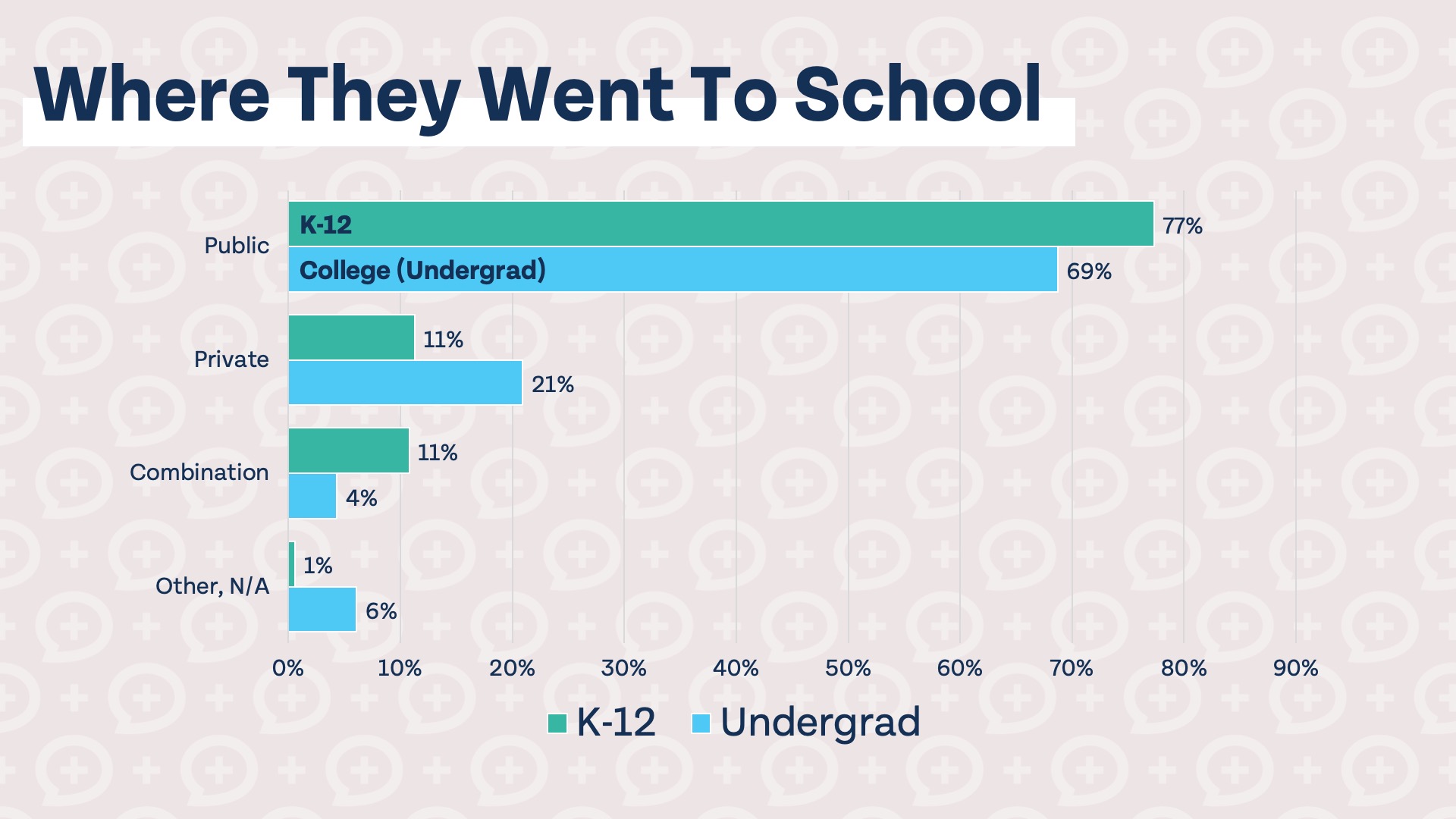
Articles
Millionaire Habits Revealed (2025 Client Survey Data)
Each year we conduct an annual survey of our millionaire clients. Some of the data is not too surprising. Yes, they have much higher than...

Articles
How To Get Your Financial Life Together in 2025
The majority of Americans live paycheck to paycheck, but nobody really wants to be living paycheck to paycheck. If you are spending everything you make,...
Financial FAQs
Courses & Tools

How about more sense and more money?
Check for blindspots and shift into the financial fast-lane. Join a community of like minded Financial Mutants as we accelerate our wealth building process and have fun while doing it.
Free Resources
Financial Order of Operations®: Maximize Your Army of Dollar Bills!
Here are the 9 steps you’ve been waiting for Building wealth is simple when you know what to do and the order in which to...
Free Resources
Wealth Multiplier By Age
If you want to set yourself up for future success, find out how much you need to save every month to become a millionaire.
Free Resources
Car Buying Checklist
Here’s how you can buy a dependable car that won’t break the bank. Our free checklist walks you through the 20/3/8 rule and strategies to...
Recent Episodes

It's like finding some change in the couch cushions.
Watch or listen every week to learn and apply financial strategies to grow your wealth and live your best life.

Episodes
Top 10 Mind-Blowing Money Stats (2026 Edition)
Are you on the right side of the data? In this annual classic, we reveal 10 mind-blowing 2026 money stats and personal finance strategies to...

Episodes
Here’s How Much Income Puts You In The Top 10%
What income puts you in the top 10% of Americans? We break down the numbers, bust common myths, and answer your biggest personal finance questions...
Episodes
From DINKs to Single Income and 2 Kids
Commission income, two kids, and a thin emergency fund - this is what the messy middle is all about. See how we help Tyler and...